
The Maya Loved Using Mercury-Rich Red Paint to Decorate Pottery, Temple Walls and Even Burials. They May Have Accidentally Poisoned Their Own Water and Food Supply in the Process
Testing of ancient sediment from two lakes in Mexico’s Yucatán Peninsula has revealed “crazy” high concentrations of mercury, as one researcher puts it, confirming findings from other regions of the Mesoamerican civilization

The Maya loved cinnabar, a bright red ore used to decorate pottery, burial sites, structures and more. But cinnabar is roughly 86 percent mercury, a highly toxic element that can harm humans, animals and ecosystems.
The Maya used so much of this prized pigment that they polluted some of their cities. Now, new research suggests the Maya’s cinnabar-derived mercury contamination was even more widespread than previously thought—and it could have contributed to the civilization’s downfall.
Testing of ancient sediment from two lakes in modern-day Mexico’s Yucatán Peninsula has revealed high concentrations of mercury during ancient Maya occupation. The findings, published November 4 in the journal Science Advances, suggest mercury pollution took a toll on the lakes’ aquatic ecosystems, causing their populations of aquatic creatures to decline or collapse. If the Maya ate fish or drank water from the lakes, they could have been exposed to toxic concentrations of mercury for decades or even centuries.
In 2022, scientists reported finding high levels of mercury at several archaeological sites in the Maya’s southern highlands and south-central lowlands, attributing the contamination to the use of cinnabar. The new study, conducted by a different team of researchers, builds on that work, investigating mercury levels at bodies of water in the Maya’s northern lowlands.
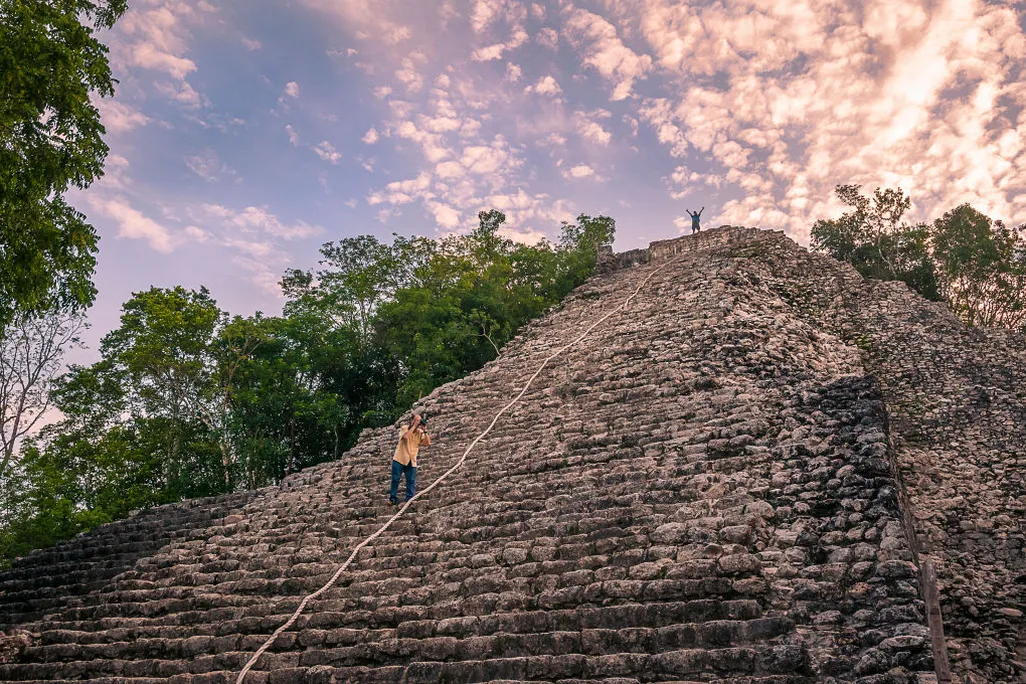
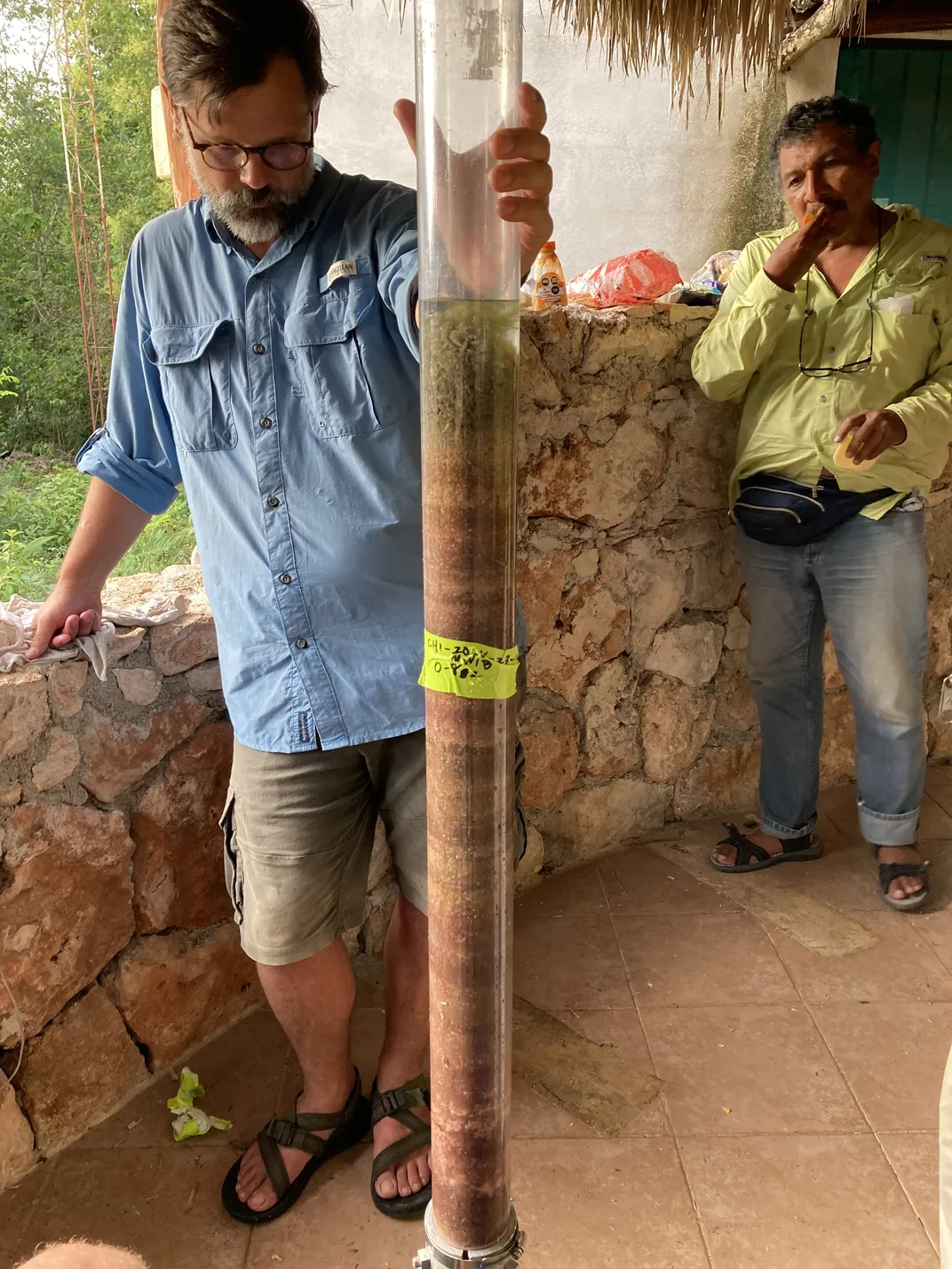
Researchers stuck long, heavy, hollow cylinders deep into the lakebeds of two lakes near ancient Maya cities, Coba and Xcach (pronounced “scotch”). They pulled up thick columns of sediment that had preserved centuries of environmental history, layer by layer.
At one site, Lago Coba, the sediment revealed centuries of elevated mercury levels, lasting from around 40 C.E. to 300 C.E. That corresponds with the end of the late Preclassic Period and the beginning of the Classic Period, which is considered the golden age of Maya civilization.
At Cenote Xcach, mercury levels spiked three different times: First, from roughly 125 C.E. to 200 C.E., just before the Classic Period; again, from 330 to 350 C.E., in the middle of the Classic Period; and, finally, from 535 C.E. to 820 C.E., toward the end of the Classic Period.
Some of the samples had mercury levels of 2.3 parts per million, which is over 1,000 times more concentrated than the 2 parts per billion maximum contaminant level set by the Environmental Protection Agency for safe drinking water. The Maya people who lived near the lakes would have been exposed to these high levels for years.
“The mercury data was crazy,” lead author Matthew Waters, an environmental scientist at Auburn University, says in a statement. “Off the charts. These mercury levels aren’t normal.”
The scientists also looked at various biological markers in the ancient sediments, which revealed that bacteria, algae, shelled organisms, midges and other populations had decreased or vanished during the high mercury periods.
These results suggest mercury was making its way up the food web. Based on their proximity to and penchant for fish and shellfish, the Maya could have suffered from mercury poisoning, which can cause damage to the central nervous system, kidneys, lungs and heart.
At the very least, the Maya living near the lakes would have seen “a strange color change in the water … and a drop in its productivity, such as fish for protein,” Waters tells Live Science’s Tom Metcalfe.
The scientists suspect the Maya imported cinnabar to Coba and Xcach because it does not occur naturally in the Yucatán Peninsula. If confirmed, this hunch could add cinnabar to the list of valuable commodities traded across the Maya world, alongside obsidian, jade and weapons. Researchers hope to take core samples from lakes located near Maya trade hubs to further explore this idea.
Did you know? Maya royalty
In 2025, a team of archaeologists working at the Maya site of Caracol in modern-day Belize discovered the cinnabar-coated tomb of dynasty founder Te K’ab Chaak.
- The finds included more than 100 shards of obsidian, jade and shell that composed a mosaic death mask for the deceased ruler.
They’re also investigating another theory: whether mercury poisoning might have played a role in the abandonment of several large Maya cities toward the end of the Classic Period.
Scientists have put forward numerous theories to explain this collapse, ranging from overpopulation and warfare to drought and deforestation. The new paper doesn’t directly link mercury to the demise of these Maya cities, but it does add “one more stressor” to the list of pressures scientists know the civilization was already facing, study co-author Savanna Wooten, an environmental scientist at the Jones Center at Ichauway, a nonprofit research facility in Georgia, tells Reuters’ Will Dunham.
