
The Canadian Artist Jean Paul Riopelle Was ‘Completely Absorbed by the Act of Painting.’ His Abstract Works Finally Have Their Own Home in a Quebec Museum
Home to the world’s largest public collection of his artworks, a new pavilion at Quebec’s Musée National des Beaux-Arts showcases the more than 50-year career of Riopelle, who was a key member of the avant-garde Automatistes movement

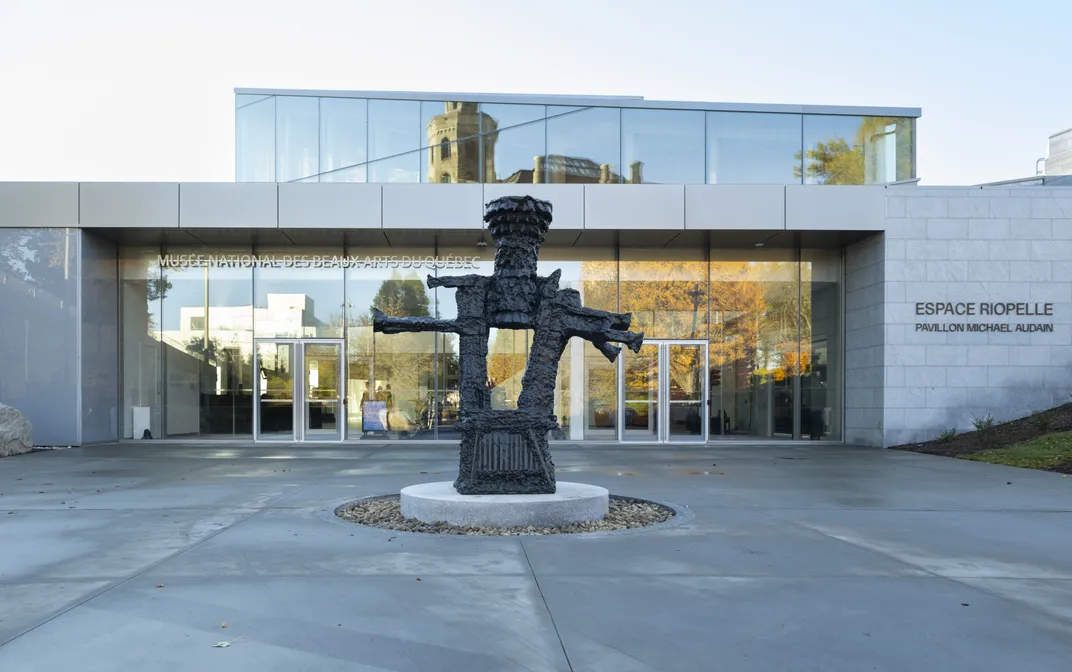
Nearly 25 years after the death of one of Canada’s most celebrated modern artists, a brand-new pavilion at Quebec’s Musée National des Beaux-Arts is opening this week in his honor.
The Espace Riopelle-Michael Audain Pavilion is named for the acclaimed Quebecois painter and sculptor Jean Paul Riopelle and Michael Audain, a philanthropist and co-founder of the Jean Paul Riopelle Foundation.
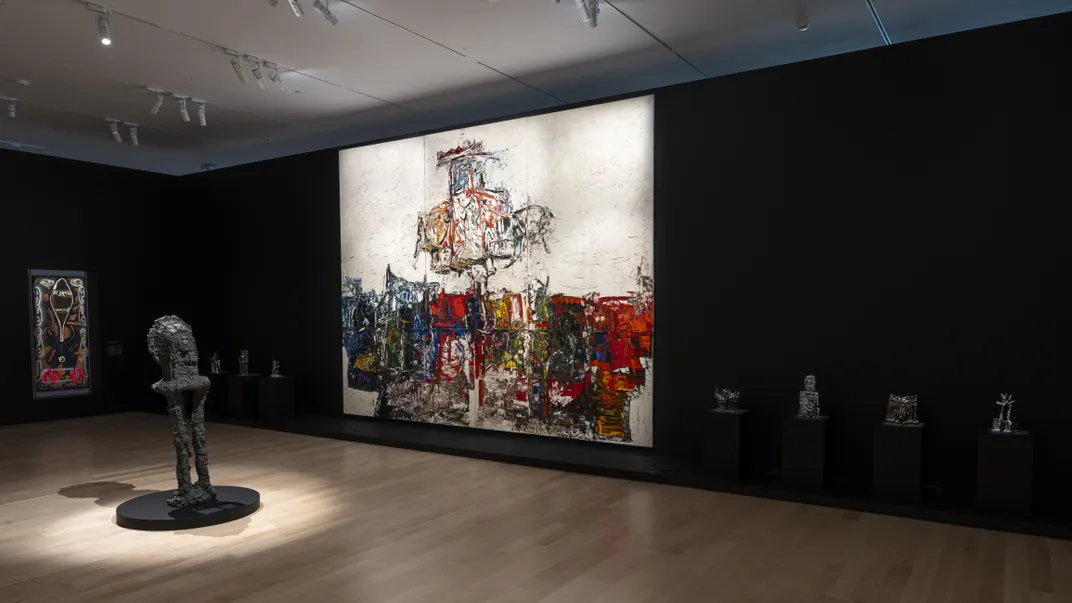
Born in Montreal in 1923, Riopelle earned international recognition in the 20th century as an influential abstract expressionist. Riopelle’s unique “mosaic” style works, which he made by squeezing oil paint straight from the tube, then spreading it using a palette knife, gained particular renown.
Riopelle was a key member of the Automatistes, a radical artistic movement founded in Quebec in the 1940s that was influenced by French surrealists and automatism, a philosophy of creating art without conscious thought. In 1948, the group published a controversial manifesto called Le Refus Global, or Total Refusal, which sought to shatter apart stodgy Quebecois culture with exhortations like: “Make way for magic! Make way for objective enigmas! Make way for love! Make way for what is needed!”
Riopelle’s style was devoted to radical abstraction and spur-of-the-moment, unconscious creation—an ethos immortalized in his diverse array of art works, spanning his more than 50-year career.
“I paint all in one go, without stopping, whether it’s one canvas or ten, without wondering when it began or when it’ll end, completely absorbed by the act of painting,” Riopelle said, per a statement from the museum. “I have no idea if an hour has gone by, or a whole night!”
Riopelle’s vast body of work and artistic legacy now have a permanent home at the museum in Quebec City. The $61-million gallery, built with architectural nods to the artist’s home studio, comprises three stories and nearly 54,000 square-feet. It overlooks both the Plains of Abraham and the St. Lawrence River. With more than 130 of his works on display, the museum is officially home to the largest public Riopelle collection in the world.
“Riopelle finally has a space entirely dedicated to him,” Jean-Luc Murray, the museum’s director, tells the Art Newspaper’s Hadani Ditmars. “The [museum] has long wanted to showcase his work while making it more accessible, and the Espace Riopelle-Michael Audain Pavilion does so brilliantly.”
The pavilion opens with four inaugural exhibitions that engage with Riopelle’s art and life in different ways. The primary show, “Riopelle: The Expression of Gesture,” is a permanent retrospective of Riopelle’s career, divided into seven themes on his constant artistic evolution. These include early works from his Automatiste era, 1950s mosaic works, depictions of bestiaries, prints of Quebec’s natural landscape and murals he created later in his life.
“[Riopelle is] arguably Canada’s most internationally known artist,” Audain tells the Art Newspaper. “He broke new ground by painting the landscape in a way that no one had ever painted it before … I think the most important and innovative aspect of Riopelle’s work was disaggregating the landscape and reducing it to strokes of a palette knife.”
The other three exhibitions shed light on Riopelle’s relationships, affiliations and perceptions. “Challenging: Modern Art in Quebec” features works by some 50 Quebecois modern artists, including other members of the Automatistes. In “Art and Emotions” visitors will be able to share the feelings evoked by Riopelle’s works in real-time in an effort to help the museum “design new artificial intelligence-based tools to personalize exhibition pathways,” according to the exhibition’s online description.
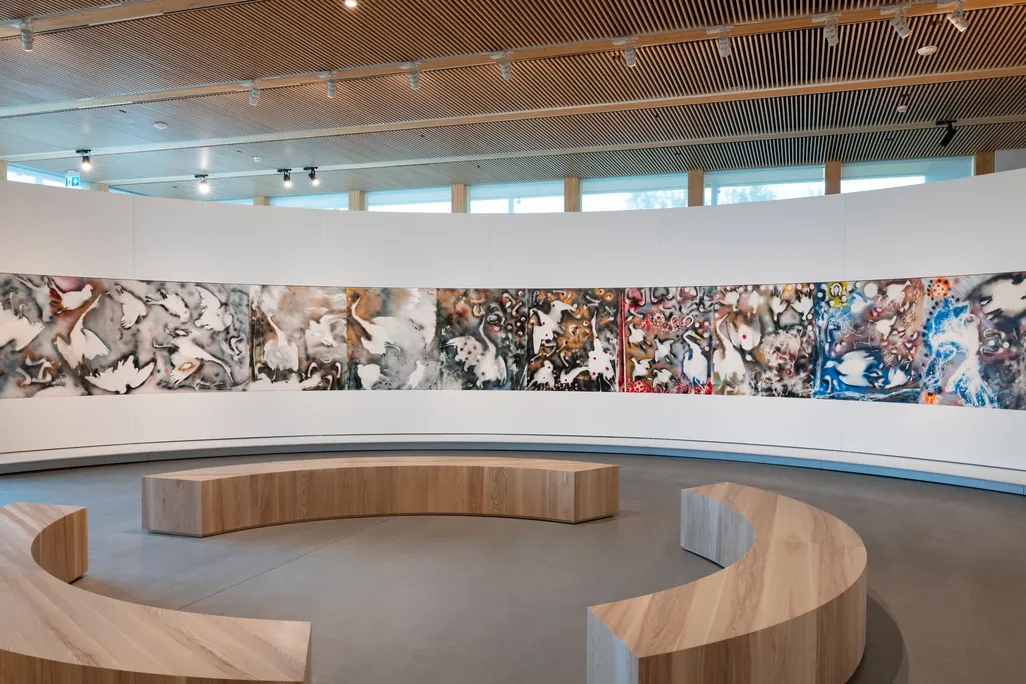
Finally, the gallery will have a specially designed space for Riopelle’s largest work, a 130-foot-long work composed of 30 paintings. Entitled Tribute to Rosa Luxemburg, he created the wall-spanning masterpiece over a period of three months in 1992 following the death of Joan Mitchell, Riopelle’s partner of roughly 20 years.
Did you know? Figure skating
Joan Mitchell was also a competitive figure skater who was named “Figure Skating Queen of the Midwest” in 1942.
“After he experimented with sculpture, his paintings changed because he explored form in a different way,” André Gilbert, the new pavilion’s curator, tells La Presse’s Jean Siag. “Riopelle took lots of risks. He painted his Rosa fresco using stencils and spray paint, the tools of graffiti artists. It feels as if we’re dealing with five or six artists at once.”
