
Someone Donated These Mysterious Artifacts to a Thrift Shop. Experts Think They Might Date to Medieval Times
A shopper who said he was an archaeologist spotted the 11 rings and two medallions and alerted a volunteer
/https://tf-cmsv2-smithsonianmag-media.s3.amazonaws.com/accounts/headshot/SarahKuta.png)
/https://tf-cmsv2-smithsonianmag-media.s3.amazonaws.com/filer_public/94/98/949854fa-947c-4910-9ad6-75cf4c351f5a/1757094126390.jpg)
Last year, someone made an unusual donation to the Thrifty Boutique in Chilliwack, British Columbia: 11 rings and two medallions that might be more than 1,000 years old.
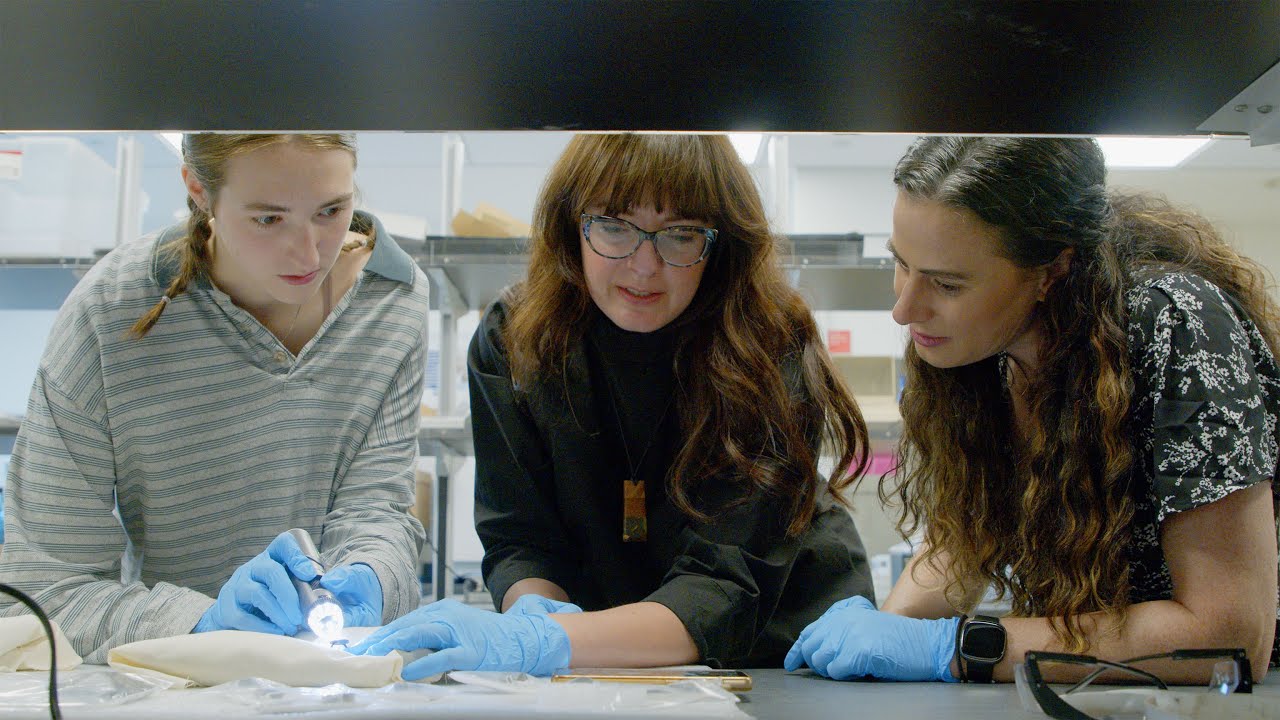
Now, the historic artifacts have found a new home at the Museum of Archaeology and Ethnology at Simon Fraser University in the nearby city of Burnaby. They’ll be the focus of a new archaeology class, in which students will have a chance to try to solve the mystery of their origins.
“What we’re doing is essentially being detectives—we’re trying to recover the story of these items,” says Cara Tremain, an archaeologist at the university, in a statement.
/https://tf-cmsv2-smithsonianmag-media.s3.amazonaws.com/filer_public/c3/ce/c3ce85f2-5cd4-45bc-9dfe-9c28738ac3a0/1757094301207.jpeg)
When the objects were initially donated to the thrift shop in the spring of 2024, staff and volunteers didn’t realize their significance. They stuck a price tag on each item—$30 Canadian dollars, or roughly $21 U.S. dollars—then put them out for sale. The thrift shop provides funding for the nonprofit Chilliwack Hospice Society, which helps individuals and families with grief and bereavement support.
Later, a man who said he was an archaeologist stumbled across the treasures and flagged them to one of the thrift shop’s volunteers. The man, who has not been identified, recommended they get in touch with archaeology experts at Simon Fraser University.
At first, the university’s archaeologists were reluctant to accept the artifacts. Because the objects do not have proper documentation, there’s a chance they were illegally looted before being donated to the thrift shop, for instance.
However, after about a year of back-and-forth, archaeologists agreed to take the items and add them to the collection of the university’s Museum of Archaeology and Ethnology. They ultimately decided to accept the artifacts so they didn’t end up on the private antiquities market.
Usually, the university needs to know where artifacts came from in order for them to have research value for students and faculty. “Something like this, though, was just such a curious sort of one-off case,” says Barbara Hilden, director of the Museum of Archaeology and Ethnology, to the Canadian Press’ Brieanna Charlebois.
/https://tf-cmsv2-smithsonianmag-media.s3.amazonaws.com/filer_public/04/f1/04f1d0ea-d619-4482-bbe4-9fe2f0c3914a/1758302178082.jpg)
Key takeaways: How did these artifacts end up in a Canadian thrift shop?
- In 2024, someone donated 11 rings and two medallions to the Thrifty Boutique in British Columbia.
- A shopper who identified himself as an archaeologist later saw the items for sale and advised the staff to contact experts to learn more about them. Now, archaeologists believe they could be rare medieval treasures.
Sabrina Higgins, an archeologist at the university, believes the artifacts date to the fourth or fifth century, based on the materials and techniques. She suspects they originated somewhere in what was once the western Roman Empire.
Higgins is most interested in the smaller of the two medallions, which features the Greek letters “CH” and the Roman letter “RH,” reports the Art Newspaper’s Hadani Ditmars. Together, the letters form a “Christogram,” or the sign for Christ.
Next fall, undergraduate students will study the mysterious rings and medallions in hopes of learning more about their history. They will go through the entire process of accessioning a new collection, including archival research and scientific analyses. They’ll also learn how to use digital technologies to study objects. “It will take at least a semester—if not longer—to piece together the origins of these artifacts,” Higgins says in a statement. “It promises to be a rewarding journey for students.”

Once they get to work, students might discover that the items are forgeries—but even that could be a valuable finding. It might foster lessons around how to differentiate fake artifacts from real ones, as well as dialogue around the prevalence of forgeries in the antiquities market. Students will also explore some of the ethical questions the museum had to consider before accepting the artifacts.
The class will then help create a new exhibition about the items at the university’s museum, a process that will provide students with even more hands-on learning opportunities.
“The fact that these items continue to exist is quite extraordinary,” Hilden says in the statement. “If they are hundreds or thousands of years old, then at any point along the way they could have been lost, broken or discarded. Yet they’ve been kept, preserved and now they’re entering a new chapter.”
/https://tf-cmsv2-smithsonianmag-media.s3.amazonaws.com/accounts/headshot/SarahKuta.png)