
Shanghai’s ‘Audacious’ New Opera House Just Opened Its Doors—and a Gravity-Defying Staircase—to the Public
The riverfront opera house is Shanghai’s latest cultural statement. It features three performance halls and is designed to be accessible to everyone, not just ticket-holders

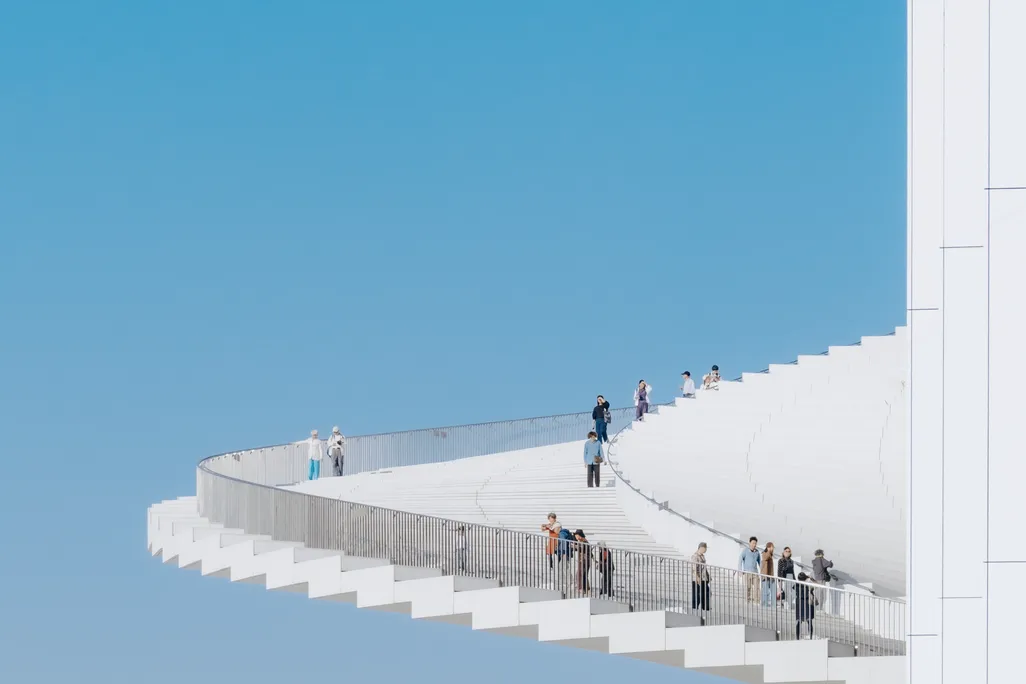
The world’s newest opera house officially opened its doors this week, featuring a bold architectural flair and a soaring spiral staircase that connects city streets to a rooftop stage and observation deck.
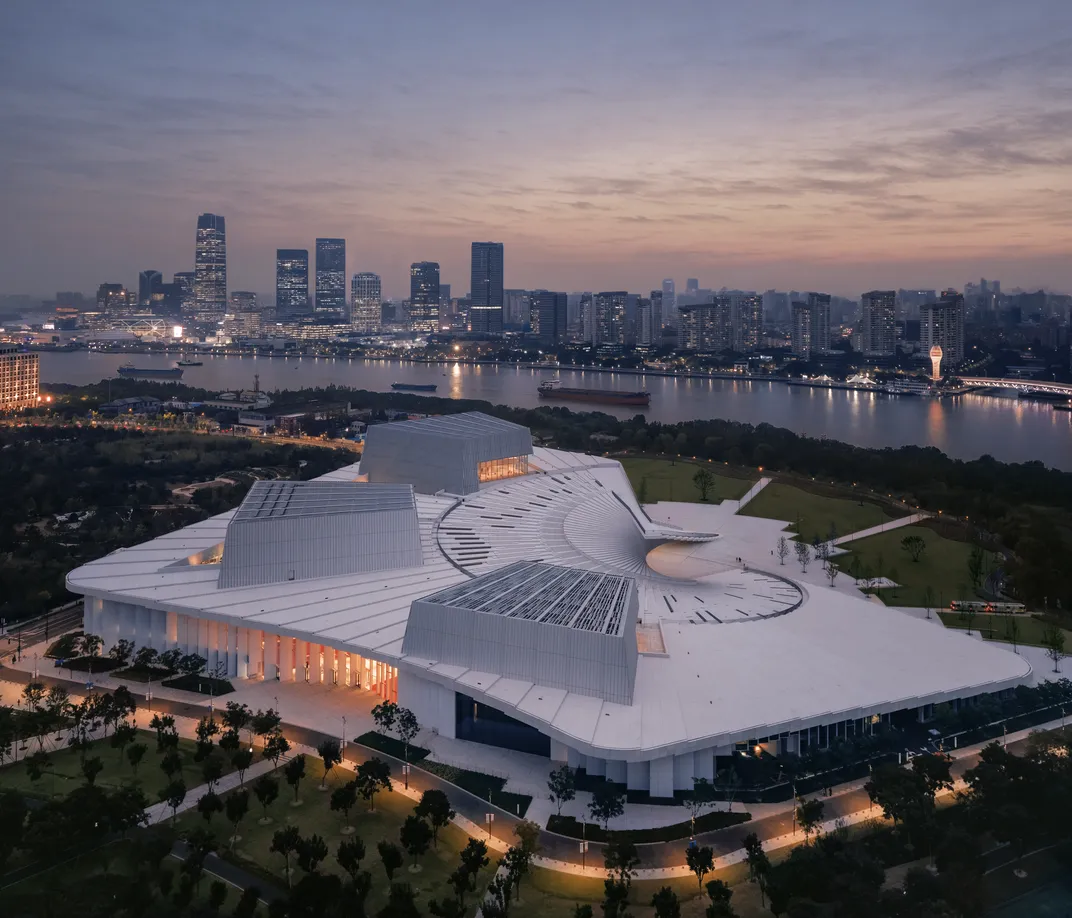
The Shanghai Grand Opera House now stands complete on the banks of China’s Huangpu River, a decade after Snøhetta, an architecture firm from Norway, won the international competition to design it.
The nearly 1.6 million square-foot building is home to three separate auditoriums with a combined capacity of 4,200 seats. Its stages were built to accommodate myriad performances and rehearsals, from traditional operas to classical symphonies and experimental productions.
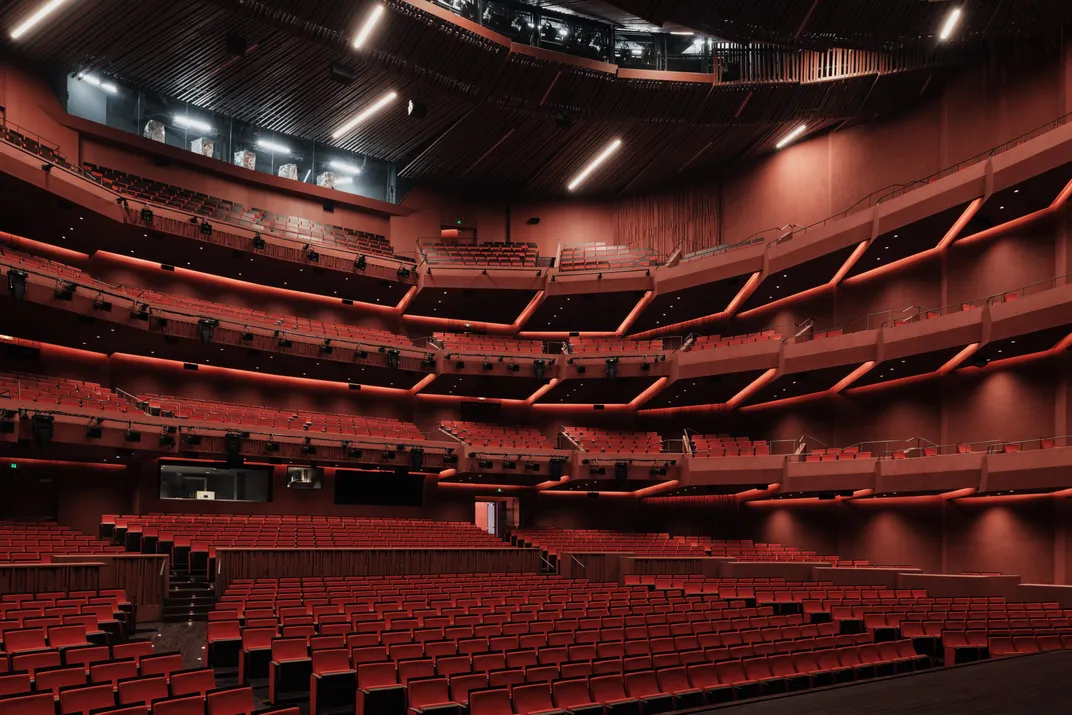
In a statement, Snøhetta describes the primary performance space—the 2,000-seat Harmony Hall—as a “finely tuned instrument, combining state-of-the-art theatre systems with carefully calibrated acoustics.” It contains five levels of seating and is furnished in dark reds.
With 1,200 seats, the Soar Theatre was designed with baroque and classical opera in mind. The slightly smaller Open Stage, which offers panoramic views of the riverfront, prioritizes flexibility, with changing stage and seating configurations that can accommodate a variety of experimental performances. The main hall of the building is a stark white space, filled with natural light and sharp red accents.
“A cultural building, any building for that matter, must respond to its surroundings, the people who use it, the performers it serves, and the city it becomes part of,” Kjetil Thorsen, the co-founder of Snøhetta, tells Dezeen’s Lizzie Crook. “When I last visited the site, I was asked by a Chinese architecture student how we managed to create a building that felt so Chinese despite not being from China. The answer lies in observation and understanding context.”
Visitors do not need a ticket to enter to the building or to explore its architectural flourishes. That philosophy of openness is embodied by the opera house’s massive exterior staircase, which rises from Shanghai’s riverfront, spiraling upwards to form the roof. It is meant to connect the the city’s existing walkways with an open-air observation deck, gathering spaces and a stage.
“Buildings like opera houses inevitably create thresholds through walls, doors and ticketed programs,” Thorsen tells Dezeen. “We see it as our responsibility to challenge those thresholds and make the building as much a civic destination as a performance venue.”
Even on its own, the staircase is something to behold, akin to a large public sculpture. Its design is reminiscent of a traditional Chinese fan, a swirling dance movement, piano keys and the flow of the Huangpu River.
“The audacious architectural gesture now needs to be filled in with contents, with projects, with life, with people,” Serge Dorny, the director general of Germany’s Bavaria State Opera, tells ShanghaiEye.
The opera house’s inaugural season runs from October through February 2027. It will feature 82 performances, including ballet numbers from Russia’s Eifman Ballet and the American Ballet Theatre; a Beethoven cycle from Staatskapelle Berlin, one of the world’s leading orchestras; and traditional Chinese operas, called xiqu, including The Peony Pavilion and Dream of the Red Chamber.
Snøhetta has designed several opera house projects in recent years that combine performance with public accessibility. In Oslo, the waterfront Norwegian National Opera and Ballet opened in 2008. The firm’s design for the Busan Opera House in South Korea, another waterfront institution, is set to make its debut sometime in 2027, while the Royal Diriyah Opera House in Saudi Arabia is expected to open its doors in 2028.
Did you know? Norwegian krone
Snøhetta, the firm behind the Shanghai Opera House, also designed the pixelated, abstract backside of Norway’s banknotes.
In recent years, Shanghai, a financial hub home to roughly 25 million people, has made a major push to establish itself as a cultural center. Since 2021, the Museum of Art Pudong, Shanghai Museum East, West Bund Grand Theatre and Shanghai Literature Museum have all opened their doors.
“Accessibility is about daring to go in,” Thorsen tells CNN’s Stephy Chung. “It’s not only about the glass walls and the doors, but it’s about being attracted to the space as you come in, and you feel that even if you’re not the average opera goer, you’re invited in.”
