
Rule Breaking Is Contagious. Just a Few Extreme Troublemakers Can Turn a Whole Group Into Rebels, Study Suggests
Experiments with real participants—and digital twins based on them—show how a small number of bad apples can spoil the whole barrel. However, the research scenarios don’t exactly mimic the real world

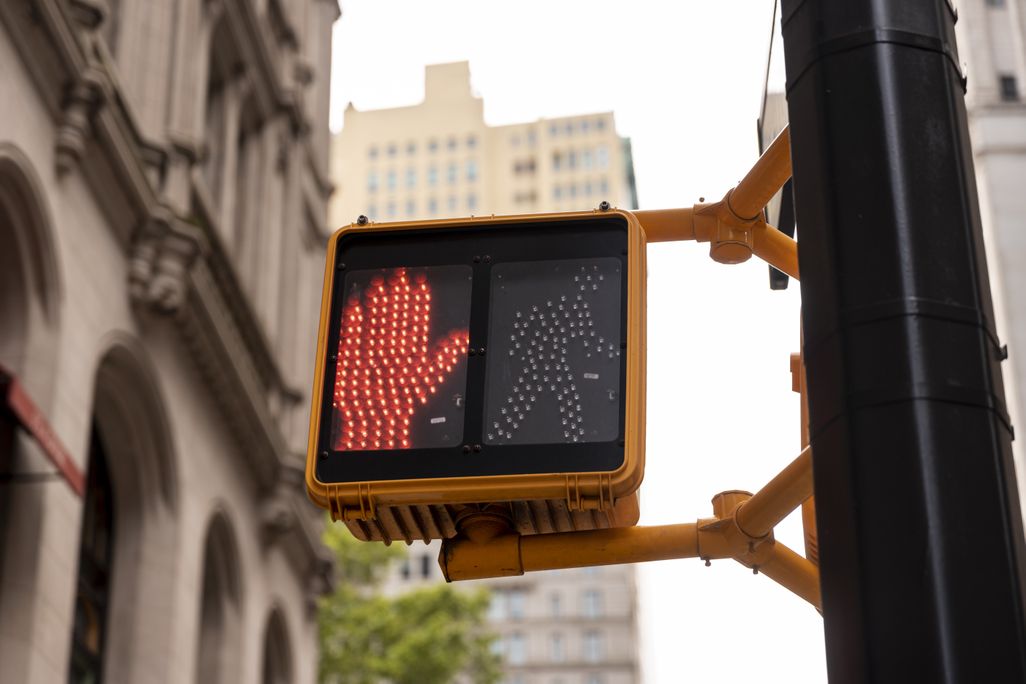
Whether it’s driving above the speed limit or sneaking snacks from home into the movie theater, most people have broken a rule here and there. But how do other people’s behaviors influence your rule-breaking tendencies?
Researchers conducted behavioral tests with real people and simulations using their digital twins and found that just a few extreme troublemakers could ignite a full-blown revolt. The experiments, described in a study published October 21 in the journal Proceedings of the Royal Society B, don’t perfectly align with real-world contexts, but they do provide a glimpse at how rule-breaking can escalate.
“Prior research shows that rule violations and other antisocial behaviors can spread through social influence, but less is known about how the severity of violations shapes these dynamics,” the team writes in the study. “In many real-world settings, rule-breaking occurs in degrees, from minor infractions to major violations, and individuals may not only imitate others but sometimes exceed the violations they observe.”
To get a better understanding of these dynamics, the scientists recruited 750 online participants from the United States, about half of whom self-identified as Democrats and the other half as Republicans. It was a contentious time, just a week before the 2024 U.S. presidential election.
The participants were paid to observe a shooting star travel across a row of 100 squares on their screen and pick the brightest one. But there was a catch: The brightest square was always near the middle, but picking squares farther to the right increasingly netted them more cash.
Initially, around a fifth of the participants followed the rules every time, and another fifth of the participants were rule breakers. However, gaining insights about others’ behaviors shifted the results.
“Many people think of themselves as making sort of autonomous decisions, especially in these individualist cultures that we are from, like Netherlands, the U.K.,” study co-author Lucas Molleman, a social scientist at the University of Amsterdam, tells the Guardian’s Nicola Davis. “But in actual fact, in many, many cases we are very much influenced by what others are doing.”
Across several experiments, researchers told the participants whether another person had followed the rules or had committed a minor or major violation, and sometimes whether they were politically aligned. Rule-following rarely spread, but rule-breaking triggered a cascade, especially if done by a political comrade. Additionally, a tiny proportion of participants—4.4 percent—were true troublemakers, violating the rules beyond what was done by the rule-breaker whose response they knew about.
Fun fact: Social status and rule-breaking
In a similar vein, researchers reported in 2012 that people of higher social class are more likely to engage in unethical behaviors, such as taking candy meant for children, lying at work and cheating during games. Earlier this year, that study earned the authors an Ig Nobel Prize, a spoof award designed to “honor achievements so surprising that they make people laugh, then think.”
Next, the team turned to computer simulations using digital twins of each participant. They observed rule-breaking dynamics in groups of 100 digital twins at a time and found that occasionally, the few extreme deviants could turn the entire group into rule-breakers.
“Sometimes people do things in groups that they would never dream of doing alone,” Jens Krause, a behavioral ecologist at the Humboldt University of Berlin and the Leibniz-Institute of Freshwater Ecology and Inland Fisheries, said a statement in 2022, after he and his colleagues had published a review in Trends in Cognitive Sciences on group rule-breaking. Krause did not participate in the new work.
Eugen Dimant, a behavioral economist at the University of Pennsylvania who also wasn’t involved in the work, tells Science News’ Sujata Gupta that while the new study sheds light on human behavior without the pressure of consequences, it’s not a realistic imitation of the world. His research indicates that one should account for societal pressures like punishments and social norms to really comprehend social contagion and the rise of mobs.
