
On This Day in 1950, Thieves Stole Millions in a Famous Robbery That Took Years for the Police to Solve
Investigators finally cracked the case thanks to infighting among the thieves—but never located all the money
/https://tf-cmsv2-smithsonianmag-media.s3.amazonaws.com/accounts/headshot/Teresa_Nowakowski.png)
/https://tf-cmsv2-smithsonianmag-media.s3.amazonaws.com/filer_public/d3/71/d37136ac-b0a1-403a-a52f-70300f727474/gettyimages-515351206.jpg)
The newspapers called it “the crime of the century.” It became the basis for four different films. And at the time, it was the biggest cash robbery in the history of the United States.
On the evening of January 17, 1950, thieves entered the building of the Brink’s security company in Boston’s North End. They entered smoothly, seven armed men quickly tying the hands and taping the mouths of the five employees working to close up for the day.
In roughly 20 minutes, they made their way out again, carrying $1,218,211.29 in cash and another $1,557,183.83 in checks and securities.
Everything went off so well that the police superintendent was convinced the theft involved someone on the inside. “There is no doubt it was an inside job. It was probably planned for weeks—even with blueprints and rehearsals,” Edward W. Fallon told the papers.

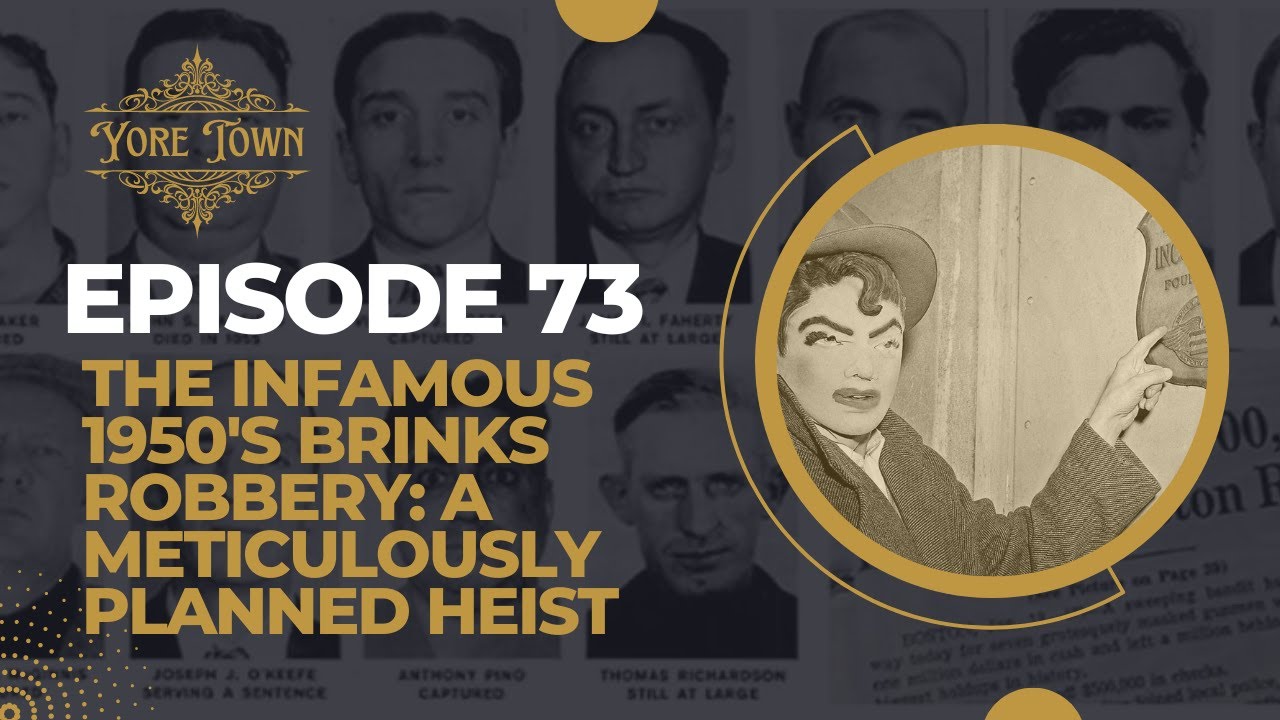
He was partly right: Though none of the thieves was a Brink’s employee, they had planned the robbery meticulously. They cased the building for months, methodically removing the lock cylinders from each door to copy keys for them. They repeatedly practiced their approach and getaway. When the day came, they all wore peacoats, gloves, chauffeur’s caps and Halloween masks to conceal their identities and avoid leaving traces behind.
Most important, they made a clean getaway. Of the few items that remained at the scene of the crime were the rope and tape used to bind and gag the employees and a chauffeur’s cap. Soon after, Brink’s announced it would pay $100,000 for any information about the crime (and that the company would be changing its locks). The police also appealed to the public, prompting slew of fruitless, and often false, tips.
With little to go on, investigators pursued almost any potential lead, only to find dead ends. They looked to Boston’s criminal underworld but couldn’t find enough evidence to indict any suspects.
The watershed moment came several years later, when Joseph “Specs” O’Keefe, a member of the robbery gang, confessed. By then, O’Keefe was in prison for a different crime, and he had been upset with the other members of the gang for years. He’d been shortchanged on his share of the loot, and in 1954, a hitman hired by the group attempted to kill him.
In January 1956, O’Keefe told investigators everything. The group had been organized by Anthony Pino, who “had no equal” and “was very energetic when it comes to stealing,” as another member of the gang later told the Boston Globe.
The night of the robbery, most of the gang hid outside the building, waiting for a signal from another man on a nearby rooftop. When the all-clear came, seven—including O’Keefe—went in to pull off the heist while Pino and the getaway driver remained in the car. The eleventh man, who wasn’t present during the robbery itself, met them later that night at a safehouse. They split the loot, taking roughly $100,000 apiece, and went their separate ways.
Within a week of O’Keefe’s confession—and just days before Massachusetts’ six-year statute of limitations expired—a grand jury issued indictments for the 11 men involved in the Brink’s robbery. That fall, eight surviving members of the gang went on trial. (Two members of the group had died in the intervening time, and O’Keefe pleaded guilty before serving as the prosecution’s star witness.)
After three-and-a-half hours of deliberation, the jury determined all the men were guilty. Still, one question would never be answered: More than $1 million of the cash they stole was never unaccounted for.
Almost 30 years after the holdup, John Adolph “Jazz” Maffie, who did almost 14 years in prison for his role, told the Washington Post that though the Brink’s job was “an adventure,” he wouldn’t try it again. However, Sandy Richardson, another of the Brink’s gang, maintained it was well worth the trouble.
“Sure it was worth it,” he said. “Hey, have you ever had a hundred grand all your own for six years?”
/https://tf-cmsv2-smithsonianmag-media.s3.amazonaws.com/accounts/headshot/Teresa_Nowakowski.png)