
NASA’s Curiosity Rover Had a Martian Rock Stuck on Its Arm for Days. Watch It Finally Shake the Stubborn Stone Off
While drilling has fractured rocks, this is the first time the instrument has ever accidentally pulled a whole chunk from the ground, according to the space agency
/https://tf-cmsv2-smithsonianmag-media.s3.amazonaws.com/accounts/headshot/Margherita_Bassi.png)
/https://tf-cmsv2-smithsonianmag-media.s3.amazonaws.com/filer_public/ec/48/ec4803ef-2d88-4703-9c69-2688bfbd6ec6/ezgif-6a4e0b5b526e409f.gif)
NASA’s Curiosity rover has been roaming Mars for nearly 14 years, hunting for signs that it once hosted environments that could have allowed ancient microbes to thrive. But on April 25, the rover ran into a problem: Its robotic arm got stuck while sampling a stone.
On that day, Curiosity drilled into a flattish rock about 1.5 feet wide and 6 inches thick that weighed roughly 28.6 pounds. It’s dubbed “Atacama” after a Chilean desert, the driest mid-latitude desert on Earth—a tough place to survive.
“Like its namesake, the Atacama drill target on Mars presented a challenge to the Curiosity rover and to the rover team,” writes William Farrand, a geoscientist at the Space Science Institute who works on Curiosity, in a NASA blog post.
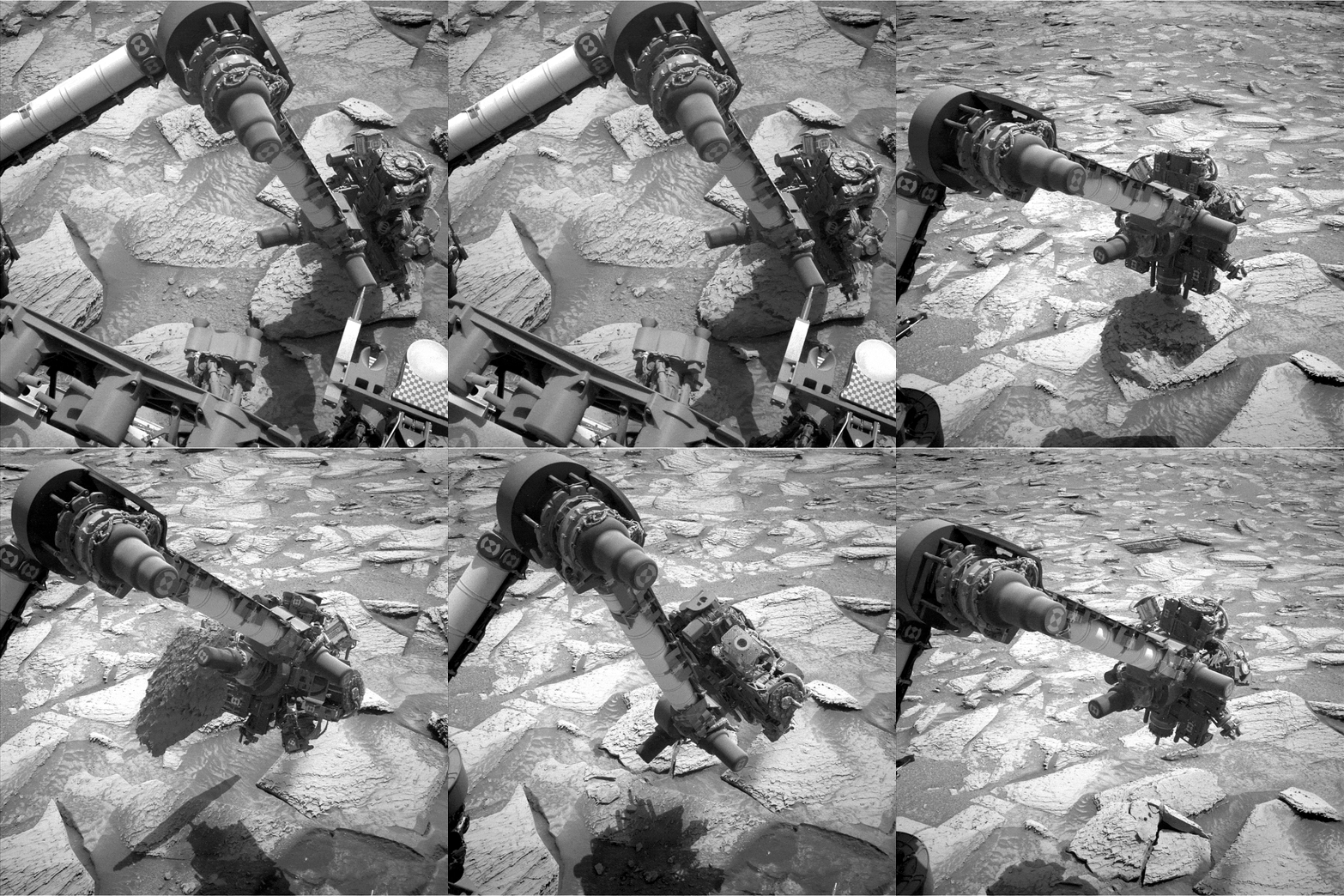
While pulling its drill out the rock, the rover accidentally yanked the whole chunk out of the ground, according to a NASA statement. It got stuck on the fixed sleeve that wraps around the rotating drill bit. Drilling has fractured stones before, per the agency, but this particular problem was a first of its kind.
Did you know? The first Mars rover
The first robotic rover to operate on Mars was the Sojourner, which hitched a ride aboard NASA’s Mars Pathfinder spacecraft launched in December 1996. It landed on the Red Planet on July 4, 1997.
The team initially attempted to shake the rock off by vibrating the drill, but that yielded no results. A few days later, on April 29, they repositioned Curiosity’s arm and tried vibrating the instrument again. Some sand fell off, but the rock remained stubbornly stuck.
One complicating factor is that the rover is far from its human controllers—the Red Planet is, on average, about 140 million miles from Earth. That means a delay in communications. So, the team sent instructions to Curiosity, then had to wait roughly 30 to 45 minutes to see if anything successful came about, according to CNET’s Joe Hindy.
On May 1, they went at it again, further tilting the drill, rotating and vibrating it, and spinning the drill bit. They planned to do this maneuver several times, but the first round ended up dislodging Atacama, which broke upon crashing to the ground.
Curiosity launched in 2011, and it was the largest and most capable Martian rover of its time. Since landing at Gale Crater the following year, the rover has indeed discovered mineral and chemical evidence of bygone habitable environments—although scientists still haven’t found definitive signs of life there. Curiosity has drilled a total of 42 holes to collect powderized rock samples.
The stuck rock saga is far from the only issue the rover has faced during its operational history. The first serious malfunction happened in early 2013, National Geographic’s Marc Kaufman reported at the time. One of Curiosity’s two onboard computers became corrupted, so the team moved their operations to a backup computer. That caused the rover to go into “safe mode,” delaying scientific operations. The entire ordeal cost the team about three weeks of Mars exploration, per the New York Times’ Henry Fountain.
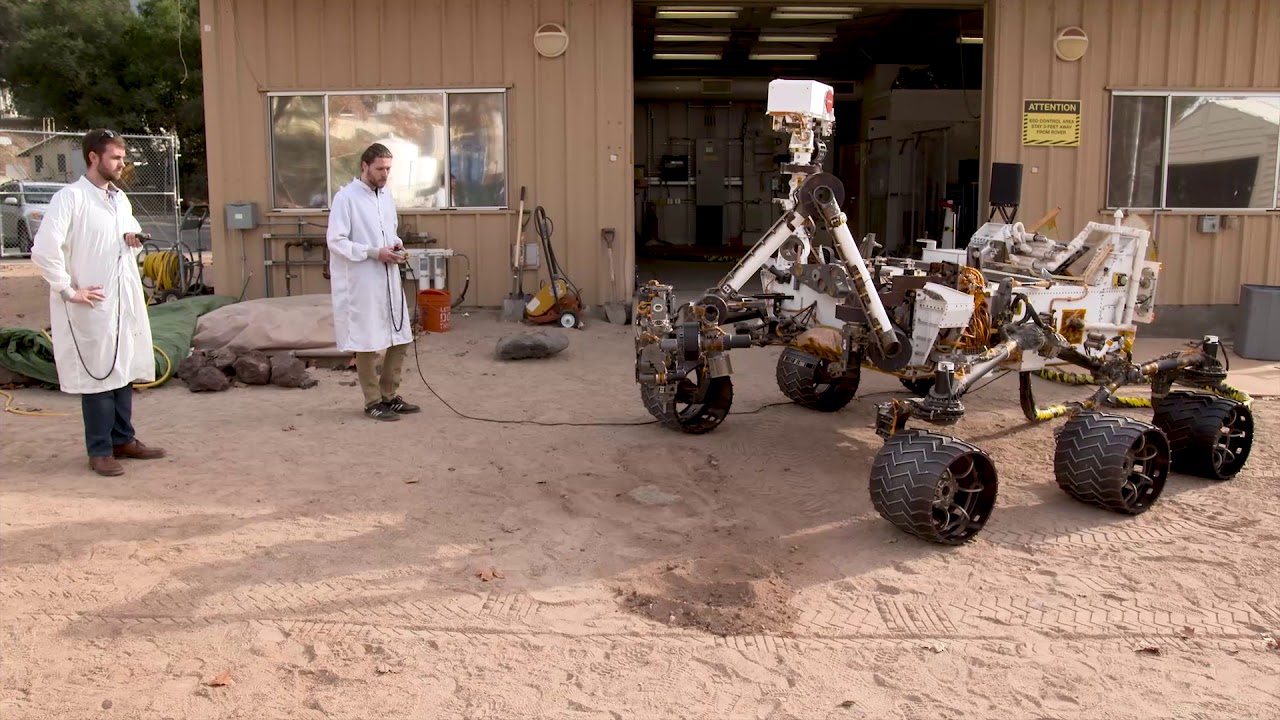
Curiosity also started having problems with its drill in late 2016. The feed mechanism that moved the piercing drill bit in and out of rocks wasn’t responding to commands. So, using a twin rover on Earth, the team created a new strategy to gather and deliver rock samples without the feed mechanism. The drill bit now always protrudes from the arm.

Even NASA’s newer rover, Perseverance, which landed on Mars in 2021 to detect signs of ancient microbial life, has had some issues. In 2022, it performed some dance moves to get rid of pebbles stuck in its sampling system, reported Space.com’s Samantha Mathewson at the time.
“When you run into a challenge, sometimes it’s best to step back and shake it off,” the rover’s team wrote on social media in 2022—advice that served Curiosity well four years later.
/https://tf-cmsv2-smithsonianmag-media.s3.amazonaws.com/accounts/headshot/Margherita_Bassi.png)