
Melting Ice in the Italian Dolomites Exposes Hundreds of World War I Munitions, Vestiges of the Vertiginous ‘White War’
Following low snowfall and record-breaking summer heat, the Italian Army is hunting for unexploded shells and bombs. “When they re-emerge, they are very, very dangerous,” one expert warns
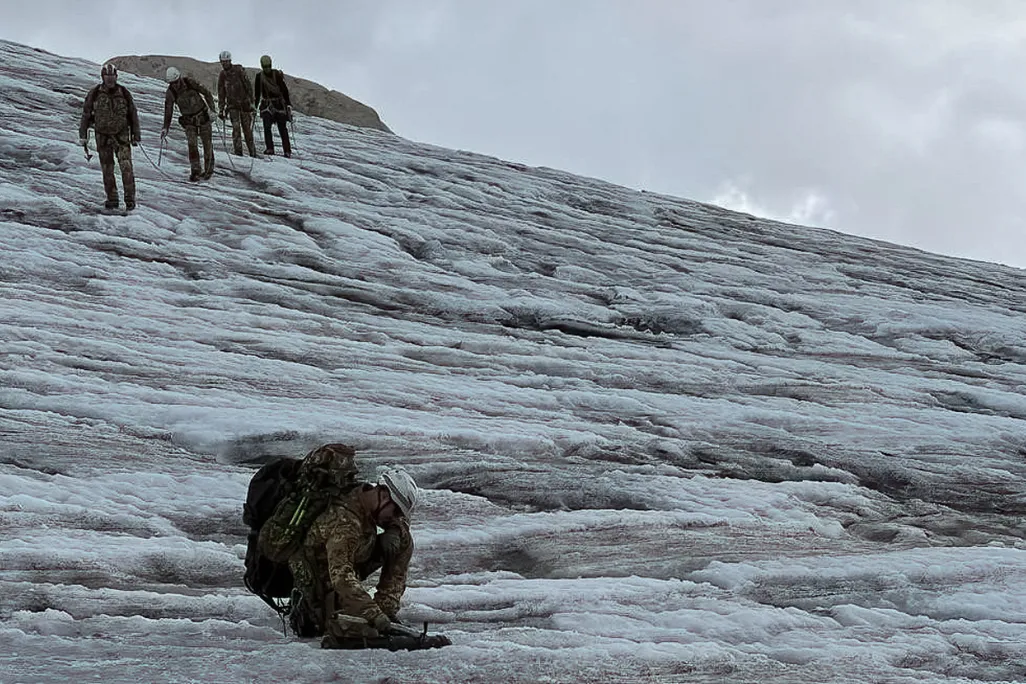
High in the craggy peaks of northern Italy’s Dolomites, record-breaking summer heat has peeled back layers of ice and revealed troves of 20th-century weaponry.
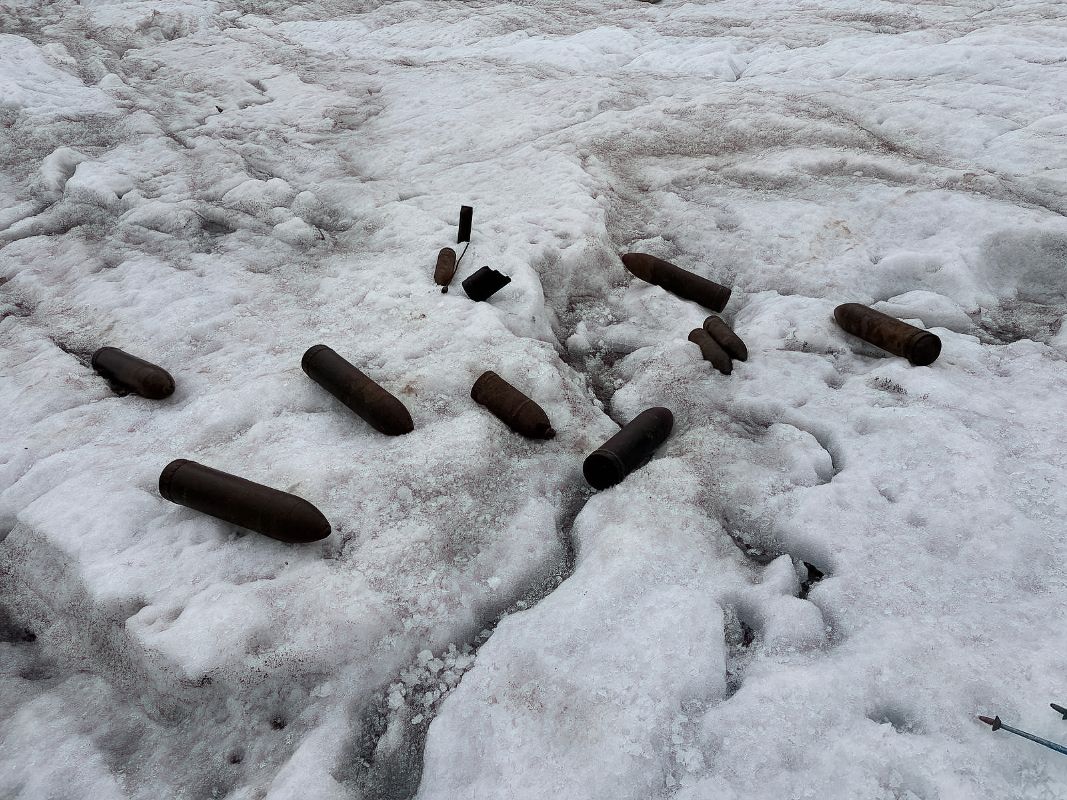
Over the course of the summer, the Italian army recovered and defused some 250 explosive devices dating back to World War I, according to ANSA, an Italian news agency.
The dangerous relics surfaced across high-altitude slopes and melting glaciers in the Trentino-Alto Adige region. They were frequently spotted and reported by mountaineers and hikers.
In one bizarre instance, firefighters found an unexploded 90-millimeter mortar shell while salvaging a car that had rolled into a ravine after the driver forgot to engage the handbrake, Barbie Latza Nadeau reports for CNN.
That unexpected discovery in June was the first of the clean-up season for the Italian Army’s Julia Alpine brigade. Specialists worked until mid-October across dizzying ridgelines, including the Carè Alto and Lares glaciers in the Adamello-Brenta area and near Cima Tre Cannoni and the Livrio glacier in the Stelvio region, according to a statement.
Among the 250 recovered munitions were hand grenades, 75-millimeter artillery rounds and French-made Thevetot mortar shells, according to the Guardian’s Angela Giuffrida.
The weaponry is a chilling vestige of the “White War,” a brutal campaign fought between the Austro-Hungarian and Italian militaries between 1915 and 1918 at elevations at times exceeding 10,000 feet. Soldiers hacked tunnels directly into the ice, hoisted heavy field guns up sheer cliffs and endured chilling temperatures.
The White War claimed an estimated 180,000 lives, largely though hypothermia, sheer falls and catastrophic avalanches, which proved far more lethal than enemy shells. When hostilities ceased in late 1918, both sides abandoned vast arsenals—and fallen soldiers—which were buried under winter snowdrifts and encased in solid glacial ice.
Did you know? Frozen cave barracks
In 2015, thawing ice near the summit of Mount Scorluzzo revealed a wooden barracks built into a natural cavern at 10,154 feet. Sealed since the war ended in November 1918, the shelter was found astonishingly intact—complete with straw bedding, lanterns, uniforms, food tins, postcards and newspapers.
While mountaineers have periodically found wartime relics since the 1990s, the speed and volume of discoveries have accelerated dramatically due to climate change. A combination of low winter snowfall in 2025 followed by scorching summer temperatures in 2026 drove unprecedented glacial loss across northern Italy.
“It is very much a consequence of global heating,” Stefano Morosini, a historian at the University of Bergamo and heritage project coordinator at Stelvio National Park, tells the Guardian. “In recent years, at the end of each summer, these dangerous artifacts emerge and each year there is a higher number. They have been conserved by the ice for more than 100 years. Some had already exploded but many hadn’t, so now when they re-emerge, they are very, very dangerous.”
Disarming century-old explosives in alpine environments was a grave logistical challenge. At one point, a cluster of 75-millimeter shells forced authorities to temporarily shut down a popular climbing route between the Cima del Frate peak and the Forcella Fierollo pass.
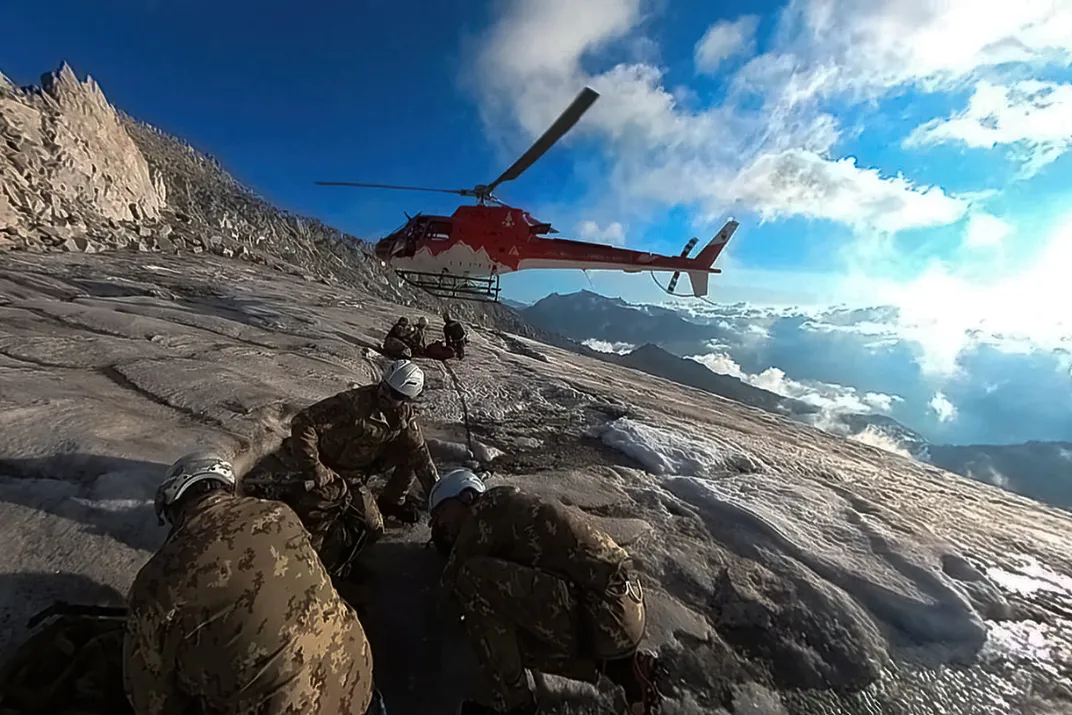
The Italian Army notes that the operation required “solid mountaineering skills” to navigate inaccessible cliffs and hazardous rockfalls, per CNN. The missions relied on specialist helicopter crews, volunteer fire services, the Red Cross and the mountain rescue branch of the Guardia di Finanza. In many areas, personnel had to use specialized air-lift equipment and heavy protective gear to safely transport unstable shells to secure detonation sites.
Beyond the dangers of gunpowder, retreating ice is making high-altitude trekking increasingly hazardous, Morosini tells the Guardian, pointing to the 2022 collapse of the Marmolada glacier that killed 11 people.
He adds: “If you come to the area, you can see how fast the glaciers are retreating and how strong the impact of climate change is.”