
Immerse Yourself in the Cosmos at Frank Lloyd Wright’s Only Planetarium, Recently Restored to Its Former Glory in Florida
Completed in 1958, the domed building is located on the campus of Florida Southern College, home to 13 Wright-designed buildings, the world’s largest single-site collection of the architect’s work

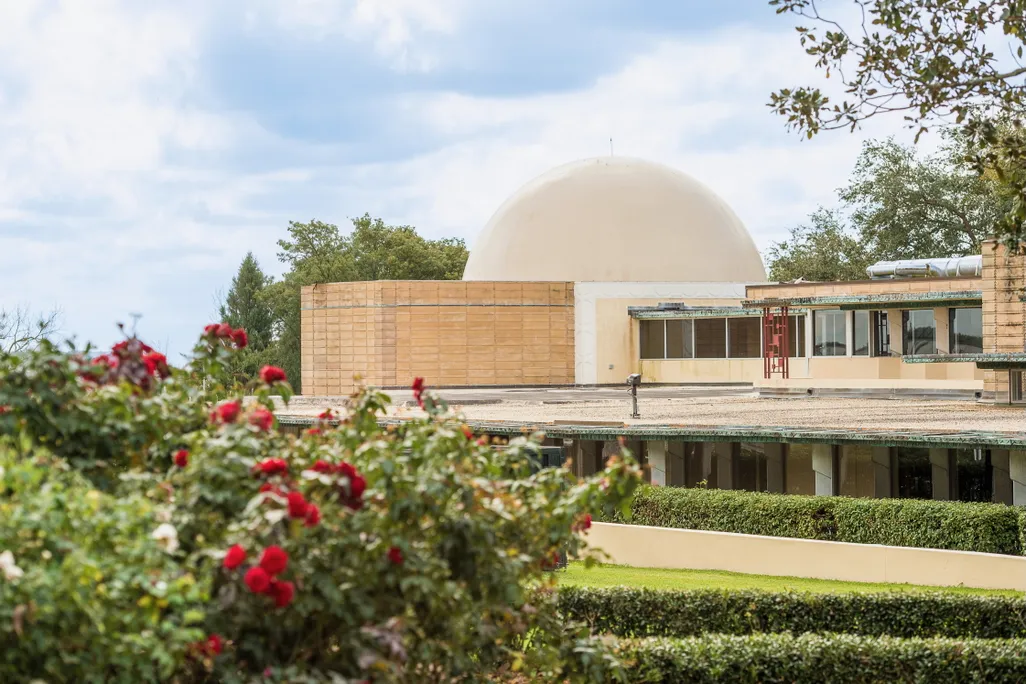
Frank Lloyd Wright, one of America’s most famous and prolific architects, designed over 1,000 architectural works during his career. More than 500 were built, including countless houses, several churches, a few theaters and one planetarium.
That single planetarium opened its doors in 1960 in the Polk County Science Building on the campus of Florida Southern College, a hotspot of Wright architecture. When its projector died in 2004, the planetarium fell into dormancy for over two decades. But now, after a nearly six-year renovation and technological overhaul, it is once again open to the public, per a statement from the school.
“The college was always looking for an opportunity to restore the planetarium, knowing full well its potential to excite and inspire audiences of all ages, as they get a glimpse into the heavens and the great genius of Frank Lloyd Wright,” Jeff Baker, an architect who is leading a campus-wide renovation of Wright’s buildings, tells Dezeen’s Ellen Eberhardt.
The private college in Lakeland, Florida, is a trove of Wright’s architecture. Wright first visited Florida Southern College in 1936, during a career high—construction was wrapping up at Fallingwater and beginning at Taliesin West. He accepted a commission to redesign the college’s campus, which he envisioned as a “Child of the Sun,” composed of sand-colored concrete and stained glass.
Between 1938 and 1958, the architect contributed 12 buildings to the campus (a 13th was completed after his death), making it the largest single-site collection of Wright’s architecture in the world. Since 2007, Florida Southern has been restoring its run-down Wright buildings.
“This architecture represents the laws of harmony and rhythm,” Wright said in a 1950 speech at the college. “It’s organic architecture and we have seen little of it so far. It’s like a little green shoot growing in a concrete pavement.”
The Polk County Science Building was among the last of Wright’s campus designs to be realized. The planetarium—originally conceived as an observatory but scrapped on account of the Florida sun—was built between 1954 and 1958 and held its first show in 1960.
“Wright turned a rather prosaic program into a form of built poetry,” Baker tells Artnet’s Richard Whiddington in an email. “It was a holistic view of education. Students were taught to understand and appreciate the value of our connection to the earth while simultaneously looking for inspiration toward the stars.”
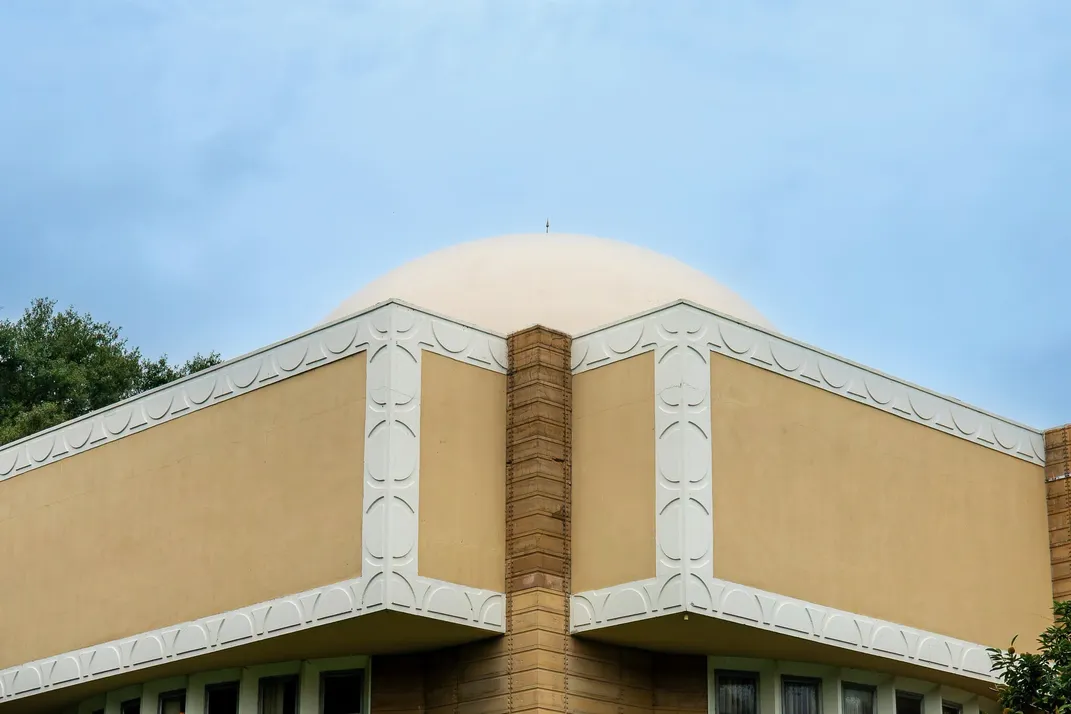
The restoration team worked from the outside in, installing a new roof, sealing out water and replacing more than 280 custom-made tiles that decorate the building’s edges. They then took on the task of restoring the interior of the 60-seat theater.
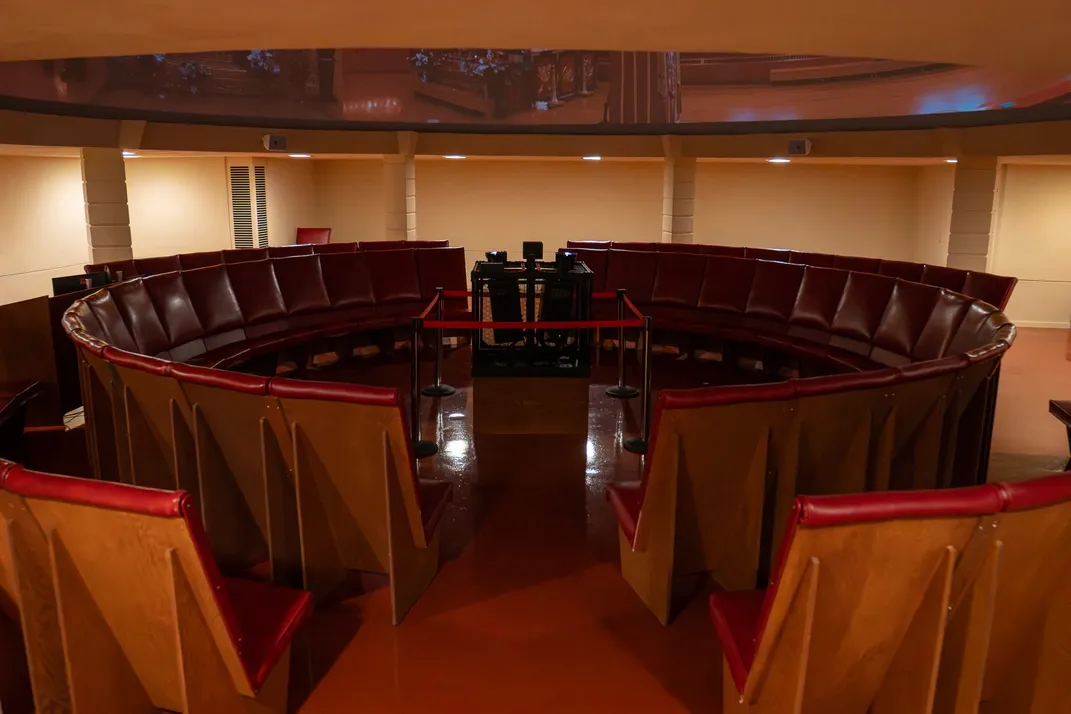
“Decades of interventions since Wright’s death had dramatically altered the room,” Baker tells Dezeen. The workers repainted the walls, refurbished the dark red floor and removed a computer closet once added to the room. “This removal allowed us to restore and reinstate all the seating in its original circular form, which we learned is a very rare survival in planetariums throughout the country,” Baker adds.
The renovation team also replaced all the planetarium’s audio-visual equipment, which formerly ran eight-track tapes, FOX 13’s Carla Bayron reports. The theatre will now regularly screen immersive public shows like “Cosmic Adventure” and “Destination Mars: The New Frontier.”
Did you know? Collegiate designs
Frank Lloyd Wright’s designs appear on several other campuses, including Wichita State’s Corbin Education Center and the Grady Gammage Memorial Auditorium at Arizona State University.
The college planetarium wasn’t Wright’s first attempt at designing for astronomy. In the 1920s, he conceived a different planetarium for a Maryland complex that was never built. Born in 1867, the architect was fascinated by science and nature, which he incorporated into solar-conscious and futuristic designs.
“During the course of his life, he goes from horse-and-buggy to envisioning and drawing cities that would include flying cars, and this is the only planetarium he actually got to build,” Florida Southern College president Jeremy P. Martin tells FOX 13. “But thinking about his fascination with the structure and the medium, I think we've exceeded even his wildest dreams in this restoration and new equipment.”
