
How Did Ancient Egypt’s Sacred Cats Live? More Than 100 Unwrapped Mummies Reveal Poor Living Conditions, Infections and Violence Before Death
Osteological and chemical tests on 131 museum specimens reveal that domestic cats and wild-caught jungle cats later destined for mummification suffered high rates of disease and physical trauma
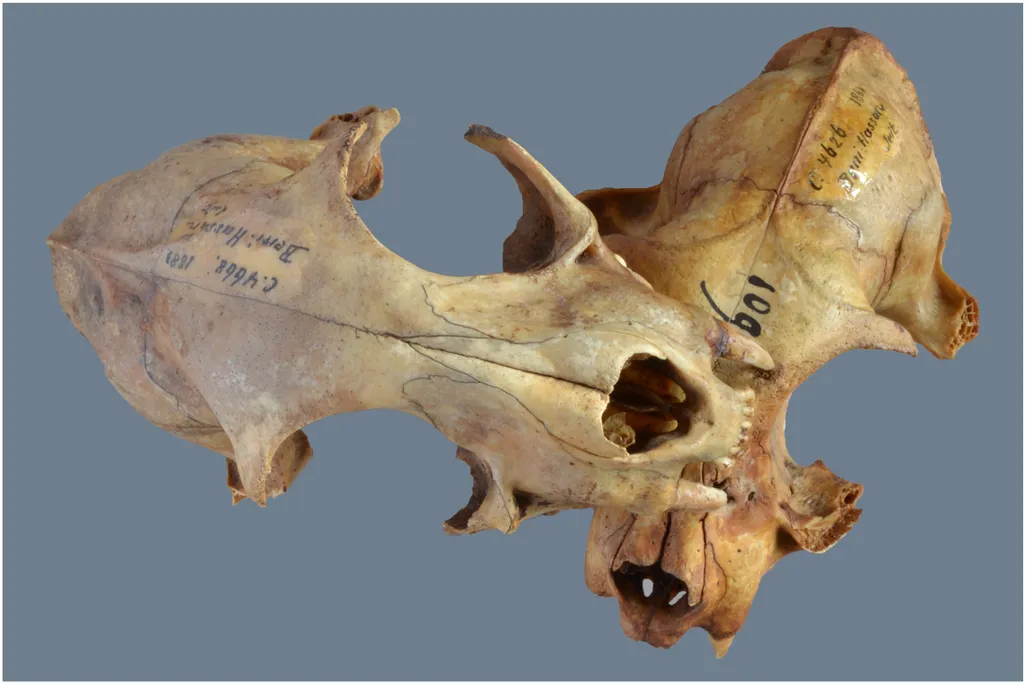
Across ancient Egypt, millions of cats were once mummified and laid to rest in sprawling animal necropolises to honor the gods. Now, a closer look at more than a hundred preserved skulls reveals that these sacred animals endured surprisingly brutal lives.
Researchers analyzed 131 well-preserved cat skulls housed at the Natural History Museum in Vienna that originally came from Beni Hassan, an ancient animal funerary site in Egypt’s Nile Valley, some 155 miles south of Cairo. The majority of skulls belonged to adult cats, mostly domestic and some wild. They were largely dated between 380 B.C.E. and 40 B.C.E Osteological and chemical examinations revealed widespread signs of gum disease, infections, healed wounds and fatal skull fractures, according to a study recently published in the Journal of Archaeological Science.
“What struck us most was the high proportion of injuries and evidence of disease, suggesting that these cats lived in poor conditions,” Bea De Cupere, study co-author and archaeozoologist at the Royal Belgian Institute of Natural Sciences, tells Phys.org’s Sandee Oster. “This is not what one would expect for animals destined to become votive mummies.”
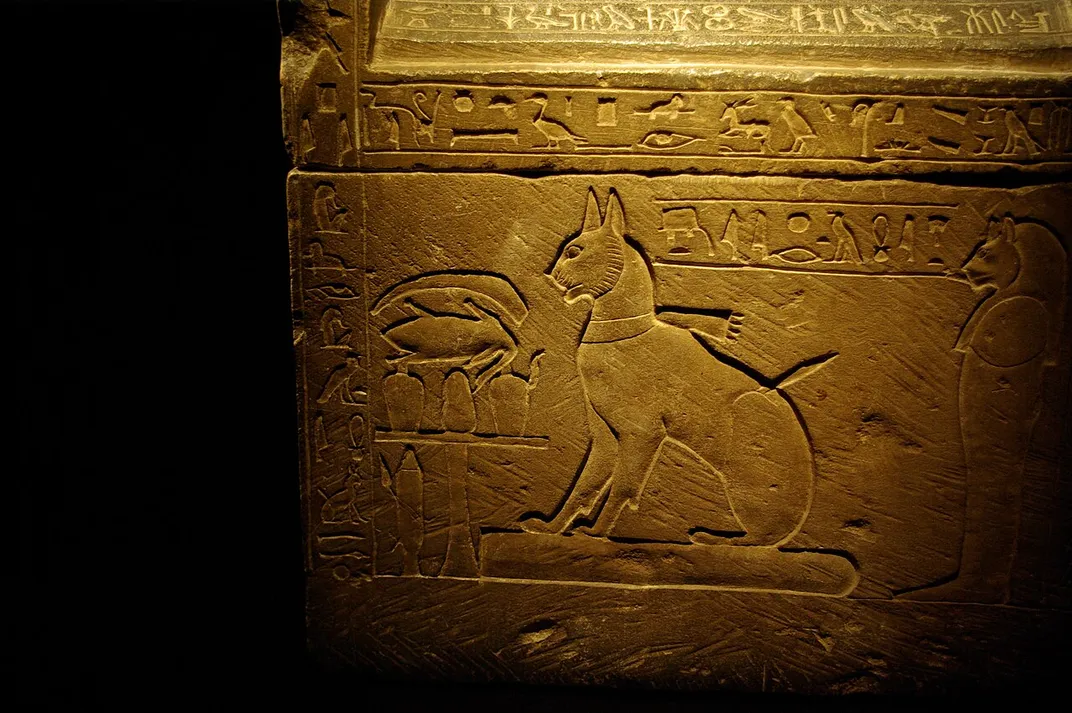
In ancient Egypt, cats were revered as earthly embodiments of the goddess Bastet and frequently appeared on tomb walls and artifacts. Eventually, devotees began mummifying felines as sacred offerings across at least 20 animal cemeteries in Egypt, according to the study.

In the 19th and early 20th centuries C.E., however, excavators were mostly interested in human mummies and used ancient animal remains as ship ballast, fuel, fertilizer or powdered medicine. The Beni Hassan skulls—the largest known museum collection of ancient Egyptian cat skulls with documented origin—survived only because British biologist William A. Herdman salvaged a small portion of roughly 200,000 animal mummies set out for a fertilizer auction in Liverpool in 1890, according to Gizmodo’s Gayoung Lee. Since 19th-century scientists were mainly interested in skulls, the cats’ torsos were likely discarded after unwrapping.
To reconstruct the cats’ lives, lead author Wim Van Neer, also an archaeozoologist at the Royal Belgian Institute of Natural Sciences, and his team conducted X-ray and chemical isotope analyses alongside radiocarbon dating on nine of the skulls. Eight dated to between 380 B.C.E and 40 B.C.E., spanning the end of the Late Period into Ptolemaic rule. A single outlier dated to the Third Intermediate Period, around the 10th century B.C.E., hinting either that Beni Hassan was used earlier than other records indicate or that the specimen came from Bubastis, Egypt’s oldest known cat cemetery. Unlike previous studies of cat mummy deposits, where roughly 20 percent of individuals were adults, 86 percent of the Beni Hassan specimens were fully grown. Most were domestic cats, alongside at least seven jungle cats, African wild cats and possible hybrids.
More than half of the skulls bore evidence of disease or physical trauma, including missing teeth, gum disease, metabolic disorders and pitted bone possibly linked to infections. Isotope analysis revealed that while domestic cats were raised around people, the jungle cats had a markedly different diet, indicating they were captured young and later kept alongside domestic felines. Six of the seven jungle cats suffered from similar ailments as their domestic counterparts, and in one case, a jungle cat’s canine teeth lined up directly with healed bite marks on a domestic cat’s forehead.
“The high density of animals would inevitably have led to stress and aggression among them, resulting in injuries, while diseases could spread easily,” Van Neer tells Phys.org.
Did you know? A new cat species
This year, scientists identified a new species of wild cat for the first time in a century. The tiny Tilcayo was discovered in a cloud forest in Bolivia.
Fourteen of the skulls also showed signs of trauma, including human-inflicted wounds, revealing how the cats started their journey towards mummification. While some cats were strangled, most died from blows to the head inflicted with a heavy wooden stick or a sharp metal blade. “Skull fractures were the most common cause of death, whereas evidence of strangulation occurred less frequently,” the researchers write in the study.
Not every blow was immediately fatal. Several skulls displayed healed lesions, which the team noted in the paper could reflect human “disciplinary measures” or failed attempts to dispatch the animals, per the study. “Catching the cats and killing them for the preparation of mummies may also not always have gone as intended,” Van Neer tells Phys.org, noting that some felines may have escaped after sustaining severe injuries.
In absence of whole skeletons, the researchers caution that diagnosing systemic health problems is not so straightforward. Just how these sacred animals were housed before their deaths also remains an open question.
The authors write: “Although the precise conditions under which cats intended for votive mummification were kept remain unknown, the evidence from the Beni Hassan collection suggests that they lived in a stressful environment, probably in confined spaces rather than being allowed to roam freely.”