
Groundbreaking DNA Analysis Identifies 1.3 Million Living Relatives of Colonial Maryland’s Earliest Settlers
Experts compared DNA from 49 skeletons buried in a cemetery in St. Mary’s City to genetic data shared by 11.5 million 23andMe users. They also identified what may be the remains of the colony’s second governor
/https://tf-cmsv2-smithsonianmag-media.s3.amazonaws.com/accounts/headshot/meilan_headshot2.png)
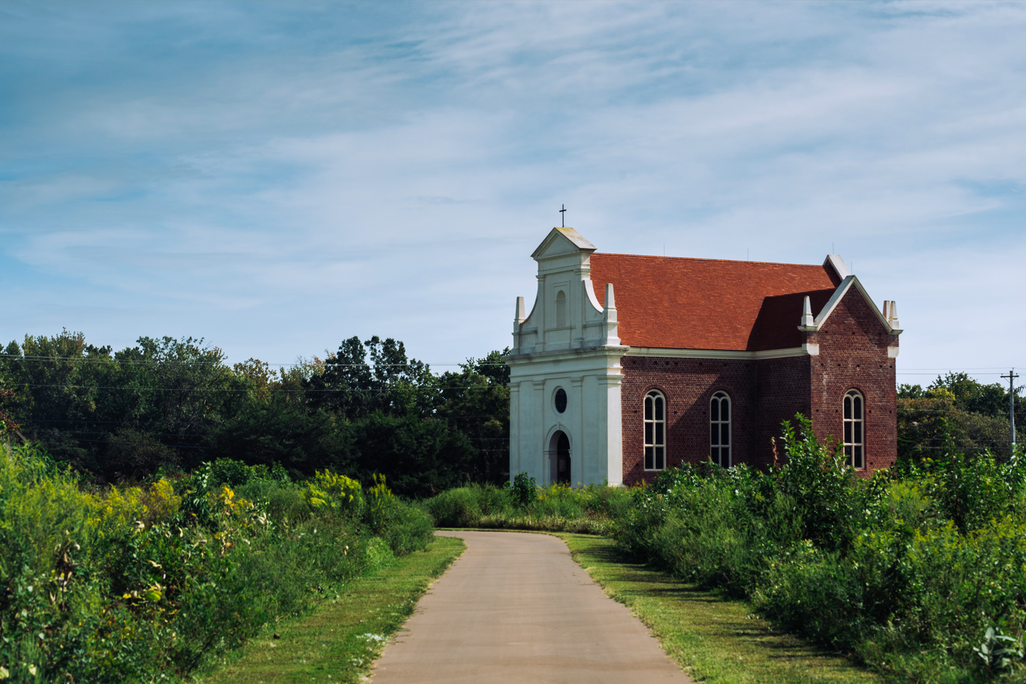
During the Colonial era, residents of St. Mary’s City, the first permanent English settlement in Maryland, buried more than 400 members of their community in the cemetery at the local Brick Chapel. Most of these graves went unmarked, presenting a challenge for archaeologists attempting to identify the skeletons some 300 years later.
A new, first-of-its-kind genetic study may provide some answers to this longstanding mystery. As the authors write in the journal Current Biology, a DNA analysis of 49 individuals buried in St. Mary’s City uncovered more than 1.3 million living relatives of these early settlers. The survey also revealed familial ties between some of the dead and tentatively identified three previously anonymous sets of remains, including a skeleton that may belong to the colony of Maryland’s second governor.
“This is the first time that ancient DNA has been used to help identify unknown individuals, without any prior knowledge of who they might have been,” says first author Éadaoin Harney, a population geneticist at 23andMe Research Institute, in a statement.
Need to know: The history of St. Mary’s City
- English colonists fleeing religious persecution founded St. Mary’s City in 1634. It was the fourth permanent European settlement in British North America.
- St. Mary’s City served as Maryland’s first capital until 1694, when officials designated Anne Arundel Town (now Annapolis) as the colony’s seat of government.
Speaking with WTOP’s Michelle Basch, Harney adds, “There have been ancient DNA studies where they will say ancient DNA has helped to identify some historical figure or some historical person, but those have always been based on the archaeology, based on the history. Researchers have had a very strong prior hypothesis about the identity of that person.”
For the study, an interdisciplinary team compared DNA from the St. Mary’s City skeletons with data shared by more than 11.5 million users of 23andMe, a popular genetic testing service. The researchers looked for identical-by-descent segments of DNA, which individuals with a common ancestor share. Longer segments suggest more recent genetic links, while shorter ones suggest more distant shared ancestry.
As Harney tells WTOP, the analysis indicated that about 9,000 people from the pool of 1.3 million are “very likely direct descendants or very close relatives” of the Maryland colonists.

In addition to conducting DNA testing, the study’s authors examined the St. Mary’s City skeletons to determine their age, sex, diet and physical health.
“Most people, as you can imagine, came over, lived and died without a single word being written about their life,” co-senior author Douglas Owsley, a forensic anthropologist at the Smithsonian’s National Museum of Natural History, tells Smithsonian magazine. “What we can read from these bones, they will talk to you if you listen to them. We can learn about their lives, and it’s the kind of information you will not find in any history book.”
One of the most intriguing discoveries in the new paper is the skeleton of a roughly 8-year-old boy of primarily African ancestry. Born in North America, he likely died between 1666 and 1705, according to Owsley. The child’s remains were wrapped in a shroud and buried in a carefully crafted, relatively rare gable-lidded coffin. The researchers write that the boy’s burial among individuals of majority-European ancestry “is a significant finding that warrants additional consideration.”
“Diversity was and always has been central to American history,” Owsley says, “but the narratives of individuals like this are very difficult to identify in the written record. … The presence of this boy certainly makes the case that Africans” were present in St. Mary’s City.
The child’s remains stand in stark contrast to those of two young men who had recently immigrated to the Colonies, probably from Ireland. The pair’s skeletons showed that they’d endured poor health and grueling physical labor, only to be buried rather haphazardly, without coffins, after dying in their 20s. Just one was wrapped in a shroud.
/https://tf-cmsv2-smithsonianmag-media.s3.amazonaws.com/filer_public/04/5c/045c69ff-71d0-4f37-8d33-e8d7a783322d/maryland-chaple-foundation-x.png)
“Although their status of bondage is unknown,” the authors write in the study, “these features are consistent with the profile of indentured servants,” some of whom agreed to work for colonists for a set number of years in exchange for passage to America.
Anna Suranyi, a historian at Endicott College who wasn’t involved in the research, tells Live Science’s Kristina Killgrove that the circumstances of the child’s burial might suggest that he wasn’t enslaved. “White people, including indentured servants, were generally buried in segregated cemeteries, with enslaved people sometimes being buried in isolated and unmarked locations,” she says.
DNA revealed that the individuals interred at the Brick Chapel included members of six genetic families, including a multigenerational one—a result that surprised Owsley. “People came over to the New World, and really their lives were often short,” he tells Smithsonian.
Walking around the chapel’s cemetery, however, the researchers found that they could trace relatives across the decades: for example, a grandfather who arrived with the first wave of settlers to St. Mary’s City, and then his son and granddaughter. Building on these genetic connections, the scholars created family trees that factored in both DNA and the location of neighboring burials.
The researchers were particularly interested in three closely related individuals buried in the cemetery. They asked research participants with strong genetic ties to the deceased to share their genealogical histories, then pored over these records to identify overlaps in the family trees. This genetic data, combined with isotopic evidence, led the team to theorize that one of the bodies was Thomas Greene, Maryland’s second governor. Meanwhile, the other two may be his first wife, Anne, and their son, Leonard.
/https://tf-cmsv2-smithsonianmag-media.s3.amazonaws.com/filer_public/15/d5/15d50763-053d-4502-97e8-fc089b325029/forensic.jpg)
“We didn’t go into this study searching for Thomas Greene, but when the genetics team brought this name to me, it was remarkable how well the historical and archaeological records supported this potential identification,” says Henry Miller, a senior research fellow at Historic St. Mary’s City, in the statement. “There is more work to be done to confirm his identity, but this genetic analysis was the key we needed to unlock this finding.”
Owsley started working at St. Mary’s City in 1992, when archaeologists excavated three lead coffins buried in the north arm of the church. Inside, they found the remains of a man, a woman and a roughly 5-month-old infant. In partnership with geneticists from Harvard University, Owsley and his colleagues identified the adults as Philip Calvert, the fifth governor of Maryland and a member of the colony’s powerful founding family, and his first wife, Anne Wolseley Calvert.
Although the researchers suspected that Philip was the child’s father, they found it unlikely that Anne was the baby’s mother, as she would’ve been an older woman at the time of the birth. It was only in 2016 that DNA analysis confirmed the skeleton’s identity as the infant son of Philip and (in all likelihood) his second wife, a much younger local woman.
“There’s just all kinds of data that when I started, some 45, almost 50 years ago, you could not have begun to even think that you could address,” Owsley tells Smithsonian. “If you’d have told me, even ten years ago, that we would be able to do this, I would have not thought that possible. It shows how rapidly the science is advancing.”
By giving a voice to 17th-century settlers whose lives went otherwise unrecorded, the anthropologist adds, “we’re able to get just a really very comprehensive, more complete narrative of this early process of settling North America.”/https://tf-cmsv2-smithsonianmag-media.s3.amazonaws.com/accounts/headshot/meilan_headshot2.png)