
Frida Kahlo’s Family Home and Artistic Retreat Opens as a Museum
Museo Casa Kahlo occupies “Casa Roja,” which is only a few blocks away from the Museo Frida Kahlo in “Casa Azul”
/https://tf-cmsv2-smithsonianmag-media.s3.amazonaws.com/accounts/headshot/Sonja_headshot.png)
/https://tf-cmsv2-smithsonianmag-media.s3.amazonaws.com/filer_public/04/8b/048b0ecb-87ad-4bf9-8357-52ae3acf2b8c/casa-kahlo-001-11-2.jpeg)
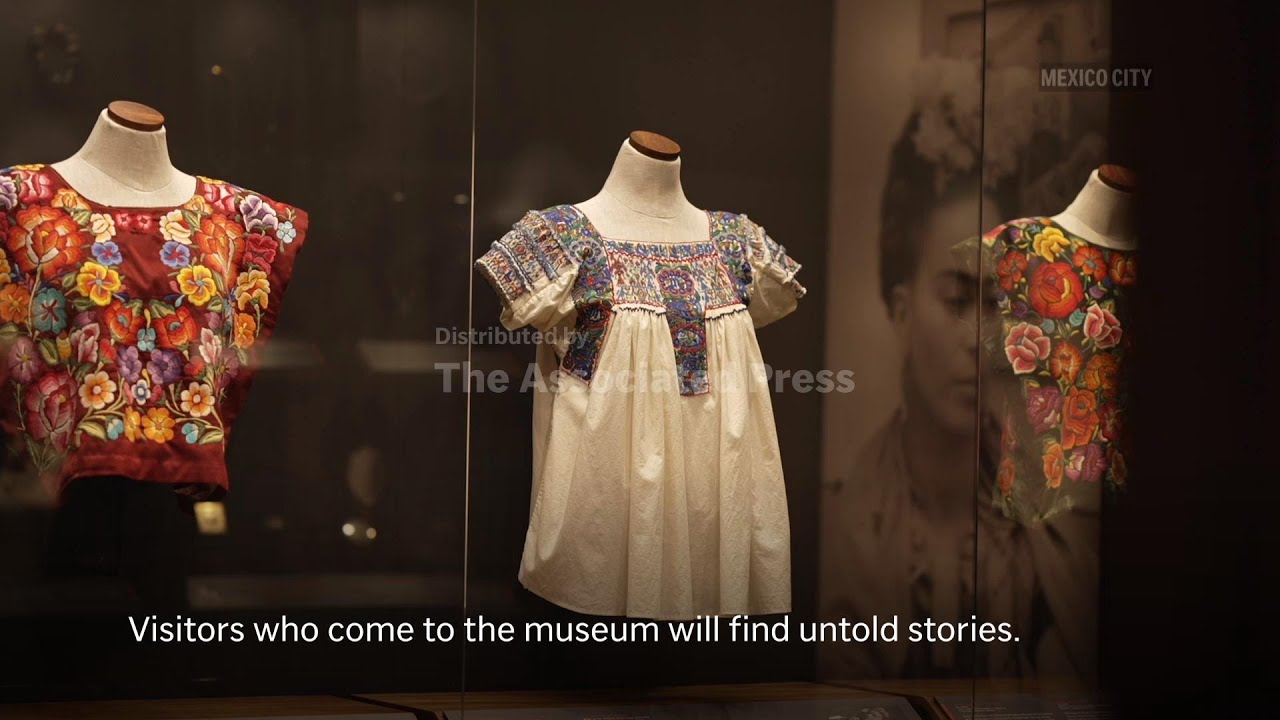
An immersive museum dedicated to painter Frida Kahlo’s personal and familial life has opened in Mexico City. Situated in one of the Kahlo family’s ancestral homes, the Museo Casa Kahlo gives visitors an intimate glimpse into Kahlo’s essence and support system—through restored rooms, clothing and handwritten letters.
“What I want the audience to find is the human Frida … the Frida they don’t know,” Mara Romeo Kahlo, Kahlo’s great-niece, tells the Associated Press. The artist is famous for her haunting self-portraits, revolutionary spirit, and battles with both physical and emotional pain. “But here, [people] will find the Frida who laughed, who cried … who told jokes—the sister Frida, the aunt Frida.”

Kahlo was born in 1907 in Mexico City, inside a blue house her father had built in the neighborhood of Coyoacán. She grew up in that house, nicknamed “Casa Azul,” then shared it with her husband, muralist Diego Rivera. Today, Casa Azul is home to the popular Museo Frida Kahlo, which displays both Kahlo’s and Rivera’s art and personal objects.
But Kahlo’s parents had another, lesser-known house in Mexico City: “Casa Roja.” After Rivera paid off Casa Azul’s mortgage upon marrying Kahlo, her parents moved into a nearby red house, Casa Roja, in 1930. Later, Casa Roja was inherited by Kahlo’s younger sister, Cristina. Since then, Cristina’s descendants have owned the place. As the New York Times’ Elda Cantú reports, the Kahlos had kept Casa Roja’s address a secret, continuing to host dinners and birthday parties there until recent years.
Fun fact: Record-setting painting?
- Frida Kahlo's 1940 oil painting titled El Sueño (La Cama) could become the most expensive work by a female artist ever sold at auction.
/https://tf-cmsv2-smithsonianmag-media.s3.amazonaws.com/filer_public/b7/66/b7665e1e-5db6-425d-a569-5f664ffa609b/guillermo_kahlo_-_frida_kahlo_june_15_1919_-_google_art_project_restored.jpg)
The museum reflects the various generations who lived in Casa Roja—as well as Kahlo’s usage of her family’s home. In honor of Kahlo’s father, a Hungarian German photographer named Guillermo Kahlo, the museum contains a darkroom, in which portraits of the Kahlo family hang from strings. On the wall of the fully restored kitchen is a mural painted by Kahlo. The entry hall contains a photo of Kahlo at 4 years old, alongside one of her earliest artworks: an embroidery of a simple house and tree. Another room is lined with framed, affectionate letters Kahlo wrote throughout her life.
“You know how much I love you, now even more,” Kahlo wrote to Cristina’s daughter, Isolda, in 1954, per National Geographic’s David Shortell. “Because having given you away, you give me your girl [Romeo Kahlo], and so now I have two loves.”
These letters—marked by homesickness, love and grief—illuminate the importance of Kahlo’s family in her life, Kahlo scholar Luis-Martín Lozano tells National Geographic. “It didn’t matter that she had her very interesting international life, that she was an artist, that she was a communist, that she had bisexual relations,” he says. “She had a family that was her anchor.”
Museo Casa Kahlo also allows visitors into the house’s basement, which Kahlo once used as a creative retreat. Here, she kept collections of unconventionally beautiful objects, like “taxidermied insects, oil ex-voto prayer scenes, and Asian lacquered-skin dolls in ancient dress,” writes Shortell.
“That’s where she wrote, and where she created some of her things, and where she listened to music, and where she could be herself,” Adán García Fajardo, director of the new museum, tells the AP.
Museo Casa Kahlo was an intimate, family-driven project 20 years in the making. Romeo Kahlo and her daughter, Mara de Anda, sorted and cataloged Casa Roja’s contents themselves. Until two years ago, Romeo Kahlo still lived in the house, which the Kahlos call “the heart of the Kahlo family,” per the Times.
“Visitors to the museum will find untold stories,” museum curator Adriana Miranda tells the AP. “The relationships Frida had with her parents, with her sisters, with her family—those anecdotes we all have in our homes, with our families.”
Editors’ note, October 3, 2025: This article has been updated to correct an error in the name of Frida Kahlo’s great-niece.
/https://tf-cmsv2-smithsonianmag-media.s3.amazonaws.com/accounts/headshot/Sonja_headshot.png)