
Chihuahuas Seem to Carry a Tiny Bit of Coyote DNA—but That’s Probably Not Why They Have Fearless Personalities
New research suggests that coyote DNA makes up about 0.1 percent of the Chihuahua genome, likely the result of interbreeding between coyotes and the domesticated dog’s ancestors long ago

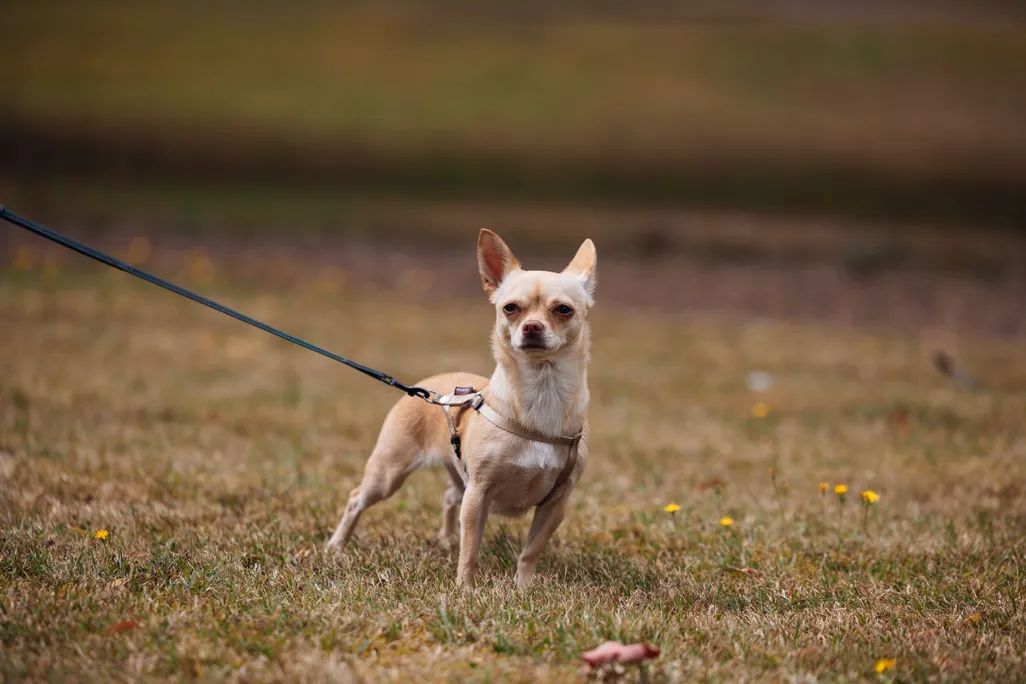
Thousands of years ago, the ancestors of Chihuahuas mated with wild coyotes. Today, traces of that ancient interbreeding live on in the DNA of the popular pint-size dogs—but they likely aren’t responsible for the creatures’ fearless personalities.
A study published in July in the journal Nature Communications has found a sliver of coyote DNA buried in the Chihuahua genome, the species’ complete set of genetic material. Researchers don’t know exactly when coyote DNA entered the tiny pooch’s gene pool, but their findings suggest the genetic link arose long ago, before Europeans arrived in the Americas.
Scientists made this discovery by accident. They were testing a new high-resolution, genomic ancestry software algorithm and decided to include the DNA of three Chihuahuas, plus numerous other canid breeds and species.
“The genetic calling cards found in the Chihuahua are unmistakably coyote,” study co-author Alexander Ioannidis, a geneticist at Stanford University, tells the New York Times’ Franz Lidz.
Researchers weren’t necessarily surprised by this result. Past evidence has suggested that dogs and coyotes interbred in the Americas before the arrival of Europeans. However, this is the first time scientists have found genetic traces of that interbreeding in modern dogs, Adam Boyko, a canine geneticist at Cornell University who was not involved with the new work, tells the Times.
Chihuahuas are believed to have descended from the Techichi, a now-extinct, mute breed kept by the Toltec civilization in what is now Mexico as early as the 9th century C.E. About 4 percent of the Chihuahua genome comes from the Techichi. Within that 4 percent, an even smaller fraction comes from the coyote.
In total, researchers estimate that coyote DNA makes up roughly 0.1 percent of the entire Chihuahua genome. Unfortunately for anyone hoping to pin the pooch’s big personality on its wild ancestry, this tiny amount of coyote DNA probably hasn’t influenced the breed’s temperament, the scientists say.
The team also found identical segments of coyote DNA in the Chinese crested, a close evolutionary relative of the Chihuahua. This suggests the genetic material entered the dogs’ family tree long ago, through interbreeding between coyotes and an ancient breed—possibly the barkless Techichi—that eventually gave rise to both modern breeds. But researchers say they need to conduct additional genomic research to confirm this idea.
Quick fact: World’s first known dog
In March, researchers reported that dogs lived alongside humans in western Eurasia around 14,000 to 16,000 years ago, pushing back the earliest genetic evidence of a domesticated canine by about 5,000 years.
How and why did ancient dogs interbreed with coyotes? It’s possible these trysts occurred naturally, because many members of the canid family are closely related enough to mate and produce pups. Coyotes and wolves, for example, have been known to interbreed in eastern North America, producing hybrid offspring called “coywolves.” Additionally, a dog-fox hybrid was recently discovered in Brazil.
However, these pairings may not have happened entirely by chance. Historical records suggest ancient humans may have deliberately bred coyotes with domesticated dogs in the Americas before Europeans got there, per the Times.
The scientists also investigated the genome of the Xoloitzcuintli, also known as the Mexican hairless dog. They found that roughly 4 percent of the breed’s DNA comes from indigenous dogs that lived in the Americas before European colonization—meaning the Xoloitzcuintli, like the Chihuahua, is one of the last living links to the now-extinct companion animals kept by ancient Mesoamerican cultures.
Based on the Xoloitzcuintli data, researchers estimate that indigenous dogs in the Americas were interbreeding with European dogs around 1700 C.E.—a finding that “aligns with evidence suggesting that Europeans and Indigenous [human] populations mixed around the same time in early Mexico,” writes Jacqueline Boyd, an animal scientist at Nottingham Trent University in England who was not involved with the study, for the Conversation.
Unfortunately, colonists’ dogs eventually devastated indigenous pup populations. “People in Europe and the Americas were genetically distinct, and so were their dogs,” said Greger Larson, an evolutionary genomicist at the University of Oxford in England, in a statement in 2018. “And just as Indigenous people in the Americas were displaced by European colonists, the same is true of their dogs.”
Disease and persecution likely contributed to the disappearance of certain native dog breeds, like the Techichi. Today, most American canines descend from animals that traveled across the Atlantic Ocean.
