
Are Moose Colorado Natives or Introduced Outsiders? New Research Suggests That the Animals Have Lived in the State for Centuries
Officials say moose weren’t established in the state until they were brought there in the late 1970s. But historical documentation and archaeological evidence indicate that they resided there long before that
/https://tf-cmsv2-smithsonianmag-media.s3.amazonaws.com/accounts/headshot/SarahKuta.png)
/https://tf-cmsv2-smithsonianmag-media.s3.amazonaws.com/filer_public/ca/24/ca24f663-9af2-4a87-9510-69607585757a/moose-rainbow.png)
Are moose native to Colorado? New research says yes.
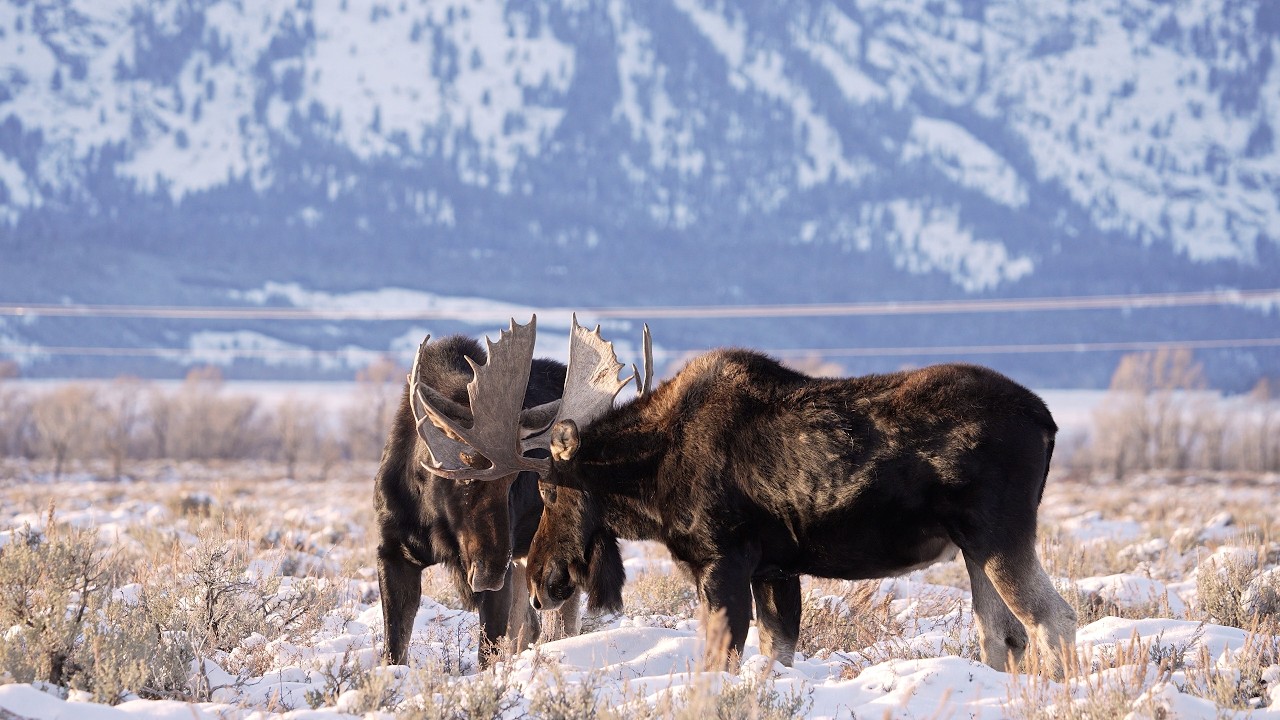
The massive, antler-adorned ungulates are long-time residents of the Centennial State, with evidence suggesting they’ve lived in Colorado for centuries—probably longer. The findings, published June 12 in the Journal of Biogeography, challenge the narrative that moose are invasive outsiders that were introduced by state wildlife officials in the late 1970s.
“Our findings show unequivocally that moose are not invasive,” study co-author William Taylor, an archaeologist at the University of Colorado Boulder, tells KKTV’s Bryce Patterson. “In fact, they’re as native as any other critter can be in the southern Rockies.”
Moose are now flourishing in Colorado, with an estimated 3,500 individuals roaming around the state. But according to state wildlife officials, that wasn’t always the case.
“Historical records dating back to the 1850s indicate that moose wandered into northern Colorado from Wyoming but were transient and never established a stable breeding population,” according to Colorado Parks and Wildlife.
That all changed in 1978, according to Colorado Parks and Wildlife, when state and federal officials launched a transplantation effort that brought two dozen moose from Utah and Wyoming to Colorado.
Since then, the population has ballooned, leading to more sightings, encounters and, in some instances, conflicts with humans. Officials at Rocky Mountain National Park say moose, along with elk, are also damaging sensitive wetlands by overbrowsing willow and aspen trees. These issues have prompted questions about how best to manage the lumbering behemoths, including whether moose belong in the state at all.
However, researchers suspected that Colorado’s moose history might be more complicated than the official narrative suggests.

“We wanted to see whether the story that was out there was lining up with the facts, because it’s clear to me that people’s understanding of the archeological record is shaping the choices that we’re making around managing animals today,” Taylor tells the Boulder Daily Camera’s Olivia Doak. “These are nontrivial issues, the stories that we tell.”
Working with Indigenous cultural heritage leaders, Taylor and colleagues combed through about 160 years of records, including newspapers, photos, museum records and oral traditions, as well as published reports about archaeological sites dated at thousands of years old.
Their investigation turned up archaeological evidence that moose have been in the state since at least 7250 B.C.E. and possibly as far back as 10,500 B.C.E. The archival materials reveal a “clear record” of moose in Colorado “stretching back to the earliest reliable written accounts,” the researchers write in the paper.
And these likely weren’t just lone interlopers. The archives indicate a “regular presence” of females and calves, suggesting that a breeding population lived in the state, per the researchers.
Did you know? Shiras moose
The moose in Colorado are Shiras moose (Alces alces shirasi), also known as Yellowstone or Wyoming moose. But even as the smallest of the four North American moose subspecies, these ungulates are still massive: They can stand up to six feet tall at the shoulder and weigh more than 1,000 pounds.
The work also hints that moose have a prehistoric and established presence in most of the Native cultures with ancestral connections to the southern Rockies. Moose show up in Indigenous “stories, in language, in tradition, even in the objects that they make,” Taylor tells the Boulder Daily Camera.
The Northern Arapaho, for instance, call moose hinenihii, or “big man,” a reference to the animals’ large size. But the Arapaho language also retains older words for moose, including see'iini3eet, which refers to the creatures’ large, flat noses. This suggests “longstanding interactions with moose across ancestral Arapaho territory,” the researchers write in the paper.
“When a term like [invasive] gets brought into the equation … it’s extremely important that there be a kind of reckoning with the deep history,” Taylor tells Rocky Mountain PBS’s Sarah Shoen.
Still, Kyle Patterson, management specialist and public affairs officer with Rocky Mountain National Park who was not involved in the research, tells the outlet that the study’s findings differ from those by the National Park Service. The agency’s data “indicates there was not a breeding population of moose in Colorado. Their historic population was very rare.”
/https://tf-cmsv2-smithsonianmag-media.s3.amazonaws.com/filer_public/c7/42/c74264ad-273e-48dd-b5f8-86b2cc77ee5a/baby-moose.png)
Moving forward, the study authors hope their findings might influence how wildlife officials view—and, more importantly, manage—moose in the state. If officials consider moose native rather than invasive, they might consider taking a more cautious, measured approach to management—and steer clear of extreme tactics like eradication, the researchers write.
“Rather than treat moose as a threat, we urge Rocky Mountain National Park and other agencies to work in partnership with tribes, paleoecologists and the public to carefully develop historically grounded management plans for this Colorado native,” write Taylor and study co-authors John Wendt, an ecologist at Oklahoma State University, and Joshua Miller, an ecologist at the University of Cincinnati, for the Conversation.
/https://tf-cmsv2-smithsonianmag-media.s3.amazonaws.com/accounts/headshot/SarahKuta.png)