
A Roman Cup and Hundreds of Other Treasures Unearthed in This 2,000-Year-Old Tomb Reveal the Rich Exchange Network of an Ancient Asian Empire
The Xiongnu people dominated Central Asia for some 300 years. Now, a grave discovered in Mongolia has revealed the pastoral culture’s links to the Roman Empire, Han China and the Lelang Commandery

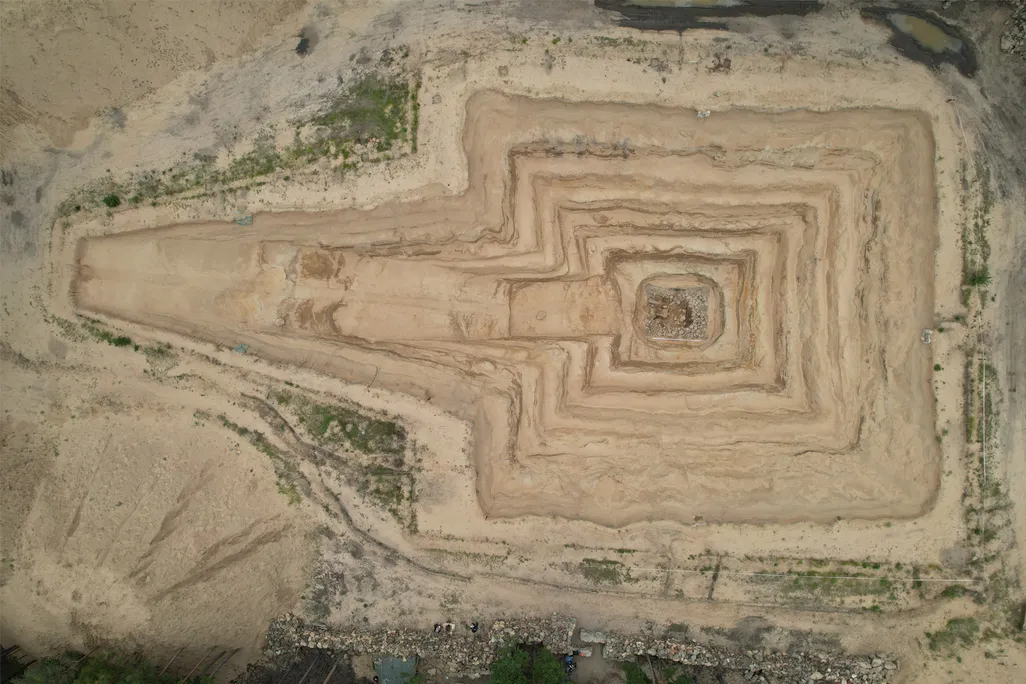
Some 2,000 years ago, an elite individual associated with the nomadic Xiongnu Empire was buried in style in what is now northeastern Mongolia. Their tomb, measuring nearly 240 feet in length (about four-fifths the height of the Statue of Liberty), is the largest of its kind discovered in the East Asian country to date.
Despite this impressive exterior, the tomb’s interior is surprisingly small and shallow. But it was packed with treasures that shed new light on the Xiongnu people’s links to such far-flung foreign powers as the Roman Empire and the Lelang Commandery, an administrative division of China’s Han dynasty that was based in what is now Korea.
The National Museum of Korea, the Institute of Archaeology at the Mongolian Academy of Sciences and the National Museum of Mongolia recently completed a four-year excavation of the burial, which is known officially as Tomb 160. It’s located in Duurlig Nars, a Xiongnu burial ground with some 300 graves.
Did you know? UNESCO recognition
- UNESCO added the Duurlig Nars complex to its World Heritage List earlier this year.
- The United Nations agency recognized the site’s tombs for highlighting “the engineering and organizational skills of this predominantly nomadic culture.”
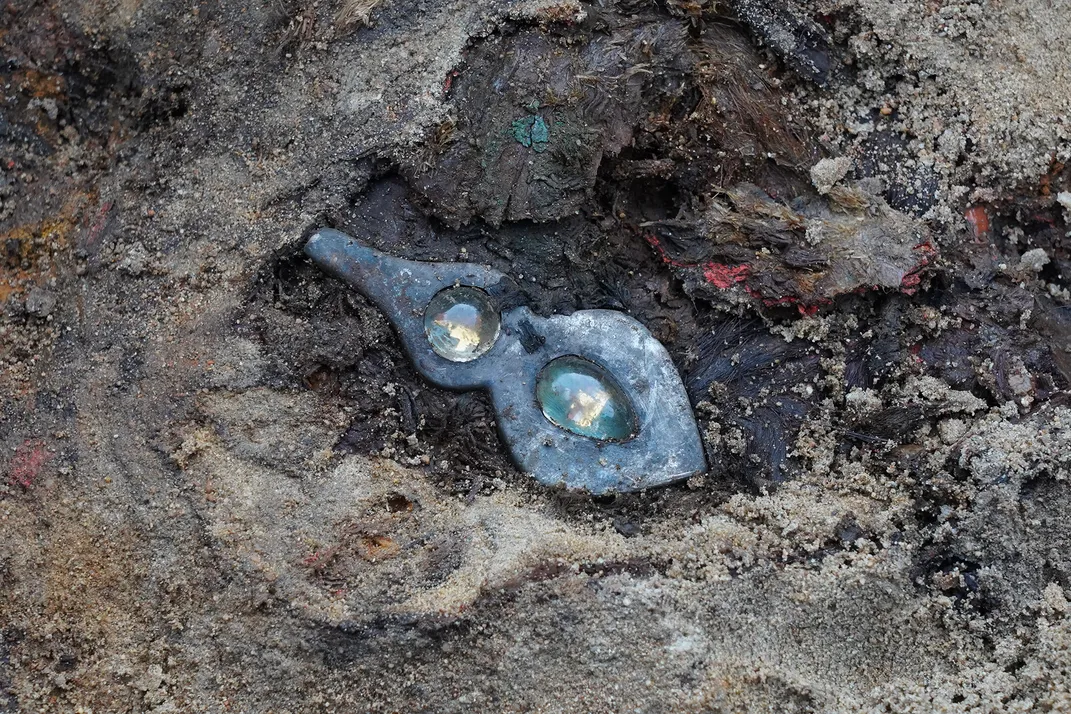
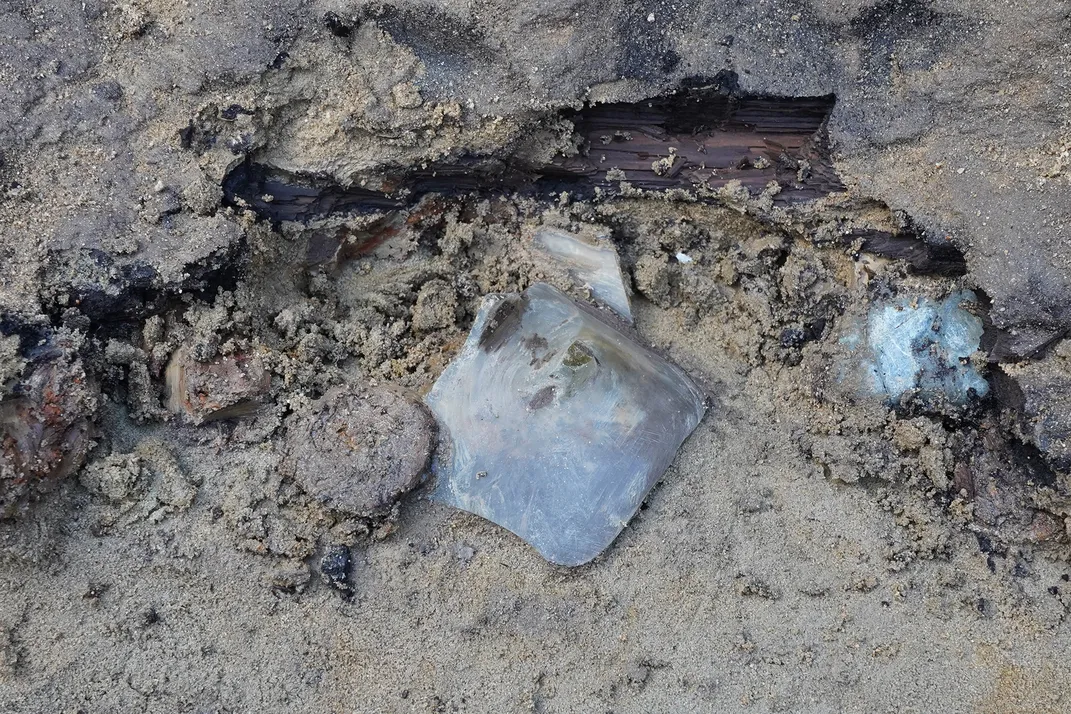
Archaeologists recovered 413 artifacts from the tomb, including a glass cup believed to be of Roman origin, a gourd-shaped silver pendant that once adorned a horse’s harness, a lacquered chariot and 15 jade pieces modeled after Han funerary goods.
The pendant resembles accessories found in Lelang tombs in modern-day North Korea, but unlike those ornaments, it boasts a crystal at its center. The jade objects, meanwhile, were fashioned in irregular shapes with intricate designs carved onto their surfaces, setting them apart from the disc-shaped bi prized by the Han as symbols of heaven.
“This excavation clearly shows that the Xiongnu of 2,000 years ago were linked to a broad exchange network reaching from Rome to the Korean Peninsula,” the National Museum of Korea says in a statement, per a translation by Seoul Economic Daily. “We expect it to serve as a turning point in expanding the field of Korean archaeology into Eurasia.”
The rich range of objects buried alongside the deceased testifies to their high status. Although the researchers have yet to identify the grave’s occupant, they plan to conduct a DNA analysis of teeth and hair recovered from the individual’s coffin to determine their sex and age.
To construct the tomb, ancient laborers built an elevated terrace enclosed by nine layers of stacked stones. The central chamber of the grave extends to a depth of nearly 50 feet, making it significantly smaller than comparable Xiongnu tombs in central Mongolia, whose depths reach more than 70 feet. The excavation team suggests that this downsized interior reflects societal shifts in the late first and second centuries C.E., when the tomb was built. At the time, the Xiongnu Empire was declining, with internal disagreements and external pressure from the Han military weakening the once-great pastoral confederation.
The Xiongnu thrived in Central Asia between the third century B.C.E. and the second century C.E., wielding control over vast swaths of territory “without building cities, forming central bureaucracies, devising a writing system or mobilizing masses of farmers to produce food,” Bruce Bower wrote for Science News in 2023. In recent years, scholars have revealed an array of insights on the Xiongnu that challenge long-held perceptions of the group as “barbaric” invaders.
In 2023, for example, a paper published in the journal Science Advances suggested that elite Xiongnu women traveled to the empire’s frontiers to shore up alliances with powerful locals. “They are representatives of the imperial clan that ruled the empire,” study co-author Bryan Miller, an archaeologist at the University of Michigan, told Live Science’s Tom Metcalfe. “You’ve got these marriage alliances spanning the whole empire, even in these local communities.”
Speaking with Science News, Miller added, “This must have been an empire organized around moving populations. Xiongnu elites were savvy politicians who delegated power to keep the empire together.”
