
A Meteor Streaked Across the Morning Sky as a Dazzling ‘Fireball’ Before Exploding With a Thunderous Boom Above Ohio
A six-foot-wide, seven-ton asteroid caused the rare celestial spectacle
/https://tf-cmsv2-smithsonianmag-media.s3.amazonaws.com/accounts/headshot/SarahKuta.png)
/https://tf-cmsv2-smithsonianmag-media.s3.amazonaws.com/filer_public/fe/4a/fe4a79d4-56a5-48c3-a970-ea8928bd076b/screenshot_2026-03-18_at_54202pm.png)
A fiery streak across the sky and a loud boom greeted many residents of northeast Ohio on the morning of March 17. The rare celestial spectacle, which took place a little before 9 A.M. Eastern Daylight Time, was caused by a six-foot-wide, seven-ton space rock that was traveling at roughly 40,000 miles per hour, according to NASA.
The asteroid was “somewhere in the size between an engine block and a full-blown car that hit the Earth’s atmosphere,” says Ralph Harvey, a planetary materials scientist at Case Western Reserve University, to News 5 Cleveland’s Courtney Shaw, Clay LePard and Damon Maloney.
When an asteroid enters our planet’s atmosphere, it begins to burn up and is considered a meteor or “shooting star.” If it outshines Venus—which this one did—it’s dubbed a “fireball.”

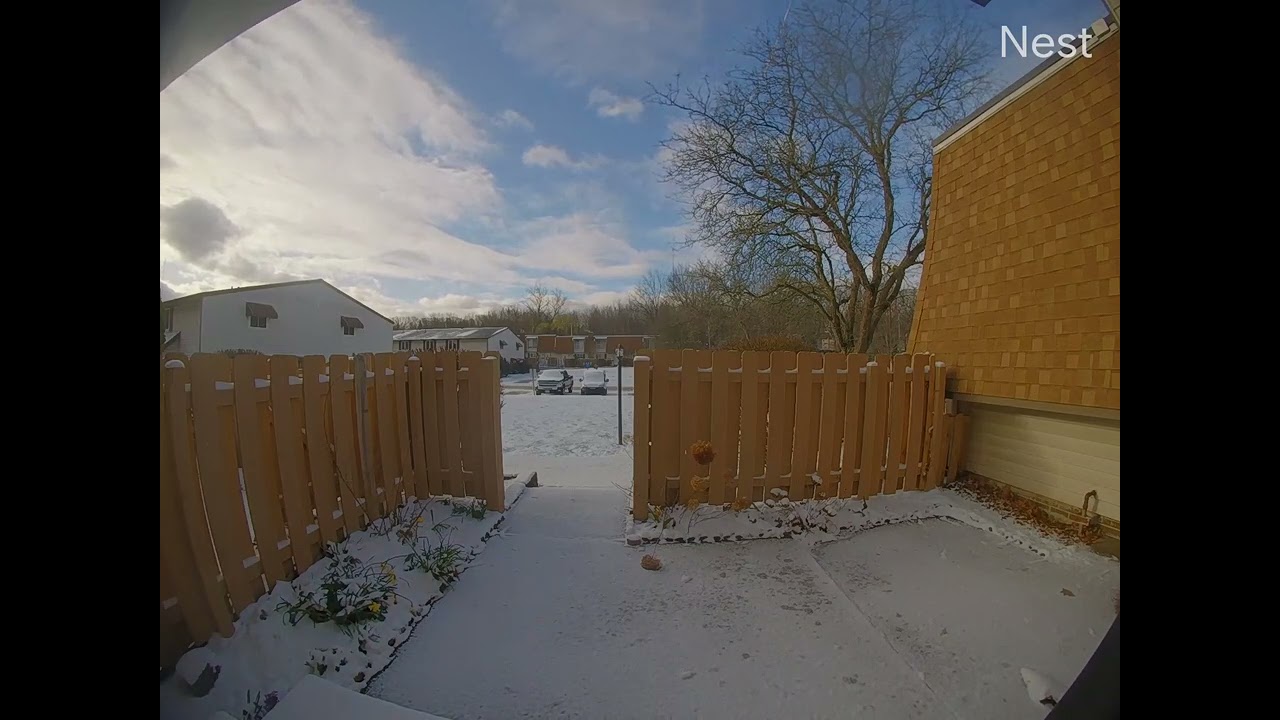
People in several states and at least one Canadian province reported seeing the “very bright daylight fireball” on Tuesday, per NASA. This streak of light was so bright it was detected by satellites that feed NASA’s Geostationary Lightning Mapper and several cameras in the region. Eyewitnesses also captured photos and videos of the fireball streaming across the blue sky.
The meteor was first spotted at an altitude of roughly 50 miles above Lake Erie, near the city of Lorain west of Cleveland, according to NASA. It traveled 34 miles through the upper atmosphere before “fragmenting” at an altitude of 30 miles above Valley City, southwest of Cleveland.
One of our employees, Jared Rackley, caught this morning's meteor on camera from the Pittsburgh area. pic.twitter.com/2LdqOpChti
— NWS Pittsburgh (@NWSPittsburgh) March 17, 2026
The asteroid had been traveling so quickly—about 50 times the speed of sound—it simply couldn’t withstand the force of entering the atmosphere, Harvey tells the Akron Beacon Journal’s Anthony Thompson. “It was like hitting a brick wall—it just exploded.”
When it ruptured, the asteroid released the same amount of energy as 250 tons of TNT, according to NASA, which created a pressure wave that shook houses and caused the thunderous sound. Some of the pieces fell to the ground as meteorites near Medina County.
“Meteorite hunters are already beginning to converge on the area,” Bill Cooke, who leads NASA’s Meteoroid Environments Office, tells cleveland.com’s Peter Krouse. However, the meteorites might be tricky to locate, as they’ll probably be “more pea-sized than baseball-sized or bowling ball-sized,” Harvey tells the outlet.
Rocks and dust in space, called meteoroids, crash through Earth’s atmosphere all the time—possibly 48.5 tons per day. While most burn up, some of these objects survive and hit the ground, at which point they become known as meteorites.
Skywatchers usually see fireballs at night. Daylight fireballs are much less common, but they’re not totally unheard of. The American Meteor Society (AMS), for instance, receives several reports per month from eyewitnesses around the world.
“If they are large and bright enough, they can be seen against the blue daytime sky,” Robert Lunsford, who serves as fireball report coordinator for the organization, tells Scientific American’s Jackie Flynn Mogensen.
Meteor over Stow Ohio #doorbellcam #ohiometeor #meteor #NWS pic.twitter.com/rJo02pHTrk
— Kelly Wallin (@kellaayj) March 17, 2026
Space junk, including defunct satellites, also enters Earth’s atmosphere fairly regularly. Occasionally, it produces bright streaks of light. But it often goes unnoticed, per the Associated Press.
At this point, experts don’t know where this specific asteroid came from. However, broadly speaking, “meteors are left over from the formation of the solar system” roughly 4.6 billion years ago, Matthew Walker, an astrophysicist at Carnegie Mellon University, tells the Pittsburgh Post-Gazette’s Anya Sostek.
“They are still out there, and they make themselves known every once in a while,” Walker adds. “It’s kind of nice to see that and be reminded of our cosmic origins.”
/https://tf-cmsv2-smithsonianmag-media.s3.amazonaws.com/accounts/headshot/SarahKuta.png)