
A Dog Left a Paw Print on This Mud Brick 4,000 Years Ago. Archaeologists Discovered It in the Rubble of a Bronze Age House
The brick was found at Tavsanli Hoyuk, an archaeological site in western Turkey. Humans and dogs in this region have had a close relationship for thousands of years

The house collapsed in a fire during the Bronze Age. Archaeologists know that much from excavating its ruins, which were found in modern-day Turkey.
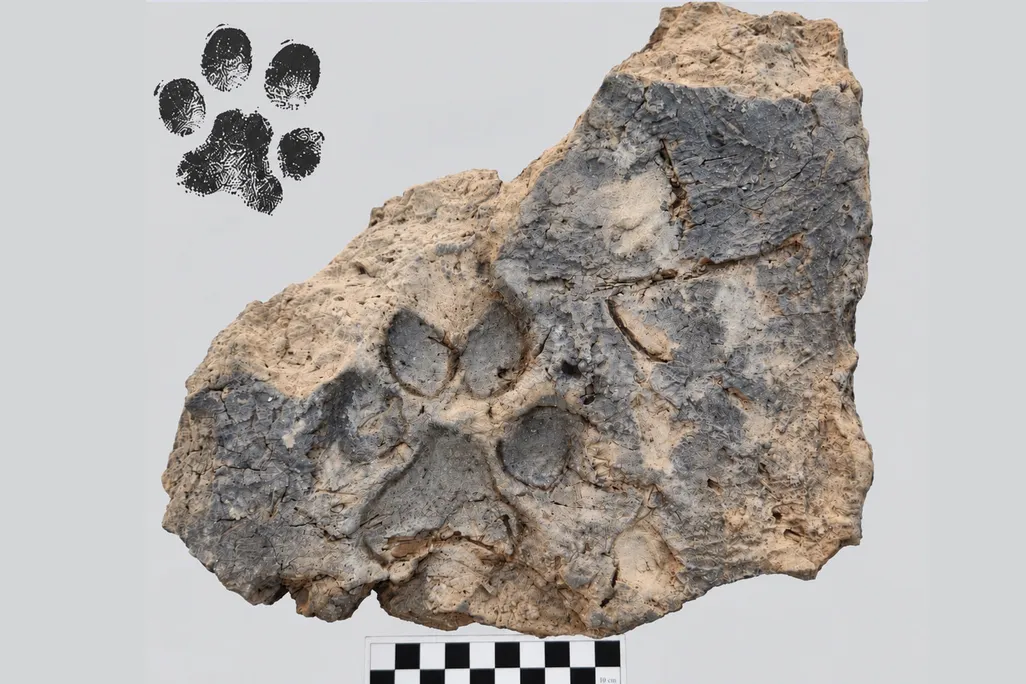
The stories of the humans who built the structure have been lost to history. But one of the mud bricks unearthed in the rubble features an intriguing clue: a dog’s paw print, which survived undisturbed for 4,000 years.
The house is located at Tavsanli Hoyuk, an archaeological site in western Turkey. Archaeologists from Bilecik Seyh Edebali University have been conducting excavations there since 2021.
“At Tavsanli Hoyuk, one of the largest Bronze Age settlements in Western Anatolia, we are uncovering not only structures and artifacts but also such small and unexpected traces of life,” Mehmet Nuri Ersoy, Turkey’s minister of culture and tourism, says in a social media post, per a translation by the Daily Sabah.
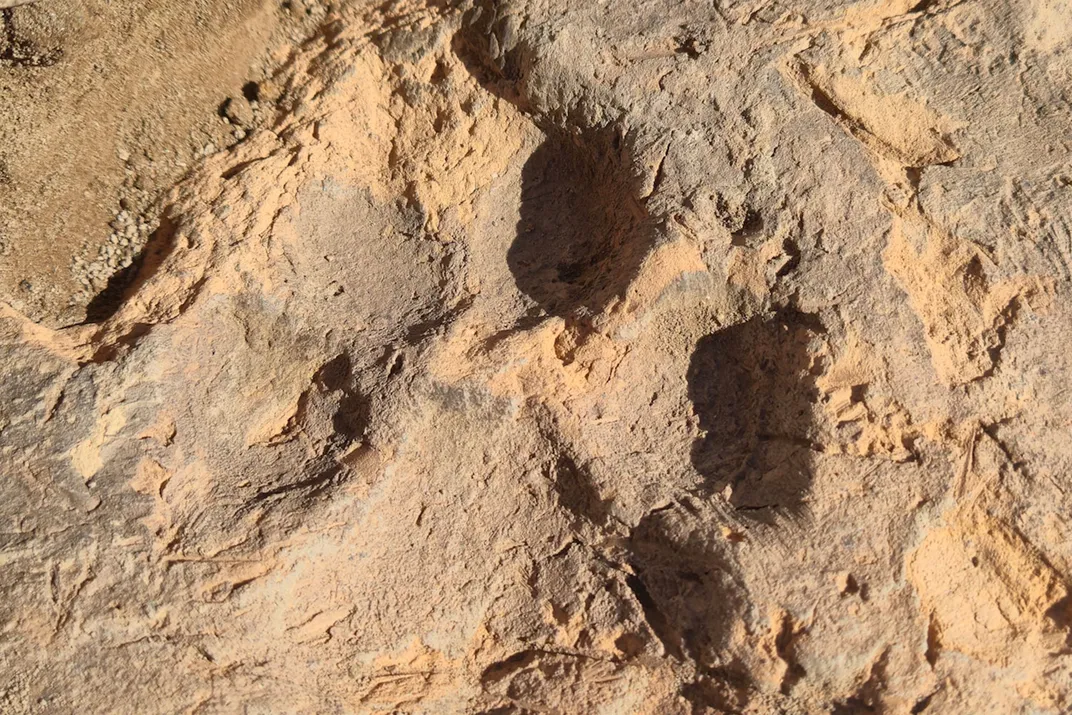
Tavsanli Hoyuk began as a village some 8,000 years ago. Flooding later covered the land, but settlers returned in roughly 3200 B.C.E., at the beginning of the Bronze Age. Humans inhabited the site continuously for the 1,500 years that followed. But then, around 1700 B.C.E., attackers appear to have burned it down.
Archaeologists have unearthed spearheads, arrowheads and daggers dating to this period. Previous excavations also revealed the remains of two victims of the attack, who were found beneath the ruins of a house. Officials announced the discovery of the brick marked by a paw print on October 26.
During the Bronze Age, workers made mud bricks by mixing water, soil and straw, according to a statement from Bilecik Seyh Edebali University. Workers would have poured this mixture into a mold, which then hardened in the sun. As this particular brick dried, a dog left a distinctive imprint featuring four round toe pads.
“Dogs have a very long history in Anatolia,” Erkan Fidan, the excavation director at Tavsanli Hoyuk, tells IFLScience’s Tom Hale. “By the Bronze Age, dogs were already a familiar part of everyday life in Anatolian settlements. The approximately 4,000-year-old paw prints discovered at Tavsanli Hoyuk provide a particularly direct and touching glimpse of this relationship.”
Earlier this year, a study published in the journal Nature found genetic evidence of a domesticated dog that lived in what is now Turkey 15,800 years ago. Fidan points to this study, explaining that humans in the region have had a close relationship with dogs for thousands of years.
Quick facts: The oldest domesticated dogs
- In March 2026, two studies with overlapping authors revealed the “first definitive genetic evidence that dogs existed during the Paleolithic period, before humans developed agriculture,” according to the New York Times’ Emily Anthes.
- Previously, the earliest genetic evidence of domesticated dogs had been about 10,900 years old.
“Of course, we cannot determine whether this particular dog was kept as a pet in the modern sense,” Fidan tells IFLScience. “But the discovery offers a small yet remarkable connection to everyday life four millennia ago.”
Paw prints have provided archaeologists with whimsical windows into history across thousands of years. One 15th-century Flemish manuscript features inky cat paw prints preserved on parchment. Archaeologists in Jerusalem found another cat paw print on pottery made more than 1,000 years ago—perhaps the earliest known evidence of a cat kneading (a behavior also known as “making biscuits”).
Researchers know very little about the dog that stepped on a brick. Did humans witness the act? If so, how did they respond? As Gizmodo’s Gayoung Lee writes, “I have a hunch that the interaction probably ended with the human scoffing and giving the furry troublemaker an affectionate tousle.”
