The World’s Newest Carnivorous Plant Is a Red Sundew That ‘Death Hugs’ Its Insect Prey. Its Survival Depends on a Rare and Disappearing Florida Habitat
Confined to hidden sinkhole lakes in the Panhandle, the Florida threadleaf sundew is both a discovery and a warning bell for a vanishing ecosystem that’s long been ignored

Florida botanist Lilly Anderson-Messec can quote the English poet John Donne by heart. “Any man’s death diminishes me, because I am involved in mankind. … Never send to know for whom the bell tolls; it tolls for thee.”
Anderson-Messec stretches that oneness from humanity to ecology. She says a piece of her dies every time a native Florida plant goes extinct. “Whatever happens in this world happens to me,” she says.
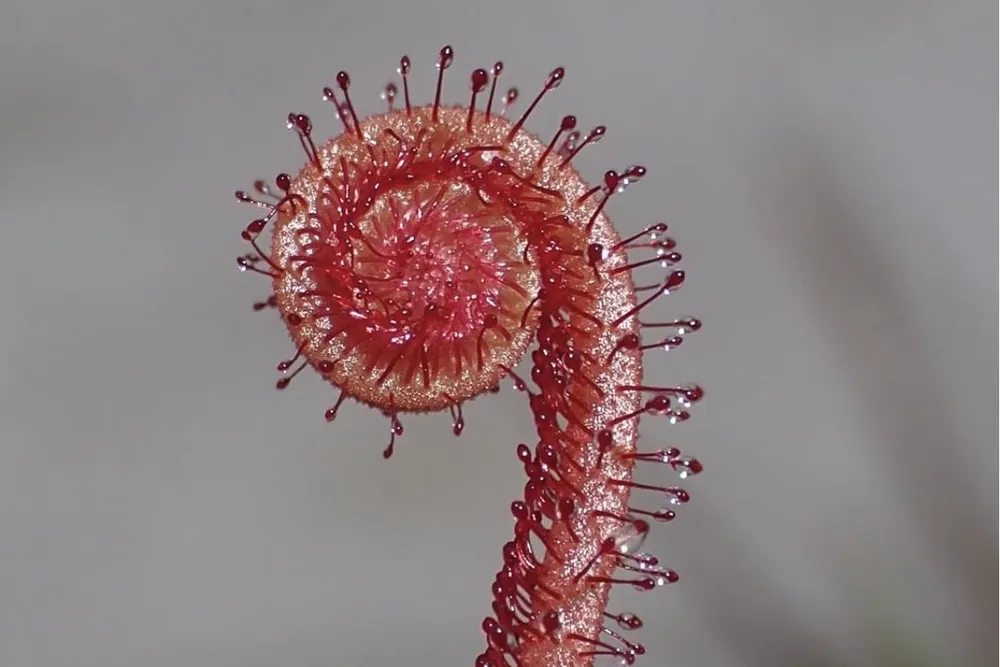
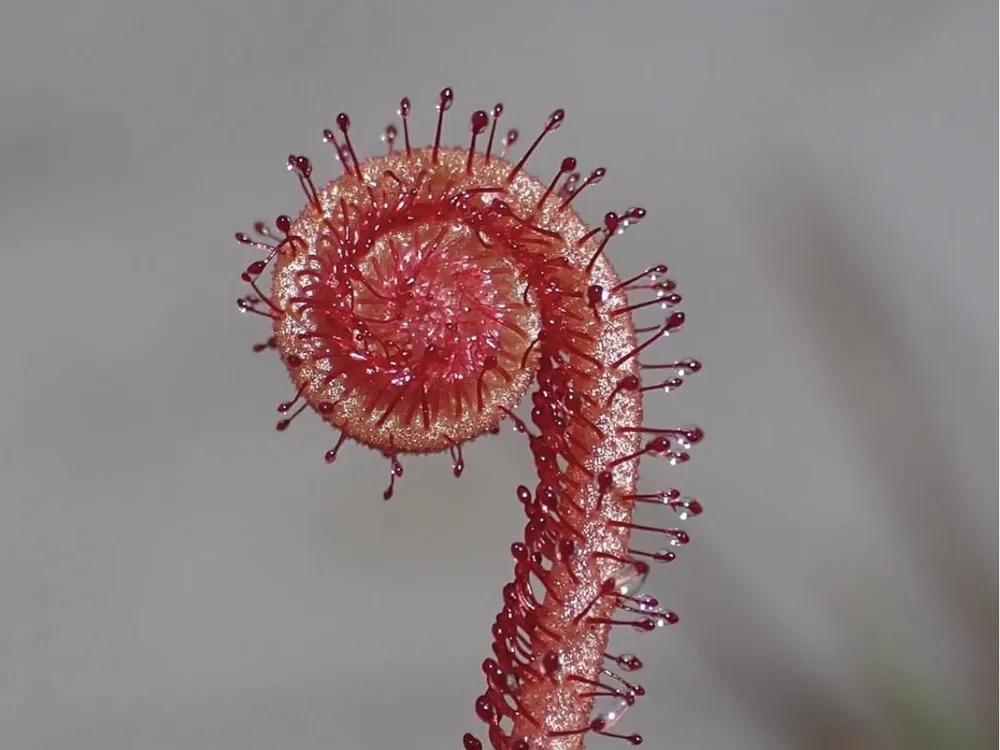
That perspective extends to a small carnivorous plant she first saw in 2014 while botanizing in the Florida Panhandle. Its dazzling red thread-like leaves ending in tightly coiled spirals left her stunned.
“This looks so different and so unique,” she recalls thinking. Unique it was.
The insect-killer was classified at the time as a variety of the widespread thread-leaved sundew (Drosera filiformis). But Anderson-Messec was not convinced. For one, the closest population of the thread-leaved sundew was hundreds of miles away in South Carolina. In 2024, Anderson-Messec posted a video of the rare sundew to her Instagram, speculating that it might be its own species.
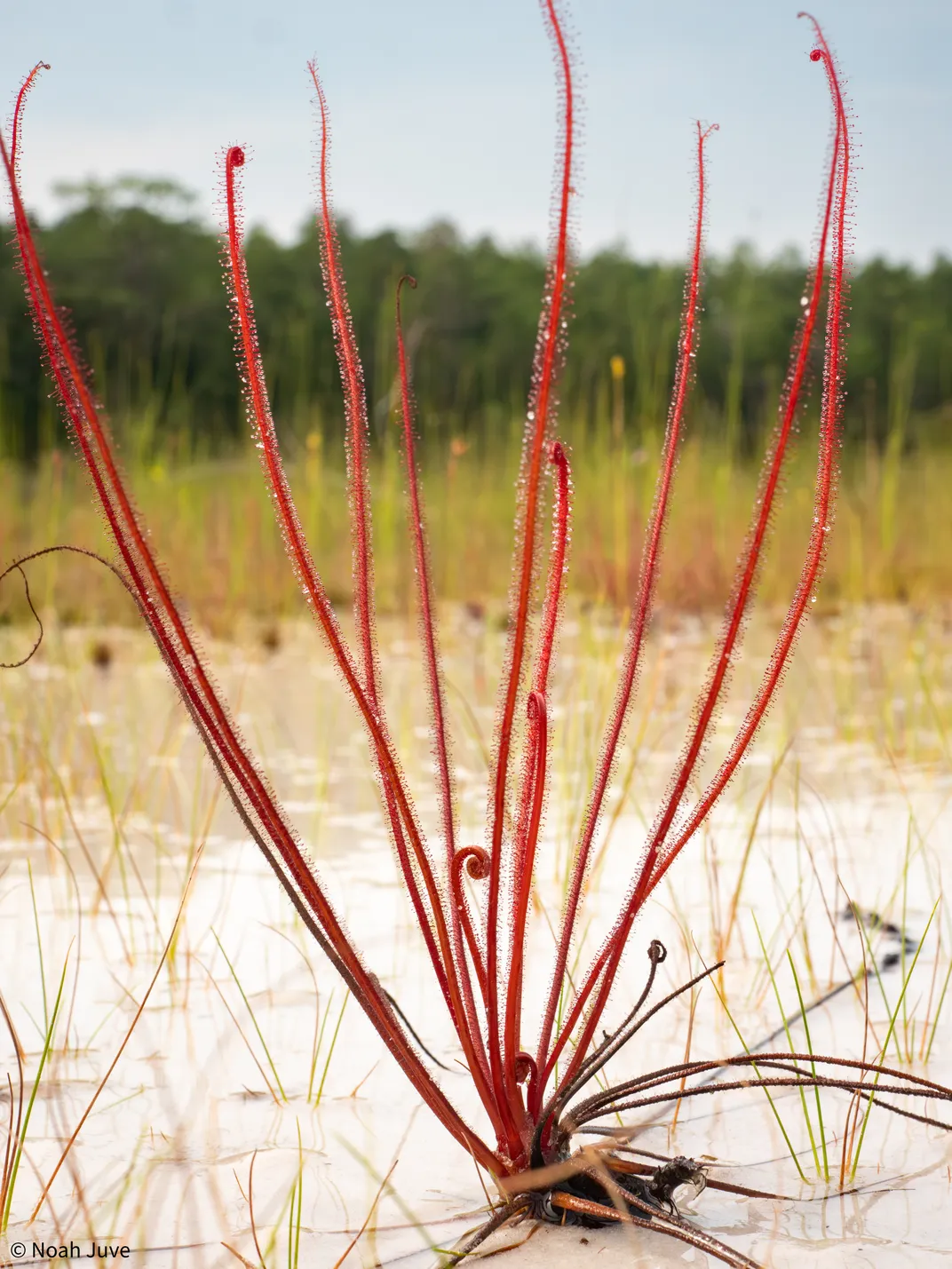
By then, the brilliant red sundew had already caught the attention of a 17-year-old hell-bent on bringing order to the chaotic world of carnivorous plants. Noah Juve—now an undergraduate at the University of Florida—did just that in August 2026, publishing a description that elevated the Florida threadleaf sundew (Drosera floridana) to species status.
With the help of Andreas Fleischmann, curator at the Munich Herbarium in Germany and co-author of the paper, Juve spent years comparing the sundew directly against its closest relatives at over 100 sites across the Gulf and Atlantic coasts. The work illustrated just how special floridana is through its striking red color, unique seed shape, flower morphology and bloom time.
But one detail overshadowed them all. This sundew occurs only in a 12-by-16-mile patch of the Florida Panhandle, an area smaller than Chicago, earning it the unwanted title of the most range-restricted sundew in the United States. Now, scientists and conservationists are racing to protect this limited habitat before it becomes irrevocably damaged—or destroyed entirely.
Describing the species and its range restriction was crucial to advocating for its conservation, Fleischmann says. “Things which are scientifically … placed at a subspecies or variety rank, they are hidden from nature conservation,” he adds.
Juve puts it more simply. “If something doesn’t have a name, how can you conserve it?”
While floridana is a nod to the species’ location, the genus originated from the Greek droseros, literally meaning “dewy.” Drosera, referring to sundews, is one of the largest groups of carnivorous plants, stretching across every continent except Antarctica.
Did you know? The oldest carnivorous plants
The oldest fossils of carnivorous plants are at least 34 million years old, uncovered from Baltic amber and described in 2014.
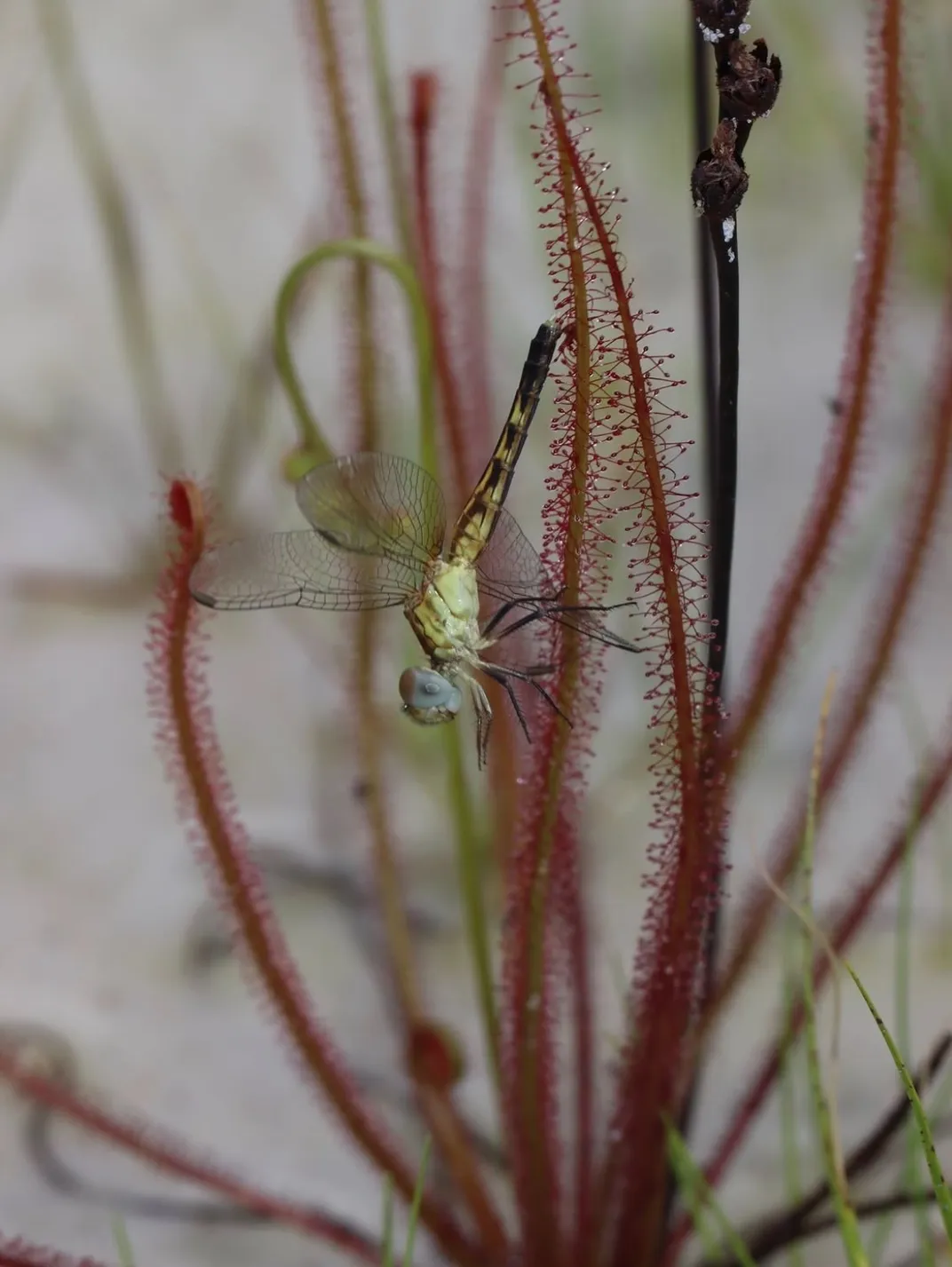
Sundews are famous for their slow-motion death hug. Using sticky globules that act like flypaper, they trap small insects and wrap around them, emitting digestive enzymes from their tentacles that slowly liquefy the prey. The insects die a slow, silent death, unnoticed by the world, much like floridana and its vanishing home.
Does the bell toll for the Florida Panhandle?
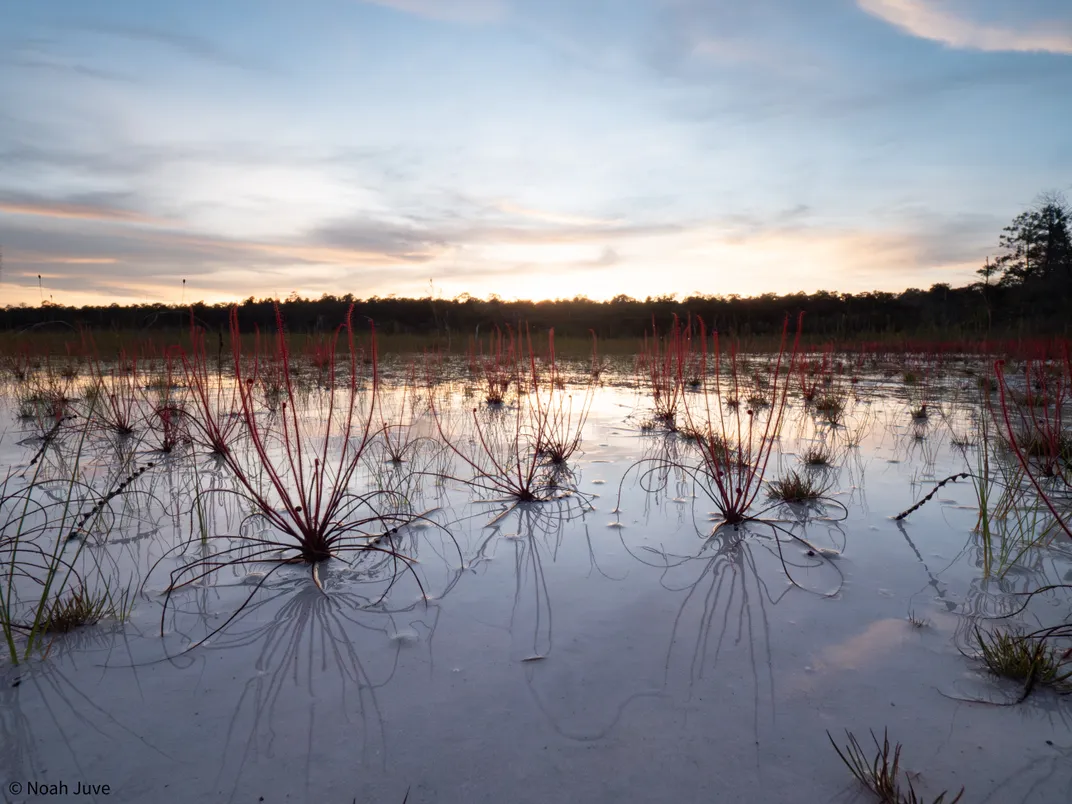
Sinkhole lakes dot the Florida Panhandle, formed over thousands to millions of years as acidic rain dissolved the limestone bedrock that underlies much of the state. In a select few, groundwater from the surrounding uplands seeps into the lakes and spreads through the white quartz sand along their shores. This process forms thin, acidic, nutrient-starved layers: the perfect but precarious home for a Florida threadleaf sundew.
Galen Bodner, a senior at the University of Florida, spent months combing these areas of the Panhandle in search of the ruby-tinted plants.
“I remember walking down, and you could see the break in the trees, and you just see red,” Bodner says. As he neared, he thought, “That can’t be them.” But Bodner soon realized there were thousands of sundews. “You approach, and they look like they’re glowing pink in the sunlight.”
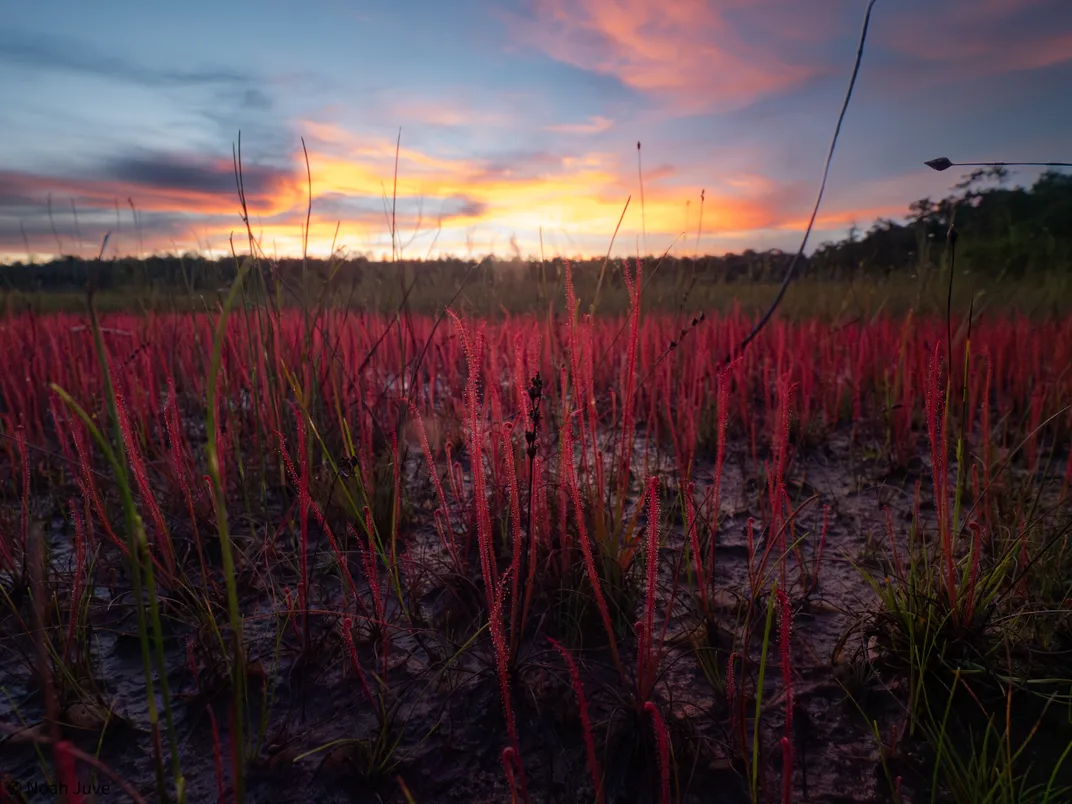
These unique sinkhole ecosystems are found in just two Florida counties—Washington and Bay—and nowhere else in the United States, according to Anderson-Messec.
“It’s a very distinct natural community with a quite robust list of endemic species,” she says. But as she was discussing the sundew in another video, she “realized this habitat is not well described.” She says the state’s Florida Natural Areas Inventory has never defined it as its own unique kind of habitat.
According to Juve, only about 20 of these sinkhole lakes have the shoreline seeps that floridana needs. Only around 12 still support isolated populations of the sundew.
Worse, most are found on private land. “The majority of these lakes are developed and have houses all around them,” Anderson-Messec says. The shoreline zones where the plant grows “are completely obliterated.”
Juve notes that the largest known Florida threadleaf sundew population is currently threatened by housing development. “It’s decimated for miles and miles,” he says.
Other lakes have already lost the plant entirely. The lake where botanist Robert Godfrey collected the first Florida threadleaf sundew in 1974 is now a suburban housing complex, according to the species description.
Frank Price, director of the Florida Natural Areas Inventory, notes that at least three populations of the sundew remain on public land.
But even public lands aren’t a perfect sanctuary. Bodner says he’s watched illegal off-road vehicle use tear apart those fragile lake margins and the seepage zones the sundews depend on. Juve has witnessed the same destruction and cites his own experience in the species description.
“You can see whole areas where there’s just big donut tire tracks sweeping through,” Bodner says. “There’s no plants there.”
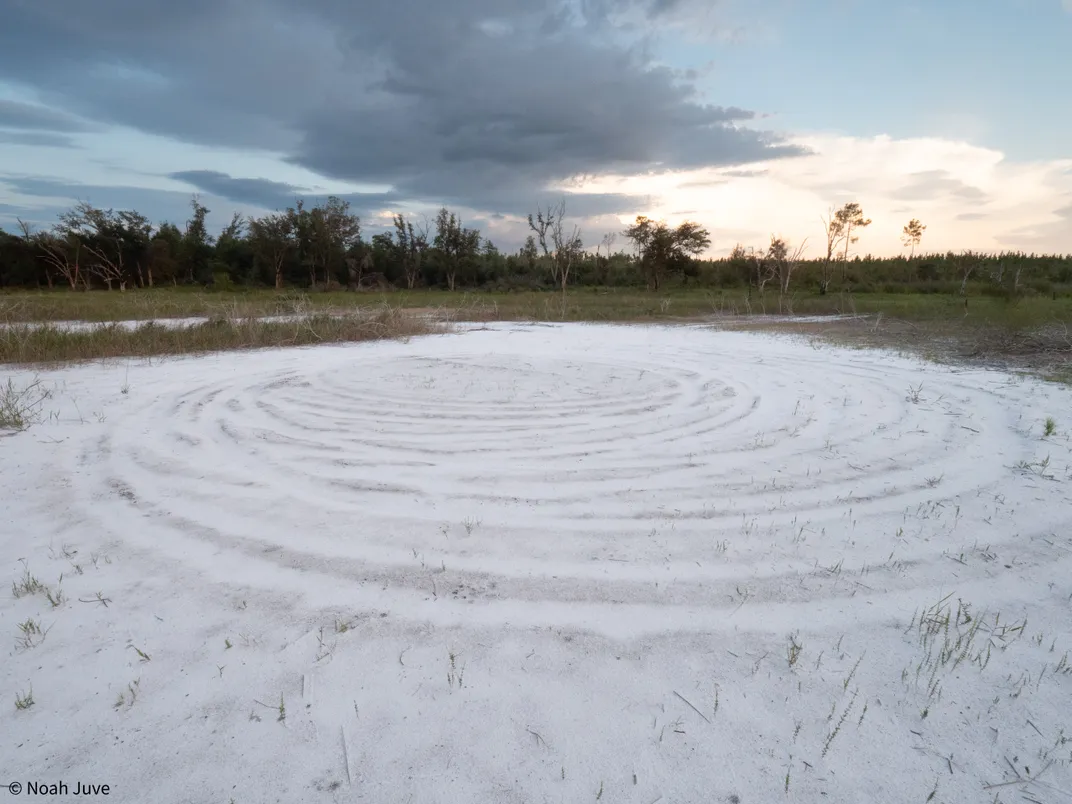
Tyler Macmillan, former land manager at the Northwest Florida Water Management District, notes that before the organization began purchasing land in Washington and Bay Counties in the 1990s, it was a “wild area.” However, Macmillan adds that illegal ATV use has since declined. Florida’s Department of Environmental Protection says in an email that it has not received any recent reports of illegal ATV riding in Washington or Bay County. The Florida Fish and Wildlife Conservation Commission declined to comment.
Even before the plant’s formal description, Florida had listed it as state-endangered. The sundew and its habitat are vulnerable to shifting rainfall patterns and drought due to climate change. Fire suppression is a slower and longer-term threat, Anderson-Messec explains, because without the regular burns that the ecosystem evolved with, woody shrubs can creep in and push out the sundew and its neighbors.
The sundew is not alone
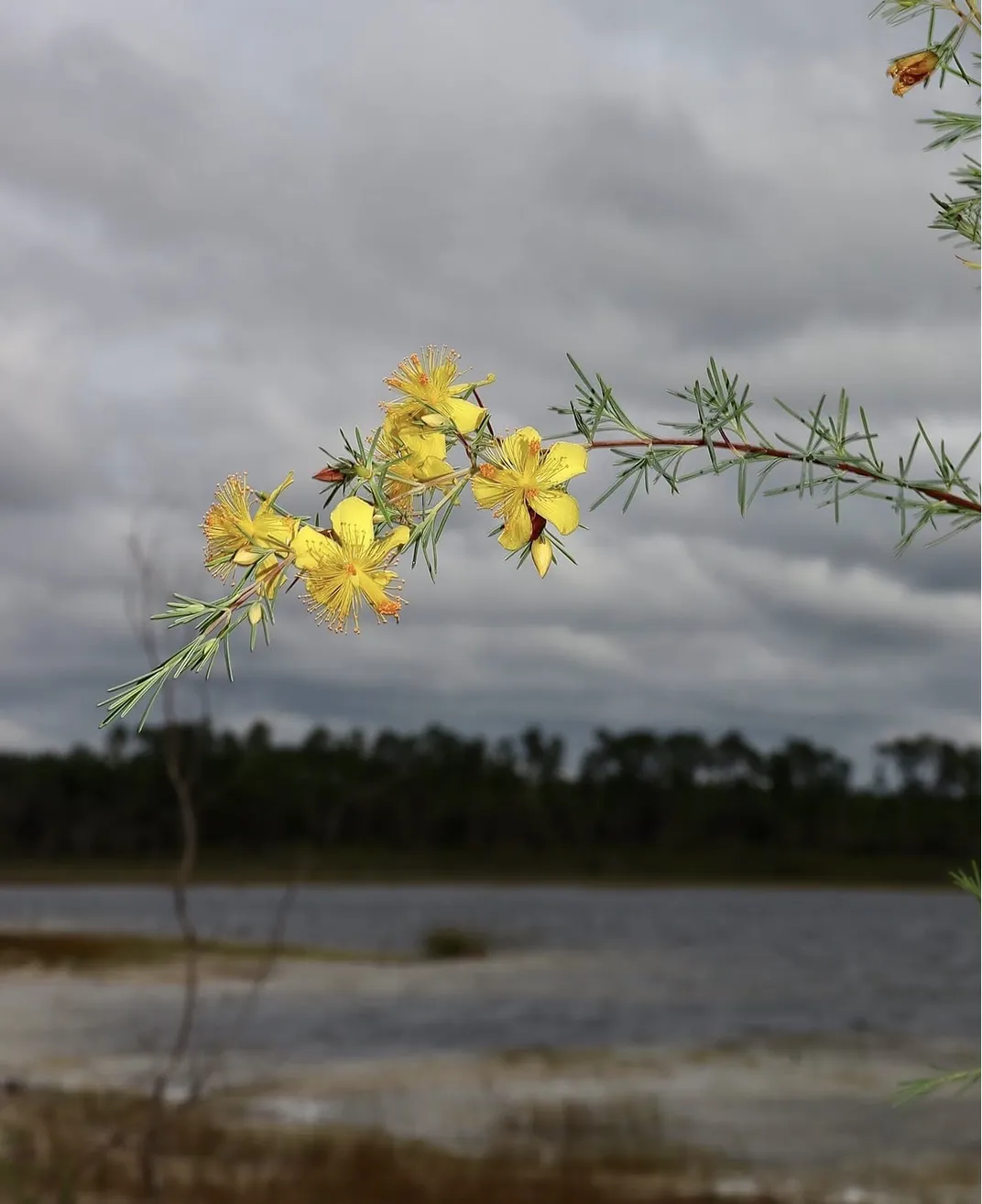
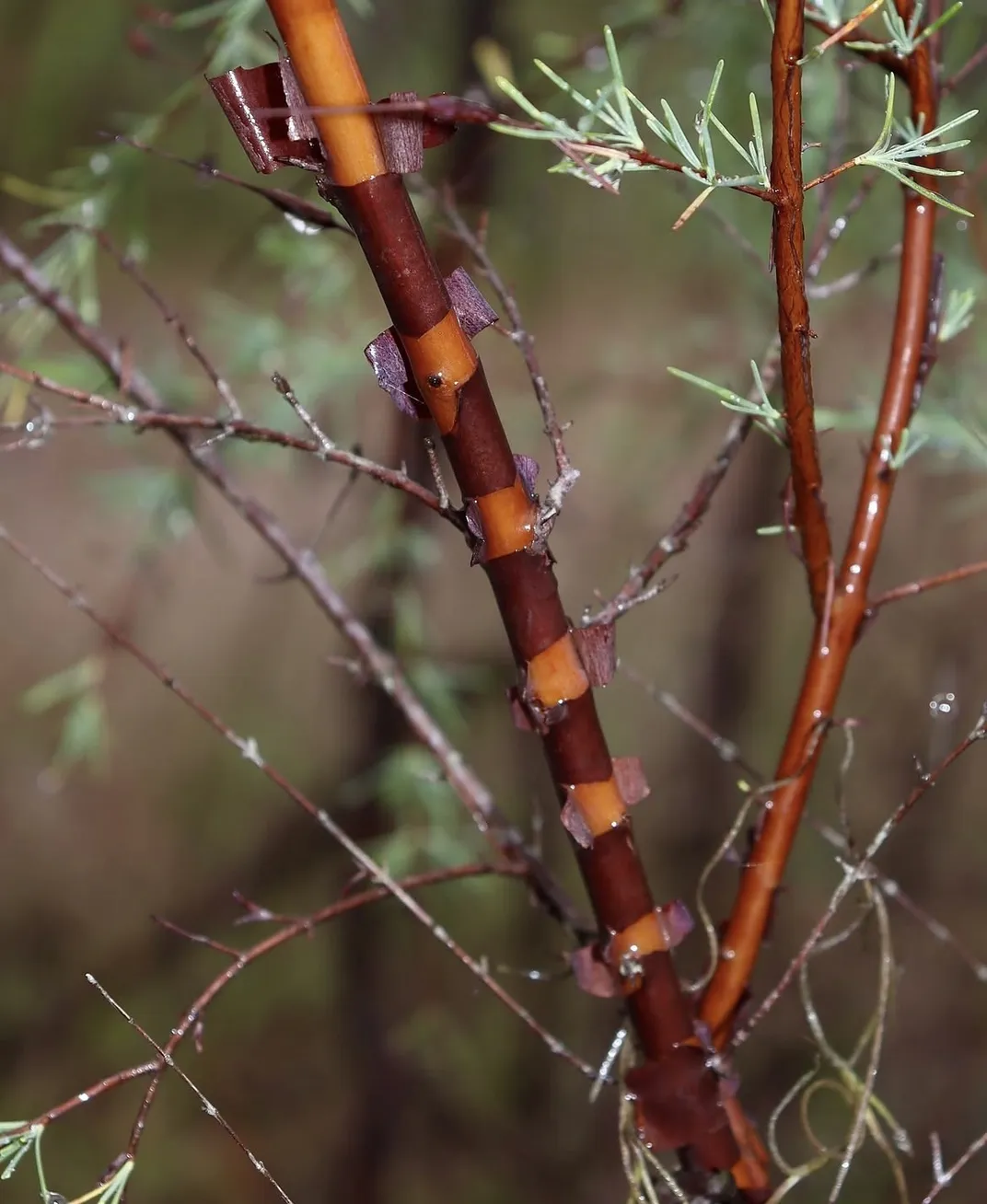
Alongside the Florida threadleaf sundew, at least three other plant species are endemic or nearly endemic to this imperiled region. Among them is the smoothbark St. Johnswort, a shrub that can reach 12 feet tall and grows only on the edges of these sinkhole lakes, adapting to wild swings between flooding and drought.
“It has these long branches that are a bluish-green color, and then these beautiful yellow puffy flowers,” Anderson-Messec says. “The gorgeous exfoliating bark is reddish and peels off in these horizontal layers. It almost looks like candy canes.”
Another, the Crystal Lake nailwort, is a low-growing, green, annual plant with wiry stems and scale-like leaves. Critically imperiled, it only has nine known populations, with most on private land. Kral’s yellow-eyed grass, an herb with thin leaves and three-lobed, bright yellow flowers, is also imperiled and listed as state-endangered in Florida.
Bruce Means, a Florida State University ecologist not involved with the sundew’s description, has studied its home region for more than 60 years. “The Panhandle between Tallahassee and Pensacola, I call it a hot spot within a hot spot,” Means says.
But that diversity hasn’t translated into protection, he adds.
“Everybody likes carnivorous plants, but they don’t realize how vulnerable the habitats are and how many have disappeared over the decades that I’ve been around,” Means says. “Very little has been done on a governmental basis to recognize and try to conserve those kinds of environments.”
The pressures on this sundew are common among its kin. A 2020 global assessment co-published by Fleischmann found that roughly a quarter of the world’s 860 known carnivorous plant species are at risk of extinction, driven by illegal poaching for the horticultural trade and habitat loss from agriculture and development.
Anderson-Messec has seen the effects of illegal poaching firsthand. For that reason, she worries that increased attention could paradoxically harm the new sundew.
“You become familiar with many individual plants,” she says. “To go out there after visiting the same site for ten years and see a plant missing, and the hole in the ground where it was, it’s heartbreaking.”
Despite her fears, she still hopes a sliver of her botanical home can be saved.
“It’s definitely depressing at times, but it’s not over,” Anderson-Messec says. “This plant is still there.”