
Brazil’s Beautiful Blue Bird Was the Star of the Animated Hit ‘Rio.’ In Real Life, Bringing the Species Back From the Brink Put It in the Middle of a Huge Drama
The Spix’s macaw disappeared from South American skies more than 30 years ago. An effort to resurrect the singular species collapsed in controversy and confusion
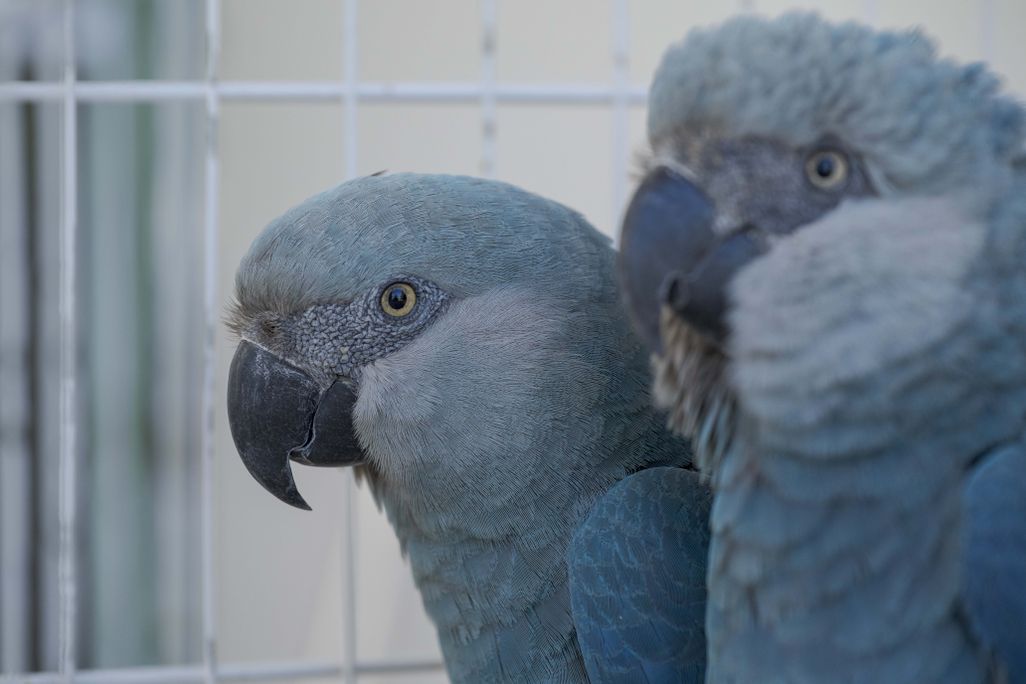
or BFDV. Miguel Monteiro
The raiding party set out in darkness.
Leaving behind the industrial city of Petrolina in northeast Brazil, the eight-vehicle convoy, escorted by two Federal Police SUVs, crossed the São Francisco River and, for two hours, traversed the Caatinga, a stark landscape of thorn scrub, cactuses and drought-stricken ranch land. At dawn, the procession turned off the highway and jolted down a dirt road to a fenced compound. The police presented a judicial order. Then the vehicles drove up to a cluster of buildings housing 103 birds that rank among the rarest animals on Earth: Spix’s macaws, luminous blue parrots that vanished from the wild a quarter-century ago.
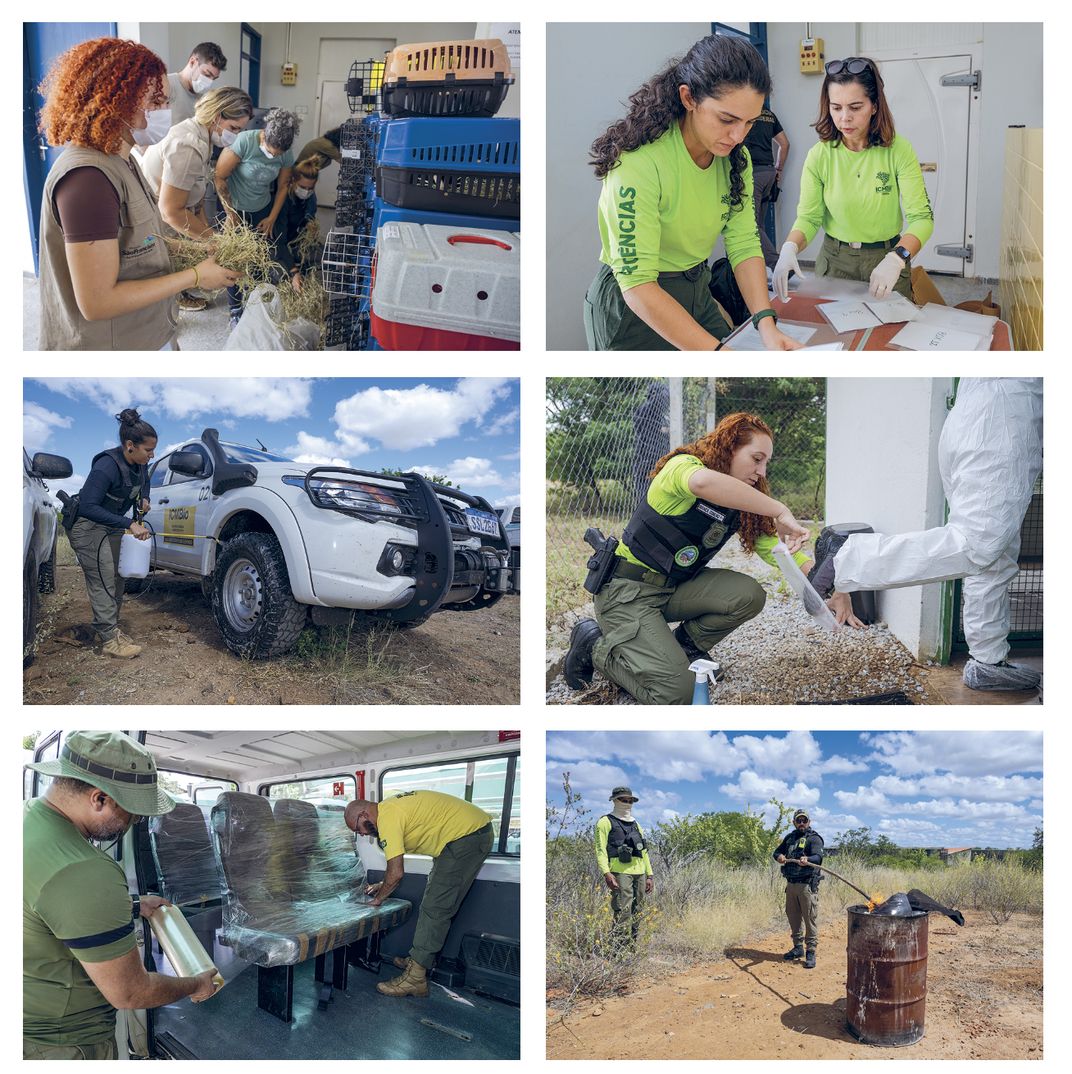
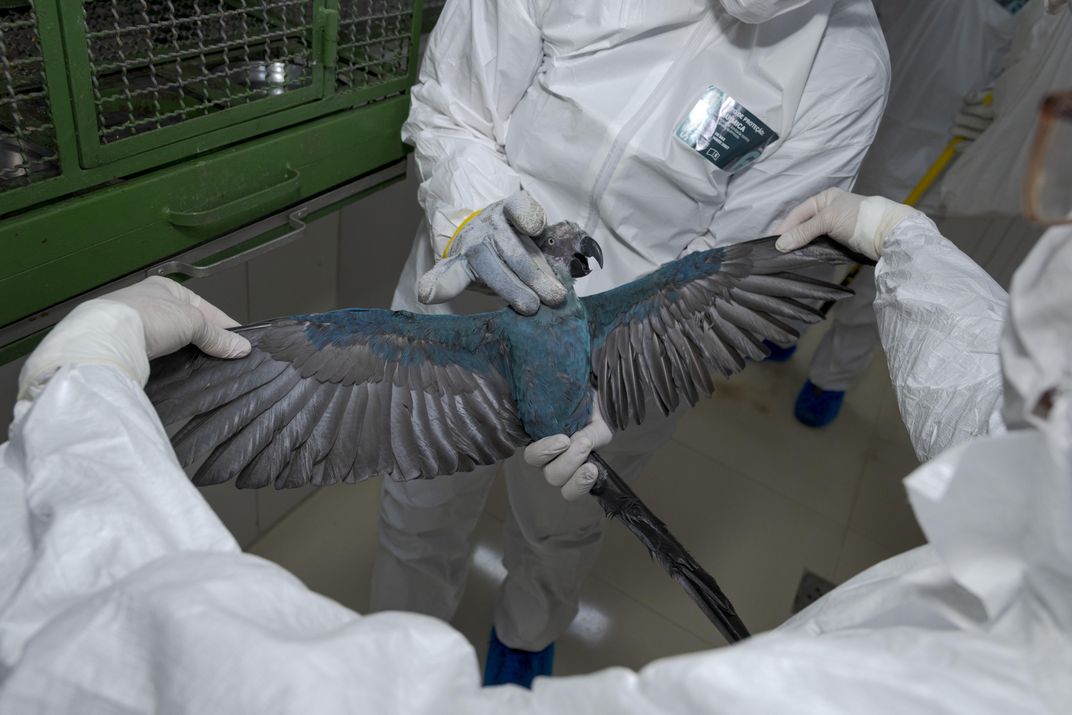
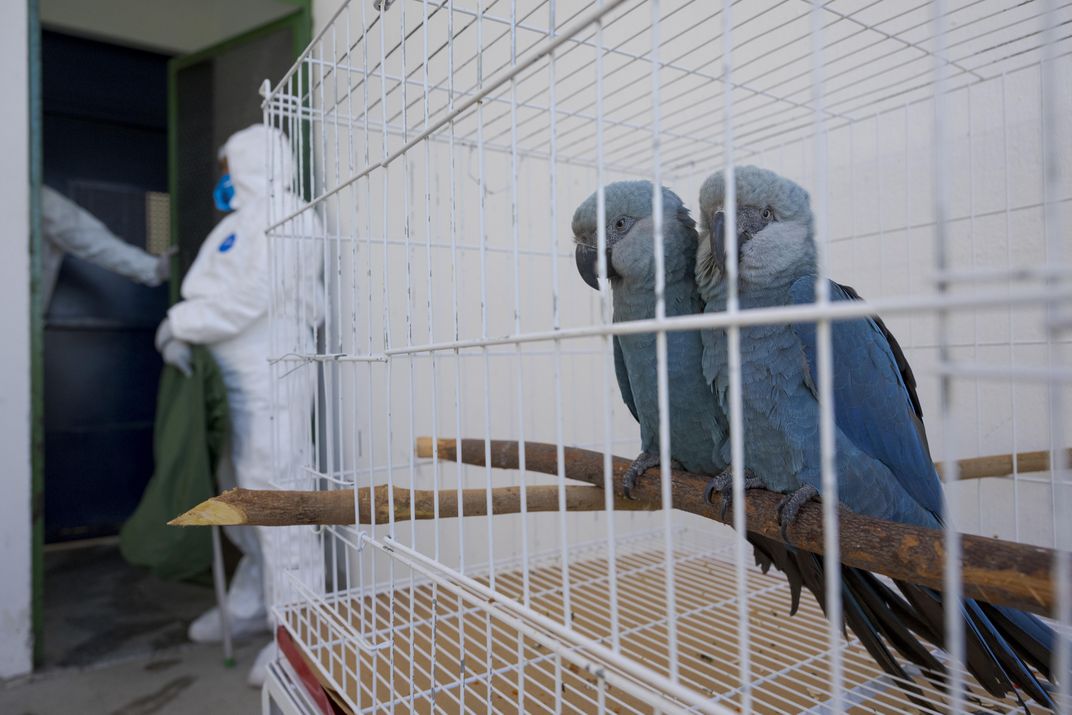
Armed officers from ICMBio, Brazil’s environmental protection agency, moved down corridors lined with bird pens. A cacophony of screeches and beating wings erupted as the team went from cage to cage, trapping the macaws in nets. Some birds bore feathers that had bleached white; others were marked by pink patches where necrotic plumage had rotted out. One bird’s beak was grotesquely deformed, its upper mandible split into keratinous shards. All were manifestations of beak and feather disease, which is caused by an avian circovirus that can ravage the immune system, attack fast-growing tissues and lead to an agonizing death. The task force members scanned a microchip beneath each bird’s skin that indicated which had tested positive for the virus and which negative. As aviary employees watched in silence, the officers placed the healthy birds into transport cages, carried them out to their convoy and rode off in a cloud of dust.
The dawn raid this past May 27 marked the collapse of what not long ago was hailed as an audacious conservation experiment: a multimillion-dollar attempt to resurrect a vanished species in its native habitat. Bred back from a tiny captive population, the blue parrots, made famous by the 2011 animated hit Rio, had begun a tentative recovery. In 2022, 20 birds were released to great fanfare into northeast Brazil’s Caatinga wilderness, where many adapted, expanded their territory and—most remarkably—began to breed, flashes of blue cutting through the muted landscape. Four hundred more macaws were scheduled for release over the next 20 years, and breeding and planning for those releases continued until 2025. For a time, the project seemed to support the once unthinkable idea that extinction, often the consequence of habitat loss and human predation, might be reversible.

But the Brazilian government now says that the organizers, a German nonprofit called the Association for the Conservation of Threatened Parrots (ACTP), botched the program and tried to deceive the authorities about the extent of its problems. Dozens of captive-bred macaws awaiting release have been quarantined. The project has been put on hold, its future in doubt. A criminal investigation has begun into ACTP’s activities in Brazil. Some conservationists point to the collapse as a textbook case of good intentions gone awry. What had been a carefully choreographed attempt to return animals to the wild has become an urgent effort to understand what went wrong.
The fallout was tangible in Petrolina. At the veterinary campus of the Federal University of the São Francisco Valley, ICMBio staffers, accompanied by the police, unloaded the carriers and placed the birds in a temporary holding facility. Reports about the raid had already exploded across social media. One parrot enthusiast in the United States claimed that Brazil was preparing to “euthanize” the 34 infected macaws left behind, but officials I talked to insisted the rumor was untrue.
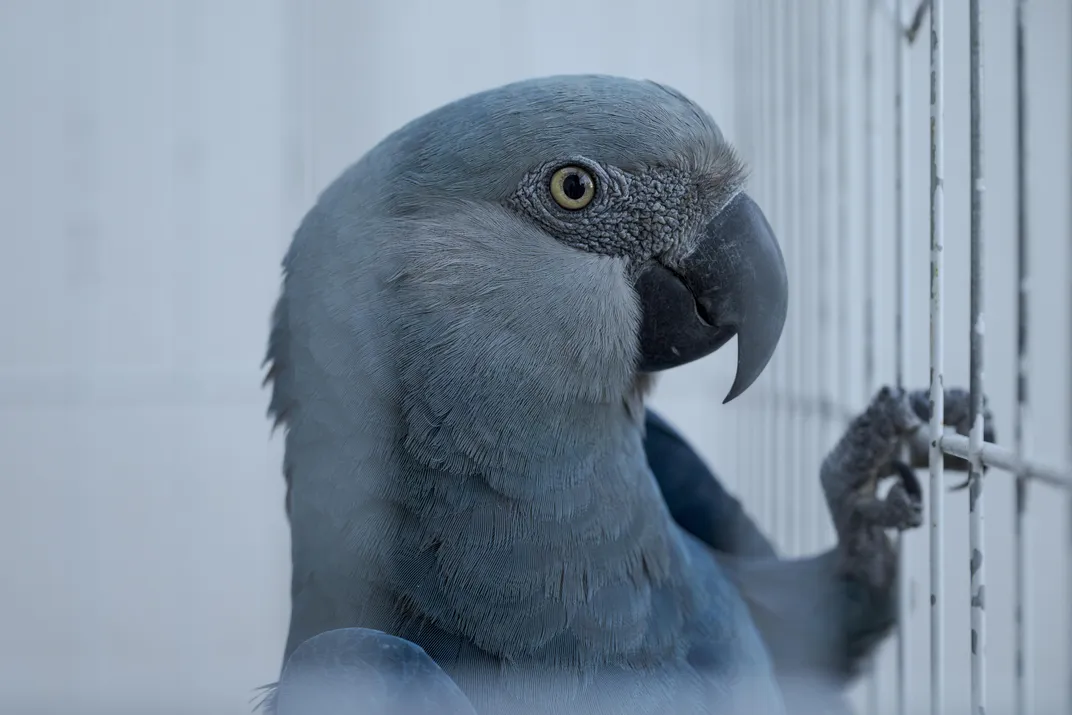
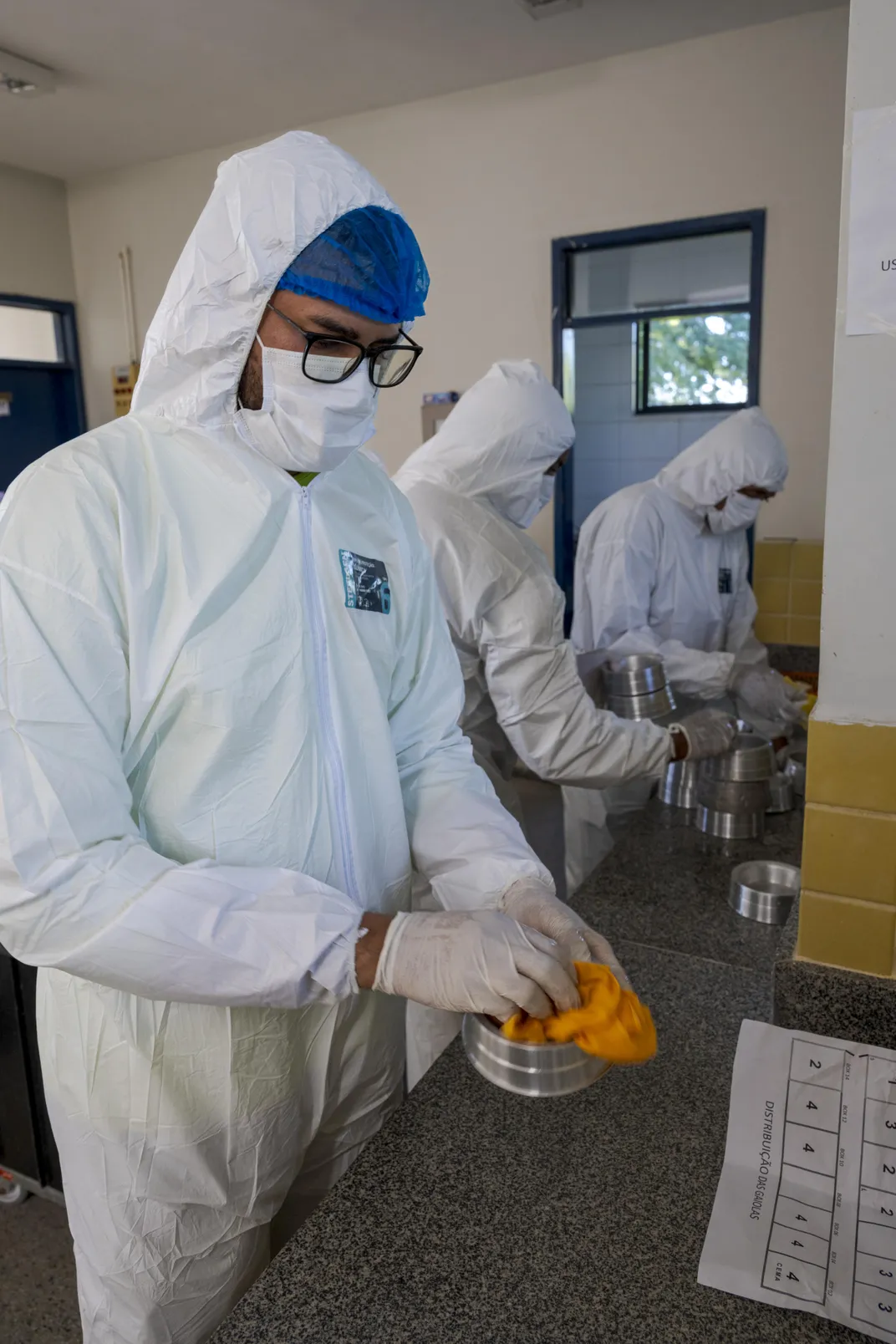
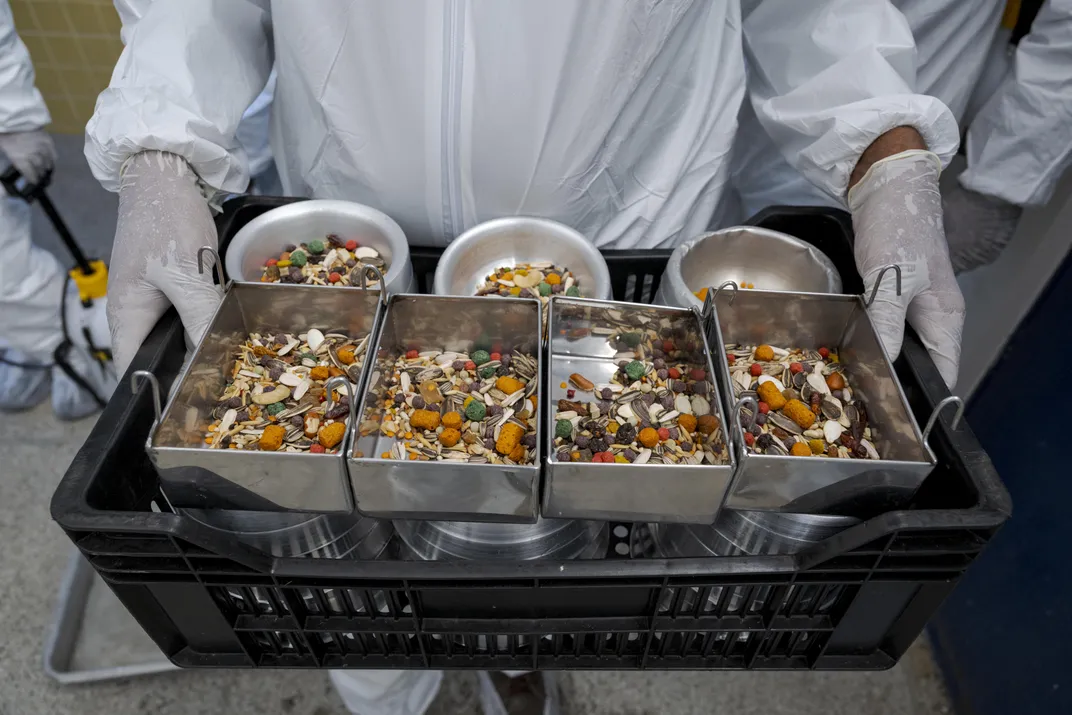
At the entrance to the veterinary school, where the healthy birds were kept, I donned a hazmat suit and received a spray-on dose of disinfectant. Then I followed Pietro Martins, a 24-year-old ICMBio birdkeeper, into the aviary. Up close, the macaws were smaller than I expected, with lustrous blue feathers, ruffled gray head plumage and a preternatural alertness. They fluttered around their cramped cages, vocalizing noisily, hanging upside-down by their talons, clinging to the wire grid with their curved beaks. Martins slipped bowls of pumpkin seeds and bright-colored food pellets inside each cage and stepped back into the corridor. The birds would be monitored and tested for a year, Martins told me, to make certain that they hadn’t contracted the lethal pathogen. In the meantime, Brazilian scientists would closely observe the area surrounding the reintroduction site for evidence of an avian pandemic. The region is home to thousands of parrots, Fábio Muniz, the chief of Brazil’s environmental crime unit, told me. “Any number of species could become infected.”
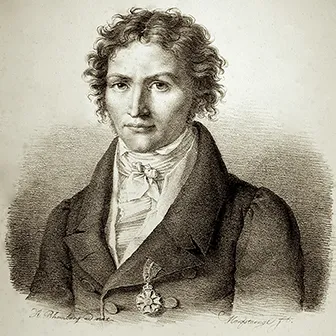
Bird collectors began capturing and trading the Spix’s macaw—named for the 19th-century Bavarian biologist who first brought a specimen to Europe—in the early 1900s. Though Brazil banned wildlife exports in 1967, and the international Convention on International Trade in Endangered Species of Wild Fauna and Flora tightly restricted the endangered species trade eight years later, a black market linked bird trappers to syndicates smuggling macaws across four continents. “As in all collecting fraternities, there is an obsessive element,” Tony Juniper, a British ornithologist and chair of the conservation group Natural England, told me. “‘Have I got the rarest, have I got the best?’ With the Spix’s macaw, this has been an issue for a long time.” By the 1980s, as hydroelectric dams and agricultural encroachment swallowed up much of the bird’s native range, the few remaining Spix’s macaws appeared to concentrate in a woodland area 60 miles northeast of Petrolina, around the town of Curaçá.
One morning in late May, I set out to visit the wilderness where the Spix’s macaw had made its last stand. Driving out of Petrolina, I reached Curaçá, a sunbaked riverside cattle town, and pushed deeper into the Caatinga. Candelabra-like mandacaru cactuses and patches of xique-xique, a thick-bodied succulent bristling with needle-sharp spines, covered the flat landscape. I turned down a dirt track to meet Adonai Martins, Pietro Martins’ grandfather, an octogenarian rancher who had watched the species dwindle into oblivion. A slender man with a weathered face and a white beard, Adonai greeted me on the porch of his home in a clearing in the bush. He wore a chapéu de couro, the leather cowboy hat of the Brazilian vaqueiro. He had spent his entire life in the Caatinga. As a boy, he said, “I looked up and saw flocks of eight or ten blue macaws flying overhead. They were prettier than the maracanas”—green macaws with blue-tinged wings and tail feathers—“and for the traffickers, they were worth a lot more money.
Spix’s macaws nest in caraibeiras, yellow-flowering trees with deep roots that grow along the Caatinga’s seasonal riverbeds. In the 1980s, a trapper nicknamed Carlinhos das Araras—Carlos of the Macaws—hired local men to string nets over known caraibeira hollows. “He rode around in his car and watched where the macaws went,” Adonai Martins recalled. “After that, it was no problem to take them.” By 1990, only a single male Spix’s macaw remained. “I was so used to seeing them fly over my house, from riverbed to riverbed,” Adonai said. “And suddenly, they were gone.”
But conservationists dreamed of resurrecting them. Over the next two decades, geneticists and field experts launched a global dragnet to find every Spix’s macaw trafficked out of Brazil and every captive-bred specimen held in private collections. In one case, they tracked down “Presley”—a male in his 30s—at the home of an elderly rare-bird collector in Denver. Presley succumbed to old age before he could be integrated into a breeding cohort, but Brazilian veterinarians extracted his testicles (nestled inside the avian body), which were frozen so scientists could try to harvest viable genetic material in the future.
The momentum shifted in 2016, when Brazilian officials began a partnership with ACTP. Under its founder, Martin Guth, ACTP had accumulated by far the world’s largest collection of Spix’s macaws. Guth, a former pet-shop employee and debt collector with financial backing from such partners as Belgium’s Pairi Daiza zoo and Jurong Bird Park in Singapore, had an unconventional past, and his organization was alleged by the Guardian and some conservationists to have trafficked in parrots. But, Cláudia Sacramento, an ICMBio scientist, told me, “The government knew the only way it could come back with a reintroduction program was to deal with ACTP.” Brazil purchased private land and carved out two reserves totaling nearly 300,000 acres near Curaçá. Guth contributed $1.4 million to build a reintroduction center and another $180,000 a year to support the operation. He also brought in international experts led by Cromwell Purchase, a noted South African aviculturist then working on a Spix’s macaw breeding project in Qatar. Purchase, who relocated to Brazil, became the project’s scientific director.
In 2020, ACTP flew 52 Spix’s macaws to Brazil. Purchase had set up large training cages where captive-bred birds would learn the skills necessary to survive in the wild. ICMBio helped provide 15 captured maracanas, otherwise known as blue-winged or Illiger’s macaws, a smaller and fairly common species in central and eastern Brazil, to serve as “mentors.” This kind of mixed-species interplay had never been attempted in a parrot reintroduction program, but in the 1990s the last wild Spix’s macaw had paired with a wild female blue-winged counterpart, suggesting that the two species could interact well. (The fertilized eggs laid by the blue-winged macaw didn’t hatch.) And other avian projects had fostered teacher-student relationships, for instance raising captive-bred California condors with wild-caught adults to teach them how to spot and feed on carrion, soar long distances, and develop other skills and behaviors they would need upon release.
For 15 months, the Spix’s pupils lived within sight of their mentor birds but in a separate enclosure to prevent interspecies pairing. Then, for the final four months of pre-release training, the birds were placed together inside a kind of avian boot camp: a 23-foot-high, 155-foot-long “flight and release module” filled with natural perches and fruit-and-seed-producing vegetation. There, under the guidance of the mentor birds, the Spix’s macaws shifted their diets from food pellets to seasonal nuts and fruits, flew alongside the wild birds, and learned to sound alarms and duck for cover when owls, hawks, falcons and other predators hovered hungrily over the mesh-protected cage. Trainers selected the 20 fittest Spix’s, each between the age of 3 and 7, for the first release.
Pietro Martins, then working at the reintroduction center in his role with ICMBio, remembers the jubilation that swept through the valley on June 11, 2022. A video captured by ACTP preserved the moment. The first macaw to be set free, fitted with a radio transmitter, hesitated on the threshold. Then it unfurled its blue wings and climbed steeply into the sky. Seven more Spix’s, all radio-tagged, and eight blue-winged macaws followed that day; a second group, including 12 Spix’s and seven blue-winged macaws, were set free six months later.
To make sure the birds wouldn’t starve, Purchase and his team suspended two feeders stocked with local fruits, flowers and seeds outside the release cage and set up more on the branches of nearby trees. As birds paired off and began exploring the gallery forests, ACTP staffers tracked them around the clock from two 19-foot-tall towers and from ground points throughout the area. The mixed flock formed a cohesive unit outside the cages, but the blue-winged macaws’ mentoring couldn’t save all the Spix’s. Nine of the 20 vanished or died during the first three years, some picked off by predators, others electrocuted by uninsulated power lines. But the 58 percent first-year survival rate eclipsed that of other avian rewilding projects, according to Thomas White, a U.S. Fish and Wildlife Service official who served as a technical adviser to ACTP. Even more promising, the wild-
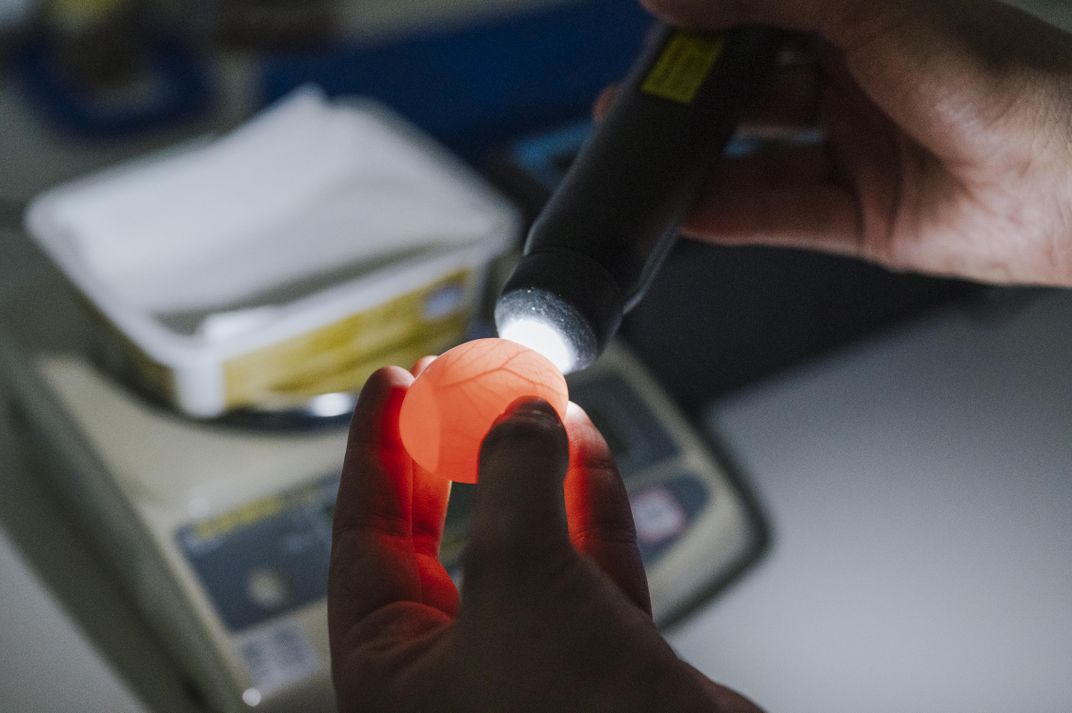
released Spix’s macaws began to breed, hatching chicks in their ancestral homeland for the first time in a generation. A single prolific male, logged as “Male No. 7,” fathered six chicks across two separate pairings in 2023 and 2024. To help the breeding, ACTP teams installed 12 nest boxes in caraibeiras and wrapped slippery zinc bands around the trunks to thwart attacks by opossums, marmosets and small wild cats. At the time, White lauded the initiative as “the most carefully planned and executed psittacine reintroduction that I have ever seen.”
One afternoon, Pietro Martins and I trekked into the heart of the now disused Spix’s macaw reserve: a dry creek bed that transforms briefly into a torrent during the rainstorms that lash the Caatinga between November and March. Fifty-foot caraibeiras flanked the sand-filled watercourse, their trunks pocked with nesting hollows hammered out by crimson-crested woodpeckers. Martins pointed to ropes dangling from high branches, which he and other ACTP researchers had used to shinny up the trees and check on eggs and chicks.
When Martins joined the project, he had no idea about Brazil’s complicated history of avian conservation. Because Brazil stopped issuing export permits for its native birds after 1967, the government regarded all captive specimens abroad since then as contraband. But in the 1990s, the Brazilian government offered amnesty to private owners and breeders of Spix’s macaws around the world, promising not to go after them in court in exchange for their cooperation with future captive-breeding recovery programs. (Many clandestine owners came forward.) Purchase, like other ACTP staffers, shrugged off any lingering taint of past illegality. Working with Guth, he told the environmental news site Mongabay in 2024, represented the “best option, and in fact the only option” for successfully returning the species to the wild.
Guth’s trajectory is a study in self-reinvention. As a boy in East Berlin in the 1970s and ’80s, he cleaned a neighbor’s bird cages and, as a 10-year-old, filled his family’s barn with budgies and parakeets. He was drawn to the birds’ exotic coloring and, as he told me recently, their affordability. “In those days, you could buy a budgie for 5 deutsche marks,” or about $2.50, he said as we sat at a Berlin café on a brisk September morning. “A macaw would cost you 5,000,” or about $2,500. A solidly built man with a bald head, a ruddy complexion and a trimmed salt-and-pepper beard, Guth agreed to meet me only after persistent encouragement from colleagues; he felt he’d been burned by the press, and he was guarded and initially on edge. He scowled when I asked about his youth, saying in accented, near-fluent English that he’d recounted it “many times before.”
Guth fled to Hungary before the Berlin Wall fell and eventually settled in Hamburg to work as a birdkeeper in a pet shop. But by the mid-1990s, he transitioned into organized crime, collecting debts and, in at least one instance, extorting a nightclub owner for protection money. Once, according to court testimony, Guth briefly held two men hostage to strong-arm them into paying what they owed. In September 1996, a German court handed him a five-year prison sentence for extortion-related offenses. “I was a youngster,” Guth later told the German newspaper Süddeutsche Zeitung.
Upon his release, Guth was vacationing in the Canary Islands when he saw his first Spix’s macaw at Loro Parque, a zoo with a well-known parrot collection. He soon redirected his energies into his childhood obsession: to acquire and breed rare parrots, framing his enterprise as a means of saving the birds from extinction. In 2005, he purchased three Spix’s for €15,000 from a Geneva aviculturist who could no longer care for them. The next year, he established ACTP, constructed a state-of-the-art aviary in the village of Tasdorf outside Berlin, and negotiated deals with private collectors and international wildlife regulators.
He soon began wooing Al Wabra Wildlife Preservation in Qatar. Its owner, Sheikh Saud bin Mohammed Al Thani, a billionaire collector of art, meteorites and rare animals, had started with a few dozen Spix’s macaws and by expert breeding grew the total number of birds to 120. After the sheikh died in 2014, Guth persuaded the royal’s children to bequeath him the birds, giving him control of 90 percent of Spix’s in the world. Over the next several years, Guth bred dozens of parent-raised chicks and created a deep reserve for rewilding. The facility grew to house hundreds of specimens. It earned Guth a moniker: “The Parrot King.”
Did you know? Prelude to an extinction
-
In 1995, with a single Spix’s macaw surviving in the wild, conservationists released a captive-bred female into Brazil’s Caatinga wilderness in hopes the pair would mate.
-
The birds soon paired off, but before long the female disappeared; years later, a local resident said he spotted the small blue corpse beneath a power line, though its fate was never confirmed.
-
The male, the world's last wild Spix's macaw, disappeared in 2000. The Spix’s macaw was declared extinct in the wild in 2019.
Yet his success remained shrouded in mystery. “He is uncredentialed as a wildlife conservationist, zoologist or scientist, and he emerged with financial backing to acquire the most endangered parrots in the world,” says Paul Reillo, founding director of the Rare Species Conservatory Foundation in Florida. Guth’s ascent attracted scrutiny among conservationists and news organizations alike. A 2018 exposé in the Guardian claimed that Guth, under the banner of conservation, was quietly acquiring rare black cockatoos—valued at tens of thousands of dollars apiece—from the Australian government and funneling them to wealthy collectors. A 2020 Audubon investigation detailed how ACTP had extracted rare, state-protected red-necked Amazon and imperial parrots from the Caribbean island of Dominica after Hurricane Maria in 2017 against the objections of local conservationists. Concluding that ACTP provided Guth with a sheen of legitimacy for a lucrative, transnational enterprise, the article’s author, Brendan Borrell, acknowledged that Guth’s affection for parrots seemed genuine. “Guth may have pure intentions when it comes to protecting parrots,” he wrote, adding that he detected “some morsel of sincerity beneath his bluster, a belief that conservation can pay for itself—and that the ends, when it comes to his beloved birds, justify the means.”
When I met him, Guth denied illegally trading in rare species, and he folded his arms defensively when I asked him about such charges. “You are presenting me with the same s--t from all the other articles,” he said. Instead, he wanted to talk about the Spix’s macaw. By the time he began collecting them, he told me, the global population had dwindled to just 52 captive-bred specimens. “I was told that the bird is coming to an end. I had to do something.”
Lorenzo Crosta, a veterinarian who works with ACTP, told me that Guth’s commitment to the birds speaks for itself. “Martin is genuinely passionate about this species, and his dedication has led to remarkable success.” Vladislav Marcuk, the manager of ACTP’s Tasdorf aviary, says, “Without Martin, I think we wouldn’t even have a conversation about reintroduction.”
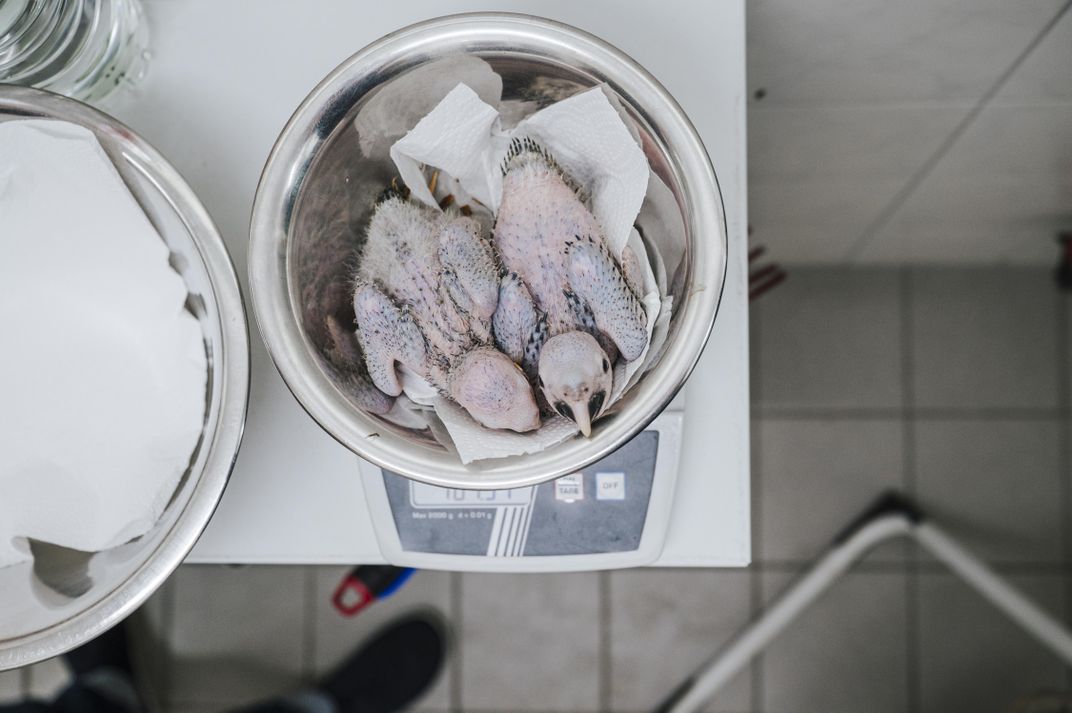
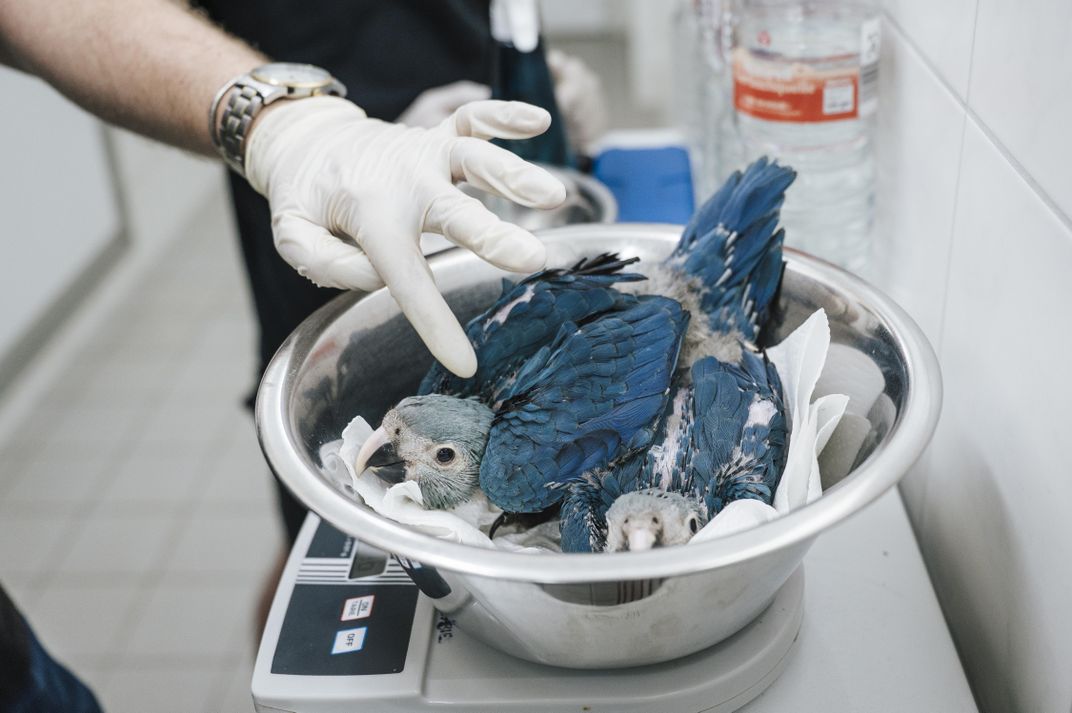
In 2022, Guth, overcome with emotion, stood outside the release center in Brazil and watched his birds soar into the wilderness. “It’s so amazing,” he enthused on the video capturing the occasion, his voice cracking. “Waiting for 16 years for this moment. ... Now we have blue skies in the Caatinga again.”
By the end of 2023, however, Pietro Martins sensed trouble. A new government took power in Brazil, and ACTP officials felt that it had turned against the reintroduction program. Long bureaucratic delays and a worldwide outbreak of avian flu stalled shipments of Spix’s macaws from Germany and scotched planned release dates; ICMBio also says that many birds received in Brazil were too old or infirm for wilderness survival. This shattered the timeline of ACTP’s charter, which promised 20 birds annually for two decades.
That same year, Martins and his team discovered the lifeless body of a Spix’s chick inside its nesting hollow. When he flagged the death to ACTP officials, the reaction was defensive. “Cromwell Purchase said, ‘You can’t tell anyone about this dead chick,’” Martins recalls. “He was fearful that ICMBio would view the project as a failure.” (Purchase says he probably meant that nobody should disclose the chick’s death before he had a chance to speak to Guth.) Soon after, Guth engineered a controversial transfer of 26 Spix’s and four Lear’s macaws from Germany to the Vantara wildlife center in India’s Gujarat State, owned by the son of India’s richest man. Conservationists had alleged for years that Vantara acquired animals on the black market, claims that Vantara denies. (Last year, an investigative committee appointed by India’s Supreme Court found no evidence of trafficking, though many conservationists dispute the verdict.) ACTP defended the transfer as a matter of avian welfare, claiming the German aviary had reached capacity after Brazil froze releases. “We were full of birds,” Crosta, ACTP’s veterinarian, told me in Tasdorf as we walked past rows of well-maintained breeding pens, accompanied by the whistles, screeches, squawks and trills of 250 rare macaws from Brazil and the Caribbean. “We can’t treat them well if we overcrowd the cages, and if there’s an outbreak of something, we’re done.”
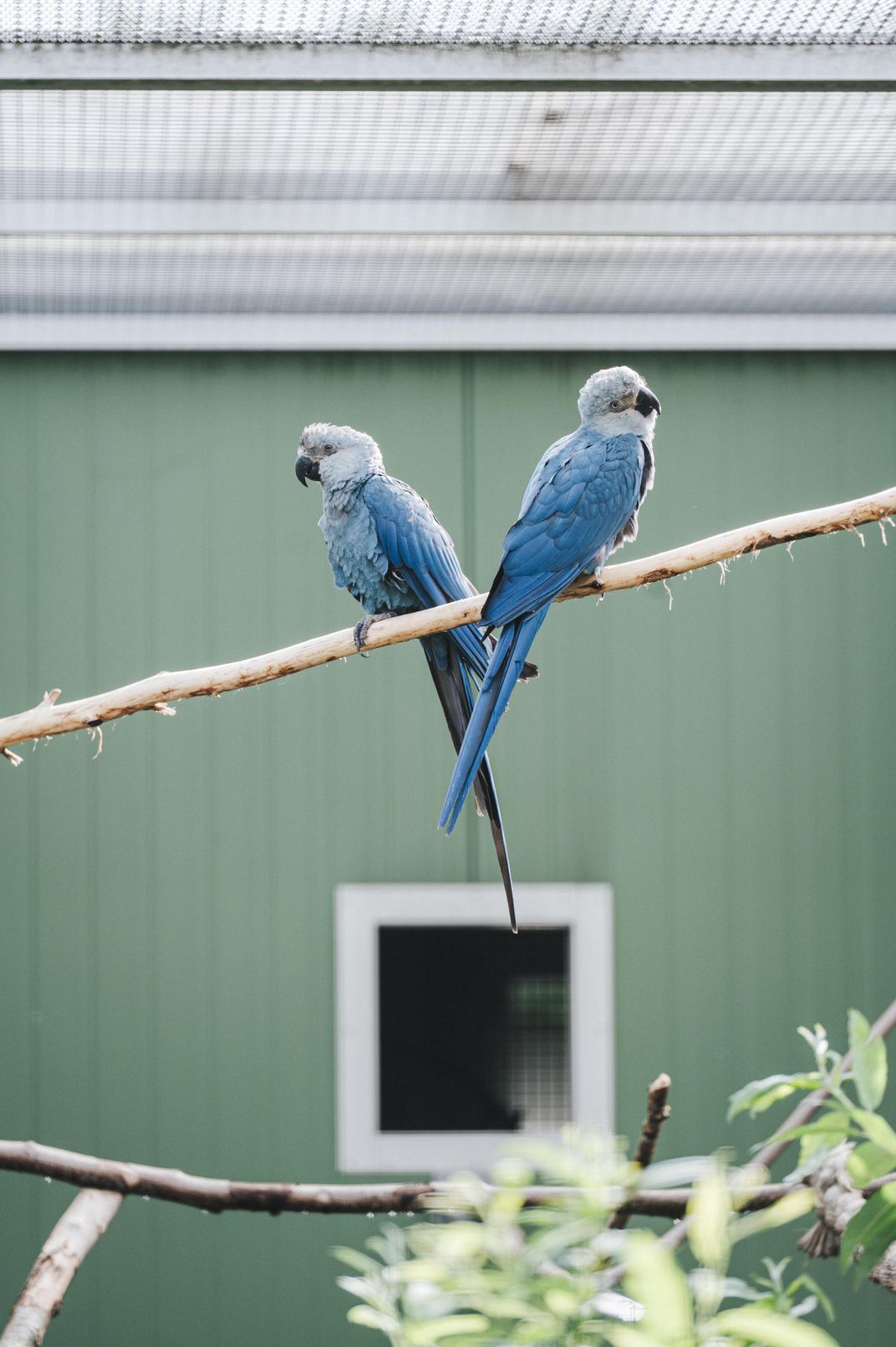
But the Brazilian government, which demands a say involving any transaction of Spix’s macaws, suspected the Indian transfer was a commercial deal in violation of its agreement with ACTP. Enraged, Brazil severed its partnership with ACTP. Though the German group was permitted to continue monitoring the birds at the aviary and prepare for another release, Brazil was coming to regard the outfit as a rogue operation that required tighter scrutiny. “ICMBio believed that ACTP wasn’t being transparent enough to establish a healthy partnership,” Martins said. “And the folks at ACTP felt that ICMBio was getting in the way.”
In early 2025, ACTP field researchers observed a fledgling, wild-hatched Spix’s macaw with severe feather loss struggling to remain airborne. “The team shrugged it off, saying, ‘It’s fighting between the birds,’” recalls Estênio Marques de Lima, a Petrolina veterinarian who spent a year at the ACTP aviary. To Marques de Lima, however, the diagnosis was clear. “This was textbook circovirus,” he told me. “Which means it was contagious as hell.” On May 12, the center notified authorities that seven of its birds had tested positive for the pathogen, including the wild fledgling and six being prepared for release.
Alarmed, ICMBio officials entrusted the response to Sacramento, its top infectious disease specialist. Born in rural Mato Grosso State at the edge of the Amazon, Sacramento had built a reputation as an expert on the fish of freshwater ecosystems. She knew she had to move fast: The circovirus pathogen was highly contagious, especially among young birds, spreading easily through fecal matter, mucus and feather dust. Left unchecked, she says, it had the potential to ravage dozens of other parrot species that had turned the Caatinga into a favorite destination for biologists, amateur ornithologists and adventure tourists.
ACTP, meanwhile, disclaimed all responsibility, saying the pathogen could have come from a wild Brazilian parrot or even a pet bird sold in a local market. “We are very close to the creek system, and there’s constant interaction between wild birds and the Spix’s macaws,” Purchase told me. In addition, he said, free-flying native macaws often visited the outdoor breeding pens, drawn by curiosity about the captive flock, where they would hang on the fence—near enough to the captive birds to spread an infection. ACTP downplayed the danger, saying the virus had probably been circulating around Brazil for three decades without causing harm.
Skeptical, Sacramento began a line-by-line review of import documents that had accompanied the latest shipment from Guth’s German aviary: 41 Spix’s macaws flown across the Atlantic in January 2025. As she pored over clearances, Sacramento found a document showing that one Spix’s macaw had initially tested positive for circovirus in a German lab before leaving Europe. “At no point did ACTP communicate with ICMBio to say, ‘This one bird came back positive; how do we deal with it?’” Sacramento said. Instead, “They told us, ‘All of them are good.’” When ICMBio officials confronted ACTP, Crosta insisted that the initial finding was a “weak” positive. A second test at the same lab had shown the first result to be a “technical error,” he said, and both results had been noted in the documents. “There is no doubt that the animal was negative,” Crosta told me.
But Sacramento and other experts question that verdict, saying that there’s no such thing as a “weak” positive—and that the circovirus can become latent after a positive screening and reappear with new virulence. Moreover, they say, it is highly unlikely that a wild Brazilian bird could have transmitted the virus, which originated in Australia and has been found in wild parrot populations only in parts of Oceania, Southeast Asia and Africa. In Brazil, the virus has been seen in captive parrots and other psittacines and those known to have interacted with them. Given the reintroduction center’s extreme remoteness, however, the chances that any bird, even if exposed elsewhere, could reach the area were vanishingly small. Far more likely, many experts say, the pathogen originated in Guth’s aviary, which mixed parrot species in a high-density population ideal for spreading a virus.
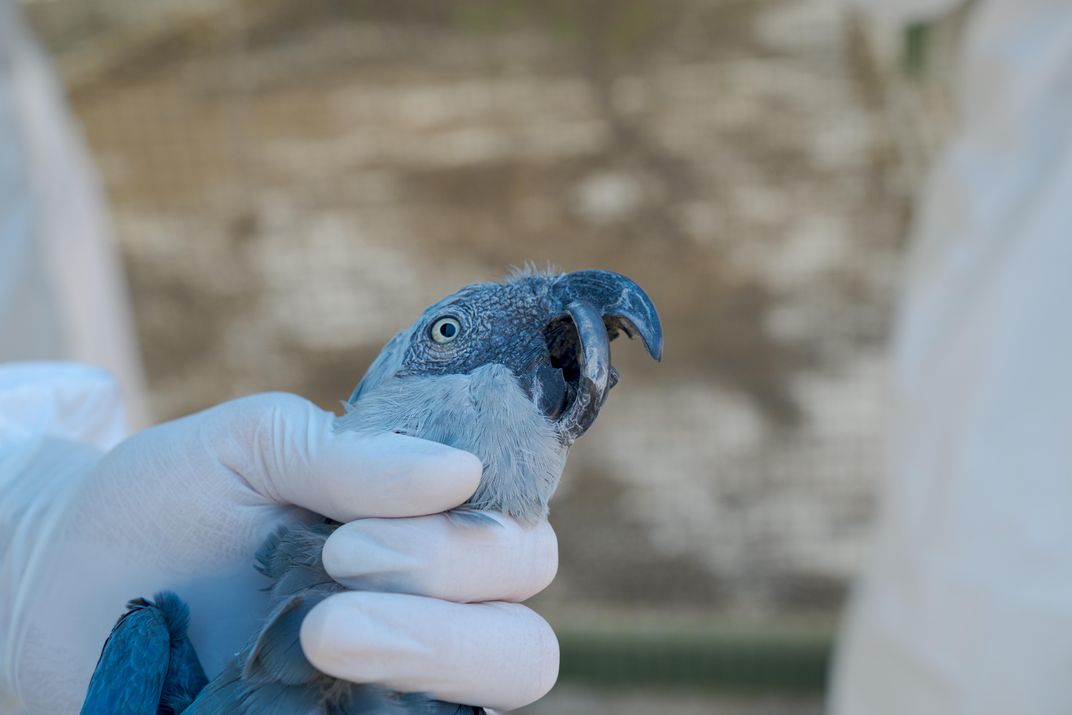
Guth says the idea that his Spix’s macaw was “patient zero” makes no sense. “Why should we invest so much money and risk our own birds’ survival?” he asked me. “Why should I bring the virus into my own program?” Moreover, he said, the bird he sent to Brazil spent six months in quarantine in Petrolina with 40 other Spix’s macaws, and not a single other bird became infected. (The birds that later tested positive, Purchase explained, were part of a separate cohort that, he said, almost certainly interacted with wild macaws.) “It is impossible,” Guth said, that his bird was a carrier.
In September 2025, Sacramento demanded that ACTP round up all the released birds for immediate testing. Purchase and his team refused, arguing that trapping them would subject them to stress and lower their immune response, with possibly fatal results. ICMBio should first sweep the wilderness for feathers, feces and other avian material, they argued, and only if that tested positive would ACTP comply with the order. Some experts say ACTP was clearly willing to risk the spread of virus in the wild rather than terminate the project. “Biosecurity is everything when you’re working on cases like this,” Reillo told me. “The first thing you do is recall all the birds for comprehensive testing. You say, ‘Let’s figure out what’s going on.’”
Meanwhile, Sacramento and her team inspected the re-introduction facility, and she says the irregularities were deeply troubling. The staff mixed infected and uninfected birds in the same pens and neglected disinfectant protocols, and handlers walked between aviaries in casual flip-flops instead of changing into sterile booties. Purchase acknowledges mixing the birds, but he says ACTP had little choice: Even birds that tested negative may have been silently incubating the virus, so moving them to quarantine with sick birds would doom them, and moving them to other pens could have spread the virus further. Instead, he says, they decided to “wait out the storm, testing regularly and removing positive birds as they became positive,” until they found sufficiently isolated aviaries on a neighboring property “which allowed us to make better separation.” He also argues that ACTP staff, by slipping into a new set of flip flops before entering each pen, maintained sterile conditions, but to Sacramento’s eye the shortcut was a failure of containment—making it easy to trail virus-infected feather dust and feces into pens filled with uninfected birds.
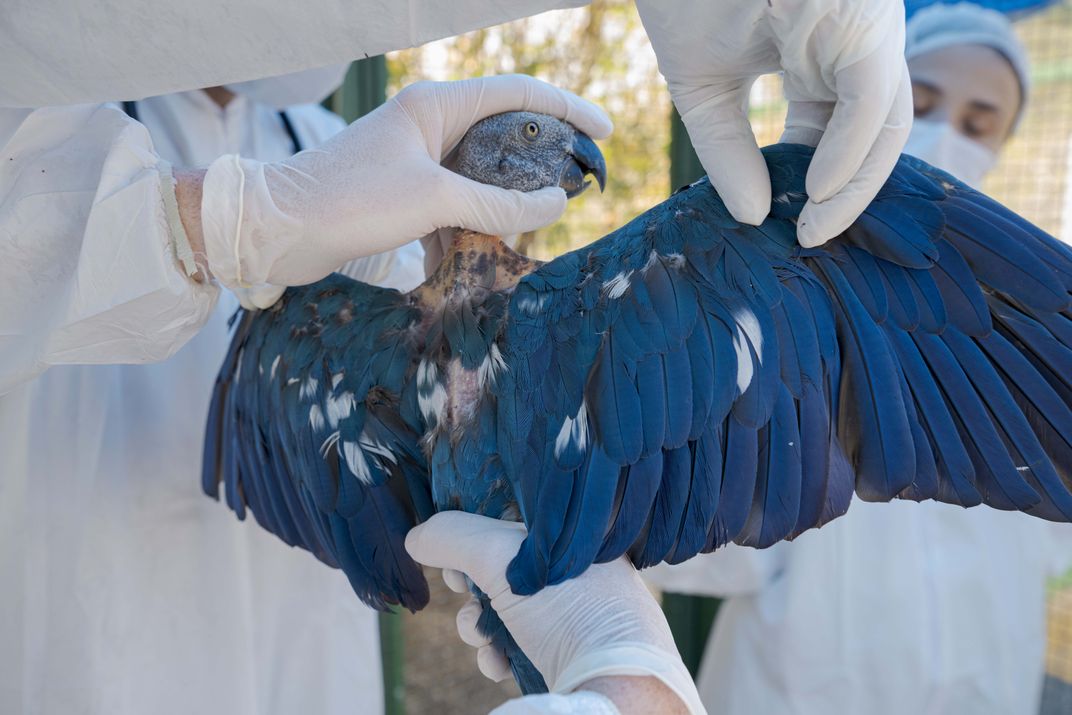
On November 2, 2025, federal police arrived in Curaçá, brandishing a court order to recapture the 11 remaining released macaws. Over the next seven days, Sacramento and her team cut off their food, lured them from the forest canopy and locked them into cages. A laboratory in São Paulo tested feathers, blood and PCR cloacal swabs and found that all 11 birds had the circovirus; some suffered from disfiguring symptoms such as the splintered beak, which made eating nearly impossible. Sacramento’s team unearthed 23 additional positive cases festering within the facility’s supposedly secure captive population—evidence, she says, that ACTP’s antivirus safeguards were ineffective. Crosta insists that ACTP’s own PCR screenings in a more “reliable” Berlin lab showed a far lower number: Only 2 of the 11 released birds tested positive. He suggests the Brazilian lab mishandled the samples. “We used a lab that was working for more than ten years with circovirus,” he told me. “There was less risk of contamination.”
Purchase and his colleagues maintain that while a handful of birds have shown severe symptoms of the disease, the wider ecological threat is limited. White, the U.S. Fish and Wildlife officer who advised the program, supports their position. “Recapturing those wild birds and bringing them back to captivity, in the absence of any clear evidence of an existential threat to the wild...was a huge overreaction,” he says. ACTP characterizes the police raid as an act of bureaucratic overreach masquerading as conservation. “It looks like the Brazilians wanted to take back control,” Purchase told me. “It’s about Brazilian pride in wanting to own everything.” Sacramento argues that by the time the police intervened, the question was no longer who controlled the project but whether the country’s native parrots could be protected from it.
The federal intervention, called “Operation Blue Hope,” brought one of the 21st century’s boldest reintroduction efforts to a screeching halt. In Brazil, the remaining captive Spix’s macaws—the infected and the healthy alike—now dwell in small cages in a state of indefinite quarantine. Because circovirus had never before been seen in Spix’s macaws, ICMBio is monitoring the sick birds to understand its long-term effects while seeking a treatment or a cure. The Brazilian government insists the birds will not be euthanized, and some Brazilian veterinarians are holding out hope that the South American parrots may be spared the severest symptoms seen in their Australian counterparts, and that many might survive. (Not a single Spix’s macaw has yet died from the disease.)

Subscribe to Smithsonian magazine now for just $19.99
This article is a selection from the December 2026 issue of Smithsonian magazine
Guth’s compound in Germany, meanwhile, now houses 204 Spix’s macaws, including dozens of chicks that were once slated for a triumphant trans-Atlantic release into the wild. ICMBio fined ACTP the equivalent of about $330,000 for negligence in handling biosecurity protocols, and the Brazilian Federal Police launched criminal investigations, confiscating phones, laptops and other evidence to determine how the virus spread. Guth, in turn, told me he planned to file his own lawsuits in Brazil, demanding that the Brazilian government prove that the circovirus originated in his aviary in Germany, though no such legal action has yet been taken. “This was my dream, but this country is so ungrateful for what I have done,” he said.
Guth’s critics say the outbreak demonstrates the dangers of placing such a sensitive project in the hands of a controversial breeder with a reputation for bending the rules. One leading American parrot researcher, who asked to remain unnamed because he regularly interacts with figures from across the parrot conservation world, draws a contrast with the World Parrot Trust, which has successfully overseen reintroductions of endangered parrots across Latin America, and with far smaller budgets. In Costa Rica, a 16-year effort has returned 130 great green macaws to the wild. At Copán, in Honduras, about 150 scarlet macaws again fly above Maya ruins rich in parrot iconography. “We’re in this situation because someone played fast and loose with the rules and set back parrot conservation in Brazil and the rest of the region,” the researcher says. “The question is: For how long? Could it be decades? For me, that’s the scary part.”
Marcelo Marcelino, ICMBio’s director, insists that Brazil hasn’t ruled out seeking another partner if circumstances allow it. “We’re testing other bird species in the Caatinga, taking samples of the environment, such as feathers, to check if traces of circovirus exist,” he said. “If it’s a safe environment, we’ll begin the project again.” Mongabay recently reported that Brazil has held preliminary discussions with Vantara, the Indian wildlife center, about a potential future partnership. For now, however, Brazilian officials say their priority is to make sure that the circovirus doesn’t become a regional calamity.
Near the end of my trip, I drove 110 miles southeast of Curaçá to the Canudos Biological Station, where I checked into a spartan lodge used mostly by scientific researchers. At 4 a.m. the next day, Guilherme Feitosa, a park ranger, picked me up in his truck, and for an hour we raced along a red-earth track, then parked and hiked across a moonscape of gullies, soft sand and fractured rock.
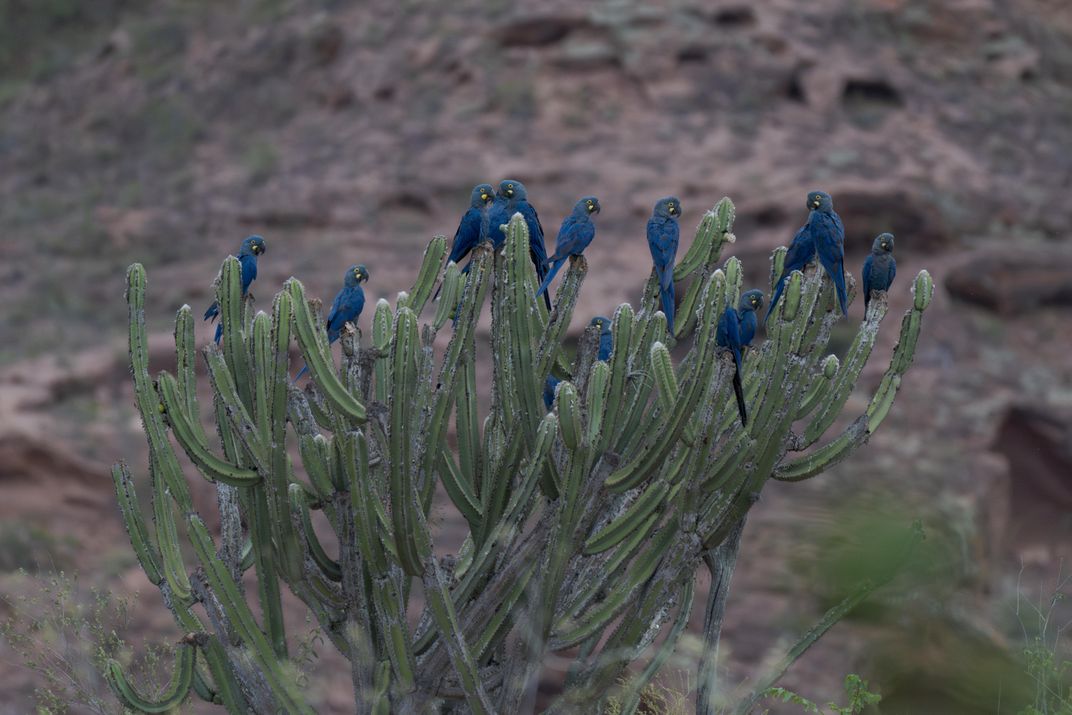
The Canudos preserve is home to the nesting grounds of the Lear’s macaw, another endangered blue parrot, about three times the size of the Spix’s, that nests inside cavities in eroded sandstone cliffs. Feitosa and his colleagues have been carrying out a perilous task: rappelling into the canyons to collect blood samples from chicks to test them for the circovirus.
Fifty years ago, the Lear’s population had dwindled to just 54 birds, but ICMBio’s Lear’s Macaw Integrated Management Program—in which employees plant fruit-bearing trees, monitor nests and enlist local populations to report traffickers—has brought the numbers up dramatically in two generations. There are now some 2,500 birds. If the circovirus escapes the Spix’s reintroduction area, however, their survival will once again be in jeopardy.
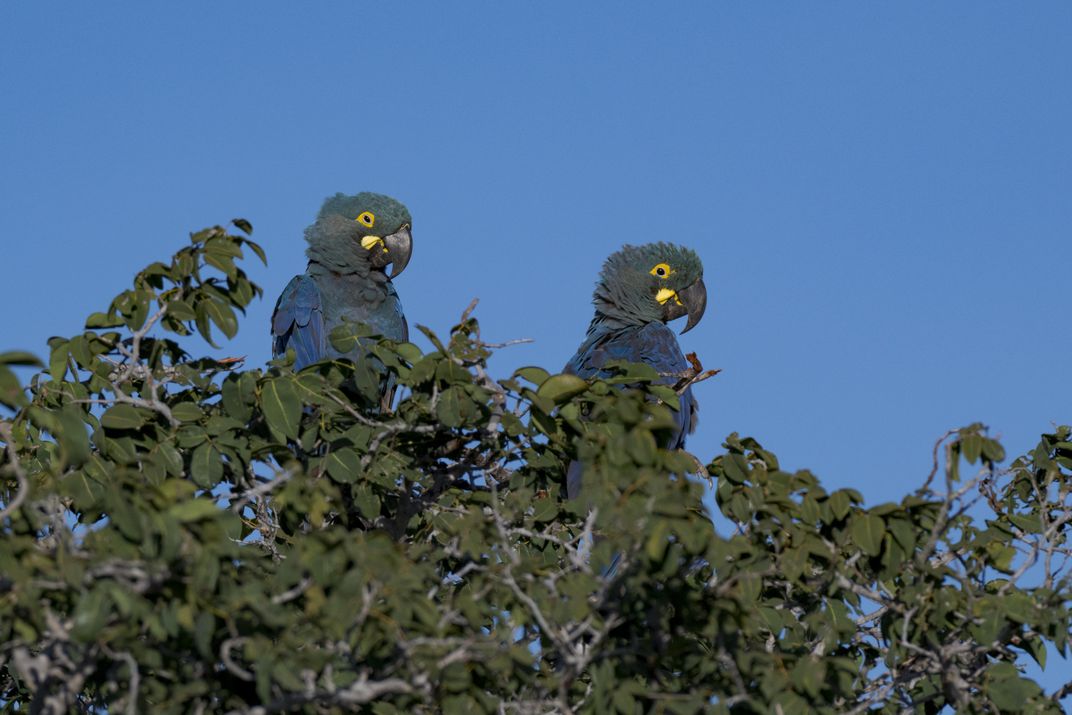
At first light, Feitosa and I reached the rim of a sandstone canyon nearly 400 feet deep. Its walls were honeycombed with small caves where the parrots nest beyond the reach of most predators, including black-chested buzzard-eagles. Ten days before my visit, Feitosa had strapped on a harness, descended the cliff face and shone a flashlight into each cavity until he found a chick. “We’ve counted between 200 and 220 inside this canyon,” Feitosa said. “Some of these cavities are like mazes. The nests can be 20 meters deep inside the cave.” The chicks responded by rolling onto their backs and feigning death, an instinctive defense that made it easier to draw blood from a vein beneath the wing. Now Feitosa was waiting nervously to receive the findings from a laboratory in São Paulo. “The chicks that we’ve tested haven’t shown any signs of sickness—they looked healthy,” he said. But even a single positive test could have disastrous consequences for the species. Weeks later, to the relief of Feitosa and many others, the results came back negative.
As the eastern sky brightened, the first faint calls echoed from below. One macaw pair climbed out of the canyon, then another. Within minutes the silence gave way to an explosion of screeches. Blue parrots streamed from the cliffs in every direction, crossing a dawn sky streaked with ribbons of orange and pink. Some flew in pairs, others in trios, others in flocks of five or ten. The birds spread across the terrain, coming to rest on cactuses or licuri palms. From another canyon a mile away came a second chorus of cries, until it seemed that the entire landscape was erupting in pandemonium. The spectacle brought the fates of two of the world’s most endangered bird species into poignant focus. Lear’s macaws still belong to the wilderness. Spix’s macaws languish in cramped cages, their uncertain future tangled up in forced quarantines, judicial warrants and competing claims on the truth.
In Berlin, I asked Guth what he thought of Marcelino’s suggestion that Brazil might restart the Spix’s reintroduction program with another partner. He countered that rebuilding it from scratch would be a monumental undertaking. “They have to figure out how to make the birds fly again,” he told me. “I guarantee that you will not see any bird flying over the next 10 or 20 years.” In the next breath, however, he insisted that he would be prepared to help, should anyone ask. “I will make my birds available,” he told me. “Why not?”
