
When a Carpenter in California Found a Nugget of Gold, It Started a Rush Toward Nothing Less Than the Modern World
A new book by historian Nathaniel Philbrick makes the case that James Marshall’s 1848 discovery set in motion events from the Civil War to the rise of Silicon Valley
/https://tf-cmsv2-smithsonianmag-media.s3.amazonaws.com/filer_public/9d/c7/9dc74015-d150-42ac-81a6-6af173b2c2fe/sia-98-4800.jpg)
On January 24, 1848, a carpenter named James Marshall found a nugget of gold while building a mill in the foothills of the Sierra Nevada. This moment started the gold rush that would bring thousands to the territory known as California. In The Rush: California Gold, the Civil War and the Making of the Modern World, the latest book by prolific historian Nathaniel Philbrick, Marshall’s discovery is a decisive historical moment, sending a fledgling nation “hurtling toward a reckoning not only with slavery but with its geographic immensity.” (The Smithsonian holds a nugget, above, thought to have been discovered by Marshall.)
The Rush is built on an enormous body of existing scholarship, and Philbrick synthesizes this research into a lively and accessible narrative. California was a highly disputed land when Marshall made his fateful find, poised to tip the balance between the Union’s 15 enslaving and 15 free states. Philbrick neatly evokes the politics, people and technologies that animated the period. He refers to the era’s collective technological and cultural accelerations as “the Rush” and invokes this force as the catalyst for events as disparate as the Civil War and the advent of moving pictures.
“Life in California,” Philbrick argues, “could be cruel and unforgiving, but it was also filled with excitement, promise and—if you were a white American—immense freedom.” As Philbrick introduces us to the future barons who planned the Central Pacific line, he also reports on the lives of the Chinese workers who built the railway under intolerable conditions. Alongside politicians who maneuvered the Union into civil war, we meet outsiders who managed to drive events, including Mary Ellen Pleasant, a Black entrepreneur who built a laundry empire in San Francisco and funded abolitionist causes. Reportedly, she even posed as a jockey to travel to Virginia plantations to spread word of John Brown’s planned raid on Harpers Ferry.
As Philbrick describes the era’s personalities, vast wealth, racist violence and deep contradictions, he underlines their echoes in our own time. Californians in the 19th century, he writes, “wrestled with a question that Americans are still asking today: Just who are we?” The book’s final chapter, “Palo Alto,” links the events of the rush to the technology boom of Silicon Valley and offers a partial and foreboding answer to the question. “Like it or not,” Philbrick observes, “we are all passengers on a hurtling train.”
Fun fact: California's population boom
-
In 1849, around 100,000 people reached California looking to capitalize on the rush. That included around 40,000 people arriving by sea, plus 25,000 to 30,000 others traveling by land across the Plains.
-
Foreigners seeking a piece of the rush included immigrants from China, Mexico, Chile, Hawaii and Europe. In 1852 alone, some 20,000 Chinese immigrants arrived in California, accounting for nearly 30 percent of that year’s immigration to the state.
-
San Francisco’s growth is illustrative. In 1848, the city’s population was around 850. That number rose to 5,000 by July 1849, and to a whopping 25,000 by December 1849.
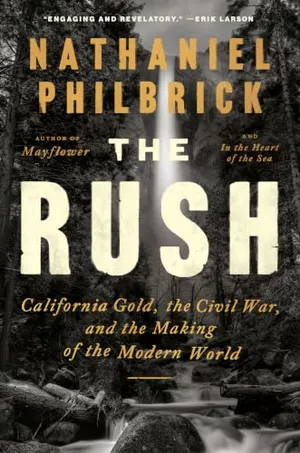
The Rush: California Gold, the Civil War, and the Making of the Modern World
In The Rush, Nathaniel Philbrick transforms the Gold Rush from a tale of sudden riches into the origin story of America’s modern contradictions
/https://tf-cmsv2-smithsonianmag-media.s3.amazonaws.com/filer_public/6b/85/6b85bf6c-e32d-47a5-ae26-56f2a6676e43/september-october-2026.webp)
Subscribe to Smithsonian magazine now for just $19.99
This article is a selection from the September/October 2026 issue of Smithsonian magazine

A Note to our Readers
Smithsonian magazine participates in affiliate link advertising programs. If you purchase an item through these links, we receive a commission.