
This African Prophet Was Burned at the Stake 320 Years Ago. Today, Kimpa Vita Is Celebrated as the ‘Kongolese Joan of Arc’
Dona Beatriz Kimpa Vita believed herself to be possessed by the spirit of St. Anthony. The movement she led in the early 1700s promoted an Indigenous African form of the Christian faith

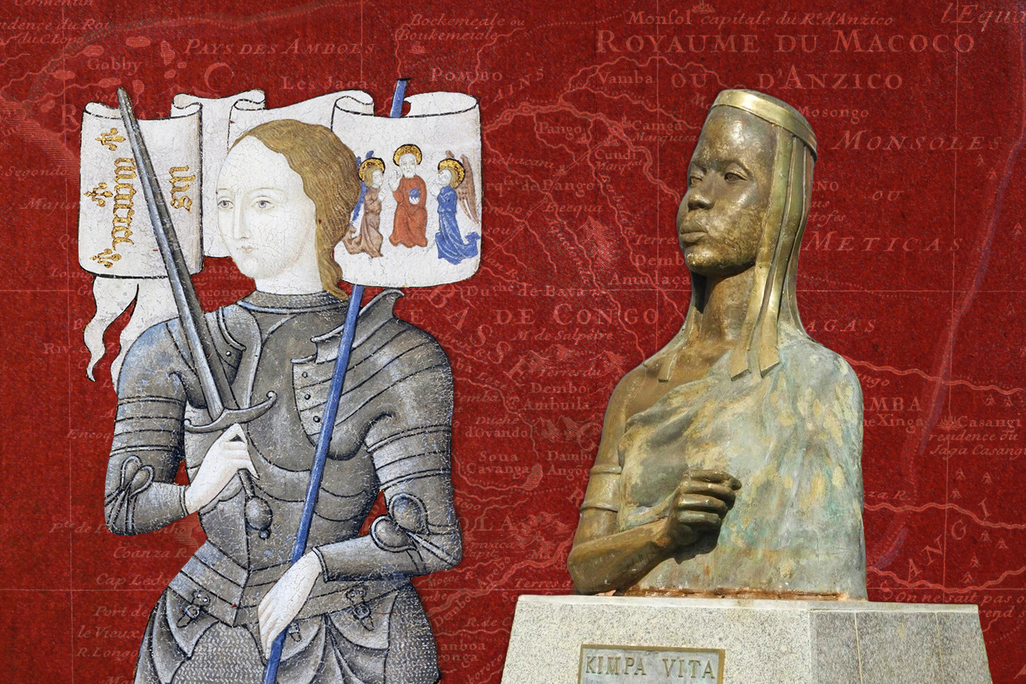
In early July, dozens of women in Congolese finery of red and white gathered in the suburbs of Paris to mark an unusual anniversary: the burning at the stake of an African noblewoman by agents of the Catholic Church 320 years prior.
The Kongolese prophet Dona Beatriz Kimpa Vita was executed as a heretic on July 2, 1706, after raising a movement that challenged Catholic orthodoxy in the west-central African Kingdom of Kongo. At the time, Kongo was beset by war and under pressure from the colonial power of Portugal. Kimpa Vita rejected this foreign influence and called for the restoration of the kingdom’s former glory. Today, the countries that succeeded Kongo—particularly the Democratic Republic of Congo and Angola—celebrate her as a national heroine akin to a Kongolese Joan of Arc.
“We pay tribute to … this young woman, heroine and prophetess whose commitment to the awakening of consciences and the defense of her people marked her era and continues to resonate with us,” Tanya Mukendi, one of the organizers of the Paris event, told a Congolese news agency in July. “Faced with the dangers of imminent social collapse, she transcended her condition by calling for a collective awakening of the human conscience.”
Need to know: Joan of Arc
- Joan of Arc was a French peasant who claimed to be guided by visions of saints and angels.
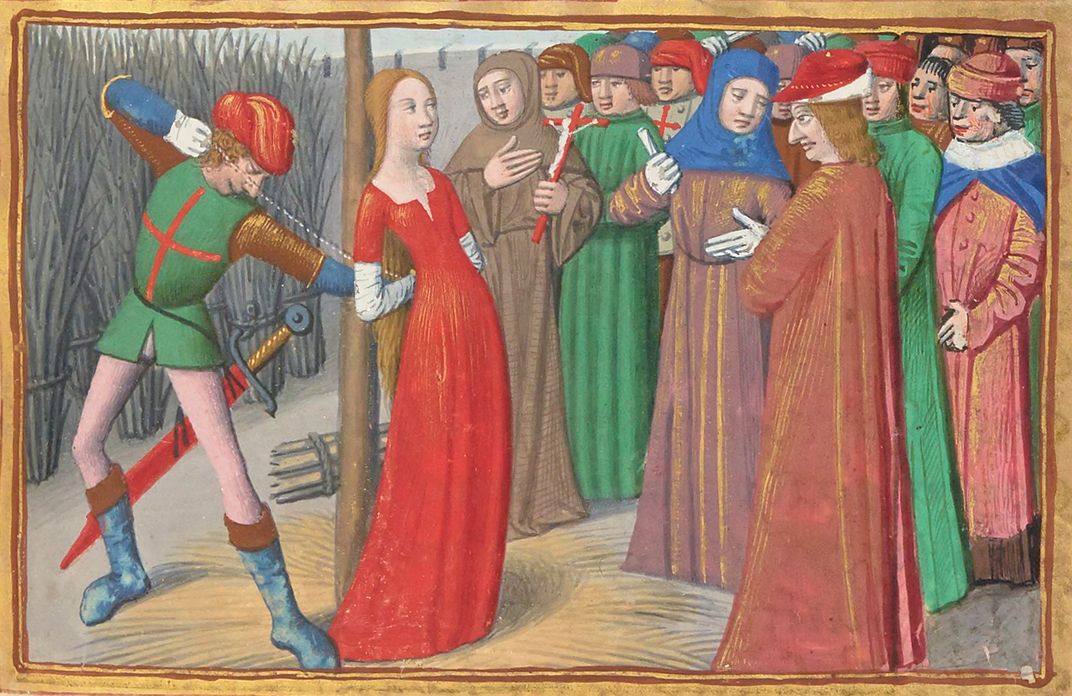
- Joan led her people to victory against the English at the 1428-29 Siege of Orléans but was captured and burned at the stake as a heretic in 1431, when she was around 19 years old.
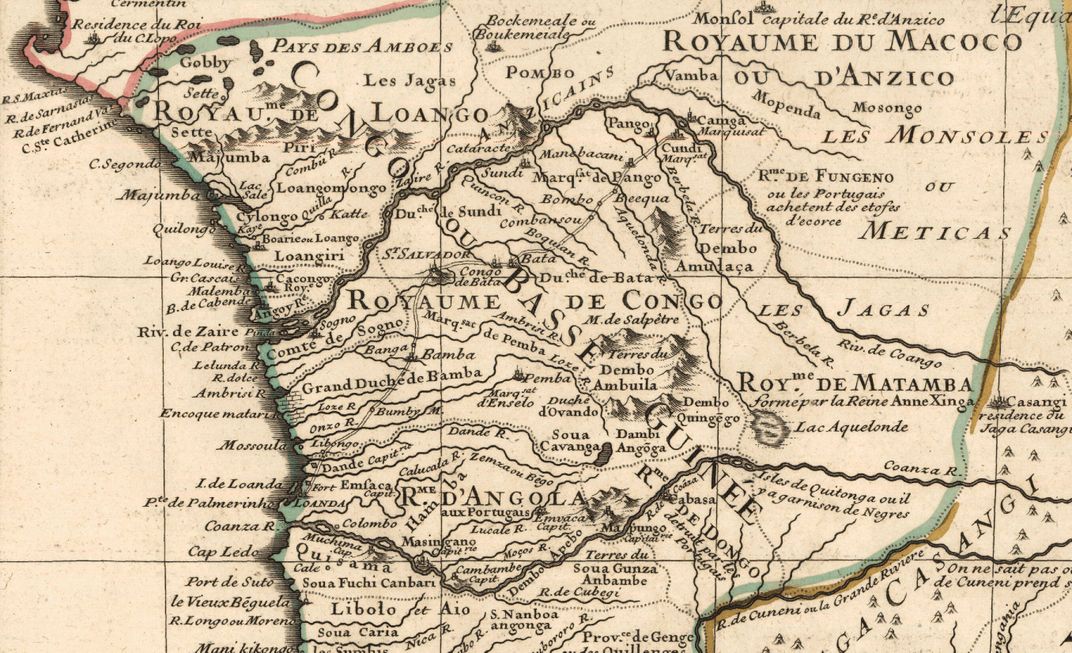
The world of Kimpa Vita was indeed on the very edge of collapse. In the late 17th century, Kongo was ripped apart by a bitter civil war. The Kongolese king António I was beheaded by a Portuguese army in 1665, with his son captured and his crown and scepter taken back to Lisbon as trophies. His once-great capital, São Salvador (now M’banza Congo in Angola), lay in ruins, and a series of pretenders to the throne set up rival camps across the once-vast African kingdom. In the mountainous region of Kibangu, claimant Pedro IV ruled with dubious authority, backed by Portuguese and Italian Capuchins of the Catholic Church.
Catholic missionaries had first arrived in Kongo nearly 200 years earlier, in the late 15th century. But the church had only ever maintained a scant presence in the region. “That the Portuguese would evangelize the country [themselves] was really out of the question” based simply on lack of personnel, John Thornton, a historian at Boston University and the author of The Kongolese Saint Anthony: Dona Beatriz Kimpa Vita and the Antonian Movement, 1684-1706, tells Smithsonian magazine. The few foreign priests in the region spent their time performing Christian marriages and baptisms, leaving the Kongolese to organize “their own educational system,” employing terms in the local Kikongo language “that sort of matched their own ideas of spirituality,” Thornton says.
This combination resulted in a dynamic fusion of Indigenous African and Catholic spirituality. A baptized Christian could also be a nganga marinda—a prophet, medium or healer employing the ancient arts of Kongolese religion. Such figures were often responsible for the religious education and welfare of the common people.
According to Thornton, Kongolese nobles who visited Europe seemingly found proof that theirs was a special kingdom. Early European maps of Africa sometimes placed the Garden of Eden in Kongo. Religious icons displayed across the continent also depicted Mary and Jesus with dark skin, suggesting the Holy Family might have been African in origin. Back in Kongo, Thornton says, these early encounters gave rise to a widespread belief that Christianity had been born in Kongo and that Jesus and the Virgin Mary were themselves Kongolese. “One of the ways [the Kongolese] sort of captured the religion was they took over its founding moments and put them in Africa,” the historian says.
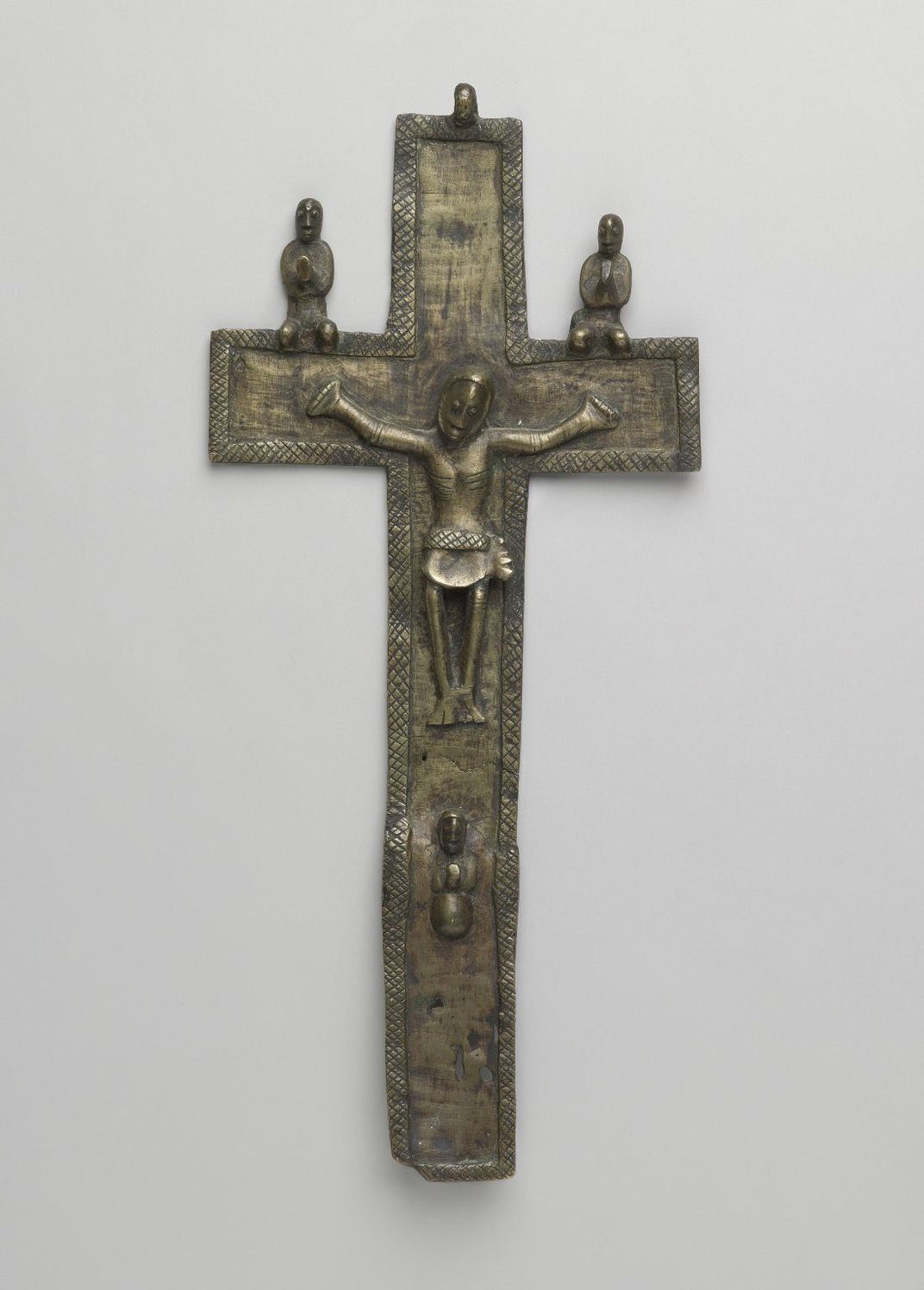
By the time of Kimpa Vita’s birth in the late 17th century, however, the Catholic Church was on a crusade to eradicate such “superstitions” and local variations, which had been widely mocked by Protestant reformers in Europe. An ugly thread of racial superiority was developing within Kongo’s Catholic missions. “The true Kongolese are very ignorant, oppressed by misery and superstitious,” Bernardo da Gallo, an Italian Capuchin missionary, wrote in a 1710 report. Biased as it is, da Gallo’s account is one of the most authoritative surviving records of Kimpa Vita’s life. (Dona Beatriz was her Christian name, while Kimpa Vita was her Kikongo name.)
Catholicism’s spread across Africa coincided with the rapid expansion of the trans-Atlantic slave trade. In 1452, Pope Nicholas V authorized Portugal to subjugate “enemies of Christ … and to reduce their persons into perpetual servitude.” Slavery was acceptable, the church argued, if used as a tool to evangelize nonbelievers—a group that included a growing number of Kongolese swept up in the civil war.
The kings of Kongo had once drawn a distinction between native Kongolese and foreign-born captives, deeming only the latter suitable for slavery. But the worsening conflict and growing demands posed by the slave trade—which reached its peak in the decades after Kimpa Vita’s ministry—ended the special status of Kongolese captives. On average, nearly 7,000 people annually were enslaved and sold out of Kongo between 1700 and 1709, all with the tacit approval of Catholic missionaries.
Born into Kongolese nobility in 1684, Kimpa Vita spoke out against not only the slave trade but also “the problems of war—displaced people, intransigent elites and the absence of popular checks on rulers,” Thornton wrote in his book. She lived during a time of immense spiritual upheaval. Around the turn of the 18th century, a series of prophets claimed that Jesus was angry at the Kongolese people—especially their king, Pedro—for failing to restore the kingdom. Preaching across the countryside, these individuals burned ritual objects alongside Catholic crucifixes and issued dark warnings of judgment from above if the capital city of São Salvador was not reoccupied.
Kimpa Vita joined the prophets’ ranks after falling seriously ill in 1704. On the verge of death, she saw a vision of a friar “dressed as a Capuchin, who said he was St. Anthony, sent from God into her head to preach to the people and hasten the restoration of the kingdom,” according to da Gallo.
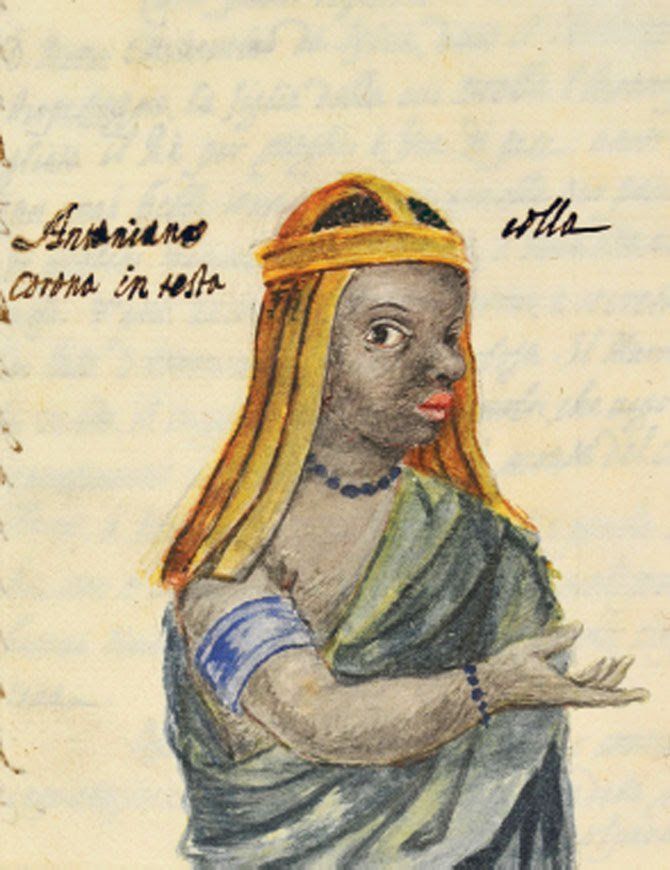
The young woman rose from her bed, convinced that she’d been possessed by Anthony, and set out with a new mission in mind: “the revitalization of the kingdom through adherence to a vision of Catholicism that was set firmly within Kongo history and geography,” Alexander Ives Bortolot, an expert on African art history, wrote in a 2003 essay. “Although the [Antonian] movement recognized papal authority, it was hostile to European missionaries, whom it considered corrupt and unsympathetic to the spiritual needs of Kongolese Catholics.”
When reports of Kimpa Vita’s campaign first reached him, da Gallo was dismissive. “‘Bah, get lost,’ I replied,” he admitted in his account. But the messenger assured him that “this is certainly something new”: a miracle worker unafraid of saying that Jesus was Black, that São Salvador was Bethlehem and that the Capuchins didn’t want Black saints in Kongo.
In what survives of her theology, Kimpa Vita presented a version of Christianity “closer to the Protestant ethics of free interpretation and universal priesthood than to the confession of sins, which is one of the core sacraments in the Catholic Church,” sociologist Aurélien Mokoko Gampiot wrote in his 2017 book, Kimbanguism: An African Understanding of the Bible.
Kimpa Vita decried Catholic ritualism and its emphasis on sacraments. In a reworking of the Catholic prayer Salve Regina, or Hail, Holy Queen, she instead focused on the importance of intention: “Hail, you say, and you don’t know why,” she said, as reported by da Gallo. “God wants intention, intention God takes. Marriage serves no purpose. … Baptism serves no purpose. … Confession serves no purpose. … Good works serve no purpose. God wants the intention.”
Some of the prophet’s theology, though, was more unusual. She called Anthony a “second God,” suggesting he was “above the angels and the Virgin Mary.” She also asserted that Black and white people were made of fundamentally different matter: Africans from the living bark of a sacred fig tree and white colonizers from an inert and chalky stone.
Kimpa Vita’s sizable following of “little Anthonys” soon occupied the fallen temples of São Salvador, threatening to challenge Pedro’s authority. Da Gallo, fearful of losing his own tenuous position, hesitated to denounce her—but he needn’t have worried. Kimpa Vita would soon cement her own downfall.
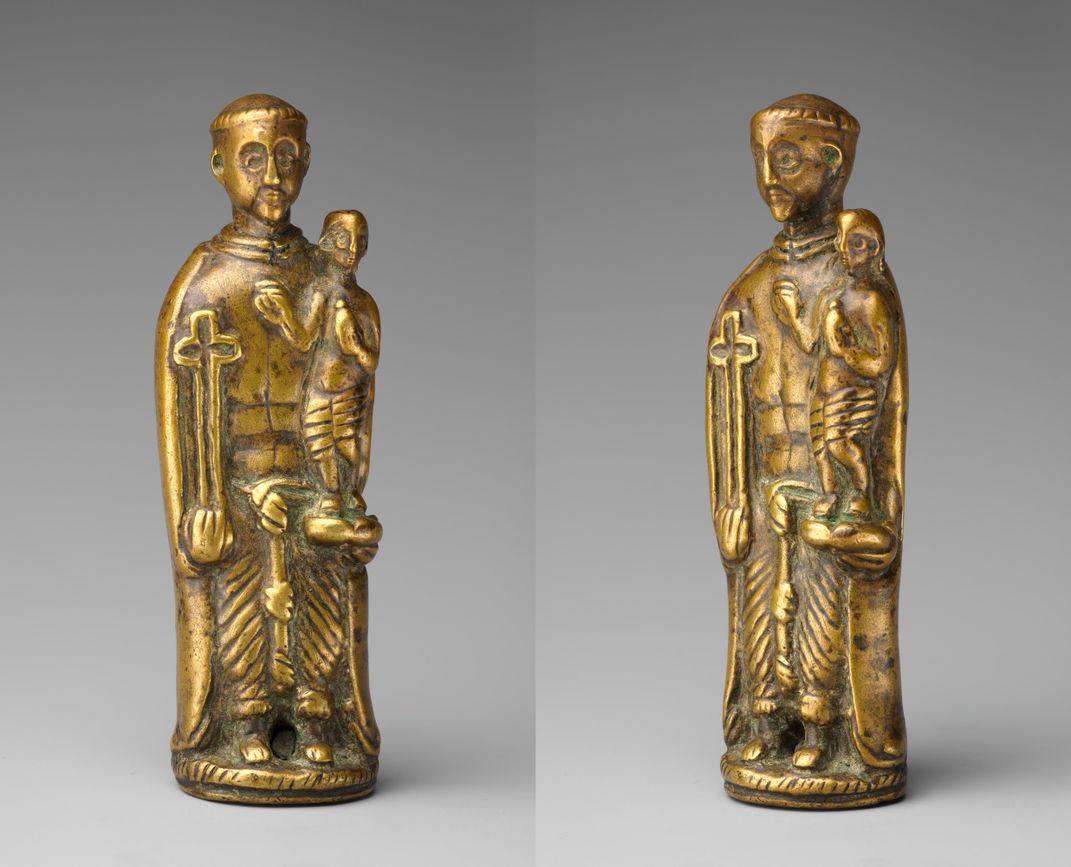
In early 1706, Kimpa Vita established a pattern of “dying” each Friday and resurrecting the following Monday. Her main attendant, a “guardian angel” named João Barro (she called him St. John), would accompany her on these supposed visits to heaven. (In truth, the pair simply retreated to Kimpa Vita’s house behind the ruins of São Salvador’s cathedral.)
This routine began as an attempt to conceal the fact that Kimpa Vita was pregnant with Barro’s child. As the prophet’s due date approached, she announced that she would be spending an extended amount of time in heaven. Not long after, ambassadors for a rival royal faction heard a baby crying in the wilderness of Kibangu. When they investigated, they found Kimpa Vita, Barro and their child.
The envoys promptly delivered the trio to Pedro. Under interrogation, Kimpa Vita maintained that “the virtue with which she had worked to repopulate São Salvador, God had given to her,” da Gallo wrote. “She then lost it because of her sins, which had reduced her to this state.”
The Kongolese king was unsure of how to proceed. Although Pedro was “inclined toward mercy,” Thornton wrote, he knew that her survival “represented a serious and popular counterargument to his own plans for a negotiated, noble-led restoration of Kongo.” Pedro considered forcing Kimpa Vita to stand trial before the bishop of Kongo and Angola, in faraway Luanda. But da Gallo disapproved of this plan, noting that “the Antonians, who had spies everywhere, even in the king’s house, could easily block the road and recapture their saint with impunity.”
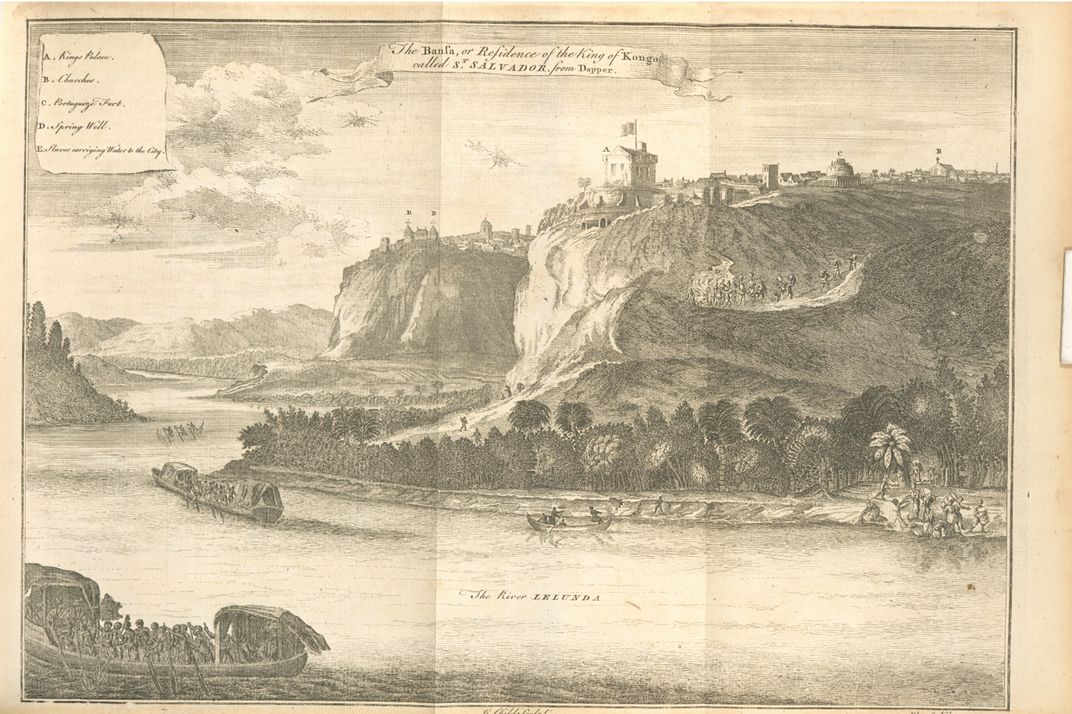
Ultimately, a coalition of royal and religious authorities sentenced Kimpa Vita and Barro to death. On the day of the execution, the crowd that had gathered to witness the prophet’s execution grew violent, attacking her and her lover “like so many mastiffs,” da Gallo recounted. “The stunning noise of the outcry might have killed them before they arrived at the scaffold,” but in the end, both succumbed to the flames. “The poor false St. Anthony, who was used to dying and resuscitating, this time died and did not resuscitate,” da Gallo remarked smugly.
After Kimpa Vita’s death, records of the Antonian movement that she’d started are scarce. “If her movement survived, we might easily have missed it,” Thornton tells Smithsonian. But Kimpa Vita’s legacy was itself resurrected decades and even centuries later. Kongo became a Portuguese vassal state in 1888 and remained so until 1914. That year, a Kongolese uprising prompted the Portuguese to dissolve the kingdom and absorb it into the existing colony of Angola. It was only in the decades after World War II that Angola and other colonies that had once made up the Kingdom of Kongo finally gained their independence from European powers.
As the former inhabitants of Kongo and other oppressed peoples threw off the shackles of colonial rule, many looked to Kimpa Vita for inspiration. “She and her ideas lived on to inspire revolts in America; to inspire newly created Christian religious movements and doctrines; and even a movement to ask or demand recognition for her role, especially from the Catholic Church,” Benjamin Hendrickx, an emeritus historian at the University of Johannesburg in South Africa, wrote in a 2021 journal article.


Although Pope Paul VI rejected a campaign to make Kimpa Vita a saint in 1966, she remains an important religious figure in the Congolese diaspora, as evidenced by the Paris gathering commemorating her death this year. For many who have studied her story, later (and more successful) African religious movements—like that of the Congolese cleric Simon Kimbangu, who founded the separatist Kimbanguist Church in 1921—can trace a direct lineage to Kimpa Vita.
“Without having wielded any official power, Kimpa Vita is considered as a historic forerunner of African messianism and millenarianism,” a set of beliefs regarding a foundational transformation of society after an apocalypse-level event, Gampiot wrote in the Critical Dictionary of Apocalyptic and Millenarian Movements. “Today, she is revered as having planted the seeds of nationhood in Angola, Congo-Brazzaville and the Democratic Republic of Congo.”
As the Congolese author Petelo Nginamau once argued, Kimpa Vita “can be credited, to a certain extent, with being the mother of African independence, as a heroine of Black dignity and freedom.” At a time when even Christian missionaries saw Blackness as a sign of inferiority, Hendrickx wrote, she articulated “a doctrinal image of Blackness as the real, human color and of beauty, thus turning upside down the image.” And for that, more than three centuries later, she is still remembered.
