
A New Breed of Homesteader Is Turning the Abandoned Shacks of a Previous Era Into a Community in the Desolation of California’s Wonder Valley
The state once sold tracts of this arid landscape dirt cheap, but living there proved too hard without modern conveniences. It isn’t as inexpensive anymore, but people are giving the region another go
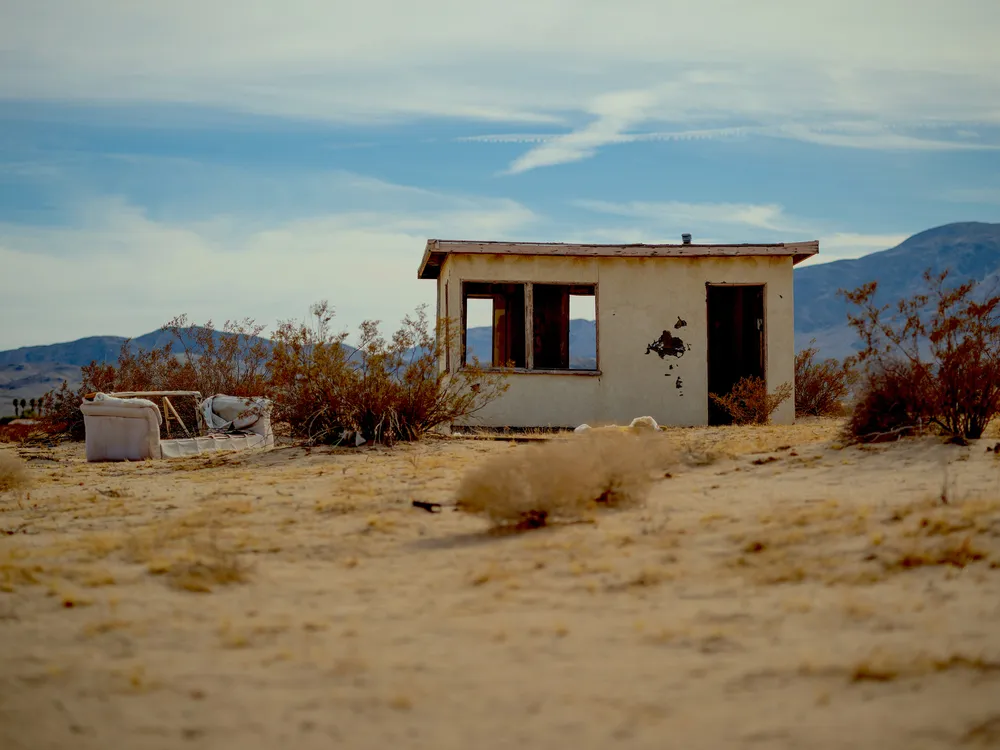
If you drive east through the Mojave Desert on California State Route 62, past the towns of Joshua Tree and Twentynine Palms, you reach a place called Wonder Valley. It’s a 150-square-mile expanse of rock, sand, dust and scrub, surrounded by low, jagged mountain ranges and possessing a desolate beauty. A thousand years ago, this stretch of desert was traversed by small groups of hunter-gatherers—Shoshones, Utes, Paiutes. They were supplanted by Serrano people, who were forcibly removed to reservations in the early 20th century. Then came a land rush, a heady era of fast-paced construction. Today the area’s most distinctive feature is hundreds of isolated cabins and shacks, most abandoned and derelict. They give the valley a look of haunted decrepitude.
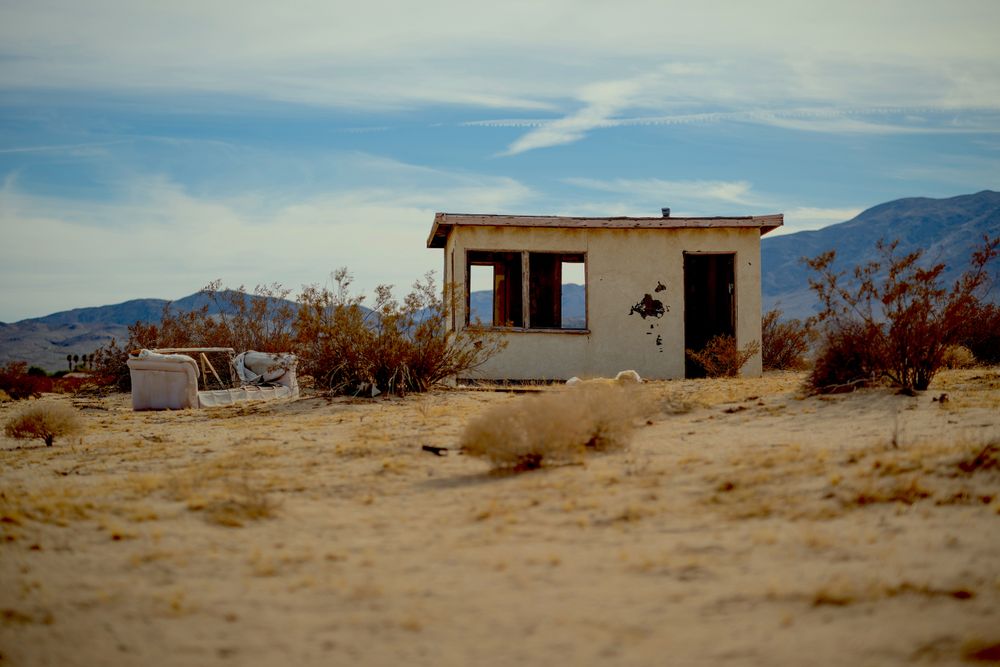
The artist Wayne Martin Belger, whose photographs illustrate this story, has been coming to Wonder Valley since the 1990s. Originally, he created eerie images of abandoned homesteads, forgotten architecture, failed dreams, the objects that people left behind and what he calls “the beauty of decay.” In recent years, though, he has begun to document a shift. A new wave of pioneers, dominated by artists, misfits and creative types, has moved into this harsh, unforgiving, remote place. Some are constructing new shacks and cabins. Others are renovating the dilapidated structures first built in the 1940s and 1950s, during the last great land rush in the lower 48 states.
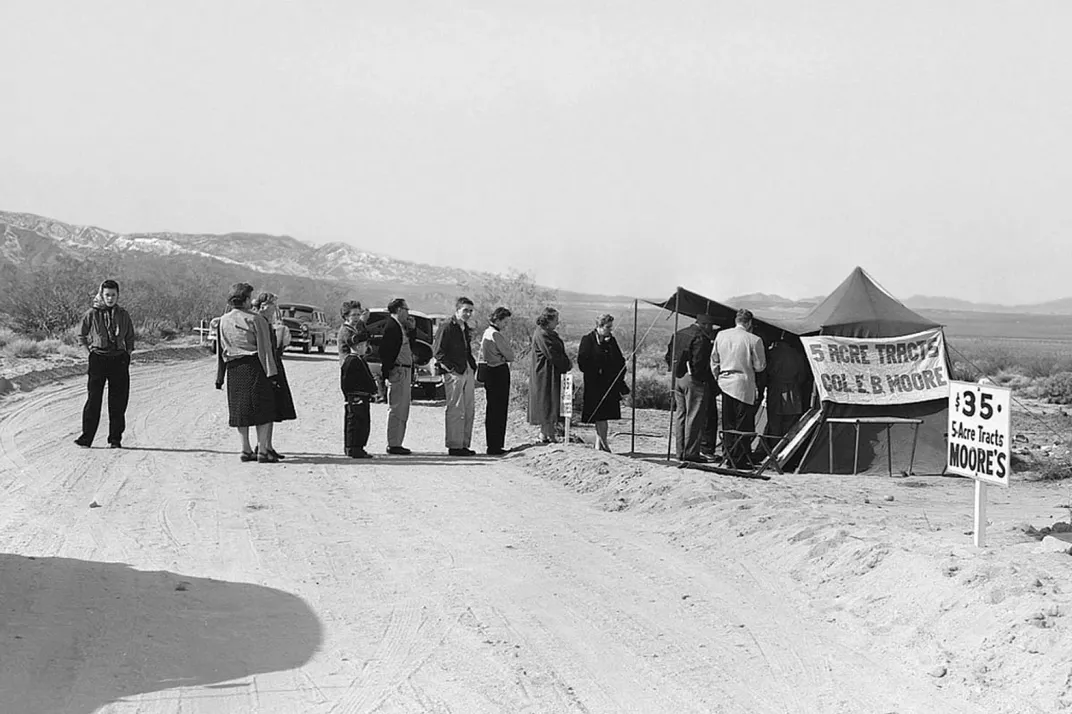
Back then, upwards of 27,000 lease applications were filed in California, mostly for five-acre lots in remote parts of the Mojave Desert that largely went to working-class Los Angelenos. The federal government had declared this land “useless” because it was too arid for farming or grazing, and that opened it up for settlement. Under the terms of the 1938 Small Tract Act, if homesteaders erected a small dwelling within three years of signing the lease agreement, they could buy the five-acre lots for a nominal fee—usually $10 to $20 an acre. These small dwellings became known as “jackrabbit homesteads.” They sprang up on federal lands all over the country, but their greatest concentration was in and around Wonder Valley, California.
Jackrabbit homesteaders were driven by the same basic impulse as earlier generations of American pioneers, according to Kim Stringfellow, an artist, writer and retired educator based in Joshua Tree and the author of the 2009 book Jackrabbit Homestead: Tracing the Small Tract Act in the Southern California Landscape, 1938-2008. “The desire to claim territory and own a piece of land is quintessentially American,” she says as we drive through Wonder Valley in dusty, apricot-colored light at the end of a blustery November day. “The difference here was that you couldn’t make a living from the land. This was recreational homesteading. People wanted to get away from the stress of city life and enjoy the silence and solitude of the desert.”
The Los Angeles Times called it “one of the strangest land rushes in Southern California history.” It turned into a full-blown craze after World War II, when gas and tire rationing ended and building materials became widely available again. Ronald Reagan, fresh out of the military in 1945, filed on a five-acre parcel near Twentynine Palms but apparently failed to “prove up” his lease by erecting a structure. Frank Sinatra was more diligent and secured a 2.5-acre homestead near Las Vegas in 1959. The federal Bureau of Land Management (BLM), which ran the program, put a temporary moratorium on new filings in the mid-1950s because it was backlogged with nearly 60,000 applications.
What the Los Angeles Times found so strange was the mass exodus of city people to a barren wilderness known for scorching heat, rattlesnakes and scorpions, with no infrastructure, utilities, modern conveniences or reliable water sources. Jackrabbit homesteaders either had to haul their water in vehicles or gamble on drilling a well that might end up expensive—and bone-dry. Low-cost air-conditioning units came on the market in 1947, but electricity wasn’t readily available in Wonder Valley until the late 1950s.
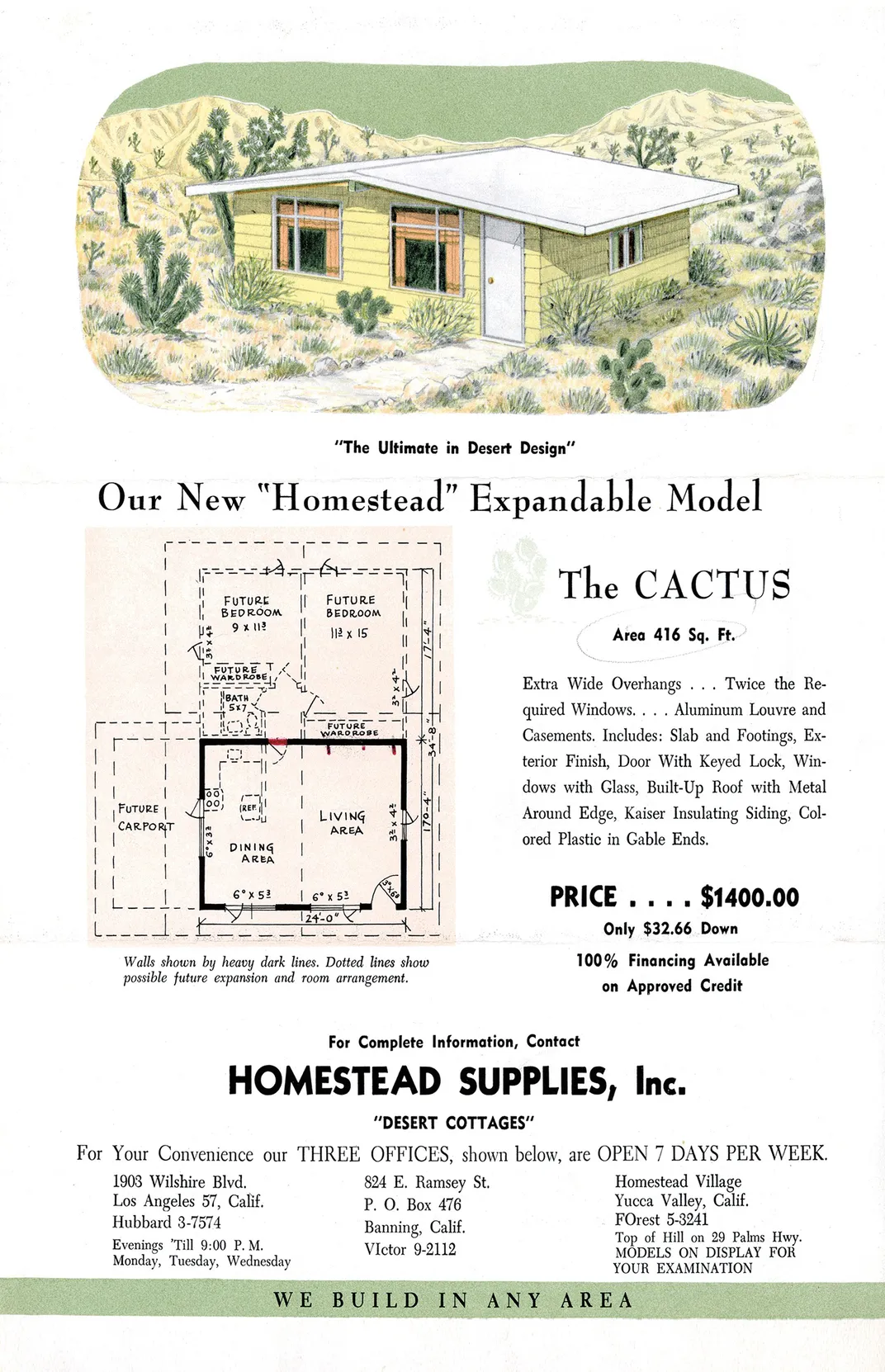
The more self-reliant homesteaders drove out into the desert with tools and supplies and built cabins themselves, but it was easier to buy a simple, inexpensive, prefabricated cabin or cottage. Homesteaders often gave amusing or self-deprecating names to their properties—Aching Back, Lizard Acres, Calloused Palms, Withering Heights—but they also marveled at the austere desert environment and the life-forms it sustained. According to local lore, one man unironically named his homestead Wonder Valley, and people started using the name for the entire community of homesteaders in the desert flats beyond Twentynine Palms. Stringfellow finds it interesting that they rejected the prevailing idea of the desert as a hostile wasteland. “If you look at their journals and the articles they published, they’re constantly expressing their love of the desert, their fascination with its plants and animals and geology,” she says. “Some of the best accounts are by independent single women who moved out here.”
Melissa Branson Stedman was a regular contributor to Desert magazine, a California-based monthly that promoted life in the Southwest. She was a city girl who caught the land rush fever and “became infected with the malady in its most virulent form,” as she described it. In March 1941, she said good riddance to Los Angeles and filed a claim in Morongo Valley near Joshua Tree. She dug a rainwater cistern and built an outdoor stone fireplace by herself. A friend helped her construct a 12-by-14-foot cabin, where she lived alone with a wind charger and a battery to power her radio and light, plus a pistol for protection. When she shot the first rattlesnake that intruded on her property, the magazine published a photograph of her proudly displaying its skin, which she’d cut and peeled away.
It’s impossible to say what proportion of Wonder Valley homesteaders were part-timers who occupied their properties mainly on weekends and vacations, but full-time residents like Stedman were always in the minority—and dwindled as the years went by. By the late 1950s, the fever had broken, and the land rush petered out. In 1959, the BLM began auctioning lots of land to the public at a fair market price, without the requirement to build a dwelling. “It became much more expensive to buy land out here, and that really ended it,” Stringfellow says.
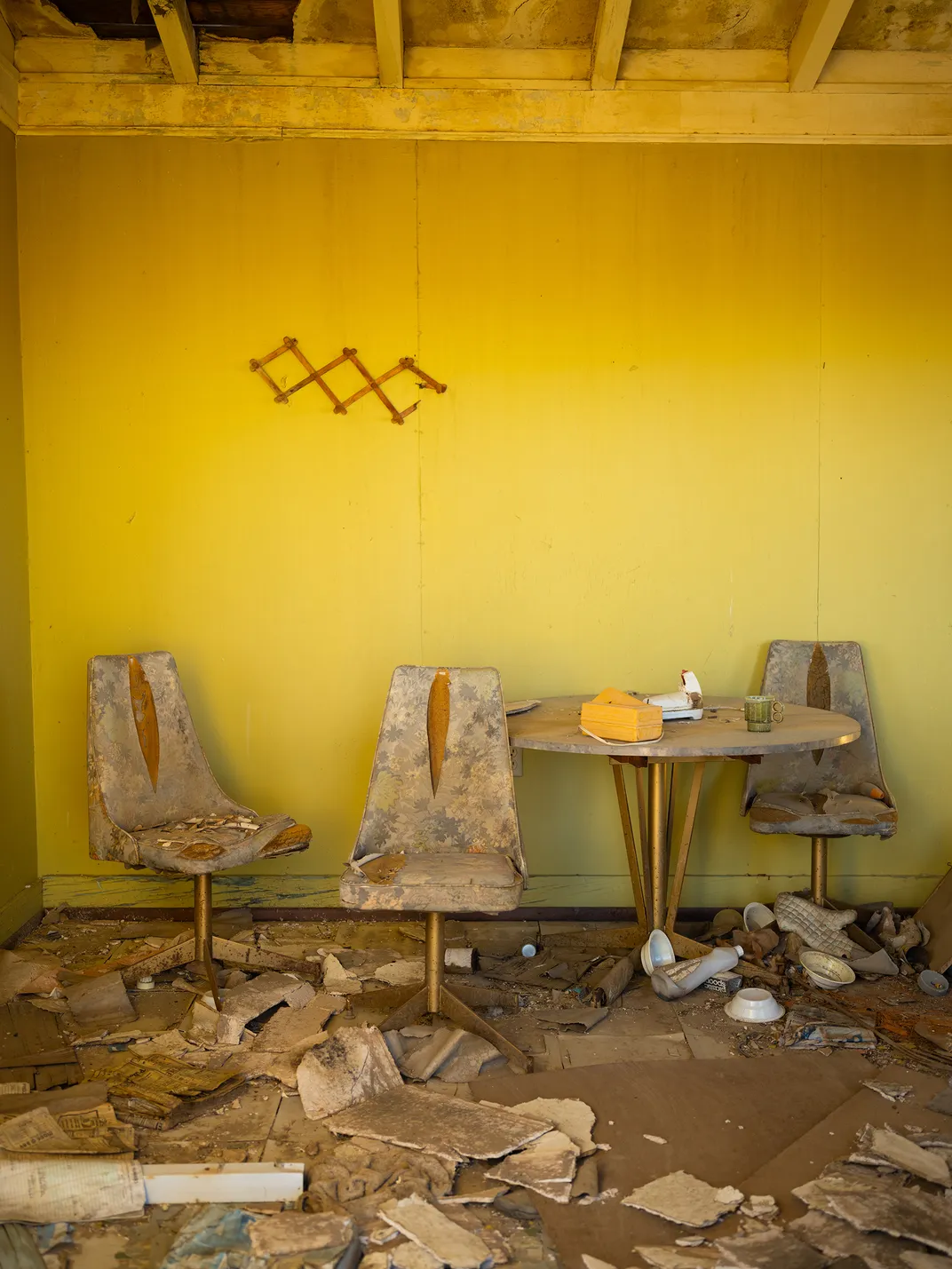
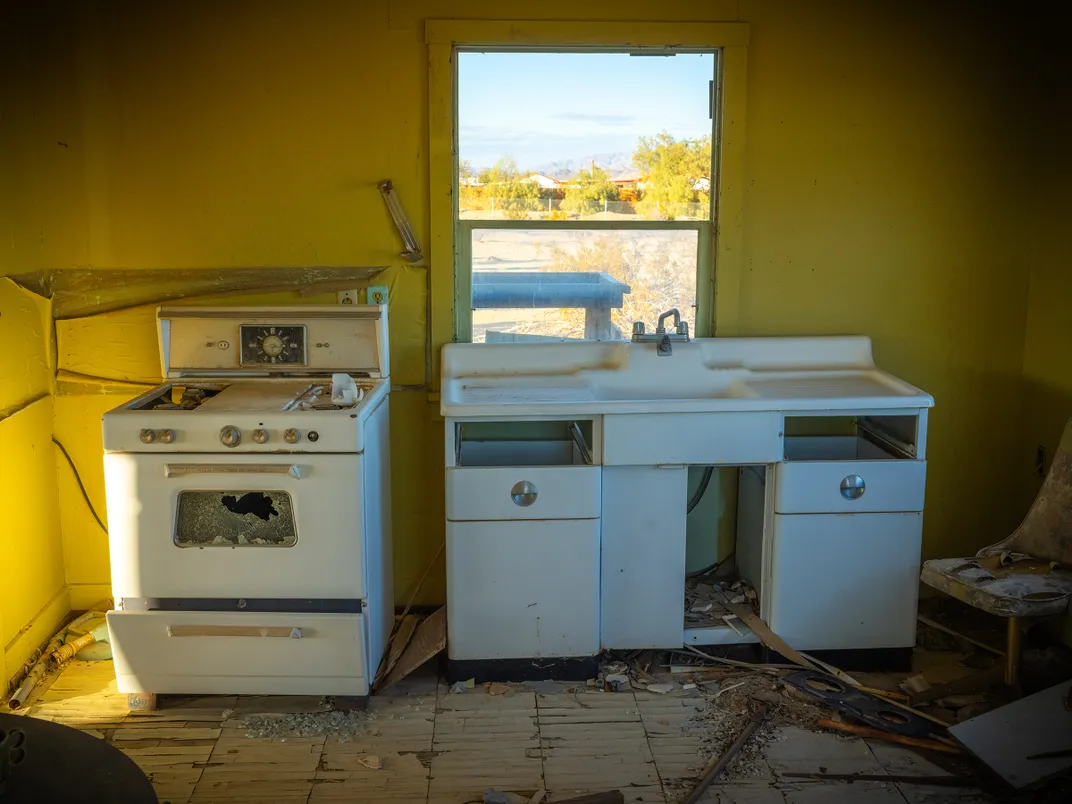
There followed what she calls “waves of abandonment” in the 1960s and 1970s. In the most common scenario, the original settlers would die or become too frail to live by themselves. They would leave the homestead to their children or grandchildren, who had no interest in occupying, maintaining or paying taxes on a remote shack in the high desert. Other homesteaders grew weary of the isolation, the harsh conditions, the lack of amenities and the monotony of life in their small, low-slung cabins and ranchettes. “Often they just walked out the door, got in their cars and drove away, leaving all their furniture and possessions behind,” says Stringfellow. It was the death of an American dream.
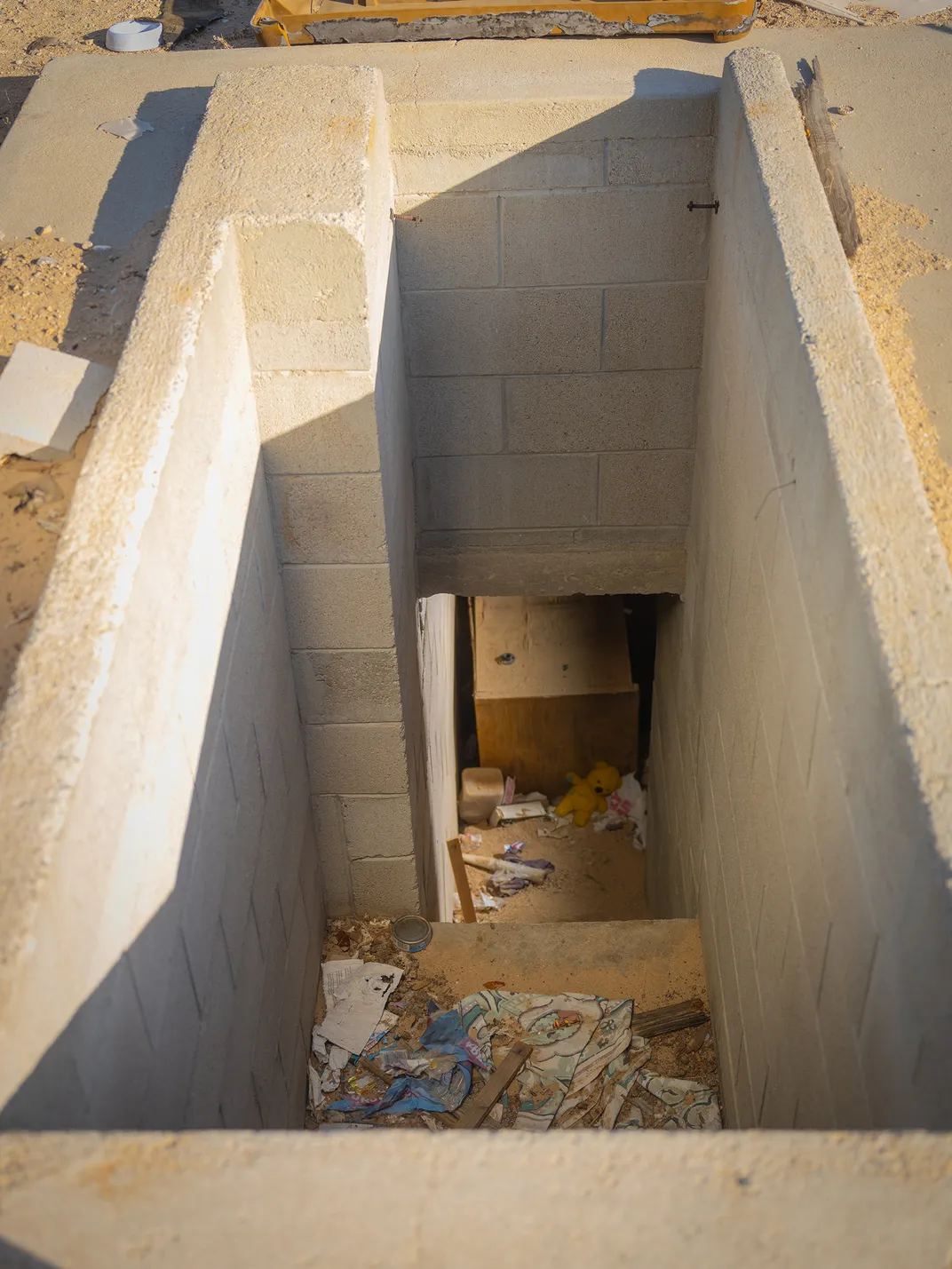
In his explorations of Wonder Valley, Belger has come across 1950s calendars still hanging on the walls, bills from 1962 on a dust-covered desk, closets full of hanging clothes that disintegrated at the touch of a finger. On a homestead property near State Route 62, he found concrete stairs that led to a hidden underground nuclear fallout shelter. The small interior was stocked with cans of beans lined up on shelves and a manual on how to survive radiation poisoning. It appeared untouched by human hands in decades, although a dead jackrabbit lay on the floor, mummified by aridity.
Revisiting the fallout shelter, Belger and I found signs of more recent human occupation. A mattress surrounded by piles of junk and graffiti on the walls lent the place an unsettling feel; someone had burrowed down for a while and then moved on. Outside the wrecked cabin next door, these words by Chilean poet Pablo Neruda were painted on a couch: “We shall always be, you and I, alone upon the earth.”
Did you know? The geology of Wonder Valley
-
The Bullion Mountains, which border Wonder Valley, contain Jurassic-age rocks, while the nearby Sheep Hole Mountains contain much younger, late-Cretaceous granites. These rocks formed from magma deep beneath the Earth's surface when the western edge of North America was an active tectonic margin.
-
Over millions of years, tectonic forces fractured, tilted and displaced the region's crust. Later, faulting and block rotations helped shape the mountain ranges and desert basins we see today.
-
The Mojave wasn't always the dry environment we see today. During the late Pleistocene and early Holocene, roughly 12,000–10,000 years ago, conditions in the region were, perhaps surprisingly, much cooler and wetter.
-
The wider Mojave contained lakes, marshes, and more extensive water sources. As the climate warmed and dried, these environments contracted, leaving behind dry lakebeds, alluvial fans, and other features that characterize the desert today.
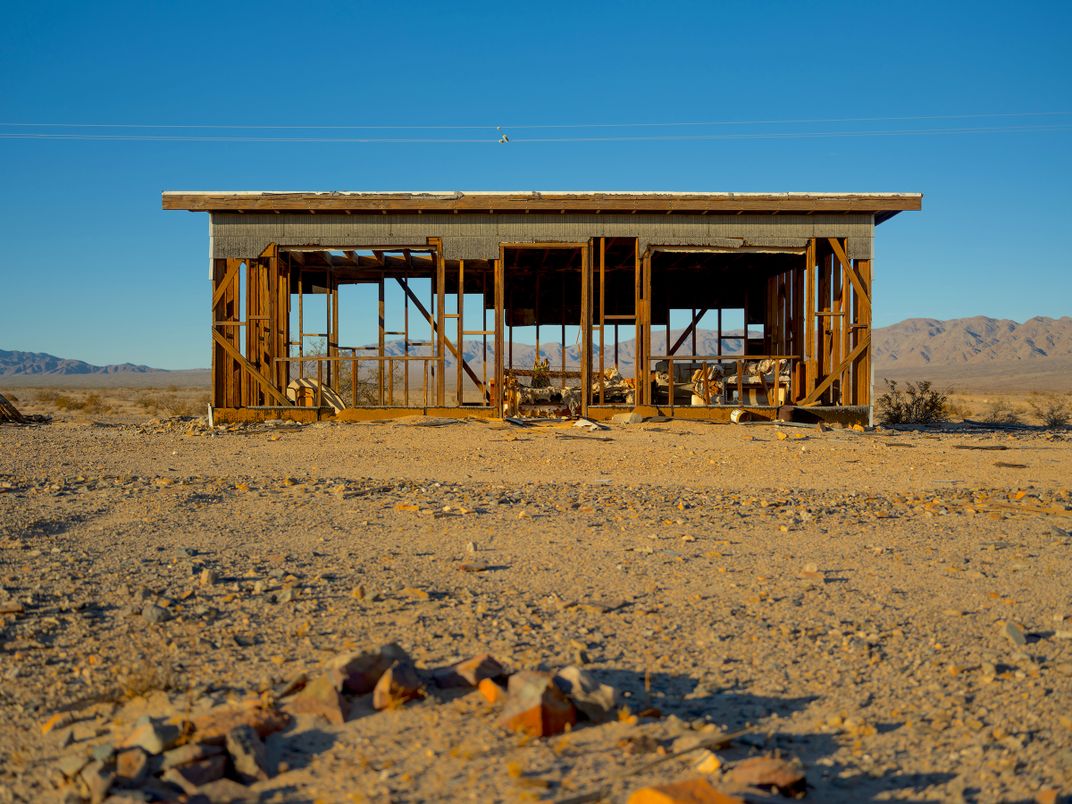
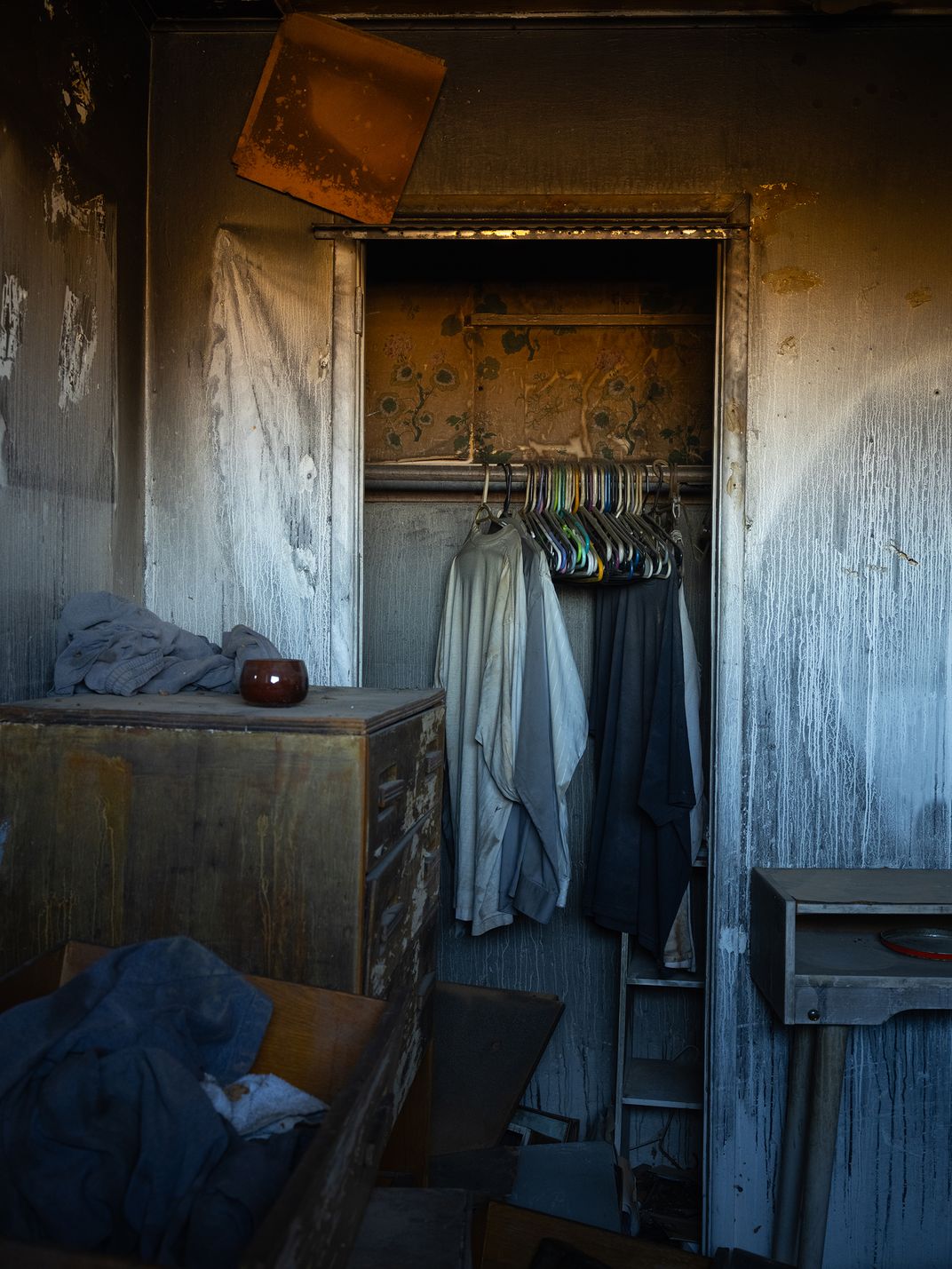
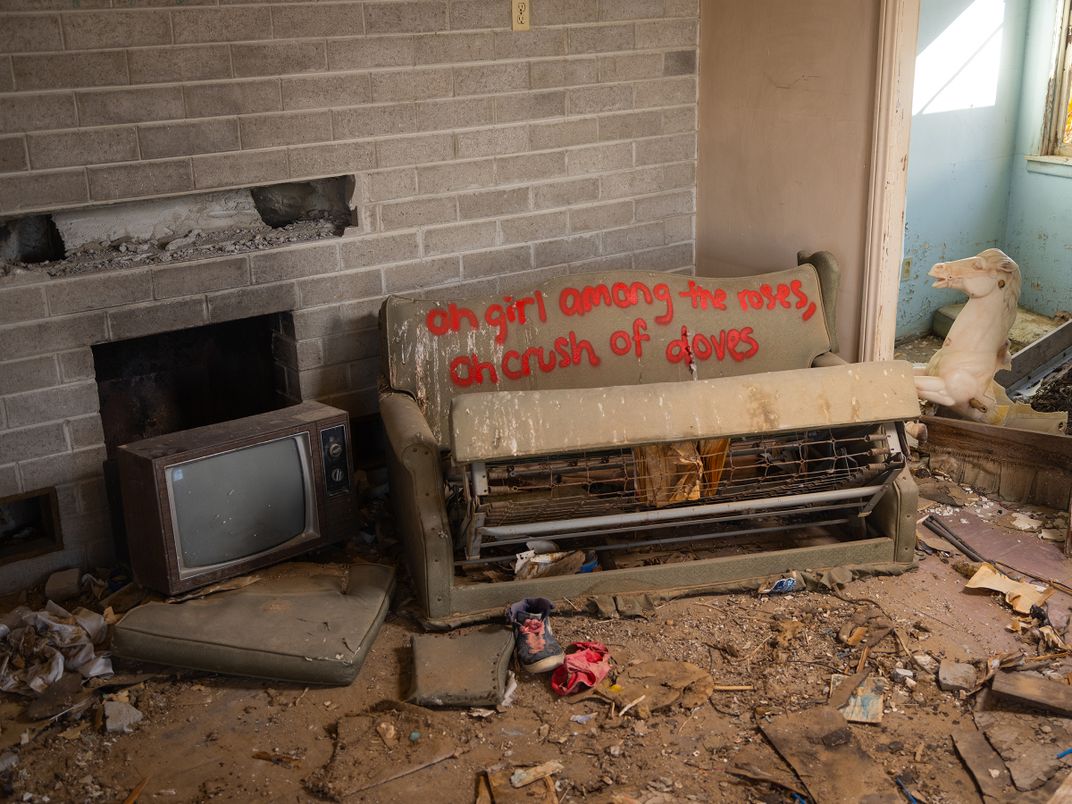
The processes of decay are on display to an unusual degree in Wonder Valley. Against a stark desert backdrop, in a vast engulfing silence, you can see the effects of rain, wind, sun and time on a reclining armchair left outside for half a century or more. The plastic seat covering is scorched, shredded and gradually disintegrating into tiny fragments that collect on the ground underneath the carcass of the chair. Like the other human-made objects strewn about this desert, it is slowly returning into the earth. Driving around dusty dirt roads, you see cabins with their roofs gone, the walls splayed out on the ground and only the stone chimneys still standing. Sometimes all that remains is a cracked concrete slab, with desert plants growing in the fissures. Along State Route 62, one of only two paved roads in Wonder Valley, many of the shacks have been ransacked, vandalized, shot up with bullets, heavily graffitied and sometimes burned.
Other abandoned homesteads were occupied until quite recently by drifters, drug users and criminals hiding out from the law. In the Southern California underworld, the area became known as a good place to dispose of murdered bodies. That macabre reputation is now commemorated in ironic stickers and coasters made by a local resident, featuring two cackling vultures and the slogan, “Wonder Valley: Home of the Shallow Grave.”
Most of the newcomers today arrive from big cities in California and elsewhere, attracted by the peace of the desert and the low cost of homeownership—not unlike the original settlers. Also in the mix are retirees, people connected with the Marine base in Twentynine Palms, off-road-vehicle enthusiasts, young trust funders from Los Angeles and entrepreneurs who are rehabbing ruined cabins into Airbnb rentals while also putting up new buildings. After the post-boom period of disillusionment and abandonment, together they are driving a new phase of Wonder Valley’s archetypal American story—one of reclamation and rebirth.
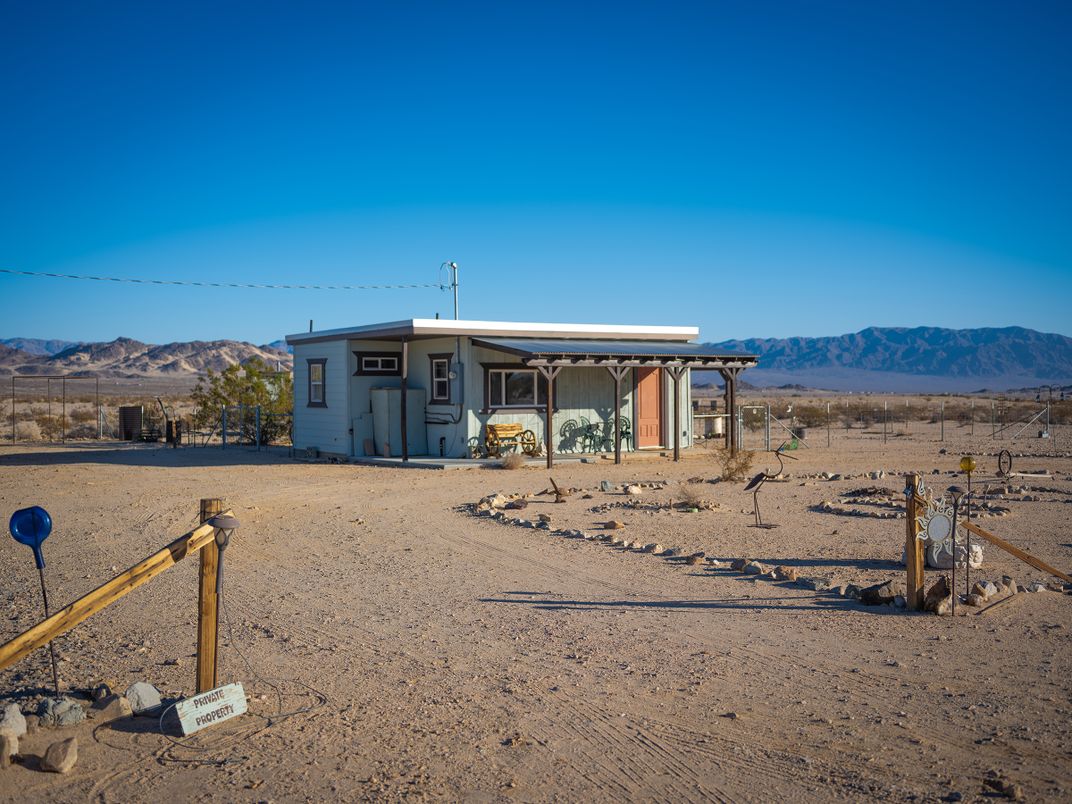
Miri Hunter is an artist, singer-songwriter and actress who teaches at St. Mary’s College in Moraga, California, and lives in a one-room cabin with a view of the rugged Sheep Hole Mountains through her front door. She felt “burned out” by the high cost of living and career pressure in Los Angeles and discovered that she felt relaxed, restored and creatively nourished in the Mojave high desert. First she stayed with a friend in Morongo Valley, then rented a place in Joshua Tree. In 2015, she moved into a cabin on the eastern side of Wonder Valley, the side farthest from civilization, and in 2018 she bought it.
With the help of Thom Merrick, an artist and musician who has been living in Wonder Valley since 2002, and other local residents, she repaired and improved the dilapidated structure, fixing the well, installing a water heater and a wood-burning stove, and redecorating the interior. Now it’s comfortable and stylish. African masks and Ethiopian art adorn the walls, and one corner is full of musical instruments and equipment. “I like the space, the freedom, the financial independence,” she says. “It’s easy to find your people because they’re out here for the same reasons. I can disappear when I want to and interact socially when I feel like it.”
For Hunter and Merrick, who play music together and have become romantic partners, the desert is an endless source of beauty and inspiration. It’s also a challenge. There’s solar electricity now, but water still comes from wells, or else you have to haul it in from elsewhere. Cellphone reception is spotty, but you can get Wi-Fi from a radio antenna or a satellite. The sun and the wind can “eat” a coat of exterior paint in two years, says Merrick, and last summer the temperature reached a brutal 112 degrees.
The dust gets into everything—beds, cabinets, musical equipment, eyes, ears, nose and throat. Guitars dry out and warp. The dirt roads wash out when it rains, and even at the best of times, it’s easy to get a vehicle stuck in the sand. The neighbors include rattlesnakes, scorpions, tarantulas and black widows. Ferocious, screaming winds regularly whip across the desert.
Matt Graham is a British American screenwriter based in Los Angeles who has lived in Wonder Valley. He was on a Zoom meeting in his rented shack when the sky darkened ominously and the wind began to blow. An extreme weather warning flashed on his phone, and he showed it to his colleagues on Zoom, joking: “If anyone’s going to get hit, it’s me.” Looking out his window, he saw solar panels fly off the roof of a house in the distance. Elsewhere in the valley, three pickup trucks were flipped over by the storm.
“It got dark, plants were ripped up and flying about, the storm was coming right for me,” he says. “I stepped to the left of the window. A moment later it blew inward and shattered. I heard a deep, grinding, metallic noise coming from the Airstream trailer next to the house where I sleep. Then there was an absolutely deafening crash. The wind had picked up the trailer and thrown it over the house. Only then did I realize that the roof of my house was gone.” That was a freakish wind for Wonder Valley, but Graham found it emblematic of his adopted home. “It’s a place of extremes,” he says. “It’s incredibly bleak and harsh, or incredibly wonderful depending how you look at it. It’s always reminding you that life is fragile and you can’t impose civilization here, because nature won’t allow it.”

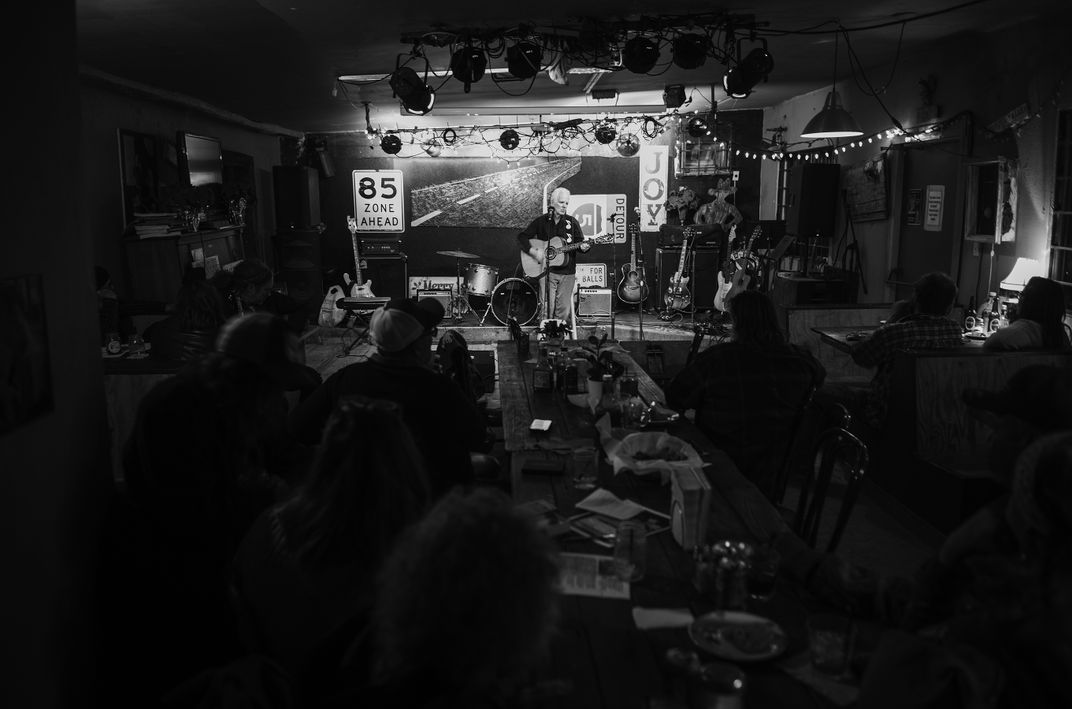
The only retail business operating regularly in Wonder Valley is a bar called the Palms, which also serves as a restaurant, live music venue and gathering place. On the occasions I went there, a pleasant, tolerant, good-humored atmosphere prevailed, with no apparent friction among the bikers, hipsters and other groups. At Sunday morning brunch, I met an artist named Chris Carraher, who has been living in Wonder Valley since the 1990s, when it was “ghost-towny, wild, big and open,” as she describes it. “You had the erosion of the social infrastructure and the built environment. It fueled my artwork, trying to understand that erosive quality.”
It troubles her that so many of the fragile structures are now fallen, pulled down, burned down—or else rehabbed by newcomers. “It’s changed the character of the place, removed some of its fearsome mystery and magic. Wonder Valley is still a great place, but it no longer feels like a wild waystation to the beyond.”
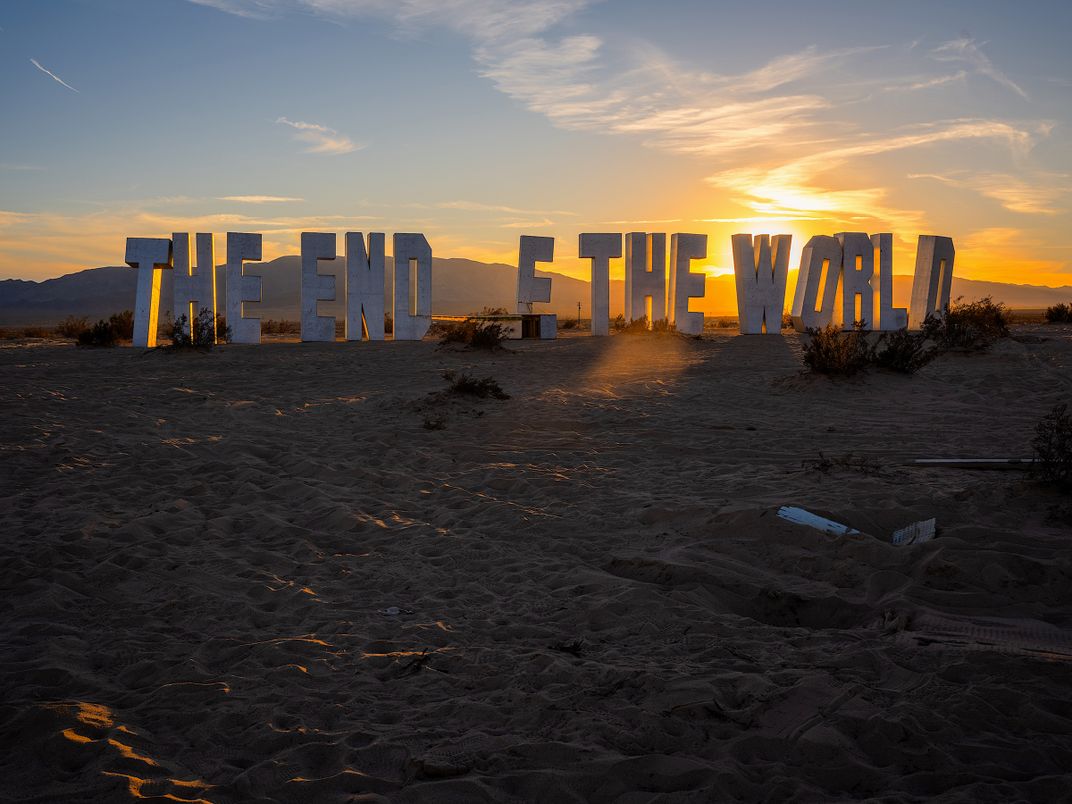
In 2020 and 2021, during the Covid-19 pandemic, there was a major exodus from the hip neighborhoods of Los Angeles to Wonder Valley. Shack prices soared, and developers saw opportunity. Carraher helped lead the local opposition to the Wonder Inn, a proposed 106-room, two-story hotel with a swimming pool and a health center. To the shock of the Los Angeles entrepreneurs who wanted to build it, local residents turned out in force to denounce the project as an eyesore and a raid on the scarce underground water resources, and the county stopped the hotel from being built.
Late Sunday morning, at a long trestle table in the Palms, locals discuss the meaning of community in a place where rugged individualism is the dominant creed. David Greene, a muralist and handyman from Ohio who has lived in Wonder Valley for 20 years, says, “We’re all oddballs and misfits. Living on five acres gives you just enough buffer from other people and a view of the horizons. The governing philosophy is, ‘Don’t be a jerk, and I’ll leave you alone if you leave me alone.’ But … we do help each other out.” He takes another sip of his bloody mary. “With a few exceptions, people in Wonder Valley are not unfriendly,” he says with an engaging smile. “We’re just a little bit feral, and that’s how we like it.”
Subscribe to Smithsonian magazine now for just $19.99
This article is a selection from the December 2026 issue of Smithsonian magazine