
A Century and a Half After Custer’s Last Stand, the Battle of Little Bighorn Continues to Mystify
The June 1876 firefight resulted in the deaths of George Armstrong Custer and 267 of his men. Historians continue to debate exactly how the Lakota Sioux and the Northern Cheyenne secured their victory over the U.S. Army
/https://tf-cmsv2-smithsonianmag-media.s3.amazonaws.com/accounts/headshot/greg2.png)
/https://tf-cmsv2-smithsonianmag-media.s3.amazonaws.com/filer_public/69/e7/69e7f694-785c-404a-89aa-2cb657394b3a/bighorn.jpg)
The Battle of Little Bighorn on June 25 and 26, 1876, lasted barely a full day, but it would become one of the most famous, controversial and mysterious military engagements in American history. Pitting the United States Army against Native warriors, primarily Lakota Sioux and Northern Cheyenne, the battle also brought together three men who remain legends 150 years later: on one side, Lieutenant Colonel George Armstrong Custer, in command of the Army’s Seventh Cavalry Regiment, and on the other, the Lakota chief and holy man Sitting Bull and the Lakota leader Crazy Horse.
Native Americans called the bloody confrontation the Battle of Greasy Grass. But the popular press soon dubbed it Custer’s Last Stand. Under that name, it has been immortalized in countless books and movies, alternately burnishing and tarnishing the Custer legend. As T.J. Stiles put it in his Pulitzer Prize-winning Custer’s Trials, “it is the one fact about the man that lives in American memory.”
At the time, however, Custer was a national figure. He had distinguished himself as a commander at Gettysburg and other Civil War battles, becoming the youngest major general in the Army at age 25. He went on to become a celebrated—some would say ruthless—“Indian fighter” in the American West, as well as a best-selling author and magazine writer.
/https://tf-cmsv2-smithsonianmag-media.s3.amazonaws.com/filer_public/93/22/9322bf9b-cc0f-4ce7-a463-c4b26ef1f1f9/custer_bvt_mg_geo_a_1865_lc-bh831-365-crop.jpg)
/https://tf-cmsv2-smithsonianmag-media.s3.amazonaws.com/filer_public/03/51/0351c87c-0ca5-431b-9bee-05298415e541/sitting-bull.jpg)
Custer was a flamboyant character, known for his long blond locks, his buckskin jackets, and his courage—and seeming invincibility—in battle. But he wasn’t universally admired, especially within the military. Many considered him an arrogant self-promoter and a cruel tyrant to the men under his command. Additionally, Stiles tells Smithsonian magazine, “he had all kinds of personal issues, like his womanizing, a gambling addiction that he took to Wall Street, a sometimes thin-skinned insecurity.”
He didn’t, however, seem like someone who would meet his end on an undistinguished Montana hilltop. When the news of his death reached the Midwest and the East Coast on July 5 and 6, it was greeted with shock and disbelief, casting a pall over the nation’s centennial celebrations.
Did you know? The U.S.’s centennial
Nearly ten million people visited Philadelphia’s 1876 Centennial Exposition—around 20 percent of the U.S.’s population at the time.Ironically, Custer wouldn’t have been at Little Bighorn at all had he not vigorously lobbied for the role, saying he’d be humiliated if left behind. President Ulysses S. Grant, who had come to detest Custer largely over their political differences, insisted that another officer be put in charge. But Grant’s top general, William Tecumseh Sherman, and Custer’s commanding officer, Brigadier General Alfred H. Terry, argued that the lieutenant colonel’s experience in past Indian campaigns made him indispensable, and Grant let them have their way.
A treaty made to be broken
In 1868, the federal government and the Sioux Nation, which included the Lakota, signed the Treaty of Fort Laramie. The agreement established the Great Sioux Reservation, giving the tribes authority over the western half of what is now South Dakota, including much of the Black Hills region, considered sacred by the Sioux. Adjacent territory in Montana and Wyoming didn’t fall under the reservation’s boundaries (it was classified as “unceded”), but the tribes were still allowed to fish and hunt there, and white Americans were barred from settling on the land without the tribes’ permission. Sitting Bull and Crazy Horse rejected the deal altogether, believing it was their right to pitch their teepees, hunt bison and graze their horses wherever they chose.
/https://tf-cmsv2-smithsonianmag-media.s3.amazonaws.com/filer_public/01/2e/012e628f-2cc3-45d9-aca0-855763f7aab8/photograph_of_general_william_t_sherman_and_commissioners_in_-d9b9a238d7190da4ae480018875f10e5.jpg)
Six years later, in 1874, General Philip Sheridan asked Custer to mount an expedition to the Black Hills, in part to find a site for a new fort on the western border of the reservation. It was no small enterprise. More than 1,000 men and 100 wagons, a 16-piece brass band, and a retinue of journalists and photographers accompanied Custer on the journey. To investigate rumors that the area was rich in gold, Custer also brought along a small team of scientists.
When news got out that the expedition had indeed found the precious metal, a new gold rush began. Although it was the Army’s responsibility to enforce the treaty and preserve the tribes’ rights to their land, Grant “recognized that the Army couldn’t hold back rapacious miners,” historian Ron Chernow wrote in his biography of the president. “To resolve the impasse, he offered the Sioux $6 million if they ceded the Black Hills to the federal government.”
After the Sioux declined, the government moved to rein in the free-roaming tribes, setting a deadline of January 31, 1876, for them to report to the reservation. When that deadline came and went, the Army mobilized to force the Sioux to relocate.
/https://tf-cmsv2-smithsonianmag-media.s3.amazonaws.com/filer_public/09/40/09408e85-5472-4669-b526-a08bcd45fbd8/custer_staghounds.jpg)
The Army closes in
Beginning in March 1876, thousands of soldiers from forts in Montana, Wyoming and the Dakota Territory set out to locate the Native tribes and essentially drive them toward the reservation. This task was made all the more difficult by the fact the Sioux were a nomadic people, constantly on the move in search of food and other necessities for themselves and their animals. Under Terry’s command, Custer and his Seventh Cavalry left Fort Lincoln in Bismarck (in what is now North Dakota) on May 17. In total, Custer’s officers and troops numbered about 750.
Once the Army located the Sioux, Custer’s role was to act as a “hammer,” attacking their village from the east and the south to drive the men, women and children northward, where other cavalry and infantry—the “anvil”—awaited. Conventional wisdom at the time suggested that Native Americans would “almost always flee, especially if their families were threatened,” instead of fighting, historian Robert M. Utley wrote in Custer: Cavalier in Buckskin. The Seventh Cavalry’s job seemed to be as much about containing the Sioux as combatting them.
Unknown to Custer, however, the Sioux village had grown considerably in recent weeks. “Bolstered by those brethren who had left the reservations for a summer of freedom, the village had swelled to … some 7,000 people, including perhaps 2,000 or more warriors,” historian Thom Hatch noted in The Last Days of George Armstrong Custer.

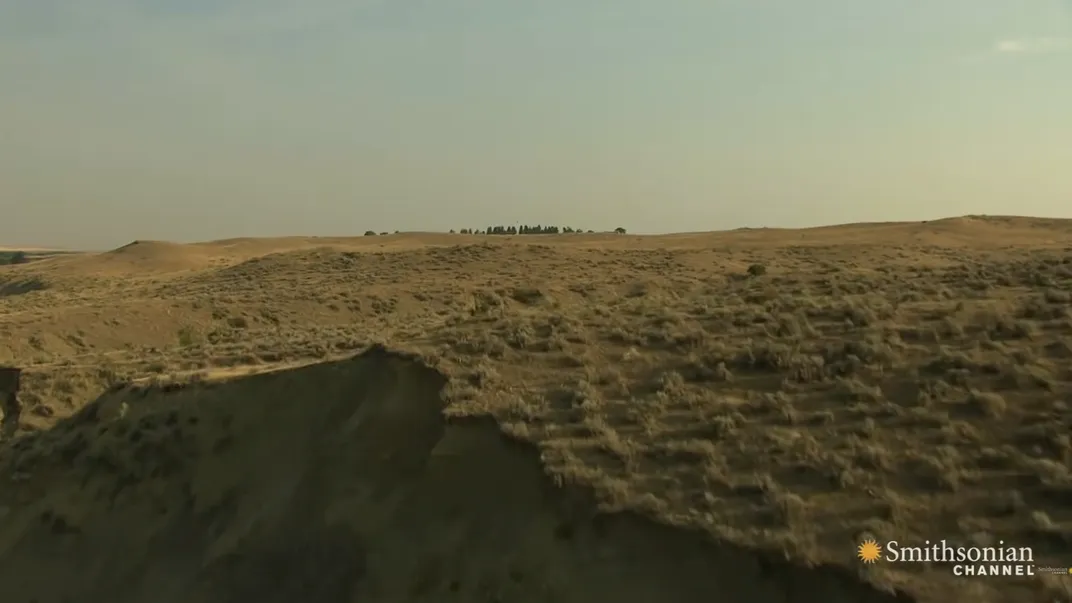
After weeks of searching, Custer’s scouts reported on June 24 that Sitting Bull and the Sioux had set up camp near the Little Bighorn River in Montana. Custer moved his troops into position, planning to attack at dawn on June 26. But when scouts reported that his troops’ presence might have been discovered, he decided to act sooner out of fear that his foes would scatter in all directions.
On June 25, Custer split his troops into three battalions that would surround the village, putting two in command of other officers and keeping the largest, comprising some 210 men, for himself. A fourth group remained at the rear to manage the supply wagons. He then ordered a battalion under the command of Major Marcus Reno to immediately attack the village from the south. Reno was apparently under the impression that Custer and his men would be right behind him, but when the major’s troops encountered unexpectedly fierce resistance and saw no sign of Custer, they retreated to the nearby woods.
Meanwhile, Custer swung his troops around to the north of the village, where they engaged with the warriors assembled there. Because not one of Custer’s men lived to tell the tale, exactly what happened next has been a matter of conjecture ever since, inspiring an almost infinite number of conflicting story lines. “To study this battle is to enter quicksand,” historian Stephen E. Ambrose warned readers in his 1975 book, Crazy Horse and Custer.
The precise role played by Sitting Bull, then in his mid-40s, has also been widely debated. By most accounts, he was not directly involved in the fighting but remained well behind the front lines. In some versions of the story he is little more than a passive bystander.
/https://tf-cmsv2-smithsonianmag-media.s3.amazonaws.com/filer_public/99/fb/99fbf3aa-a8d8-43d8-9b2d-61fadd130d9b/little_big_horn.jpg)
Utley, in his biography of Sitting Bull, wrote that white officials later claimed, on dubious evidence, that “he remained in his teepee, making medicine, or fled to the hills in terror, even abandoning his family, or skulked somewhere else safely out of danger.” Paul L. Hedren, in his 2025 book, Sitting Bull’s War, offers what seems to be the current consensus, writing, “he was never caught in the midst of the most dangerous fighting but yet always seemed close enough to observe and assess virtually everything occurring.”
Sitting Bull himself later provided a rare and vivid first-person account of the moment that Custer’s forces attacked. “The squaws were like flying birds,” he said in an 1877 newspaper interview. “The bullets were like humming bees.”
Crazy Horse’s actions appear to be better documented, primarily by later Native American accounts that describe him fighting on both battlefronts, first helping to repel the attack by Reno’s forces in the south, then racing north to engage, and ultimately slaughter, Custer’s troops.
A gruesome sight
On June 27, an advance guard of Army troops found the bodies of Custer and his men scattered across the battlefield. Among the dead on what is now known as Last Stand Hill were Custer himself, his brothers Thomas and Boston, and his nephew Henry Armstrong Reed.
/https://tf-cmsv2-smithsonianmag-media.s3.amazonaws.com/filer_public/05/05/0505e243-50fc-44a8-96bc-2b4f674cab21/studio-portrait.jpg)
“The dead had been mutilated in the most savage way, and they lay as they had fallen, scattered in the wildest confusion over the ground,” Reno later testified. “They had lain thus for nearly three days under the fierce heat of the sun, exposed to swarms of flies and flesh-eating crows.”
Compared with most, Custer’s corpse was relatively untouched. Stripped naked except for his socks, he had two bullet wounds, one to the head and another to the chest, as well as a knife wound on his thigh, but he hadn’t been scalped. Years later, it became public knowledge that his genitals had also been impaled with an arrow.
Although popular lore suggests that Custer made his heroic last stand on the hill, some Native American accounts indicate that he was killed or wounded earlier in the battle, then carried to the hilltop by his men.
The aftermath of the Battle of Little Bighorn
At the Smithsonian’s National Museum of the American Indian in Washington, D.C., a sign asks visitors, “Who really won the Battle of Little Bighorn? It’s complicated.”
/https://tf-cmsv2-smithsonianmag-media.s3.amazonaws.com/filer_public/ba/e2/bae29785-7bef-4c7b-8eea-6097b39b9bd9/indian_monument_at_little_bighorn_battlefield_national_monument.jpeg)
While the Sioux and the Cheyenne were the clear victors of the battle, they would not win the war. In fact, public outrage over Custer’s death may have hastened their defeat. Less than a year later, nearly all of the Native tribes in the region had been forced onto the reservation.
Crazy Horse and more than 1,000 of his followers surrendered in May 1877. That September, the Lakota leader was bayoneted to death by an infantry guard during a scuffle at nearby Fort Robinson, in northwest Nebraska.
Sitting Bull, for his part, escaped to Canada with some of his followers, only returning to the U.S. in 1881. He was held as a prisoner of war for two years before finally taking up residence on the reservation. Instead of being seen as a villain, he became a national celebrity, particularly as a star attraction of Buffalo Bill’s Wild West Show in 1885. Five years later, Sitting Bull was shot dead on the reservation in a confrontation with Indian police.

Custer’s posthumous reputation would rise and fall over the decades, especially as historians replaced dime novel hacks in telling his story. Close to 70 movies, from the silent era onward, have also offered their own takes on the Custer legend. In They Died with Their Boots On, a huge 1941 hit, Erroll Flynn gave moviegoers a dashing and heroic Custer. A year earlier, future president Ronald Reagan had portrayed him as an earnest young West Pointer, pre-Little Bighorn, in Santa Fe Trail. But in 1970’s Little Big Man, Custer was reduced to a comical madman, with sitcom actor Richard Mulligan playing the role opposite Dustin Hoffman.
Could the pendulum ever swing back to Custer as an all-American hero? “I don’t think I had the last word on him,” Stiles tells Smithsonian. “Someone that volatile will be examined again and again, with opinions about him constantly in flux.”
The Battle of Little Bighorn seems likely to share that same fate.
/https://tf-cmsv2-smithsonianmag-media.s3.amazonaws.com/accounts/headshot/greg2.png)