

How the Journey Began: 55 Years of Traveling the World with Smithsonian
Smithsonian’s educational travel program was one of the first of its kind when it debuted nationally in 1970, and it quickly found an audience eager to explore places both familiar and far-flung—from New Mexico to post-Mao China and the Soviet Union.
:focal(808x543:809x544)/https://tf-cmsv2-smithsonianmag-media.s3.amazonaws.com/filer_public/4c/de/4cdef162-7d0a-4aae-b859-25ff90340154/sj_jeep_with_migrating_herd3.jpg)
In May 1970, a small ad tucked on the last page of the second-ever issue of Smithsonian magazine announced three international “study tours.” Secretary S. Dillon Ripley had established the Smithsonian Society of Associates in 1965 to expand the Smithsonian’s outreach, and creating educational travel programs was one of the ways he envisioned carrying out the institution’s mission of “diffusing knowledge.” A few trips had been running in the late 1960s, but they were offered exclusively to members of the new society, most of whom lived in the Washington, D.C. area.
When Smithsonian magazine launched in the spring of 1970, hitting mailboxes from Maine to Hawaii, news of the travel program could suddenly reach a national audience. The first three trips had somewhat esoteric themes: Palladian architecture in northeastern Italy, the decorative arts of England, and Byzantine Greece. But letters requesting information about the trips flooded in, and they filled up fast.
/https://tf-cmsv2-smithsonianmag-media.s3.amazonaws.com/filer_public/e7/94/e7941833-a060-4f84-b733-8bc423bcdf94/smithsonian_mag_may_1970.jpeg)
“The magazine was our only outlet. We didn’t advertise anywhere else,” says Prudence Clendenning, one of the first employees of the Smithsonian’s new travel program. The proposition was appealing: a small-group tour to a compelling destination, full of enriching activities and led by a Smithsonian-approved expert, known then as a study leader. In the early 1970s, the only other non-profit group operating a similar kind of educational travel experience was Stanford Alumni Association—and to join those, you had to have a connection to the university. Americans’ appetite for travel was burgeoning, and the Smithsonian’s travel program, at the time just three women sharing a tiny office in the Smithsonian Castle, prepared itself to meet the moment.
The program evolved quickly and got bolder, moving beyond western Europe to offer trips to West Africa, Afghanistan and Pakistan, and a cruise on the Black Sea aboard a chartered ship. It also developed domestic experiences: members could watch the launch of NASA’s Skylab 4 at Cape Kennedy (now Canaveral); peer at petroglyphs in Hawai’i; explore Hopi and Navajo culture; or enjoy “a nostalgic winter weekend of sleigh rides, singing, square dancing, and delicious food” in Sturbridge, Massachusetts.
Clendenning ran the U.S. and Canada trips at the time, and for decades afterward. For the international tours, her colleagues collaborated with established tour operators, but, she says, “there were very few tour operators working on U.S. destinations. Often the trip’s expert would recommend the whole itinerary.” Clendenning would design an itinerary with the expert who would lead the trip, and start making calls herself to reserve hotel space and guided site visits—every single detail down to the menus. “We took about 28 people and every trip was filled. Our contacts on the ground would connect Smithsonian travelers to local people in a really meaningful way.” These intimate, local experiences, designed for a small group of engaged travelers, are a cornerstone of the Smithsonian travel brand still today.
In the early years, one of the most popular ways to travel with Smithsonian was by chartered Boeing 707. “Those were pretty terrific,” says Amy Kotkin, who started at the Smithsonian in 1977 and later led the travel program from 1994 until 2013. Introduced in 1975, the first two “foreign charter” itineraries took 180 passengers each to England and Russia. Patrick Wagner, who joined the team in 1995 and overlapped with Clendenning and Kotkin, recalls that those first two trips were considered a turning point. “The programmers basically came up with an itinerary, wrote a cover letter and registration form, licked 600 envelopes and sent them out, and the trip would sell out immediately.”
/https://tf-cmsv2-smithsonianmag-media.s3.amazonaws.com/filer_public/fd/6d/fd6d852d-ad44-4ff1-b18f-d0115d802468/1979_russia_2.jpg)
These charter tours would often begin with a pre-departure program of lectures and Smithsonian museum visits in Washington, D.C. “Then the Pan Am airplane staff would come to check us in at the Smithsonian Castle,” says Kotkin. “We boarded a bus in front of the Castle which drove us right onto the runway at Dulles airport! When you see yourself taking over a transatlantic commercial plane, that’s pretty powerful.” Upon arrival in their destination, the 180 travelers would split into six groups, each led by their own tour director and study leader. Every group would follow the itinerary in a different order, touring major sites and museums but also “lifeseeing” with visits to schools and clinics and meetings with groups of local residents.
Smithsonian’s travel program had earned a full page in the back of most issues of Smithsonian magazine by the late 1970s, as well as an ad in Air & Space magazine. At the height of the Cold War, anyone who wanted to visit the Soviet Union could have their pick of Smithsonian Study Tours: a winter sojourn in Moscow and Tallinn, a three-week exploration of Soviet art and architecture, even a ride through six time zones on the legendary Trans-Siberian Express. The fuel crisis and the arrival of jumbo jets marked the end of the Pan Am charter tours, but it became easier to block 25 seats on an international flight, and that opened up the whole world to exploration. With Smithsonian, travelers could go rafting in the Chilean highlands, explore the “sultan’s treasures” in Turkey, meet scientists in the Galápagos, spend two weeks as a student at Oxford University, or join an archaeological dig in Illinois.
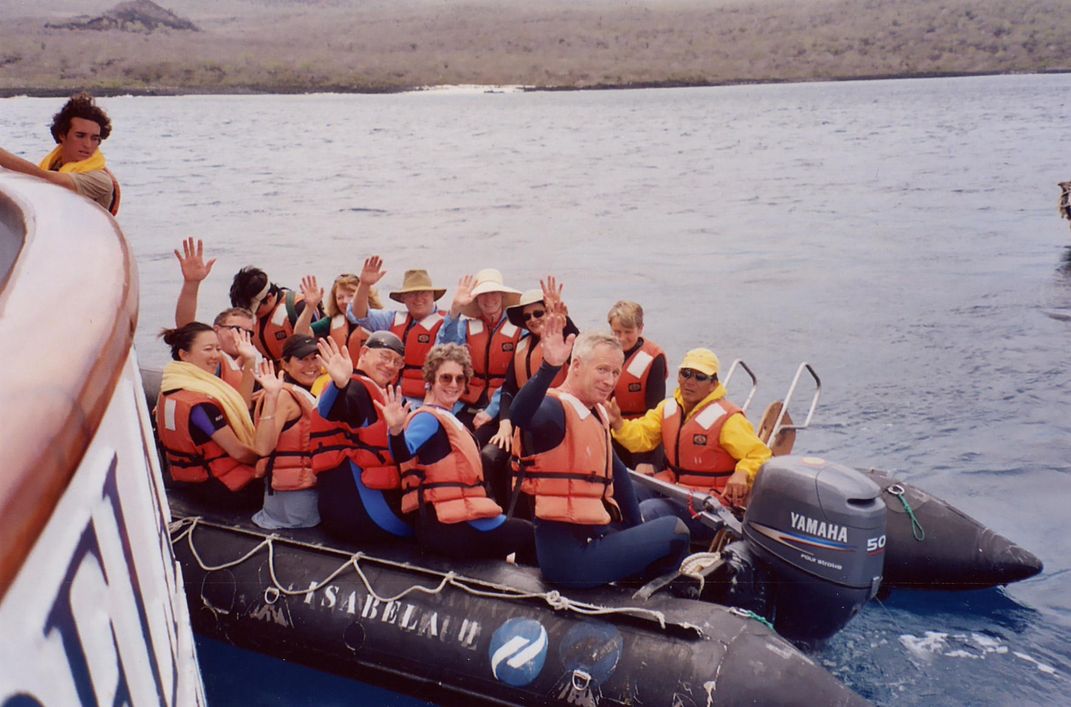
China opened to tourism in 1979 and by March 1980, Smithsonian was operating trips there. Not only were they one of the first American educational travel programs in China, they offered 12 different trips in seven months. The tumultuous Cultural Revolution had ended just four years prior and now American travelers could cruise through the Three Gorges of the Yangtze River or follow the Silk Road or visit the fabled Forbidden City in Beijing. By 1988, more than 3000 people had traveled to China on a Smithsonian Study Tour, according to the late Barbara Tuceling, longtime director of the travel program.
The four early staff members interviewed for this article each said visiting China in the early 80s was one of the most transformative travel experiences of their lives. “I couldn’t imagine anything more different. It was just astonishing,” says Kotkin, who accompanied one of the early study tours to China. The streets were jam-packed with people on bicycles and every adult seemed to be wearing a Mao suit. The handful of cars they saw during their two- or three-week trips were Soviet brands. In the cities, residents had thronged the buses, waiting to see the Americans emerge. But the visits themselves were thoughtfully designed and often intimate. Clendenning also traveled on one of the first trips. She remembers touring a school with a group of local teachers when the electricity went out. Instead of rushing on to the next thing on the itinerary, they just stayed there, Americans and Chinese teachers sitting together on the floor, asking each other questions in the dim light. “They were so curious about us.”
Kotkin returned to China on an inspection trip in 1997 and found the country completely changed. “The only Mao suits to be found were in the flea market,” she recalls, “And they had built a beltway around Shanghai in 12 months.”
By the late 1980s, Smithsonian Study Tours and Seminars was sending thousands of travelers to all corners of the world. The study tour model that the Smithsonian had helped pioneer had found its enthusiastic audience. Smithsonian travelers wanted to learn about a place in-depth, have meaningful exchanges with local people, recognize the nuances of art and architecture, and expand their understanding of the world. And they were looking for a reliable travel program that shared their values.
/https://tf-cmsv2-smithsonianmag-media.s3.amazonaws.com/filer_public/10/22/1022f552-ea46-4acb-93f7-afb866ed2a34/trvls_sj_lowcountry_ata_heritagetrolley1_2022_wjennings.jpg)
“Trust was paramount,” says Kotkin. “They felt they could trust Smithsonian—not only with their well-being, but with good education.” With Smithsonian, they could experience Europe in unique ways: a backstage tour of London’s theater scene or an exploration of folk art and ecology in the Austrian Alps. Or they could go to unexpected places like China’s far-west Xinjiang province or the mud-brick mosques of Mali. They even found access to long closed-off destinations, such as the Northwest Passage, which they tackled aboard a Russian icebreaker in 1998.
Time magazine declared in 2019 that Saudi Arabia would be opening for tourism for the first time, but Smithsonian’s travelers had been there two decades before, one of a very few educational groups allowed in by King Fahd. The three trips run in 1999 sold out fast, and Clendenning was fortunate to accompany one of them. She later told an LA Times reporter that it was the kind of trip for “someone who is open to new experiences and respects the Saudi religious and cultural restrictions.”
Today’s Smithsonian Journeys Experts will tell you this still rings true of the type of person drawn to travel with Smithsonian. No matter their background or experience, they tend to be “bright, well-prepared, curious, and down to earth,” to quote Asia expert Kenneth Hammond. “They are lifelong learners,” says Carol Reynolds, a professor of musical history who serves as expert on many Central Europe tours. “They are ready to taste and appreciate new cultures and sites, and they want the maximum experience.
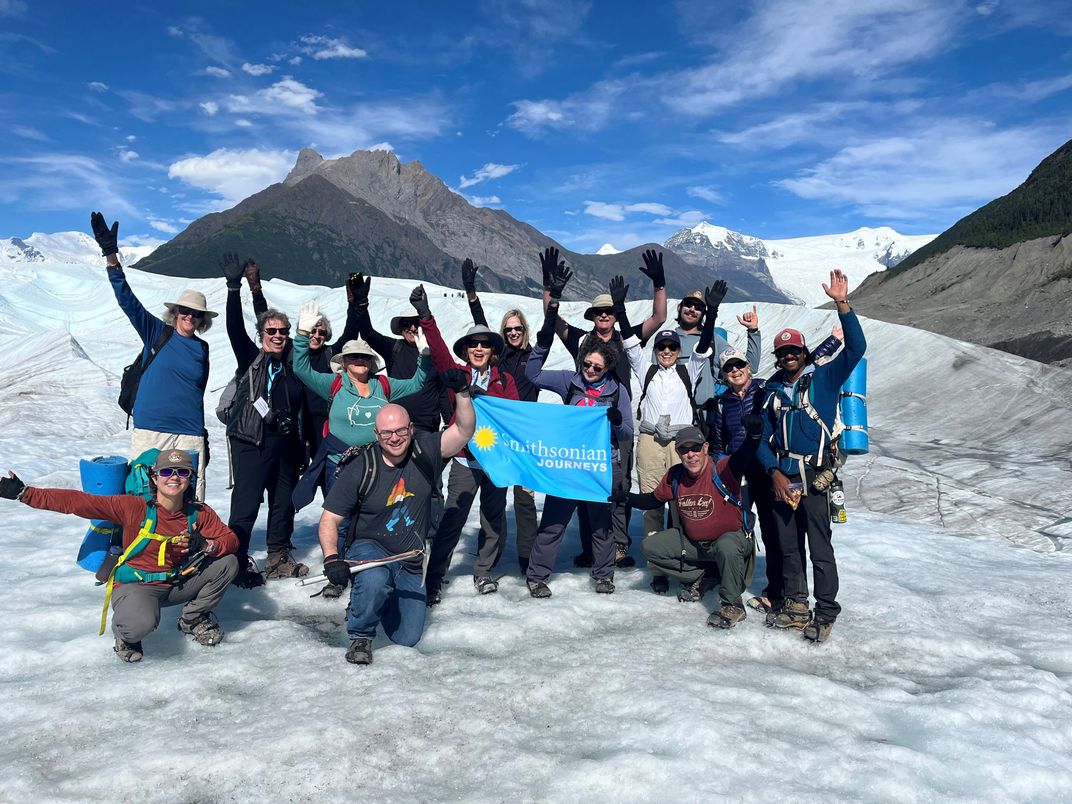
Much has changed over the past 55 years of organizing educational travel programs. The one-off trips with specific, niche themes have largely given way to unique, multi-faceted itineraries that can be replicated. In 2003, the academic-sounding Smithsonian Study Tours and Seminars became Smithsonian Journeys, reflecting the expanded repertoire of travel experiences. To satisfy a burgeoning demand for cruises, the model shifted from chartering an entire ship to collaborating with internationally renowned companies to offer co-branded cruises. Nearly 70 ocean and river voyages are planned for 2026—each emphasizing the enrichment and authenticity Smithsonian travelers seek. They also introduced Tailor-Made Journeys, custom trips designed to bring the Smithsonian travel experience to independent travelers.
But much also endures, including the core philosophies of enrichment and forging meaningful connections to local culture. Travelers still flock to the summer seminar at Oxford University—many returning year after year; and Mystery Lovers England, introduced in the 1990s, still draws Agatha Christie and P.D. James fans every year. In the past, travelers’ desire for cultural immersion fueled Countryside tours, based in a small town in a compelling part of Europe, and City Interludes, which were set in a major city such as Paris or Berlin. The concept continues today with weeklong Cultural Stays and with three-week Living In programs in cities such as Florence and Aix-en-Provence that feature language classes, culinary experiences, and art-focused excursions. A popular collection of hiking and walking trips in the 1990s has led to today’s growing line of Active Journeys.
“Our travelers have sought out different ways to experience the world since our earliest days, and that has defined how we have grown,” says Walter Littlejohn, III, senior vice president of Smithsonian Travel. “What began as a handful of educational trips is now seven distinct travel lines touching all seven continents and some 500 departures a year. And yet the nature of these trips—the Smithsonian touch—hasn’t changed.”
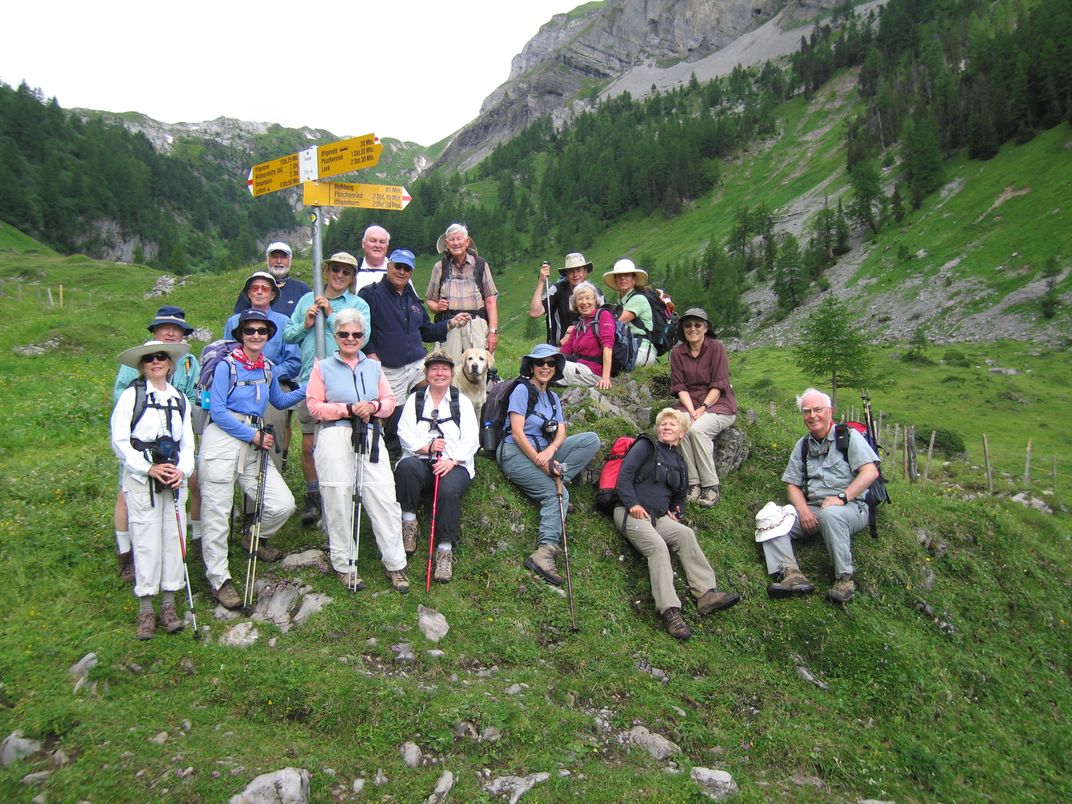
Some travelers have witnessed the evolution of Smithsonian’s travel program firsthand. Deborah and Bob Carey and Kris Fallon had already taken several Smithsonian Study Tours on their own when they met in 1994 on a Swiss Alps hiking tour. The whole group of twenty-some travelers clicked, and for the next several decades, they gathered for an annual hike, choosing a different Smithsonian trip every year. They trekked all over the Alps—in Slovenia, Austria, Italy, and France— and even hiked the Carpathians in Poland. Those trips were “exhilarating,” says Deborah Carey, “and they connected Bob and me with people with whom we have maintained close friendships to this day.”
Looking back on more than 40 years traveling with Smithsonian, Carey says “I think I am now more appreciative of the effort that goes into making every Smithsonian Journey truly memorable.” She and Fallon don’t always choose hiking trips these days, and they are glad to have so many trip types available. “I especially appreciate this variety as I get older—I can choose from a multitude of active trips,” says Fallon.
The two friends recently returned from a journey to the prehistoric caves of France and Spain. It ranks as one of Carey’s favorites. “[I’ve taken] so many wonderful trips, but this one stood out, with privately guided visits to many caves. To stand in a small dark space where people ventured 25,000 years ago to draw and paint amazing figures was a moving, almost mystical experience. And to have access to an anthropologist who helped us understand our links to the past was wonderful.”
To Patrick Wagner, who has watched Smithsonian Journeys grow as a staff member for 30 years, this shared sense of awe and discovery is the pulse of Smithsonian Journeys. “That type of experience,” he says, “it defines who we are.”
To learn more about Smithsonian's travel program today, visit www.smithsonianjourneys.org.