

American Icons: Reviving the River Herring
Previously millions strong, the river herring have nearly gone belly-up. But not all hope is lost.
:focal(2016x1133:2017x1134)/https://tf-cmsv2-smithsonianmag-media.s3.amazonaws.com/filer_public/03/86/03864a18-25a5-42f4-a804-7b2f40c405a8/blueback_herring_usfws.jpg)
As he watched the British bombarding Fort McHenry from a truce ship on the Patapsco River, inspiration struck Francis Scott Key. When the American flag was raised after 24 hours of explosive assault, Key wrote what would become “The Star Spangled Banner.” Our national anthem was born, along with our country’s obsession with fireworks.
But long before there were red rockets glaring in the sky, the Patapsco River had an equally impressive natural spectacle of its own. Every spring, it would turn silver with millions of river herring. The annual migration of these fish was a sight to behold in rivers up and down the East Coast of North America. In fact, here at the Smithsonian Environmental Research Center (SERC) in Maryland, Muddy Creek used to be called Herring Creek.
Emphasis on “used to.” In less than a century, river herring populations have dwindled by well over 90 percent. These fish have certainly seen better days, but recovery efforts are well underway. Scientists are fighting an upstream battle to protect what remains, using cutting-edge research and... bombs bursting in air?
Return to Sender
“River herring” refers to not one, but two species of fish that call the Atlantic Ocean home: the blueback herring and the alewife. Although there are slight variations in appearance, these fish can appear as one and the same to untrained eyes. Both are silver, about a foot long and have big beady eyes. The main difference lies in their range: Alewives like colder waters and travel no further than North Carolina. Bluebacks, on the other hand, will swim as far south as Georgia.
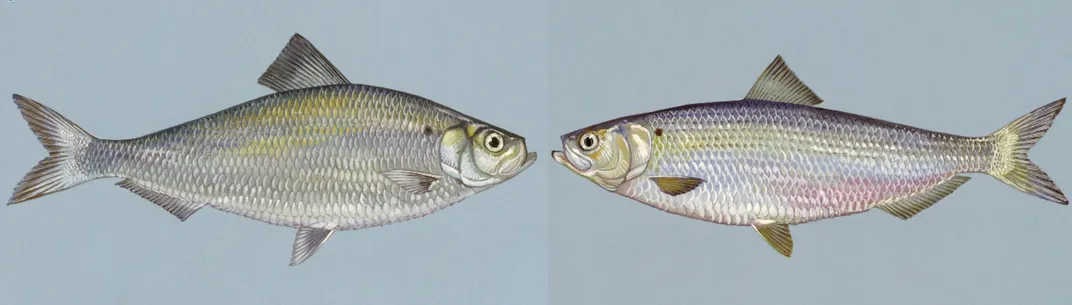
These fish are anadromous, meaning they travel from the sea to rivers to lay their eggs. Every year, they make an incredible journey from the Atlantic with one goal in mind: Lay their eggs in the same riverbeds they once hatched from. The trip is so long that the fish, despite leaving in November, don’t arrive on the coast until late winter.
As if that wasn't enough, the fish cannot complete their voyage without fighting their way upstream. They must struggle against the flow of their river of choice to reach their destination. When they finally arrive, they’ve earned the privilege to spawn. The next generations of herring follow in their parents’ footsteps, and the cycle repeats like clockwork, year after year.
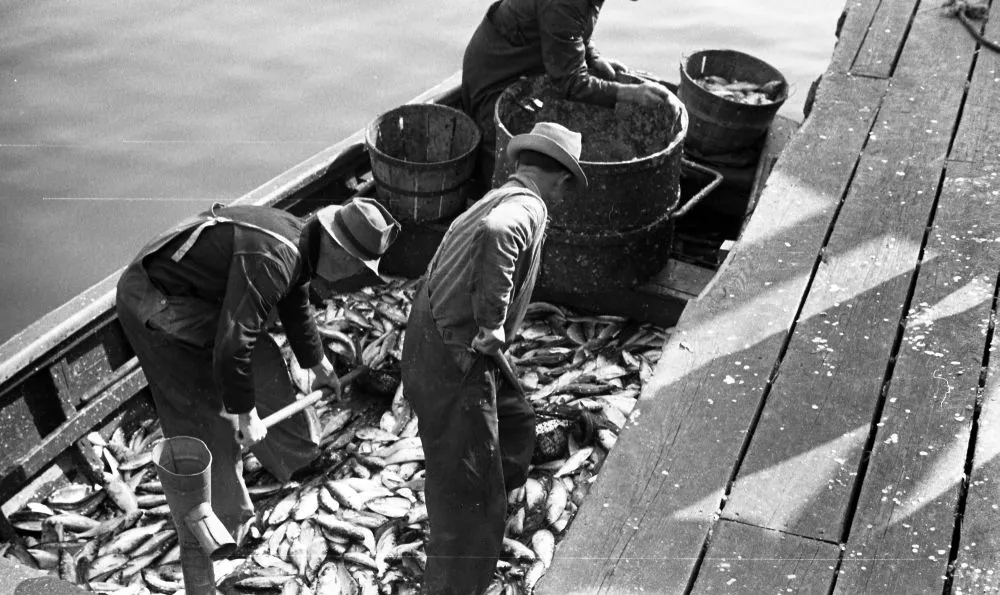
The annual return of the herring was cause for celebration for Native Americans and the colonists that came afterward. Not only did the fish signal the start of spring, but they were plentiful beyond belief. By pickling or salting the fish, people could supply themselves with enough food to last until the next spring’s herring run. When they had taken their fill to eat, they continued harvesting the fish for use as fertilizer.
“River herring were an important resource, arriving at a time of year when other food sources were scarce and it was time to plant key crops such as corn,” says Matt Ogburn of SERC’s Fisheries Conservation Lab That’s no understatement: In the late 1800s, river herring was the biggest fishery in the Chesapeake Bay. Fast forward a century, and this fishery has closed virtually everywhere on the East Coast. What exactly went wrong?
...Everything
The herring’s incredible abundance made it susceptible to overfishing, particularly from the 1950s through the 1970s. After World War II, large refrigerated ships entered the fray, making it easier than ever to capture and sell lots of fish. It didn’t help that there were few maritime regulations at the time, allowing international fleets to get in on the action. Ships from as far as Japan and Russia set up shop in the Atlantic, taking as much herring as they could.
The tipping point came in 1958, when U.S. fishers pulled a record 70.3 million pounds of river herring (31,903 metric tons) out of coastal Atlantic waters. Soon after, stocks began to dry up at alarming rates. Within twenty years, harvests dipped below 10 million pounds, an almost 87% decrease.
Fearing complete collapse of herring and other fishery species, Congress passed the Magnuson-Stevens Act in 1976. Effective immediately, only American ships could fish in waters extending 200 nautical miles off the coast of the U.S., forcing foreign vessels out. Although this act helped some fisheries recover (swordfish and sea scallops, to name a few), American fishing fleets actually expanded their activities targeting river herring. As their operations grew, the herring population continued to shrink.
Dam It All
The problems didn’t end at sea. Before the Industrial Revolution, riverbeds were virtually untouched, leaving plenty of room for the fish to spawn. If an area was already full, they could just swim further upstream. That all changed with the construction of dams. Since fish can’t get over them, they are cut off from a large portion of their spawning grounds. Less area to lay eggs means less fish in the next generation.
Let’s return to Maryland’s Patapsco River. In 1907, builders finished the Bloede Dam on its waters, the first dam in the world with internal turbines. Although it was a technological marvel at the time, it quickly became obsolete. The public moved on, but the dam remained for 100 years, blocking 62 miles of spawning grounds upstream. That is, until local land managers decided its time had come.
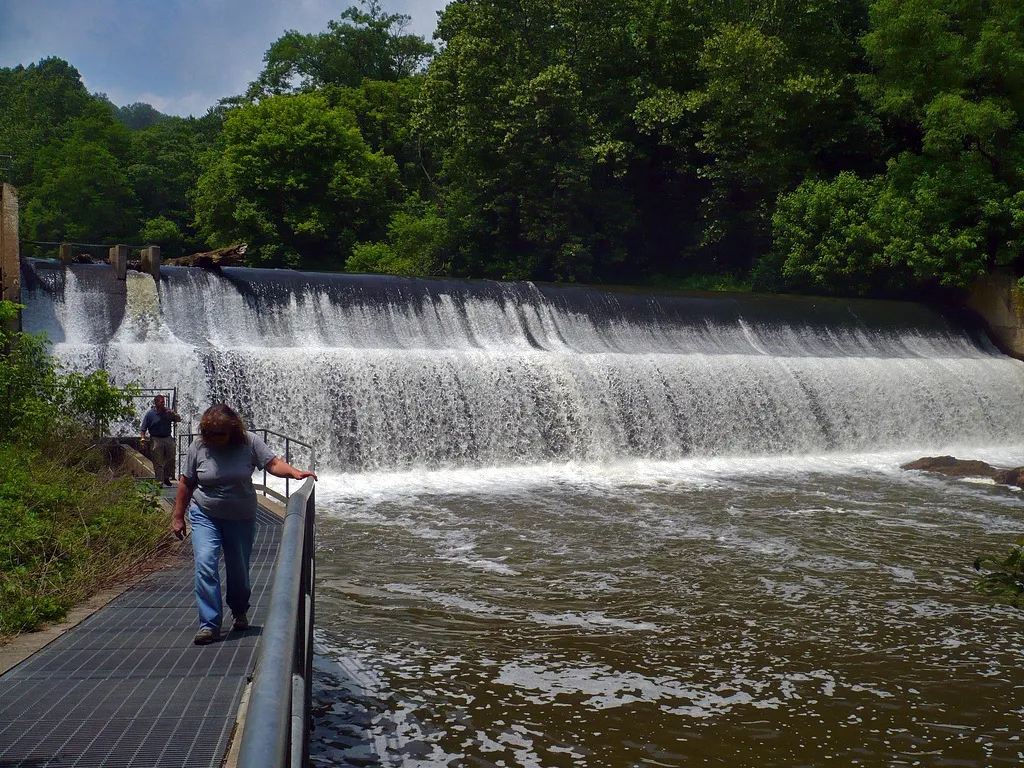
In September of 2018, in collaboration with of NOAA and the Maryland Department of Natural Resources, the non-profit American Rivers took decisive action. Working with contractors, they used controlled explosives to blow the Bloede Dam to smithereens. Then, they removed what remained with heavy machinery. Extreme? Perhaps. Could it work? Almost certainly. As soon as a dam is removed, the herring are immediately able to return to waters further upstream to spawn. But how do we confirm that they’re coming back?
Fish Futures
There are so few herring left today that they can be difficult to trap or spot. Scientists from SERC and the University of Maryland Center for Environmental Science helped solve this issue with cutting-edge technology called eDNA. eDNA, or environmental DNA, allows scientists to detect the presence of herring without seeing them. This is accomplished by searching for traces of them in the water. These can include stray scales, mucus, waste and any other bits and pieces the fish shed as they swim. By taking a water sample and then analyzing it for the river herring’s genetic code, they can tell if river herring have been in the area.
eDNA allowed SERC scientists to confirm the swift return of herring to once-blocked parts of the Patapsco in 2019, even before the remnants of the Bloede Dam were completely removed. Prior to the explosive solution, SERC scientists hadn’t detected any river herring upstream in four years. In 2021, those data were backed up with live sightings: one adult blueback and alewife each. It’s not much, but it’s a start.
“It’s encouraging to see how quickly river herring returned to the restored part of the river, even with low numbers of fish in these first years following the dam removal,” said Ogburn. His hope isn’t unfounded, either. In 2023, SERC collected live herring eggs above the former dam site for the first time.
Current research goes far beyond confirming fish presence. Although scientists understand many aspects of their spawning behaviors, they know remarkably little about how the fish spend their time at sea.
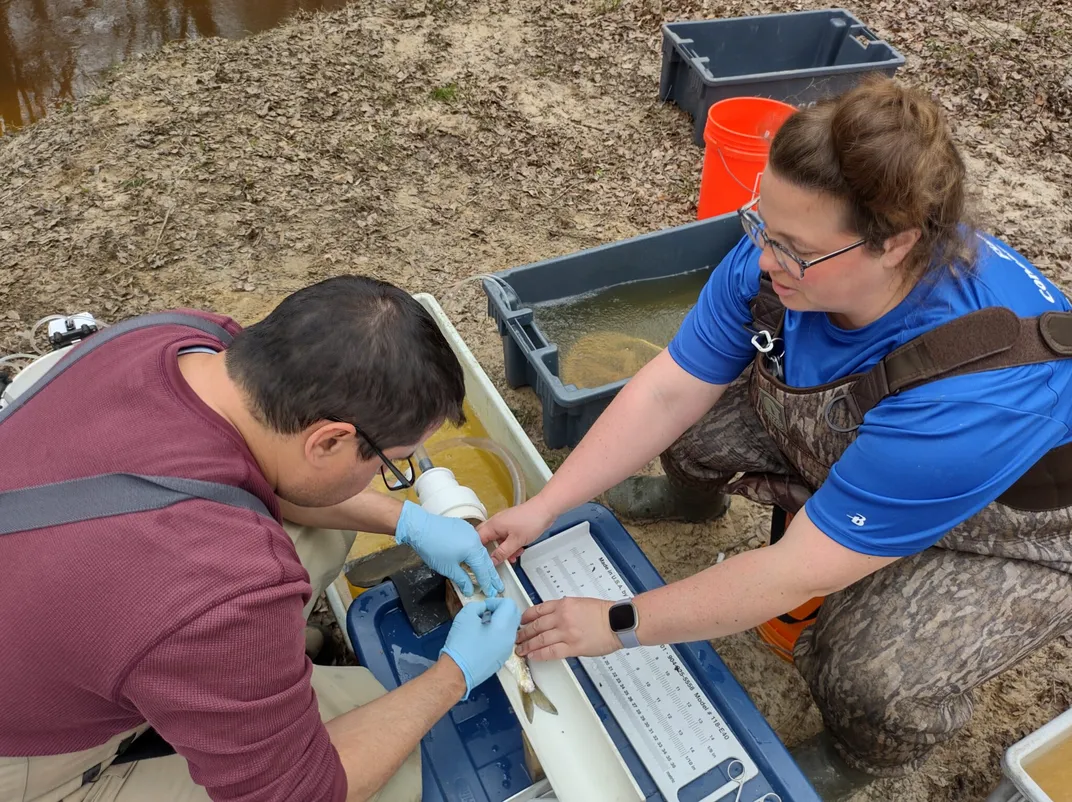
Using special acoustic telemetry tags that emit soundwaves, SERC scientists have been able to follow river herring through an entire year of travel through the Atlantic. This year, they began using an even more high-tech tag that sends out a different signal if a fish gets eaten on its journey.
“We’ve learned that river herring only take a month or so to swim back to the Gulf of Maine or even the Bay of Fundy, Canada, where they spend the summer,” Ogburn said. “It’s a remarkable migration for such a small fish!”
The river herrings’ annual spawning journey is incredibly long. Unfortunately, their path to recovery as a species may be much, much longer. Researchers and local managers hope a greater understanding of their behavior will reveal new ways to protect the population and help bring it back to health. Current population counts don’t suggest any major improvements, but recovery is no longer out of the question. Who knows? The timeline is uncertain, but one day, the Patapsco might just shine silver once more.