

American Icons: A Toast to The White Oak
From bourbon barrels to sea battles, white oaks are among the most significant trees in American history—and they need our help.
:focal(3480x1955:3481x1956)/https://tf-cmsv2-smithsonianmag-media.s3.amazonaws.com/filer_public/c0/5e/c05ecffb-8e36-49c4-a8c4-6257914025e2/hog_island_oak_tree_5_credit_john_parker_med-res.jpg)
One could say that the white oak is “as American as apple pie.” The problem is that apples aren’t exclusive to the United States, and pies were first baked by ancient Egyptians. To make the expression accurate, you’d need a food so patriotic that it could not be produced anywhere else in the world. As luck would have it, bourbon fits the bill, and we have the white oak to thank for it.
In 1963, Congress legally designated bourbon as a distinctive product of the United States. They laid out a unique set of production standards to ensure this would never change. The most important of these rules is that the spirit must be stored in fresh white oak barrels, which are charred before use. The burnt wood provides the spirit’s unique flavor and qualifies it as true bourbon. Without white oak, it’s just whiskey.
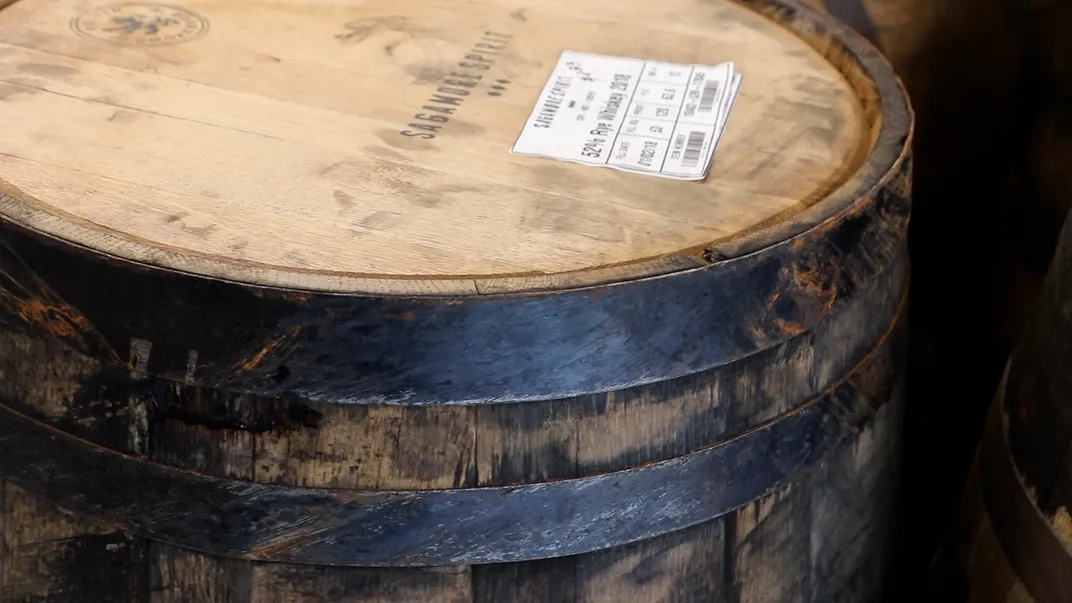
The United States wouldn’t be the same without white oaks either. Americans have put their trust (and sometimes their lives) in the hands of this tree for 250 years and counting. It’s a mainstay in our nation’s history in ways that you might not expect. In fact, one of the Smithsonian’s research organizations, the Smithsonian Environmental Research Center in Maryland, may have never come into existence without it. Simply put, the white oak’s laurels are long overdue.
Gentle Giants
The U.S. Department of Agriculture describes the white oak as “an outstanding tree among all trees.” With sprawling crowns and average heights exceeding 80 feet, it’s not hard to see why. Tolerating a wide variety of climates, they grow all over the eastern United States, from the southeastern tip of Minnesota to Florida’s panhandle. There’s no denying that these giants make a bold statement: Their state tree status in Illinois, Connecticut and Maryland serve as proof.
Growing so large takes remarkable patience. It can take up to 50 years for a white oak to reach sexual maturity, but the wait is worth it. These trees are a mast-seeding species: They produce acorns only every 2-5 years, and then drop thousands in quick succession.
This strategy benefits both the tree and a wide variety of forest creatures, according to John Parker, senior scientist with the Smithsonian Environmental Research Center (SERC).
“Oaks and other masting species play a clever game,” said Parker. “Do nothing for a few years, starving out the acorn thieves, and then 'boom,' drop so many all at once that the squirrels and deer can't eat them all.” This strategy helps ensure more acorns survive to grow the next generation of oaks.
Tough As Nails
When it comes to hardwood, you can’t get much harder than white oak. Dense plant tissue results in lumber with unmatched strength, which Americans count on for some incredibly important tasks. As our nation expanded westward, oak planks served as railroad ties to keep trains on course. As the coal industry grew, timbers became supports in mine shafts, keeping the earth above from collapsing on miners.
The wood is also resistant to water and rot, making it an excellent choice for shipbuilding. Hence, the United States Navy chose it to build its first six warships in 1797, giving them remarkable durability. These included USS Constitution, the oldest warship in the world still floating today. Constitution earned the nickname “Old Ironsides” in the War of 1812, when HMS Guerriere’s cannonballs bounced off her 22-inch-thick oak hull.
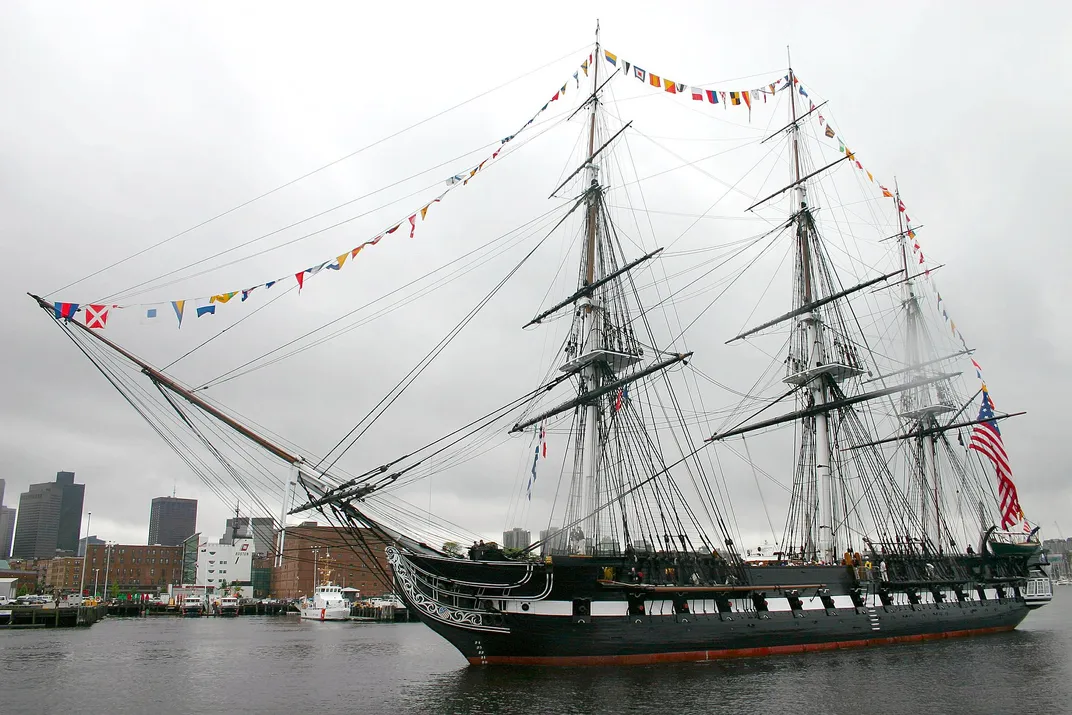
Aboard Constitution for this pivotal battle was first lieutenant John Contee, only 18 years old. After managing to outgun and sink Guerriere, the ship’s crew was awarded 100,000 dollars to divide amongst themselves. After the war, Contee purchased land on the Maryland shore, allegedly with his share of the spoils. He named the new property “Java,” after another vessel Constitution captured during his eight-month stint at sea.
Over the next century and a half, ownership of the farm passed through many hands. Here’s the clincher: The most recent owner—dairy farmer Robert Lee Forrest—bequeathed his portion to the Smithsonian Institution. This land would eventually become the Smithsonian Environmental Research Center, or SERC. Credit is due, yet again, to the white oak and the sturdy ships it helped furnish.
Today, SERC contains a mix of forests and farmland. Two massive forest restoration experiments include white oaks in their canopies: BiodiversiTREE, with nearly 18,000 trees, and Functional Forests, with 33,500 trees going into the soil this year. Both experiments test how well species like white oaks grow by themselves and in mixes with other tree species.
“At BiodiversiTREE we've found that white oaks grow nearly 50 percent faster in mixtures compared to single-species plots, potentially providing a solution to improving the yield of this slow-growing but valuable timber species,” Parker said.
SERC scientists also track how oaks are faring in natural forests through the Forest Chronosequence project. The project tracks the health of tree stands across the SERC campus, ranging in age from a few years to over two and a half centuries old.
During this project, researchers made an unexpected discovery. Isolated on a peninsula known as “Hog Island,” a 270-year-old white oak - older than the United States - is thriving. Having stood tall through our nation’s entire lifespan so far, it has earned its place in local history. As part of its 250th celebrations, the center launched a public poll to choose a name for the tree and landed on The Sentinel.
Setting the Standard
Today, many of America’s largest trees are recognized through the National Champion Tree Program. The competition, which recognizes the biggest trees in the United States, has its roots in Maryland. We have Fred Besley, the first Maryland State Forester, to thank. His inspiration? One of the most storied white oaks in American history.
In 1909, Besley assessed a white oak in the community of Wye Mills. His measurements confirmed it as one of the largest in the state. Once his findings were published, the general public began visiting the “Wye Oak” in droves.
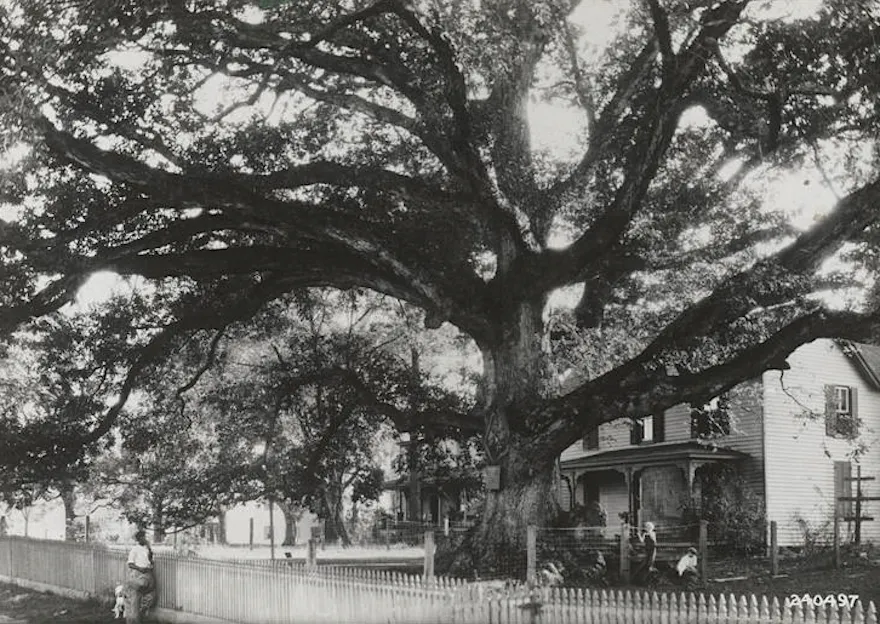
The realization that there was “a universal interest in large trees” gave Besley an idea. He persuaded the Maryland Forestry Association to host a statewide big tree contest in 1925, for which he served as the “umpire.” The results? A "Noted Tree List” and scoring system, which became the basis for the national competition we have today.
By 1937, the Wye Oak became the largest white oak in the state, measuring nearly 28 feet around and standing 96 feet tall! The behemoth was a source of such pride for Marylanders that the state legislature purchased it in 1939. Deeming it the official state tree, they set aside the surrounding land as Wye Oak State Park. Soon after, it was crowned the first national champion white oak in 1940.
Colloquially recognized as Maryland’s oldest citizen, the Wye Oak was estimated to be over 460 years old when it finally collapsed in a thunderstorm in 2002. Despite its unfortunate demise, the tree lives on through seedlings cultivated from its acorns and the state park it once called home.
Looking Forward
Despite its deep roots in American history, the white oak’s future is up in the air. As it stands, mature trees are not being replaced by enough new saplings to maintain the current population. Competition from faster-growing trees, suppression of natural fire, and white-tailed deer with a taste for saplings are just a few of the threats at hand. Without help, the population will face a collapse from which it may never fully recover.
All enterprises based around the tree are at risk, especially the bourbon industry. Because government regulations on the spirit forbid the reuse of barrels, new wood is required to keep the liquor flowing. If the wood supply dries up, so does the bourbon. The same rules that make the drink distinctly American may ultimately be its downfall.
For 250 years, white oaks have given the American people everything they have to offer and have asked nothing in return. It is difficult to imagine what will happen in the next 250. One can hope that there will still be white oaks for future generations to appreciate. And maybe, just maybe, SERC’s white oak will celebrate its 500th Independence Day as strong and stoic as ever. After all, things only get better with age, including bourbon. We’ll drink to that.
Note: The article has been corrected. The original version stated that the white oak on Hog Island was 274 years old. Our scientists fact-checked us and confirmed it is 270 years old.