

Eight of the Worst Marine Invaders, According to Scientists
Lionfish, mitten crabs and “sea vomit.” Meet eight marine species inadvertently brought to new territory that are taking the aquatic world by storm
:focal(1024x770:1025x771)/https://tf-cmsv2-smithsonianmag-media.s3.amazonaws.com/filer_public/ec/3e/ec3ee07c-945d-40fd-a7be-ff4849e16b69/red_lionfish.jpg)
They come in a hundred different forms, as creatures from all over the world take up residence in the marine ecosystems of the United States. Some are brought by ships, others by storms. For millions of years, temperature served as a natural barrier for species. But the current warming world encourages the spread of marine invaders.
Scientists like those at the Smithsonian Environmental Research Center’s (SERC) Marine Invasions Research Lab are working hard to defend the coasts, by detecting and preventing new introductions. Here are eight of the most-wanted species on their radar today.
Striped Acorn Barnacle
Amphibalanus amphitrite
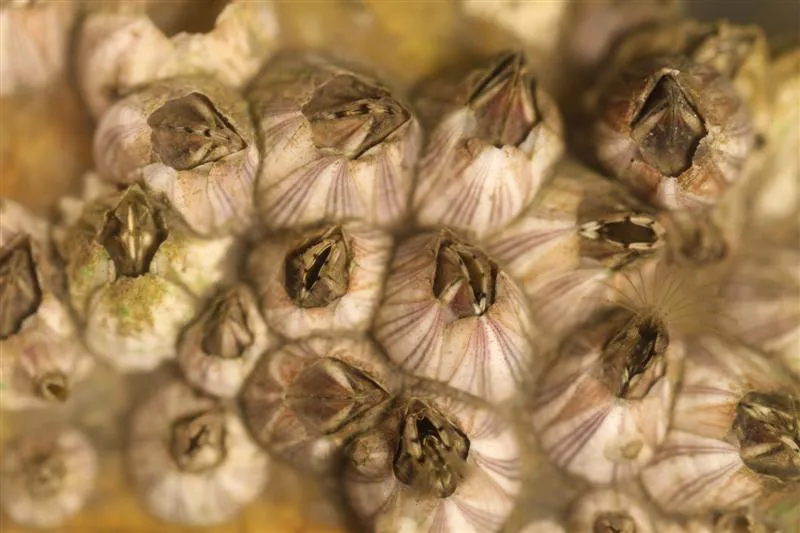
Charles Darwin first described this barnacle in 1854. Famous for encrusting ship hulls, docks and other coastal structures, it’s a prolific biofouler (where human objects gain unwanted collections of attached organisms). They can be an expensive invader for the maritime industry. They clog pipes, cause vessels to drag and use more fuel, and destroy aquaculture. Large colonies can change the seascape of sensitive ecosystems like oyster reefs.
Current prevention efforts: Researchers are experimenting with non-toxic biocides for ship hulls. Others are conducting studies on the ability of pulsed electrical fields to prevent foulers from occurring at all.
Japanese Skeleton Shrimp
Caprella mutica
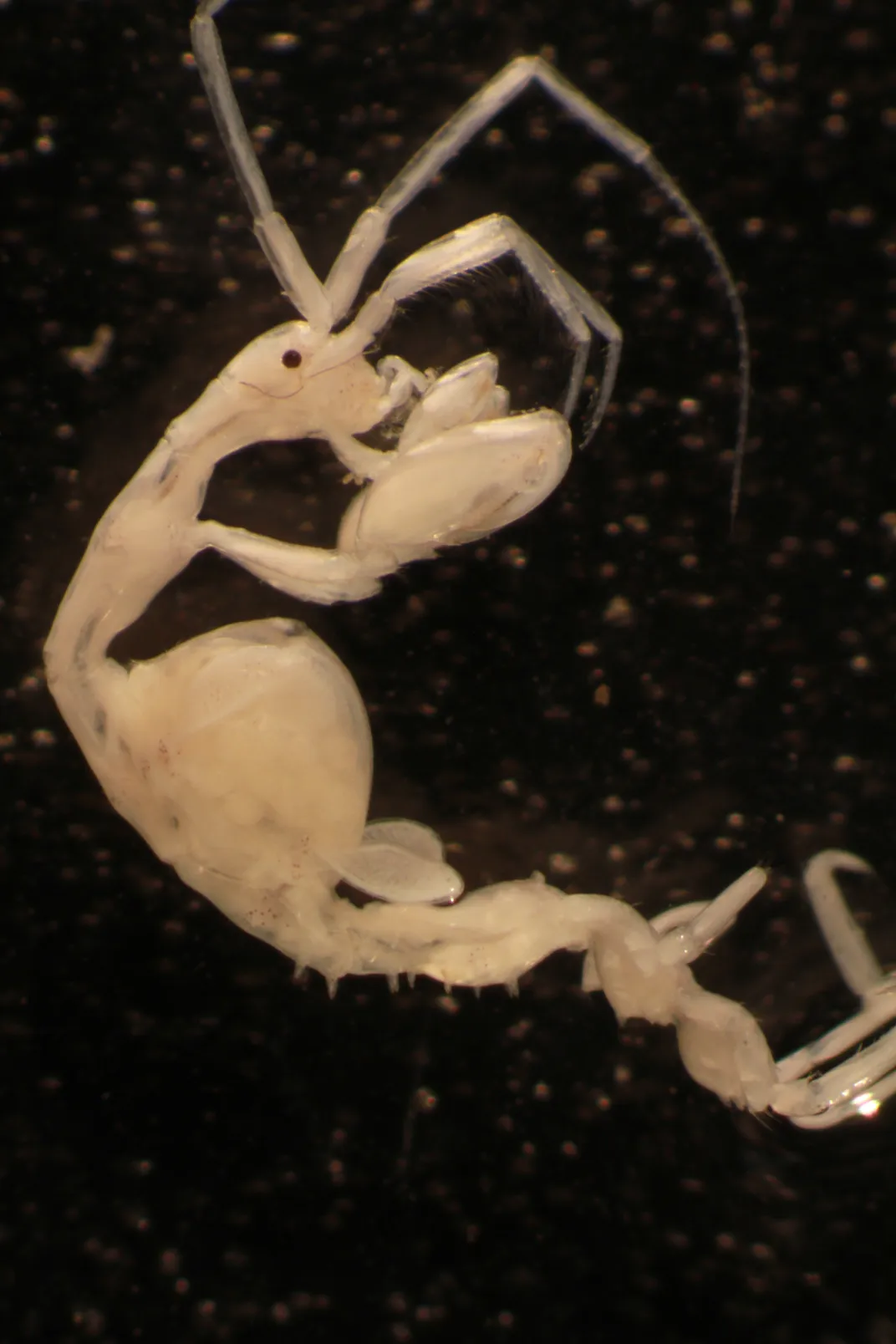
The Japanese skeleton shrimp inspires many important questions--questions like, “What am I looking at?” and “Is that an alien?” Its reduced number of limbs and elongated center contribute to its strange appearance. (Its skull-like face definitely doesn’t help either.) Native to Northeast Asia, it’s spread across the Northern hemisphere. These shrimps have no planktonic stage. They spend their lives on the seabed, and when they move, they crawl or scoot. They can feed pretty much any way they want, from filtering water and scraping algae to hunting. This makes them a strong competitor against native species. Their preferred habitats are the communities of algae and invertebrates living on artificial substrates, like docks or aquaculture and salmon farms.
Current prevention efforts: Like most invasives, once they're here, they're here to stay. This means prevention is key. Removing algae on human structures before breeding seasons and scraping clean boat hulls can help.
Australian Tubeworm
Ficopomatus enigmaticus
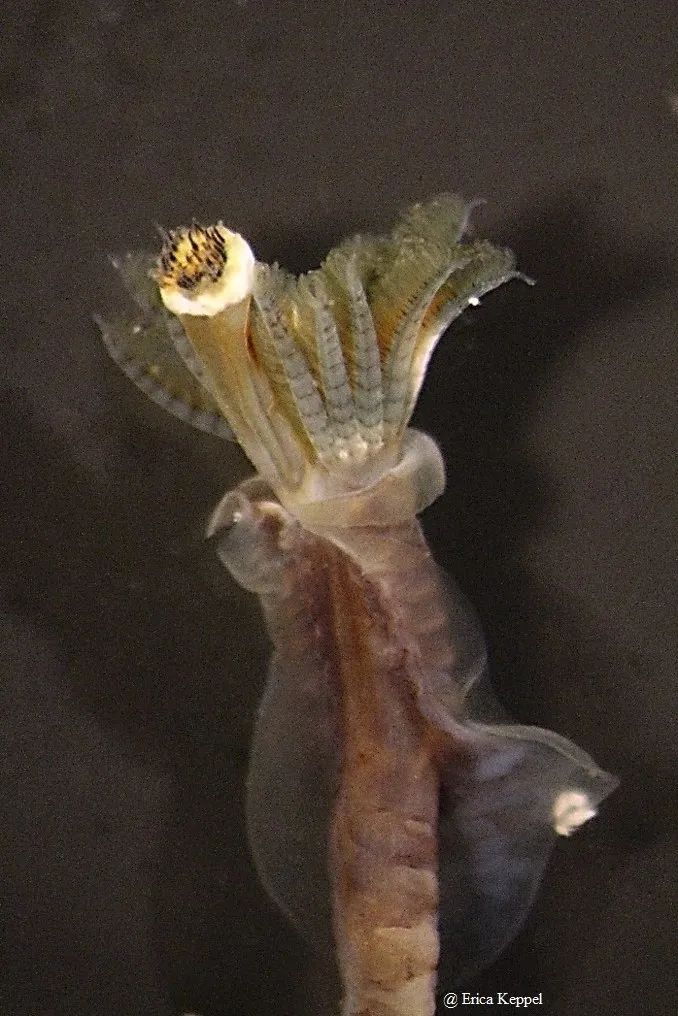
Imagine a coral reef. Now, instead of colorful and diverse corals, imagine it’s made entirely of 2- to 4-centimeter white worms. This invader is different from the others on this list. It literally alters the physical structure of the habitats it takes over. Tubeworm reefs are associated with overfeeding on phytoplankton (tiny plant-like organisms that form the basis of the marine food web), reducing water circulation, increasing sediment build up and causing algal growth. In Argentina’s Mar Chiquita Lagoon, scientists observed phytoplankton chlorophyll decreased by up to 56% near tubeworm reefs. Its main limiter is temperature—which would probably be more helpful if everything wasn’t getting warmer.
Current prevention efforts: For boat hulls and shallow reefs, the Australian tubeworm can be physically removed. In addition, antifouling mixtures and extreme salinity can destroy unwanted colonies.
Multinucleate Sphere X (MSX Disease)
Haplosporidium nelsoni
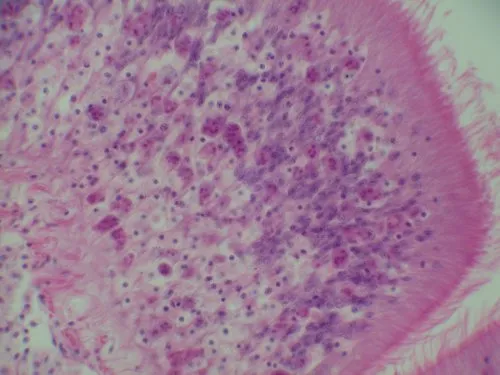
In 1996, the Connecticut oyster industry was booming. Harvesters collected more than 500,000 bushels of oysters in a single year. Enter: MSX. By 2000, the industry was down to 80,000 bushels. MSX is a microbial parasite and considered responsible for massive die-offs in Eastern oysters. It’s a bit of a mystery; it doesn’t spread oyster to oyster, and there’s currently no scientific consensus on how it’s getting around. The parasite enters through the oyster’s gills and restricts the animal’s ability to feed, starving it. Though harmless to humans, MSX infection can have a mortality rate of 80-90% for oysters and can affect oysters of all ages. It’s most dangerous in warmer waters.
Current prevention efforts: Rather than introduce exotic disease-resistant oysters, the U.S. Army Corps of Engineers has encouraged native restoration. Careful quarantine and management of oyster sanctuaries have allowed some population recovery.
Carpet Sea Squirt ("Sea Vomit")
Didemnum vexillum (D. vex)
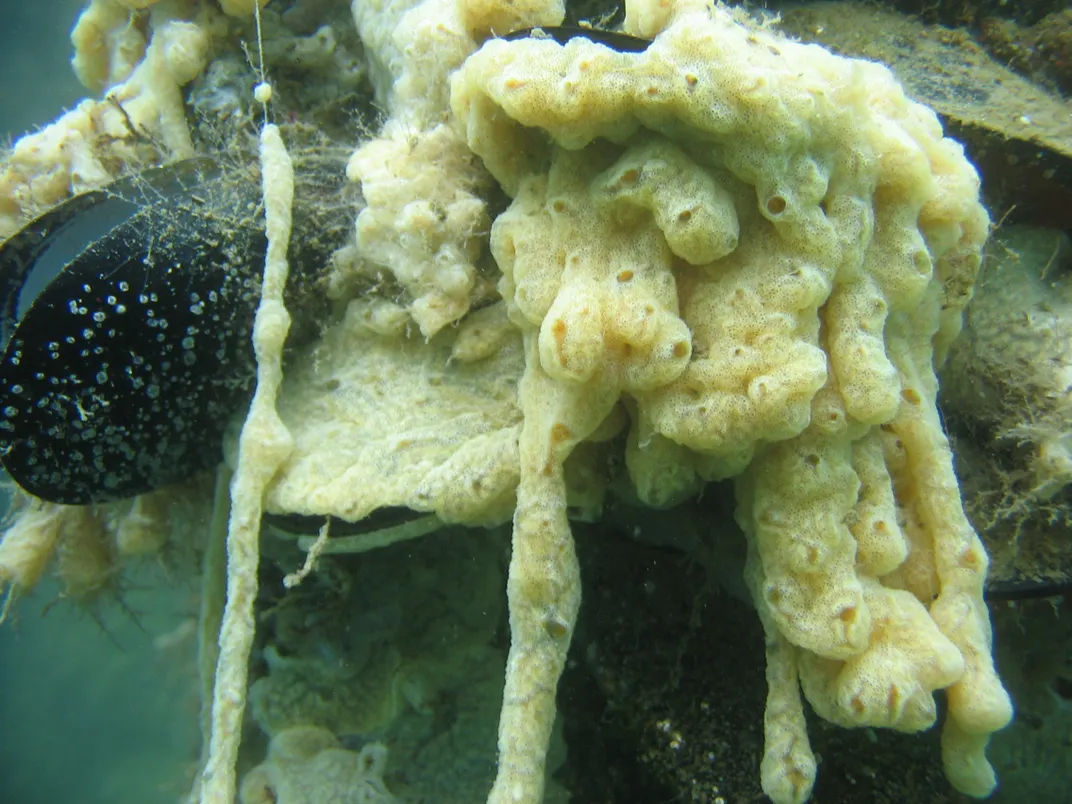
It’s a bird, it’s a plane, it’s a…carpet of vomit? This sea squirt, not so lovingly referred to by scientists as “sea vomit,” grows on rocks, gravel seabeds, seaweed, docs, boat hulls, lines, nets and mussels. Native to the coast of Japan, by the 1990s the carpet sea squirt had spread to New Zealand, North America and Europe. Each "carpet" is made of many small organisms called zooids, which are sac-like filter feeders. D. vex can completely blanket the marine environment, suffocating everything it covers. It’s also capable of reproducing both sexually, with free swimming larvae, and asexually by splitting off to form more colonies. Left unchecked, it can form massive structures that resemble dripping wax and cost the shipping industry millions.
Current prevention efforts: In 2015, SERC scientists tested custom-designed enclosures and careful application of treatments like chlorine, lime and salt. The results were promising, with salt and chlorine eradicating 100% of D. vex on flat seafloor.
Chinese mitten crab
Eriocheir sinensis
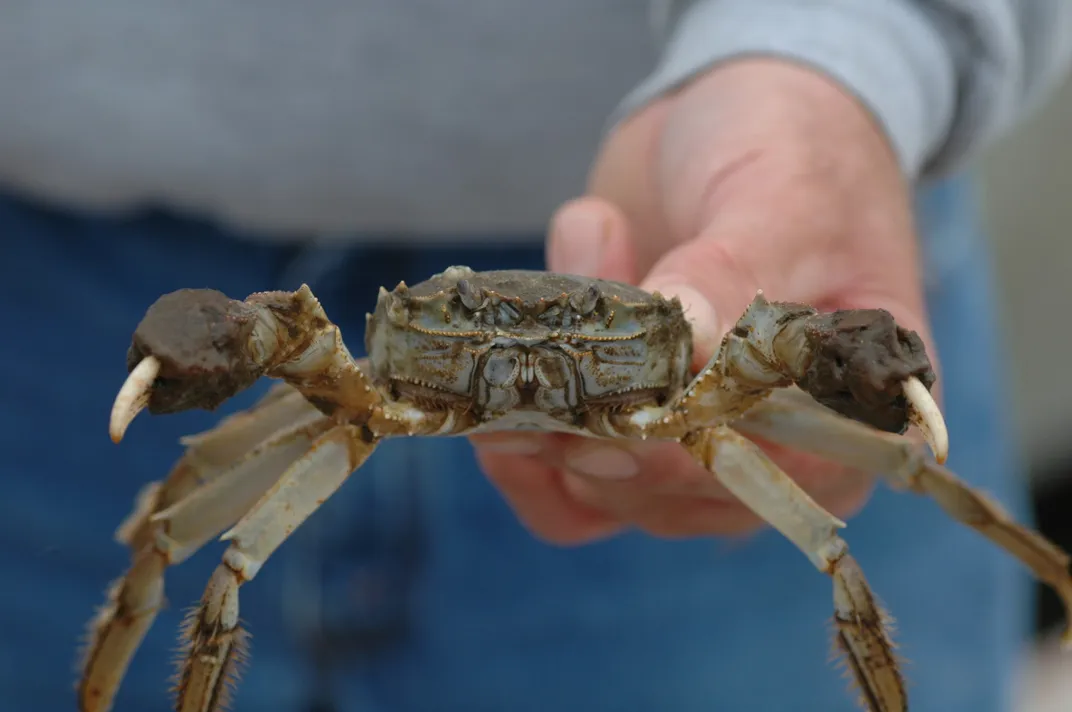
The Chinese mitten crab is native to the Pacific coast of East Asia but has established a reproducing population in California. These crabs burrow into banks, creating intricate tunnels that can erode shorelines, collapse riverbanks, clog power plants and water intake pipes, and devour native mussels, clams and other invertebrates. They also steal bait from fishers and feed on fish trapped in nets. Females can have up to a million eggs, making it easy for their population to boom.
Current prevention efforts: SERC’s Marine Invasions Lab launched the Mitten Crab Watch, where local residents can help researchers minimize and monitor the crab’s spread.
European Green Crab
Carcinus maenas
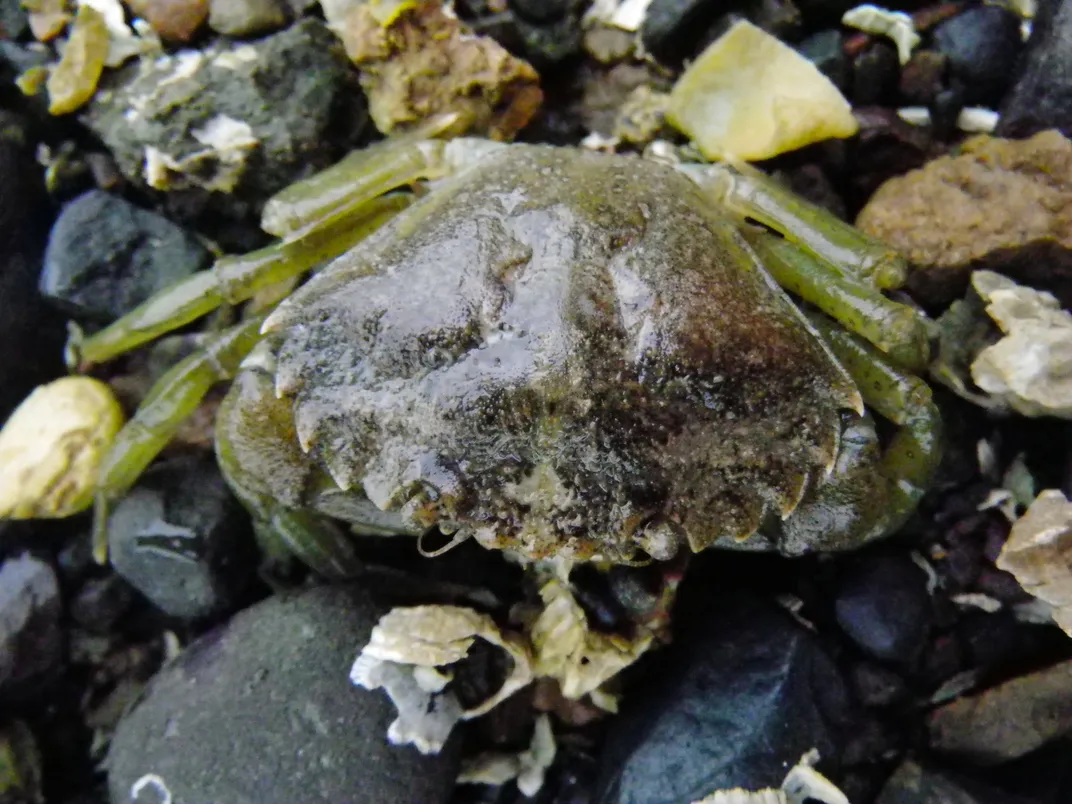
This list isn't a ranking, but if it was, the European green crab would be near the top. Native to coastal Europe and Northern Africa, it was discovered in Cape Cod in 1817 and the San Francisco Bay Area in 1989. This crab is thought to have directly contributed to the decline of the shellfish industry on the East Coast. The crab destroys seagrass and eelgrass beds and devours everything in its path—including other native species of crab. Larval crabs spread from one area to another on ocean currents, making it difficult to contain them.
Current prevention efforts: Scientists focus on intensive localized trapping and early detection. The Green Crab Removal Project—run by SERC, the Greater Farallones National Marine Sanctuary, UC Davis and Portland State University—works with volunteers to remove these crabs. In Washington alone, efforts by the Washington Department of Fish and Wildlife, local Tribes and countless volunteers have resulted in the removal of nearly 2 million green crabs.
Red Lionfish
Pterois volitans
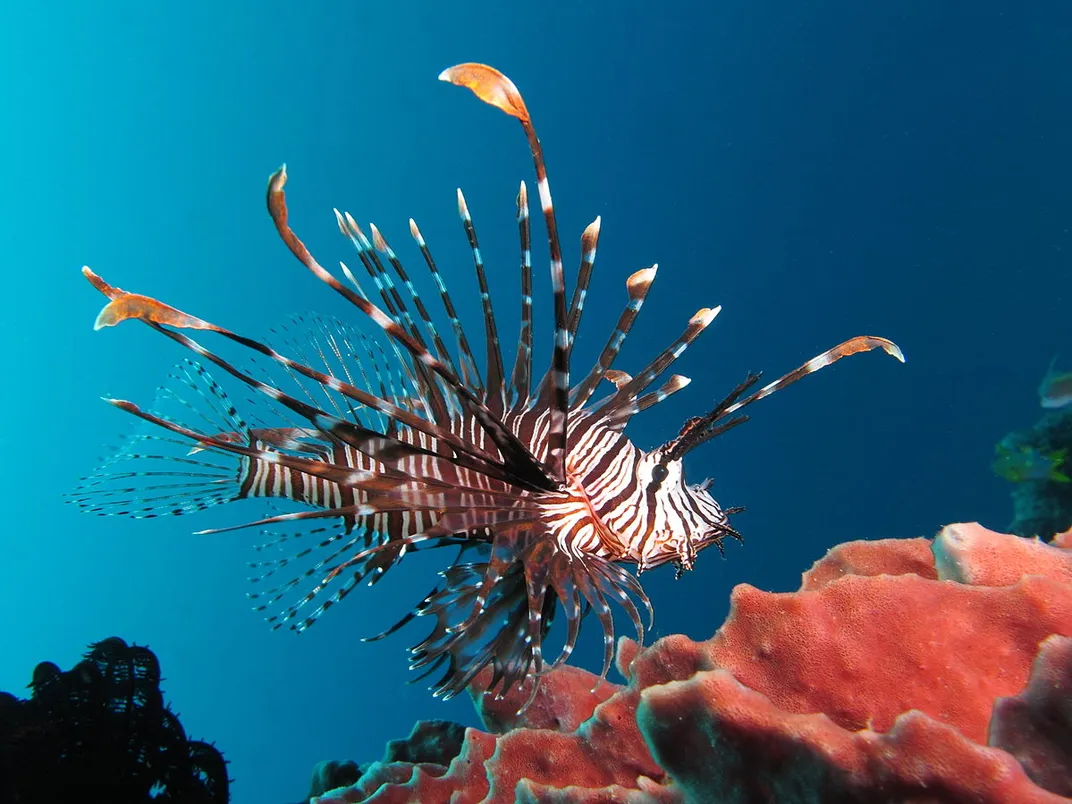
Sometime in the 1980s, an aspiring aquarist (or several) decided they no longer wanted their lionfish. So they did the obvious thing: Throw them into the sea. Yes, that’s right. The red lionfish invasion, one of the most devastating marine takeovers worldwide, likely started from aquarium owners releasing fish or eggs into the wild. But the lionfish is no Petco chum. It got its start in Dania Beach, Florida, and spread up the Atlantic coast, establishing populations from North Caroline to New York. In warmer climates they can spawn every four days—meaning one female can produce 2 million eggs per year. More bad news, they have no natural predators. They can even be dangerous to humans, with an estimated 50,000 cases annually of stings from their 18 venomous spines. Scientists found lionfish can reduce young native reef fish by almost 80%.
Current prevention efforts: While widespread removal is impossible, localized, consistent culling by researchers and dive groups can keep lionfish from taking over. Once the spines are removed, lionfish are perfectly safe to eat. If you’re feeling adventurous, you can check out the National Oceanic and Atmospheric Administration’s (NOAA) “Eat Lionfish” initiative. As NOAA scientists say, "If we can’t beat them, let’s eat them!"