

Too Many Coral Restorations Fail. Treating Them Like Experiments Could Help Them Succeed.
Scientists suggest a new framework for coral restoration that could help safeguard them in a warming world
:focal(2304x1733:2305x1734)/https://tf-cmsv2-smithsonianmag-media.s3.amazonaws.com/filer_public/cb/7b/cb7be626-8c4f-4cd1-a863-cb0dc6e9dc31/coral_reef_photo_credit_leah_harper.jpg)
In the warming oceans of the Caribbean Sea, restorationists plant 10,000 fast-growing corals by cementing them to the limestone seafloor. The goal is simple: Rebuild the reef quickly and efficiently. The coral takes off, and a year after the project, the planters report that it’s a success. Yet several years later, the new reef is gone.
Scenarios like the one above are not uncommon for conservationists working to save corals. Almost one third of all coral restorations fail eventually, either by failing to attract reef-dwelling species or collapsing entirely due to high mortality rates.
“What restoration actually means is to bring an ecosystem back to what it was,” said biologist Leah Harper, a researcher with the Marine Global Earth Observatory network at the Smithsonian Environmental Research Center.
Harper recently co-authored a new paper on coral restoration. The article, published in PLOS One, suggests a new approach: Treat restorations like science experiments.
“We cannot ignore we are dealing with nature. Technology works linearly, but biological systems don’t,” said Aldo Croquer, lead author and Marine Conservation Program Manager at The Nature Conservancy. Science experiments are based on hypothesis testing, a framework Croquer believes might show more promising results.
Restorations usually aren't run like experiments. They have a goal, as in the example above, where researchers chose to plant 10,000 fast-growing corals. A year later, it may seem like restoration was a success. However, that doesn’t mean the restoration is responsible. It’s possible that all the reefs in the region saw a population boost for reasons that had nothing to do with the restoration.
“We must be sure that the outcome is derived from the interventions and not from other natural processes,” said Croquer.
Even if coral did increase, that doesn’t always translate to fish, lobsters and other animals returning. In a few more years, warming waters, disease, intensifying storms or other factors could cause the site to fail completely.
Yet most restoration projects don’t check back after the initial success to find out. This isn’t necessarily the fault of the restorationists, but an issue with how projects are funded. A one-year timeline with visible results makes a better pitch than a 10-year timeline. However, funder preferences don’t always align with how nature works.
“It would be like me starting my first job, giving my financial advisor a check and saying, 'Never tell me anything about my retirement again,'” said Jonathan Lefcheck, co-author and owner of Best Environmental Applied Research. “That’s obviously not how we manage things economically, so why should restoration be any different?”
Strength in Diversity
When attempting to rethink coral restoration, Lefcheck looked on land for a comparison. In diverse terrestrial forests, different trees serve different functions. One species might provide animal habitat, while others limit deer browsing or help the forest resist fire. If a team planted only one species, they would likely get only one function.
The same is true of marine ecosystems. The fast-growing coral could look like a healthy reef, in the way a forest made of only one tree species still resembles a forest. But it's vulnerable. More importantly, it loses many of its benefits to nature—and to people.
“If we’re just counting coral colonies, that doesn't tell us anything about whether they're actually supporting more fish biomass and higher abundances of food fish,” Harper said.
Reefs are habitat for keystone fish species and vital for fisheries around the world. Barrier reefs also protect shorelines from severe weather and erosion. Fast-growing corals may not be able to provide protection in the same way as harder-to-grow counterparts, meaning restorations that appear healthy could be losing out on key ecosystem services.
“Diversity is good, both for people and for nature,” said Lefcheck.
Turning Restorations into Science Experiments
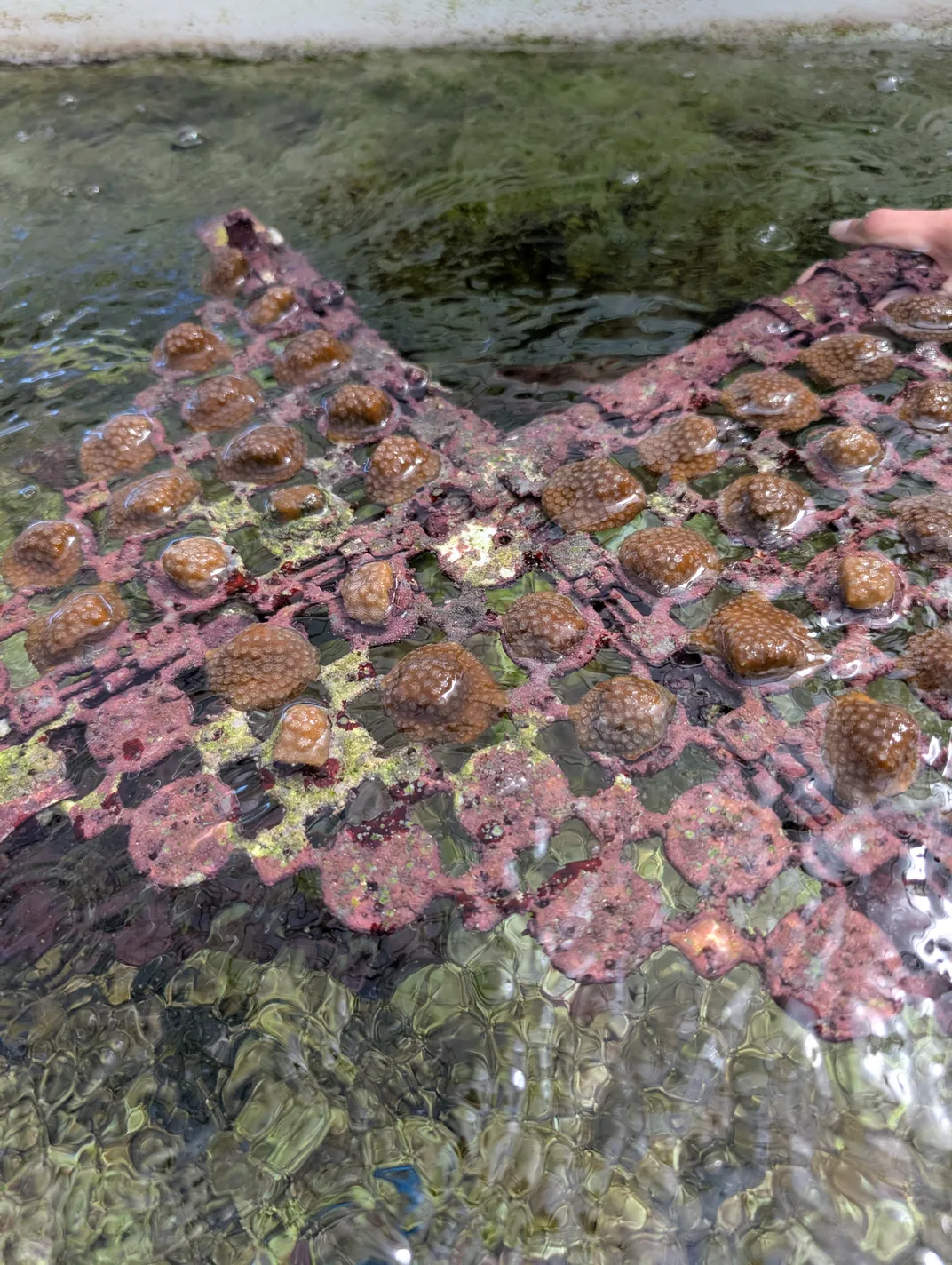
Proving that a restoration actually works requires keeping track of several variables. According to Harper, one way to do this is to start with a control site and a reference site.
Let’s return to the Caribbean Sea. Instead of having 10,000 new corals as the goal, researchers could prioritize the long haul. The team could find an area near the intended restoration to leave alone—the control plot—and an existing healthy reef in the same climate—the reference plot.
According to the authors, a better way to measure success is by tracking how the new restoration compares to the control (where nothing happened), and the healthy reference site. Over time, the restoration should look more like the healthy site and less like the control. For example, the healthy reference plot might contain 15% hard corals, while the control stays at 3%. It would be a good sign if the restored plot eventually had something close to 15% hard coral as well.
“If your control is also changing at the same rate as your intervention, then that means it's likely not your intervention that produced your results,” Harper said.
Of course, an experiment takes a lot more time, effort and money than planting fast-growing corals.
“You look at the corals themselves, but then maybe you set up cameras to look at the fish, and then somebody has to watch the videos, and they have to identify the fish,” said Lefcheck. “Calculating diversity and abundance becomes very complicated.”
Due to structural challenges, restorationists can find their projects limited to the short-term. Unsurprisingly, funders like to see results. A reef made of one species is better than no reef at all. But with rising temperatures and increasingly unpredictable weather, the authors point out, the old way of doing things just doesn’t seem to be working.
Choosing “Future-Proof” Species
One innovation that could be applied to restorations is building thermal tolerance—the ability to withstand higher temperatures.
In areas like the Caribbean, corals are especially susceptible to temperature spikes. Isolating corals that happen to be adapted to high temperatures and using them in restorations adds a new ecosystem service: climate resilience.
“The idea is we're going to kind of future-proof these restorations against increasing temperatures,” said Lefcheck.
In addition to designing restoration projects like experiments, Croquer suggests two more key strategies. First, projects should have clear metrics of success depending on the scale. Second, projects should think beyond just restoring corals at low costs. Many projects rely on harvesting wild corals as seeds for restorations. Instead, practitioners could look into less extractive ways of getting more corals, such as breeding captive corals to produce new juveniles, according to Harper.
Changing restoration practices might be an investment, but it's one that will pay off in the long run.