

Meet the Scientist Uncovering How Mangroves Can Help the U.S. Military
Smithsonian ecologist Andre Rovai studies how mangroves fight sea level rise, protecting military installations on the coast.
:focal(800x800:801x801)/https://tf-cmsv2-smithsonianmag-media.s3.amazonaws.com/filer_public/08/5e/085e8d3c-8bf8-4b4a-bf89-ef0a71fe0915/28fe1c58-786d-43e2-b449-760a29c8ef3a.jpg)
On a cool, fall day while doing fieldwork in Louisiana, Andre Rovai came face to face with an alligator.
A colleague in the field with Rovai had stepped on the alligator’s nest. Rovai heard hissing near his feet, and there she was, a few steps away from him.
Rovai, a principal investigator at the Smithsonian Environmental Research Center (SERC), had been working in coastal ecosystems for over two decades. At the time, he was an assistant research scientist with Louisiana State University. This did not prepare him to deal with an angry mother alligator.
“We were like four or five feet apart from each other, looking eye to eye pretty much because I was sinking in the marsh.” Rovai said.
Slowly, he began to move back towards the boat. The alligator kept pace, poking its head out of the water and letting out hissing noises. It took almost an hour to get out, since the researchers did not want to risk making abrupt movements. According to Rovai, telling the story was a lot more fun than living it.
Alligators, bruised shins and other hazards come with the job for scientists studying mangroves and other coastal ecosystems. For Rovai, navigating the difficult terrain was more than worth it. As a self-described “bad student,” mangroves inspired something in him that he still can’t quite explain.
Love at First Tree
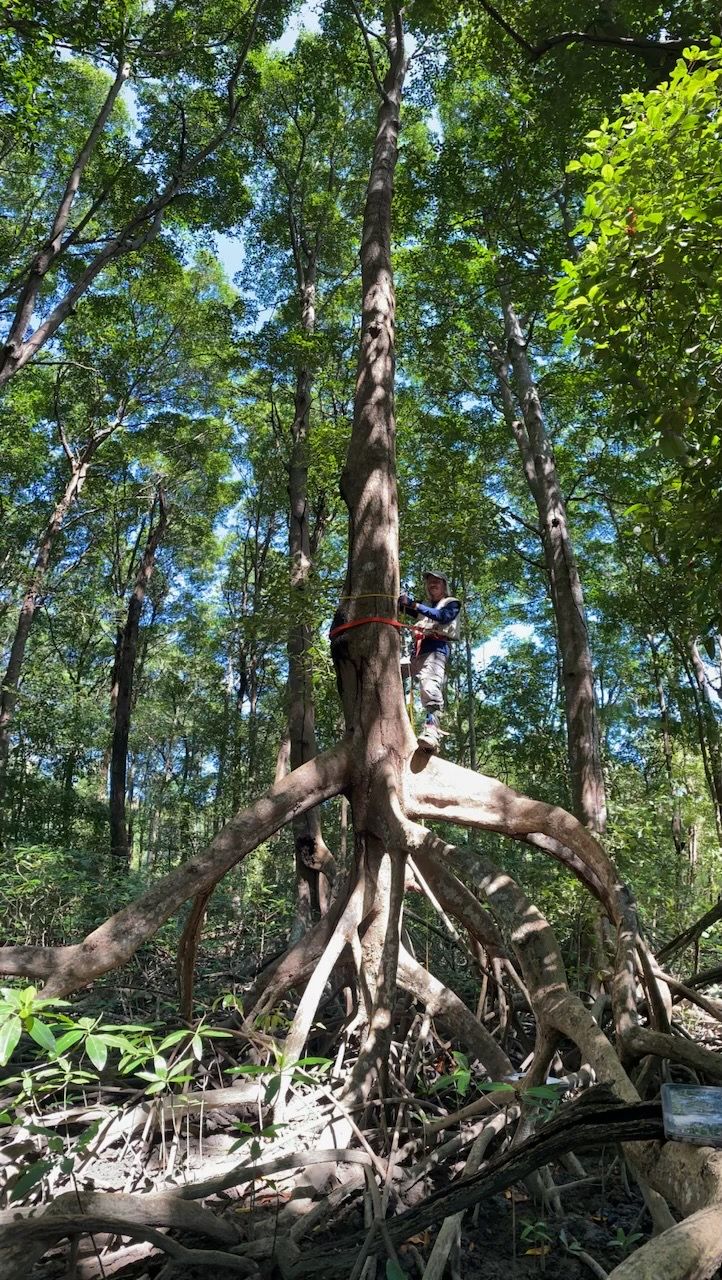
Rovai saw his first mangrove ecosystem on a field trip to the Bertioga Canal while in college at São Paulo State University in Brazil. He remembers the forest flooding, the fish swimming near the roots and the trees growing out of salt water.
It was this last sight that most amazed Rovai. Mangroves are the only trees that can do this, making them a natural buffer for the land from the sea. Their dense roots help prevent erosion and storm damage to coastlines.
“I knew right then that I was going to be a mangrove ecologist,” Rovai said. From that day on, despite his previous struggles with schoolwork, he said he never had to study for a test again. He was utterly devoted to what he was learning about marine biology in these tidal forests.
Mangroves also act as nurseries for marine species. According to Rovai, in some places 90% of what’s sold in a fish market lived in mangroves at some point in its life. For this reason, mangroves are a vital part of global subsistence fishing.
While conducting research, Rovai had the opportunity to work with community members whose livelihoods were based in coastal forests. Locals knew the best routes and times for traveling. At one point, a local fisher took Rovai out into the Amazon delta to collect soil. The data ended up being foundational for one of his most well-known papers.
Rovai joined the Smithsonian Environmental Research Center as a new principal investigator in 2025, where he leads the Coastal Landscape Ecology Lab. Today, his work looks different from his days paddling canoes into dangerous Amazonian deltas. Over the next three years, he will be studying mangrove ecosystems in Florida—this time with a new client: the U.S. military.
Keeping the Bank Afloat
For millions of years, mangroves have dampened storm energy and acted as buffers for coastlines.
“There’s nothing that’s going to be more long-lasting and efficient in protecting infrastructure than the mangrove forests and coastal wetlands in general,” Rovai said.
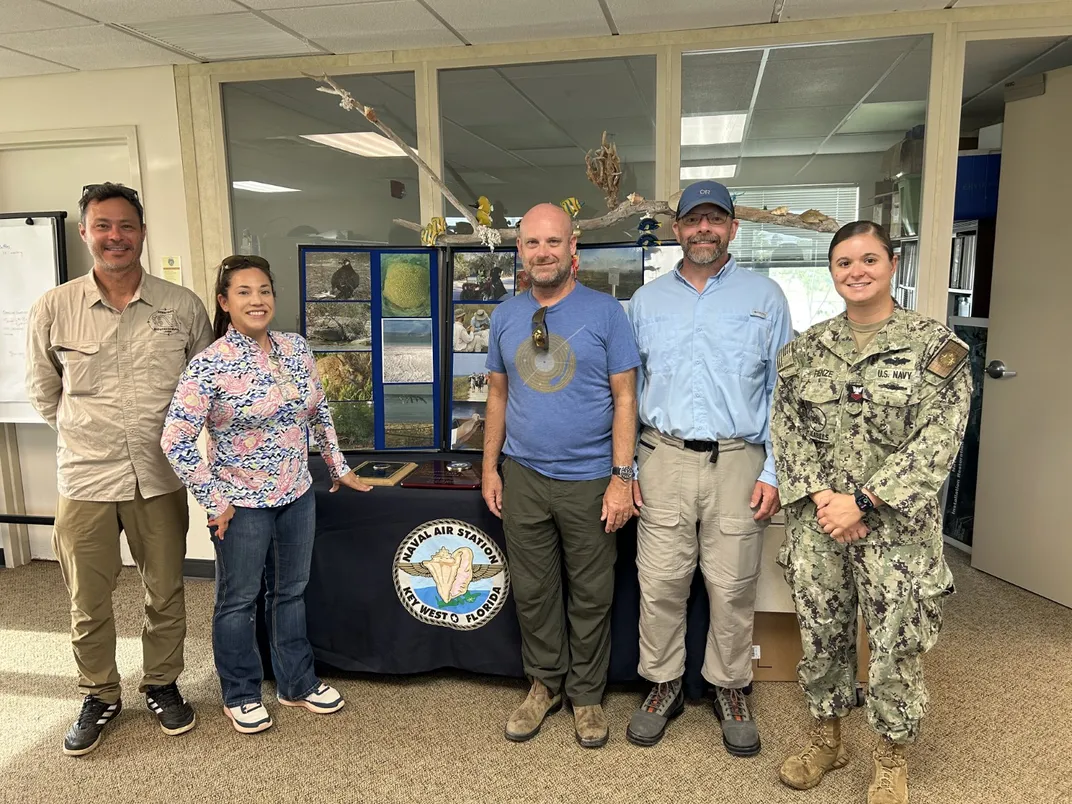
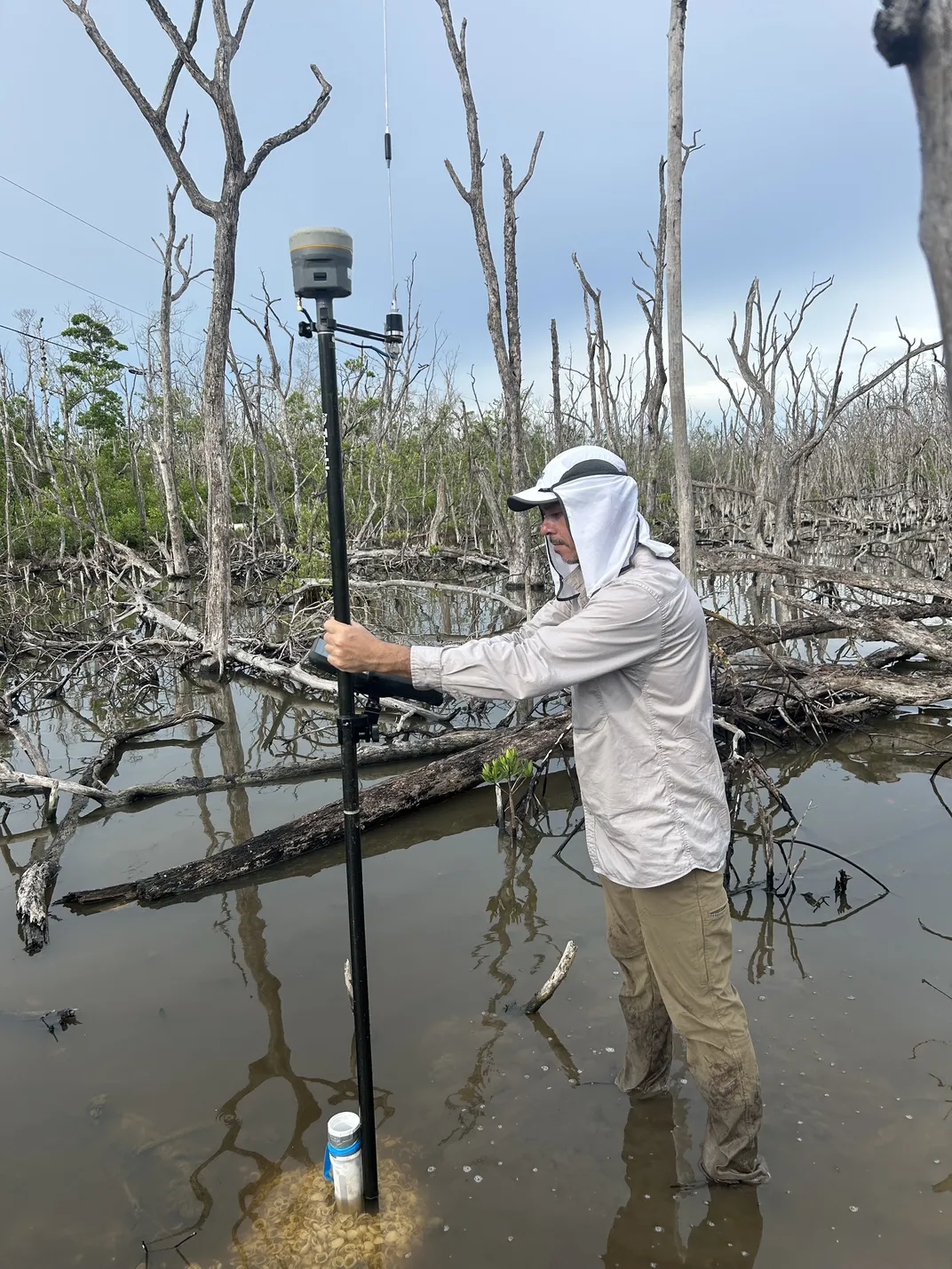
The military agrees—they’ve partnered with Rovai on two separate proposals for studying mangroves in a changing climate. The first is a three-year project with the Strategic Environmental Research and Development Program, identifying flood patterns and terrain changes at military installations in MacDill Air Force Base in Tampa, Florida, and Naval Air Station Key West. Rovai and his team will track the organic matter mangroves produce, which helps protect the shore.
Mangroves help increase elevation, while sea level rise takes it away.
“It’s like a bank account,” Rovai said. “You have a certain amount in there, but that net balance depends on how much you put in, how much you spend.”
If mangroves are lost, the organic matter they’ve produced will decay, and the sea will move in. The process can happen very quickly. Sometimes the loss of elevation is so fast, even other coastal plants can’t survive the flooding. What was once a mangrove forest becomes open water.
The researchers hope this data can be used to help protect military installations from sea level rise and assist managers in making decisions on their natural resources. The result will be an app that places all information on what may happen to their land in the palms of their hands.
How to Save the Mangroves (and Us)
While the first project studies the problem, the second considers a solution. It’s part of the U.S. Army Corps of Engineers’ Engineering With Nature program.
Mangroves are great at raising elevation and storing carbon in soil. But they can struggle to do so when dealing with extreme weather like hurricanes and frost events. Think back to the bank account. There are some healthy mangrove forests in places where the water is rising faster than the soil is growing. They’re spending more than they’re saving, and it won’t be long until they go under.
Rovai wants to know what happens when you preemptively place sediment in mangroves. Will this help the forest, or bury its roots and damage it? If it helps, this could be a method of maintaining mangroves—and their many benefits.
Where to get the sediment? The U.S. military has plenty of it from dredging material from navigation canals that need to be deepened for safety. They often place this sediment in open water sites, but the process can be expensive and difficult. Using it to help mangroves could be a mutually beneficial solution—lowering operation costs while increasing natural resilience and coastal protection.
For Rovai, that’s the core of the project: finding scenarios where people and nature can both thrive. Protecting mangroves isn’t just about saving nature for nature’s sake; it can also benefit our economy and national assets.
“It’s about protecting our quality of life, for food, for a better climate and aesthetics,” Rovai said.
Step in Mud
Rovai didn’t start off knowing mangroves were his passion. To find what he loved, he had to try several different things first, including sharks and sea turtles. In the end, mangroves stuck with him. Once he knew what he wanted, he was all in.
“Like one of my former mentors told me, you have to step in the mud to become a good wetlands researcher,” Rovai said. “Whatever your mud is, step in it a lot.”
Maybe your mud is the ocean: go diving. If it’s the forest, go climbing, he added. Sometimes, your mud leads you face to face with an angry mother alligator. But when you find your mud, it’s worth it.
“No regrets,” Rovai said.