

At the Mid-Autumn Festival, Philadelphia’s Chinatown Is ‘Building the World We Want’
The Chinese festival centers around the moon, historically as a religious practice in worshipping the moon goddess, Chang’e. In this Chinese American community, it has grown to become a source of agency and advocacy
:focal(600x400:601x401)/https://tf-cmsv2-smithsonianmag-media.s3.amazonaws.com/filer_public/8d/03/8d03ac27-a16d-4676-b3bd-e891e23a9b6b/philadelphia-chinatown-arch-stage.jpg)
Growing up, I never found mooncakes to be tasty. But when the Mid-Autumn Festival rolls around every year, I eat them anyway. For me, the act of eating mooncakes was never about taste, but it was about tradition. It was a way for me to acknowledge and participate in my cultural heritage, creating space for the “Chinese” part of my Chinese American identity.
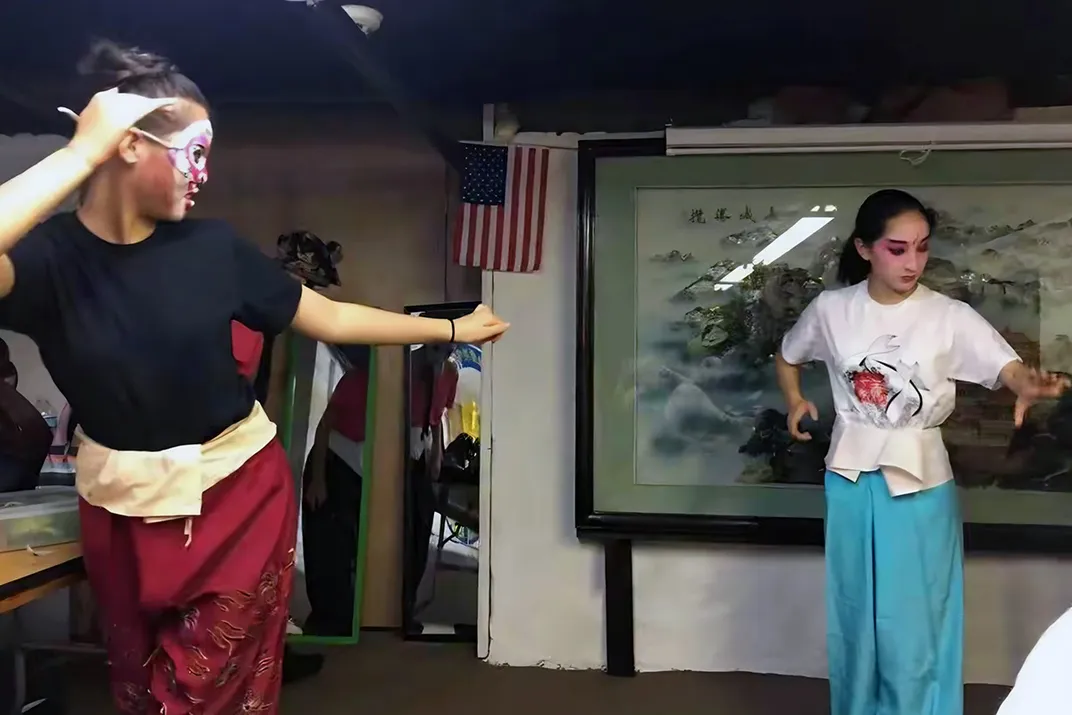
Philadelphia Chinatown’s Mid-Autumn Festival holds a very special place in my heart, because it provided me with the opportunity to honor and share my culture. As a Chinese Opera performer, I danced, acted, and sang on the main stage right under the Chinatown Friendship Arch from twelve to eighteen years old. In some sense, the festival and I grew up together, both perfecting our craft to serve our community. This year, I am excited to return to the festival, but this time, I will be experiencing it from beyond the stage.
The Chinese Mid-Autumn Festival falls on the fifteenth day of the eighth month of the Chinese lunar calendar. Its origin derived from multiple myths, with the most popular one being The Legend of Chang’e and Hou Yi. The festival centers around the moon, historically as a religious practice in worshipping the moon goddess, Chang’e, as well as representing harmony and unity. On this day, families reunite to share a meal under the bright, full moon.
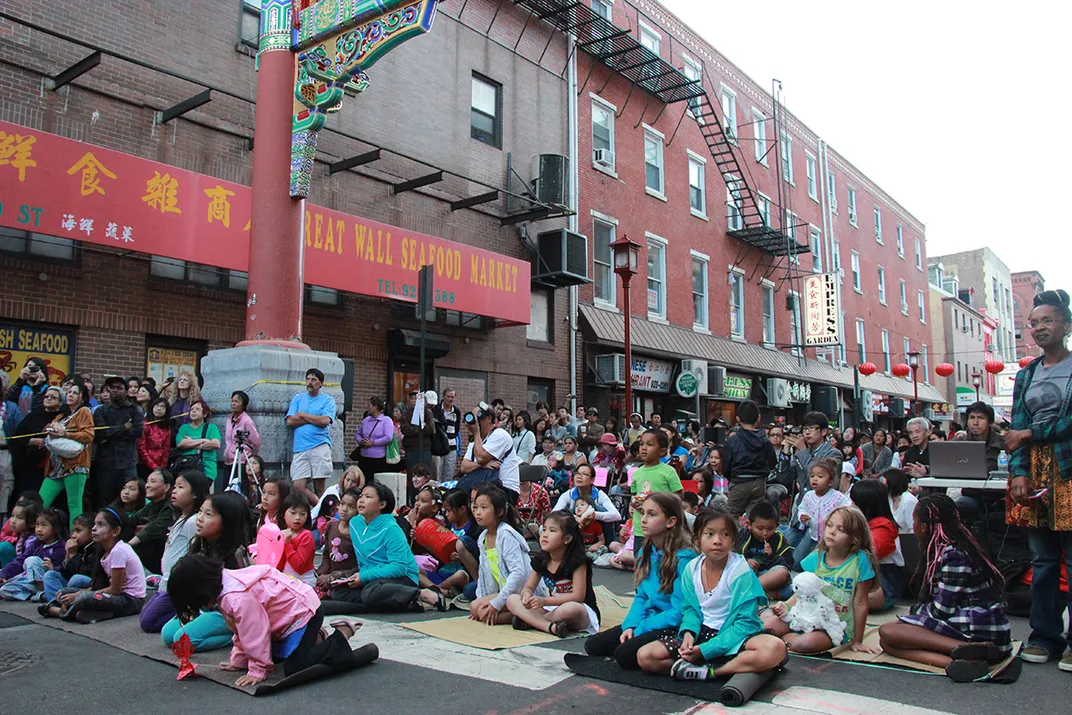
In 1996, the Asian Americans United (AAU) launched Philadelphia Chinatown’s very first Mid-Autumn Festival. The Chinatown youth were the biggest supporters of this initiative, responding to the community’s longing for familiarity, tradition, and belonging amid a history of gentrification and urban renewal. This year, Philadelphia’s Chinatown is hosting its thirty-first Mid-Autumn Festival, which is also part of the Of the People: The Smithsonian Festival of Festivals programming. On Saturday, September 26, Philadelphia will close Tenth Street, replacing traffic with art tables, carnival games, performance stages, and a community wellness space.
As a homegrown event, the community builds the Mid-Autumn Festival. An art teacher at the Folk Arts Cultural-Treasures School (FACTS) custom-makes and handcrafts a variety of arts and carnival games that reflect Chinese folklore. Cultural organizations energize the crowds with martial arts, taiko drumming, Chinese opera, and many other cultural performances. And when hunger strikes, visitors are encouraged to visit the local restaurants and bakeries that surround the festival or participate in the annual mooncake eating contest. Near the end of the festival, the community gathers on the street to watch the dragon and lion dances and join in the lantern parade.
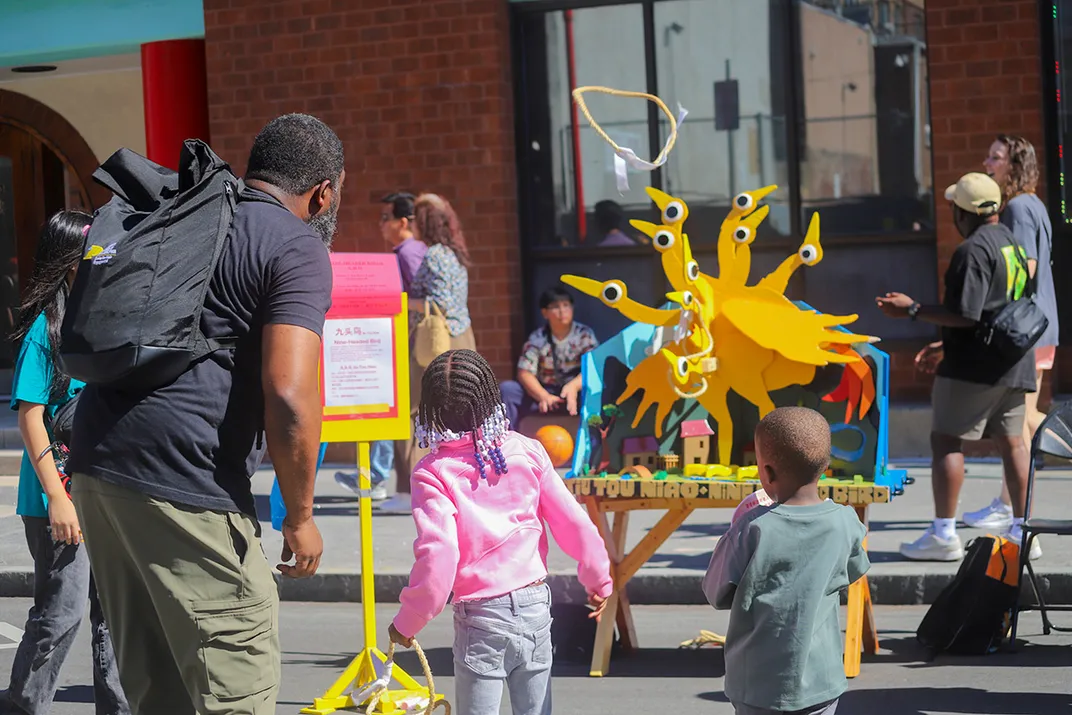
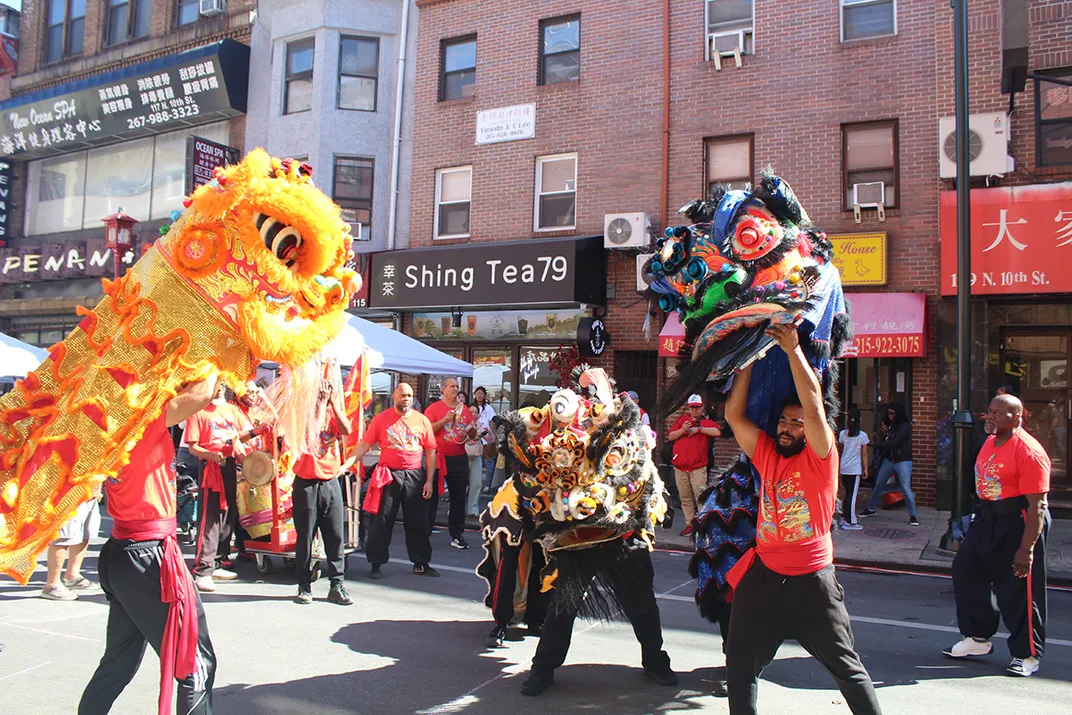
Alongside AAU’s staff, the festival’s core leadership relies on more than 300 high school volunteers to lead programs, organize games, and educate the public. The festival becomes a place where the younger generation reconnects with culture while providing service to the community. Amina Fong (sales), Boni Zhang (carnival games), and Aster Chau (volunteer program) are volunteer festival coordinators who all began as high school volunteers. All three saw the festival as an opportunity to give back and foster a stronger generational bond within the community.
“When you move to the U.S., unfortunately, you are giving up your community,” Fong says. “You’re giving up this natural space where you’re able to celebrate big celebrations like this. So, another reason why this festival is so meaningful to me is that we’re taking it back. We’re creating a space where we’re able to celebrate this huge part of our culture. And we’re trying to educate younger generations as to what this tradition looks like.”
The youth have a prominent physical presence at the festival, but they also embody a symbolic force of change and hope in Chinatown.
“[The festival] gave me the sense that I could be a leader, and that I had something to offer to my community,” Fong reflects. “I hope that, in turn, now that I’m an adult, I’m able to provide the opportunity to these kids as well.”
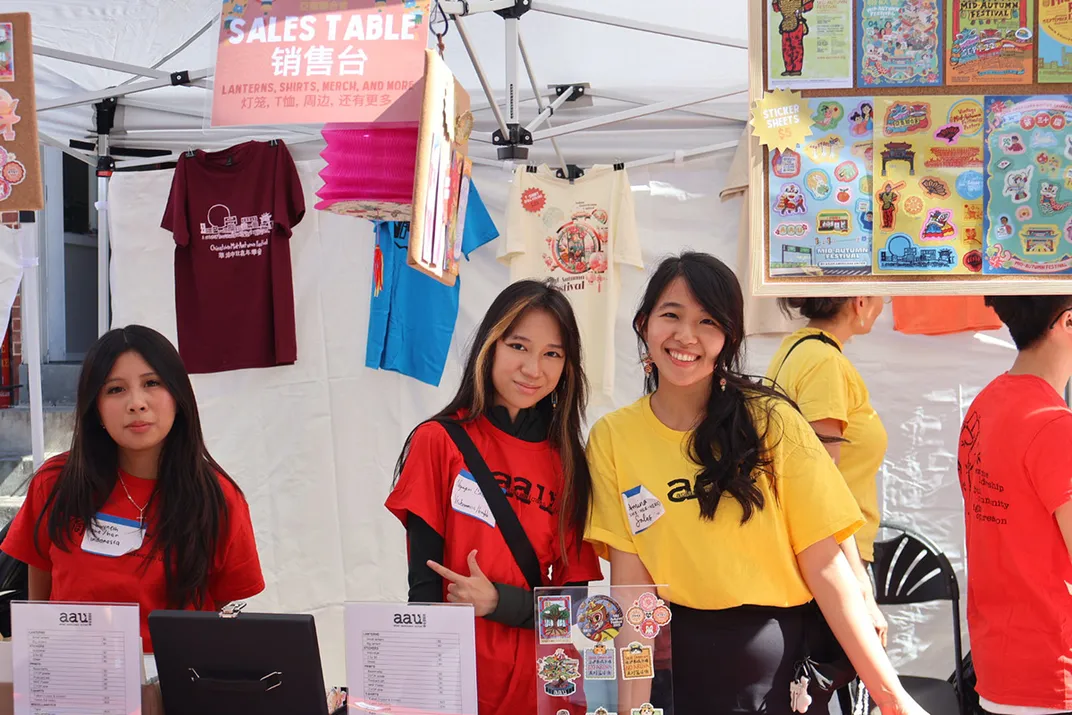
Chau, an incoming college freshman, coordinates the volunteer team at the festival. She followed in the footsteps of her older sister into the festival and is now leading her little brother in the same manner. She finds the process of organizing the festival with the younger generation personally rewarding and vital to the Chinatown community.
“It’s the comfort of community and culture, and the essence of Mid-Autumn being reunion and gratitude,” she says. “We see that transfer into our high school students when they’re making new friendships and bonding, or when they’re off on their lunch break hanging out with friends.”
For Zhang, she saw how the festival reveals Chinatown’s authenticity and impacts the community economically and generationally.
“I see that the festival brings in a lot of business to the small businesses in Chinatown,” Zhang says. "[I] also see that it creates a really lively environment. A lot of elders will come out to the community, and they’ll just sit and watch.”
Throughout the years, the festival has become an attraction not just for the Chinese community but also for the greater Philadelphia area. When I used to perform and look out into the crowd, I always felt a surge of warmth and gratitude in seeing a diverse audience genuinely experience and enjoy Chinatown in its rawest, more authentic form. The festival bridges cultures and people together with each of us searching to understand each other better.
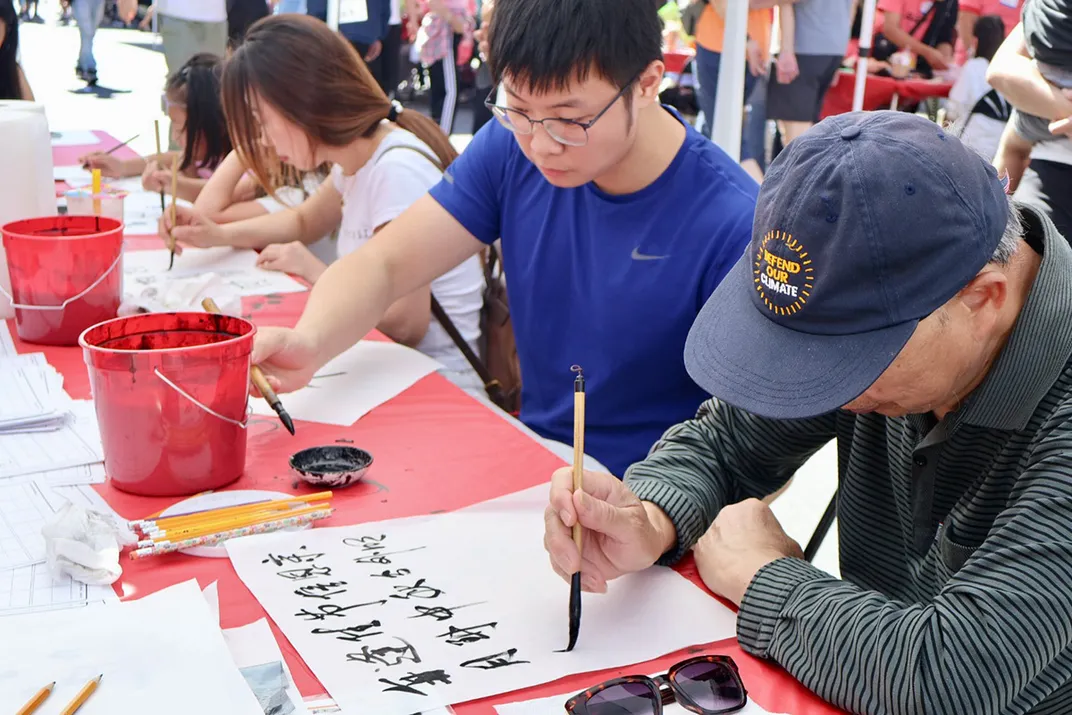
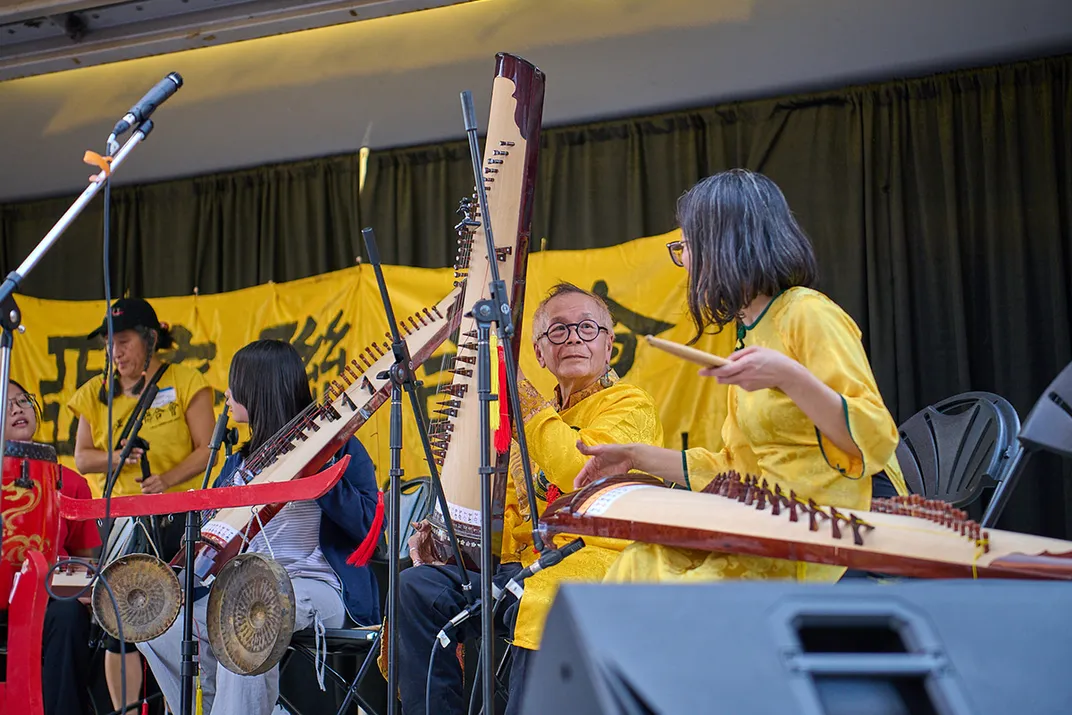
As a one-day festival, it’s easy to forget and overlook that it is brought into existence over a course of ten months of planning, coordinating, and creating. Wei Chen, AAU’s civic engagement coordinator, has been involved in the festival since 2007. He says that those ten months are significant for AAU and the Chinatown community because it invites engagement, solidarity, and collective action. AAU strongly believes in its own community to be the soul of the festival, encouraging local organizations, residents, and students to donate, promote, or participate in the festival in some capacity. This also reflects this year’s festival theme: Building the World We Want.
“I think when we say Building the World We Want, it’s really about a world, a place, without oppression and suffering,” Chen explains. “The main purpose is about bringing our humanity back to our community.”
Since the 1850s, Philadelphia Chinatown residents have had to fight to preserve their physical, social, and cultural spaces. A 2022 proposal for a new 76ers basketball arena raised concerns over gentrification and displacement in Chinatown, leading the National Trust for Historic Preservation to name the neighborhood one of America’s Most Endangered Historic Places in 2023. Residents, advocacy groups, and organizations mobilized to protest the project, successfully forcing developers to abandon the plan in 2025.
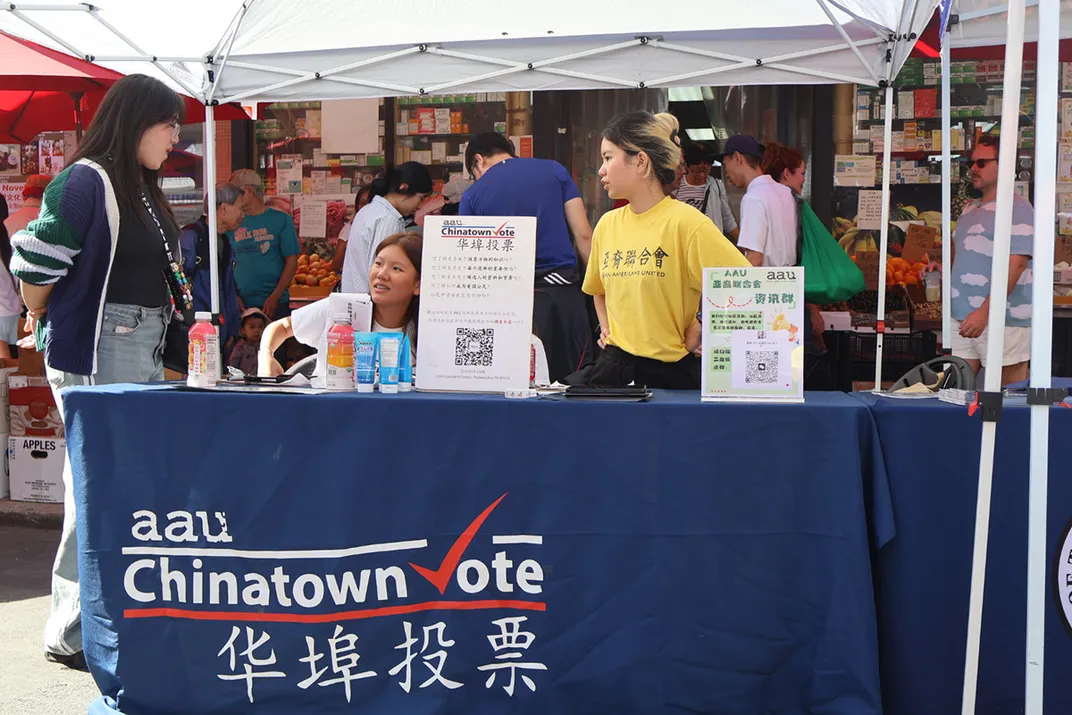
Because of such activism, civic engagement is an integral part of the festival. Vivan Chang, executive director of AAU, utilizes the festival as an educational opportunity to shed light on past adversities and empower collective action. Educational tables, like AAU’s Chinatown Vote Project (2014), help to lower barriers of participation for Chinese residents and encourages their agency. The Mid-Autumn Festival becomes not just a cultural celebration but a statement and testimony of Chinatown’s thriving presence and resilience.
“We take whatever we’re fighting, and we turn that into part of our lantern parade, or it’s part of our stage program,” Chang says. “We talk about it, and we use it as an opportunity to do public education and political education. It also helps us to show that culture is political.”
As the festival is part of the Of the People initiative, AAU is excited about the opportunities this would bring in impacting other communities. They hold a greater vision for the festival’s influence, hoping that their work might encourage and help other U.S. Chinese American communities mobilize and claim their spaces, maybe even organize their own Mid-Autumn festivals.
“One thing that I believe is externally how Mid-Autumn Festival became a culture and model for our community,” Chen says. “This is about presenting a model to a different community [in] regrouping, reuniting, and reconcentrating [their own] community.
The Mid-Autumn Festival is a part of Philadelphia Chinatown’s legacy. It is an embodiment of tradition, advocacy, and belonging. As you explore Chinatown, I invite you to experience the festival through the lens of the community who continues to keep the festival alive through their memory and commitment.
Rachel Liu is a digital asset management assistant for the Ralph Rinzler Folklife Archives and Collections at the Center for Folklife and Cultural Heritage, assisting with festival documentation. She recently graduated from The George Washington University with an MA in museum studies.