

A New Book Celebrates the Power of African Art to Solve Problems and Inspire Change
The Smithsonian’s National Museum of African Art presents collection pieces that are designed to do work for artists and their communities
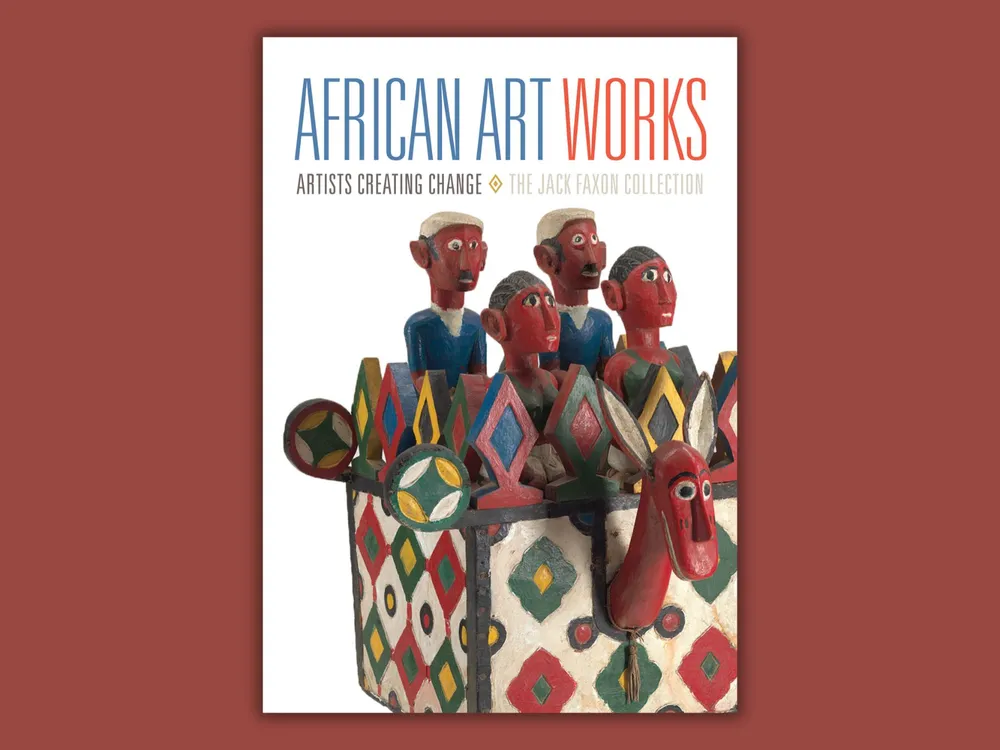
African art is all about change. While generalizations at this level are typically deadly (and are all too often surmounted by their inevitable, later-proven exceptions), it seems safe to say that both the practice and the study of “African art”—if they have any coherence as a subject beyond mere geographic provenance—are fluid...active...mercurial...evolving. The new book African Art Works: Artists Creating Change / The Jack Faxon Collection looks at how artists, communities, and collectors have sought to make change in their own lives, in their social interactions, and in their relationships to the world and beyond through art. The artworks featured here today are all, in their own way, fundamentally dynamic objects, often intended to be seen and used in motion, designed to do work. Indeed, each of the items discussed here was designed to solve a particular problem for their creators and their communities.
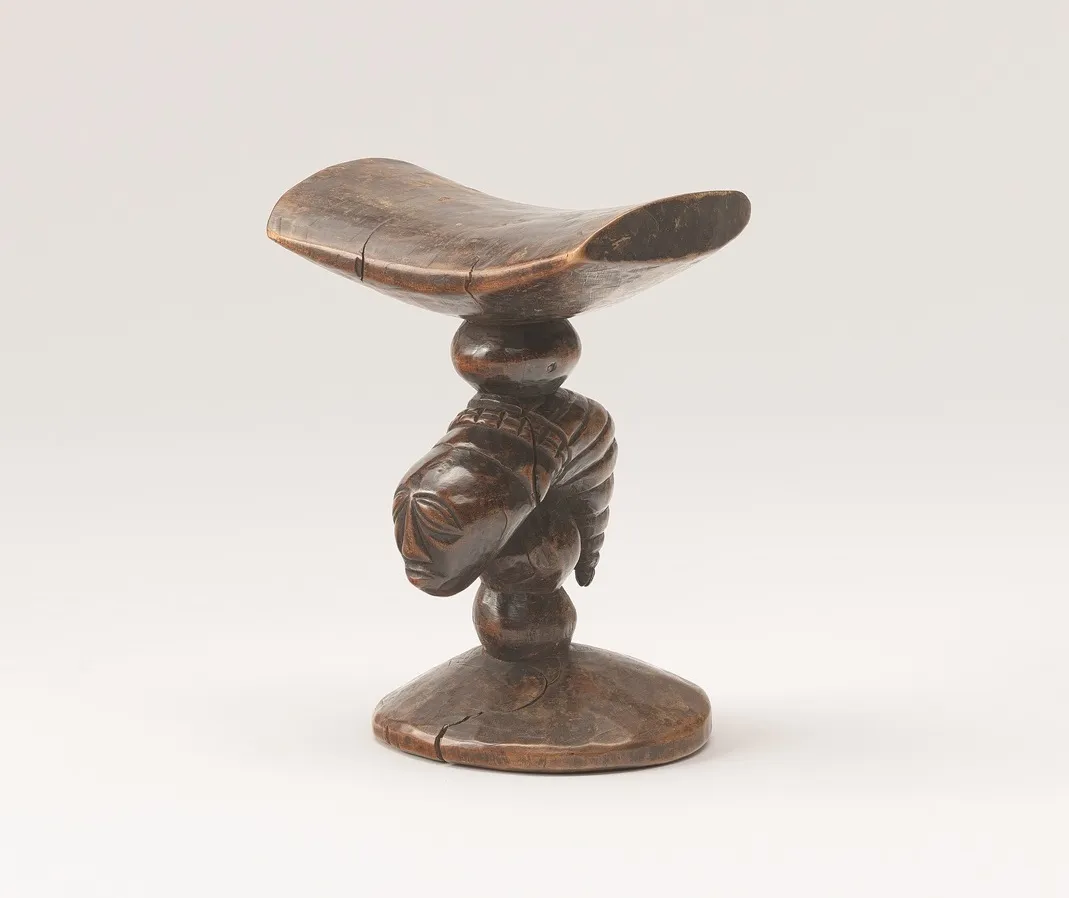
Musamo (headrest)
An artist likely from a Luba or Songye community of central Congo tasked with creating a headrest—to cradle its owner’s head in slumber and thus also to preserve their hairdo—took the opportunity to fashion an object that demonstrated his skill in rendering a perhaps even more extravagant coiffure just beneath.
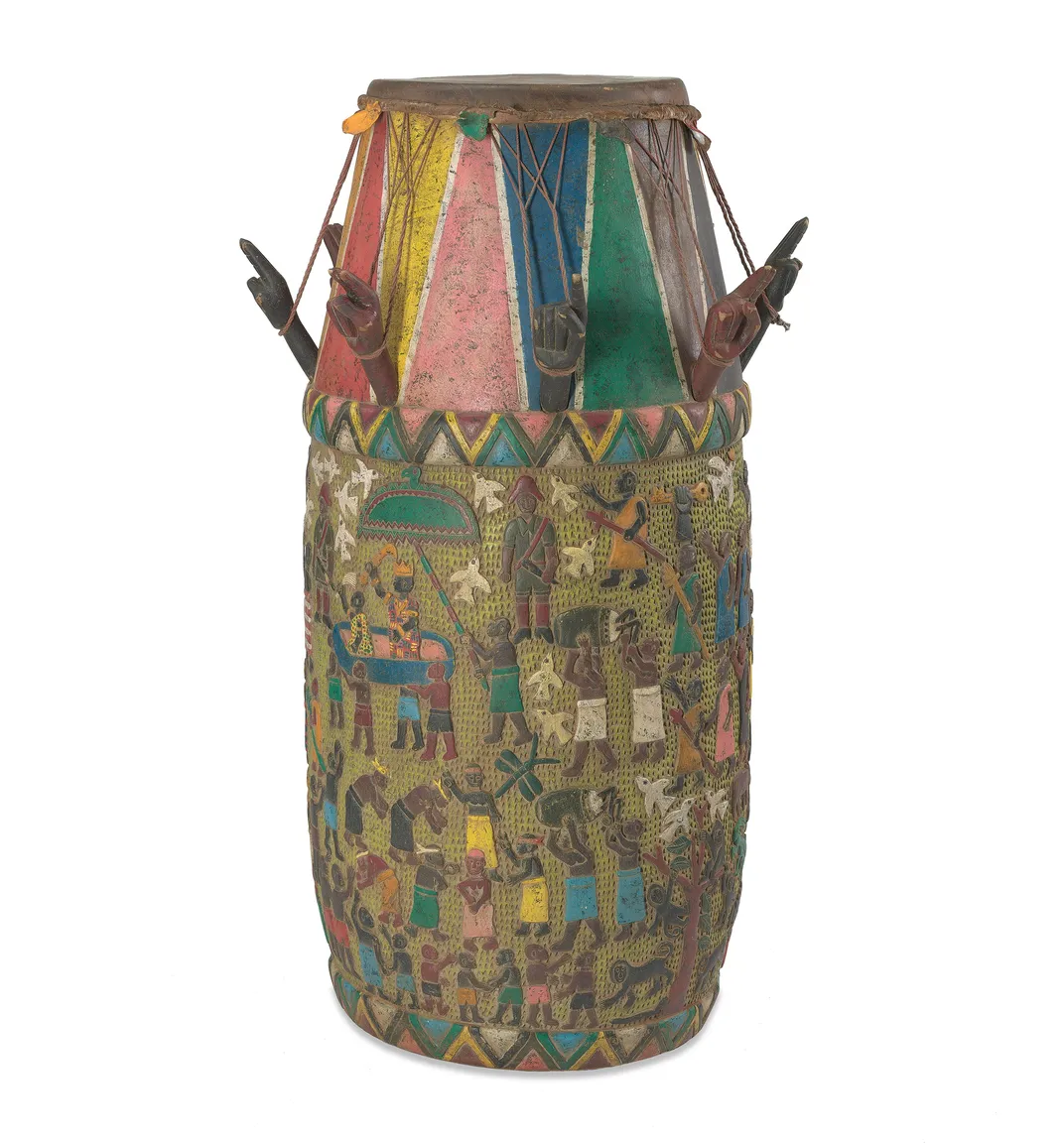
Ntan or ompe (drum)
This drum by a Fante artist was the focal point for a popular instrumental band performing in central and southern Ghana in the early to midtwentieth century. Such ensembles came in and out of style rather quickly, but with their ornate, colorful drums drawing the attention of both eyes and ears, they could be counted on to accompany festivals, chiefly installation ceremonies, and homegoing celebrations long into the night.
African Art Works: Artists Creating Change / The Jack Faxon Collection
This stunning tribute to African art features more than 200 photos, paintings, sculptures, and textiles from the Smithsonian's National Museum of African Art's collections.
Kopa (cup)
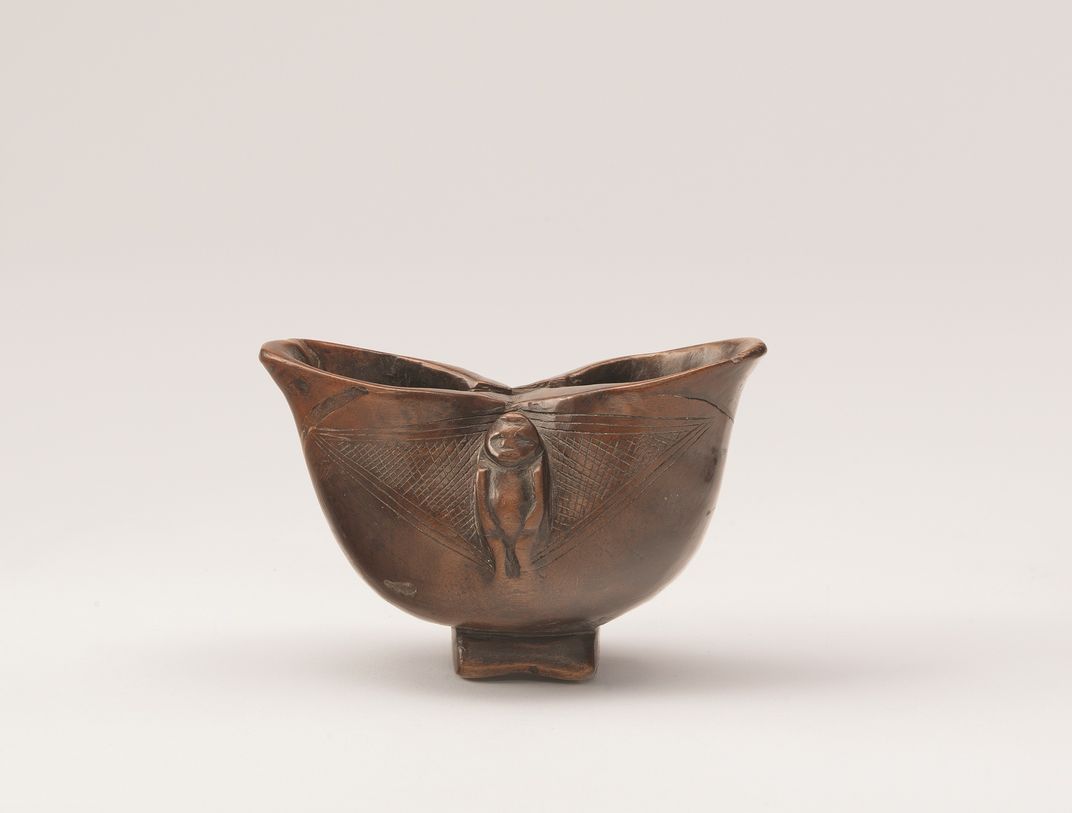
Though small in stature, this artwork had a primary, powerful purpose: to invoke ancestral spirits and, in so doing, visually and physically connect their owners to authorities in the realm beyond. The palm-sized polished wood cup, a skeuomorph of a gourd cut in two, would have been used by a Suku leader in key rituals, including his installation, thus calling upon the memory and power of leaders who preceded him into the next realm. The palm wine held in this kopa was a liquid representation of ancestral memory and would always be offered to the Earth before the Suku leader took his sip. A human figure on the side of the cup warns away those who lack the authority to touch this sacred vessel.
Egúngún elétí (crest mask)
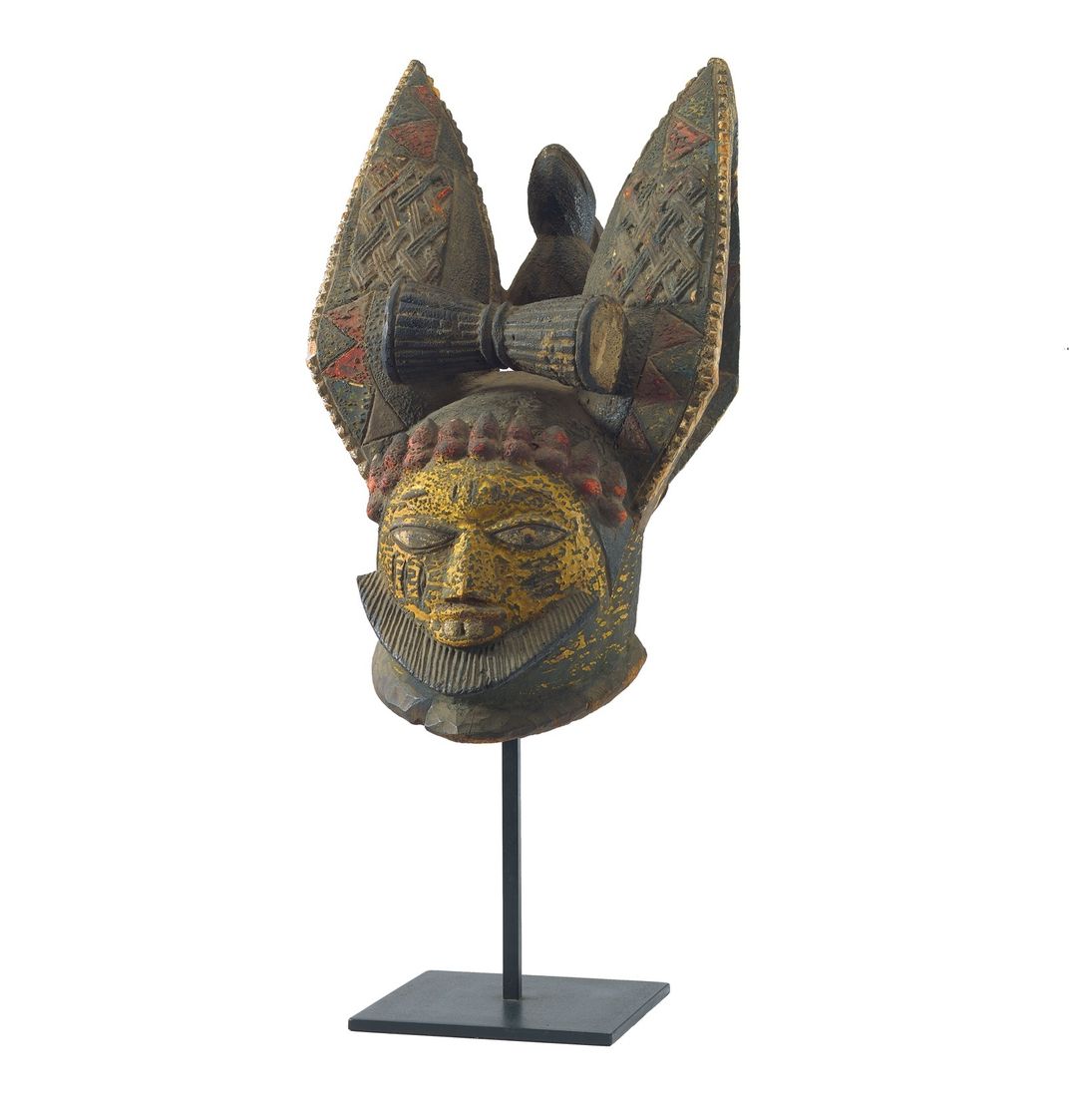
While this egúngún mask is not signed, stylistic and provenance analyses make it possible to attribute it to the hand of Oniyide Adugbologe. He was the son of Ojerinde Adugbologe (ca. 1850s–1910s), who moved to the city of Abeokuta and established a sculpture workshop that he passed down to his son and subsequently multiple generations of descendants. Ojerinde Adugbologe was quite likely the first African artist to have his name recorded by a European researcher. The name has become a sort of brand associated with several artists in the family; an elaborate figural box in the collection of the National Museum of African Art is likely by a descendant of Oniyide Adugbologe. Egúngún is a masquerade performance involving costumes and dance that honors the ancestors of a Yorùbá community. This mask, with its hybrid human-hare form, blends an animal associated with a nighttime of potentially unsettled spirits and unspoken dangers with protective elements, such as a drum and medicinal packets.
Sibondël headdress
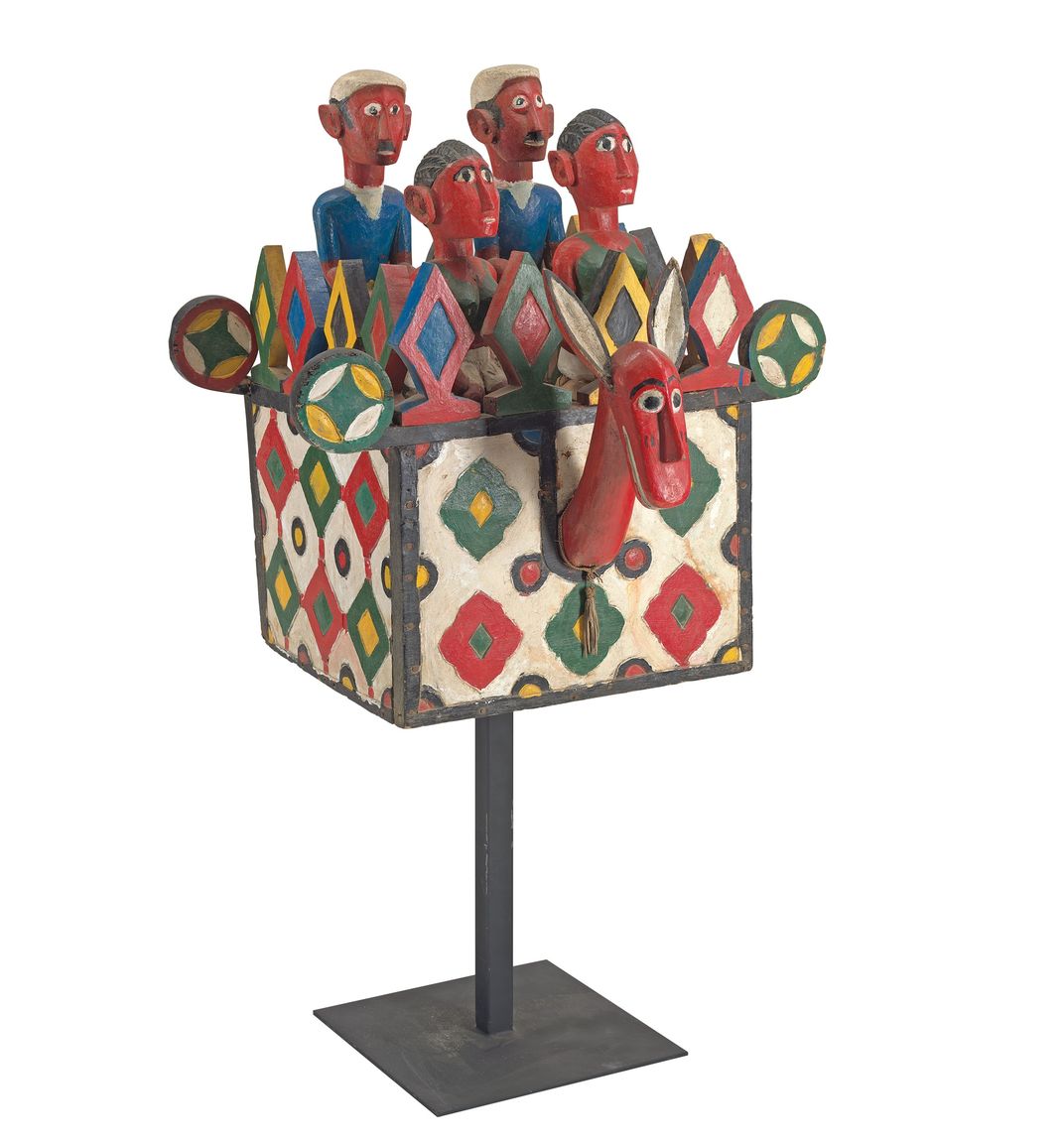
Puppetry that serves as a platform for political messages, sibondël has been a performance of contradictions. On the one hand, it has become known as a canonical Baga cultural form; yet all evidence seems to suggest that it was invented in the 1930s, likely as a response to forms of puppetry seen in neighboring regions such as Mali. Sibondël came to prominence in an era—the mid-1950s to the 1980s—when the authoritarian rule of Guinea’s first president, Sékou Touré, favored his own Mandinka ethnic group over other peoples in the country and often violently promoted Islam at the expense of local religions, like that of the Baga. During this period many older forms of Baga masquerade and religious practice were abandoned and often destroyed. Sibondël in this period was a performance typically associated with young men who opposed the established practices of Baga elders and advocated for “modernization”—a concept monopolized in Guinean thought and practice at the time by Touré’s Marxist-inspired Parti démocratique de Guinée.
And yet the form of this headdress reveals deeper nuances. Two whitehaired men and a pair of women are contained within a wooden box suggestive of sibondël’s antecedents in puppetry (as in booths or castelets for marionettes) and, perhaps, some sort of vehicular conveyance. These occupants are either wholly non-Baga or at least lack the tattoos associated with that group’s nowbanned practice of initiation. Multicolored geometric patterns seem to suggest both novelty and the aniconic strain of Islam upheld by Touré’s government. A hare—an animal long known in Baga and regional lore as a trickster—sports characteristic Baga initiation marks on its cheeks and points the way forward. To where, it remains to be seen.
Read more in African Art Works, which is available from Smithsonian Books. Visit Smithsonian Books’ website to learn more about its publications and a full list of titles.
Excerpt from African Art Works © 2026 Smithsonian Institution


A Note to our Readers
Smithsonian magazine participates in affiliate link advertising programs. If you purchase an item through these links, we receive a commission.