

How the Nation Declared Independence 250 Years Ago
A momentous new book from the Smithsonian celebrates the country’s semiquincentennial anniversary
:focal(1500x1000:1501x1001)/https://tf-cmsv2-smithsonianmag-media.s3.amazonaws.com/filer_public/fe/5d/fe5d0bf5-0452-4daf-8574-445d25b2b351/signing_of_the_declaration_of_independence.jpg)
We might begin with the Declaration of Independence itself. In early July 1776, Americans faced an extraordinary historical moment. It was, wrote the authors of the declaration, a moment “in the course of human events” when a public decision had become not only possible but also “necessary.” Now “one people”—the free colonists in British North America—were ready to end their connection with “another” people—the Britons across the Atlantic whom they had long considered their countrymen. As citizens of “Free and Independent States,” it was time to throw to old loyalties and assume a new identity.
Yet, beginning with independence leaves a lot to be explained. American colonists had been proud of their connection with Britons “at home.” By contrast, the thirteen Continental colonies had seldom celebrated a connection with one another. After all, each colony had its own distinct history, having been founded at different times by colonizers with different backgrounds, beliefs, and ambitions. Each colony developed distinct economic interests, social hierarchies, and religious institutions. The colonies rarely cooperated or paid much attention to one another, except when disputing their geographical boundaries or when forced to coordinate their dealings with Indigenous peoples in their region. Even when facing a common enemy in the French and Indian War (1754–63), they rejected the idea of adopting any formal union for purposes of defense. Given that history, how did colonists from New Hampshire to Georgia come to think of themselves as one united people? What explains the leap of faith made by so many American colonists in 1776?
One answer lies in the actions of ordinary merchants, tradespeople, farmers, planters, and free laborers who mobilized together in what they often called associations. In the early 1760s, Britain decided to ease its debt after the French and Indian War by raising revenue from the colonies. Bypassing the legislative assemblies elected in each colony, Parliament imposed taxes on colonial transactions and imports, starting with the Stamp Act of 1765. Colonists rapidly objected. They had no voice in choosing members of Parliament. To be taxed by unrepresentative men across the Atlantic was to lose a precious element of British liberty. Colonists would become second-class members of the empire. There would be nothing to stop unaccountable British politicians an ocean away from draining colonial households of whatever property they had.
To help prevent that catastrophe, in late 1764, fifty Boston merchants announced their decision to stop importing expensive manufactures from Britain on a temporary basis. Colonists could save money and lower their debts to retailers. To make life without familiar imports easier, the merchants resolved to make do with plainer fabrics and fewer ornaments in their clothing. Especially at relatives’ funerals, commonly occasions for extravagance, they would put aside fine imported fabrics and ruffles and abandon the costly practice of giving imported silk gloves to mourners at the graveside. From this local initiative there would follow a decade of similar associations dedicated to nonimportation, nonconsumption, and promotion of domestic manufactures. Gradually these associations would mark participants—calling themselves “friends of American liberty”—apart from “foes” and “enemies.” Through these extraordinary mobilizations, colonists would pull away from Britain and declare their economic, social, and cultural interdependence with one another.
/https://tf-cmsv2-smithsonianmag-media.s3.amazonaws.com/filer_public/3c/9b/3c9b54d1-58a6-4eeb-9446-ef57807979b1/silver_milk_pitcher.jpg)
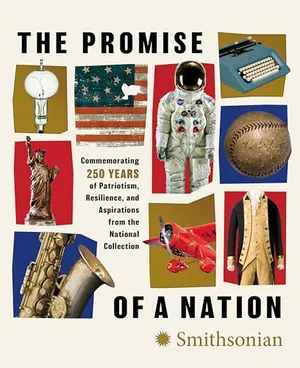
The Promise of a Nation: Commemorating 250 Years of Patriotism, Resilience, and Aspirations from the National Collection
Celebrate 250 years of American history—and witness the nation’s decade-by-decade evolution—in this gorgeously illustrated volume featuring more than 600 Smithsonian objects.
In the first instance, colonial associators hoped to remind British merchants and manufacturers of the importance of American trade. As boycotts affected their bottom line, such interests might be moved to lobby Parliament to repeal the offending policies. Besides appealing to Britons’ self-interest, associations might also appeal to their “affections” of loyalty. Surely when they understood the depth of colonists’ economic and political plight, their sympathies for their American cousins would prompt them to restore balance to the empire. At the same time, associations had a profound impact on colonists’ relationships within North America. They created new networks of trade and new occasions for public gathering and social connection. For example, in 1766, ninety-two women gathered in Newport, Rhode Island, and spent the day spinning 170 skeins of thread to help replace imported cloth. In 1767, firefighting companies in Philadelphia pledged they would stop consuming lamb so farmers could increase their flocks of sheep for wool. In 1769, merchants in Annapolis, Maryland, collectively agreed to hold prices steady even as restrictions on imports made consumer goods scarce. Such actions dramatized the willingness of some colonists to sacrifice on behalf of their society and raised awareness of the larger impact of seemingly small economic choices of individuals on the well-being of the colonies as a whole.
As these cases suggest, associations quickly spread from Boston to other port cities and rural areas in New England and the mid-Atlantic colonies; they expanded more gradually in the plantation South. Their agreements engaged the participation of groups of colonists unaccustomed to having a formal political voice and built new alliances as seaport artisans found common cause with local merchants. They pledged to cut back on imported leathers and to buy their work clothing from local tanners instead. Agreeing to boycott anyone who imported contrary to the agreement, they claimed a role in policing the pacts by joining ad hoc groups, often called Sons of Liberty, that inspected merchants’ stores and pressured violators of nonimportation bans to reform. As economic choices became a measure of political identity, then, even common tradesmen who owned too little property to vote might weigh in with town leaders on plans for associations.
The movement also attracted cooperation from free women, long seen as unqualified for most political matters. Some women managed taverns and inns. Skilled seamstresses and hatmakers ran shops alongside male artisans in colonial towns. In many households, women routinely did marketing and purchasing and could certainly judge reasonable prices.Most, both urban and rural, produced manufactures—especially the vital item of homespun, the term for domestically produced cloth. And women could certainly renounce East India Company tea and other consumables. If patriotism meant self-sacrifice, productive labor, and social affections for one’s society, then a woman might qualify as well as any man. Indeed, for associations to succeed, they could only afford to exclude the poorest free people and the enslaved from the growing movement. (Those groups would find a greater opening to their participation when the debate turned to warfare in 1775.)
/https://tf-cmsv2-smithsonianmag-media.s3.amazonaws.com/filer_public/6a/f8/6af863ae-8274-44a3-9ec4-1903ca4850f4/extracts_from_the_votes_and_proceedings.jpg)
Equally important, associations changed the forms and the meaning of public occasions. From the first, they had prohibited displays of imported finery at funerals. Later associators banned “every species of extravagance and dissipation,” such as horse races, cockfights, and “shews, plays, and other expensive diversions.” Such occasions both wasted money and highlighted social divisions. Fashionable assemblies and balls in particular exhibited wealthier colonists’ fine suits and gowns, impressive carriages, and polished social behavior, tempting middling households to go into debt in emulation. To create unity, Patriots transformed occasions of social distinction into pageants of shared commitments. For the more affluent, replacing silks with homespun became a powerful symbol of patriotic virtue, wearing neighborly concern on their sleeves. A well-to-do colonist could exhibit patriotism by replacing conspicuous consumption with conspicuous nonconsumption.
Beyond symbolism, as patrons of their producing neighbors, Patriots put cash into those neighbors’ pockets. In 1768, towns in eastern Connecticut banned imported “Carriages, Horse furniture, Hats, Ready Made Apparel, House furniture, shoes, laces, articles of jewelry, clocks, furs, broadcloth costing above 10s per yard, liquirs.” In doing so, they created opportunities for blacksmiths, furniture makers, weavers, tailors, hatmakers, lace makers, jewelers, farmers with orchards, brewers of cider, and producers of herbal brews to replace tea. By buying American, Patriots supported farm households and a few new urban manufactories that employed the poor to spin. Taken together, these actions would help ordinary households fend off financial burdens that Britain’s policies were imposing.
The association movement surely won some allies among British manufacturers and merchants. Still, Parliament persisted in laying taxes on the colonies, and new associations grew and spread. Enforcing a nonimportation ban, a crowd of local workingmen in Boston dumped East India Company tea into the harbor in late 1773. Parliament retaliated, mainly targeting Massachusetts. The so-called Intolerable Acts of 1774 banned most town meetings in the colony, moved powers from the assembly to the royal governor, and blockaded the port of Boston to crush the local economy. Many Americans responded with surprising unity. Colonies as distant as South Carolina sent relief to aid the Boston poor. And twelve colonies—Georgia would join later—promptly sent delegates to a Continental Congress in Philadelphia. That first congress proclaimed a sweeping ban on British trade, a truly “American” and “Continental Association.” By January 1775, joining this association had become incumbent on any American who wanted to think of themself as a “friend to American liberty.”
The Continental Association of 1774 represented a ringing declaration of interdependence. It created an unprecedented degree of popular mobilization, transparency in individuals’ dealings, and accountability before Patriot neighbors. It called on every town and county to elect a committee to gather signatures of support from heads of local households. Committees summoned before them anyone accused of noncompliance. If an offender refused to apologize or reform, the committee published their name and their transgression in the local newspaper or gazette. Such publication would alert all Patriots to cut off economic and social dealings with the offender. It might even alert crowds to confront and intimidate those opposed to the Patriot cause.
Accounts published in 1774–76 reveal the workings of this extraordinary mobilization throughout the colonies. The South-Carolina Gazette reported on a virtuous funeral: “Few had more friends than this amiable and excellent LADY,” yet the association’s restrictive clause “was strictly adhered to.” A Massachusetts paper printed the apology of one Enachy Bartlett of Haverhill for his earlier opposition to associations: “My Comfort in life does so much depend on the regard and good will of those among whom I live.” Here were declarations of interdependence!
The association movement created divisions among some colonists while creating unity among others. Not everyone welcomed the empowerment of artisans and laborers, the politization of social events, or the experience of coercion by neighbors, committees, or crowds. “Committees are prying into the conduct of individuals,” complained one colonist in 1775. But few Patriots saw another option. Humble petitions and pamphlets detailing colonial grievances were going unheeded. Colonists needed to take collective action. Using associations, they built new ties with one another. They forged a new loyalty—strong enough, as it happened, to replace the old.
When fighting broke out between American Patriots and British troops in 1775, the association movement changed. Congress and local committees shifted their focus toward securing weapons and ammunition for the military effort. They worked to supply George Washington’s army in the field and to provide for poor soldiers’ families at home. They redoubled efforts to identify loyalist sympathizers and to push fence-sitters into compliance. In all this, limits on luxury consumption and encouragement of domestic manufactures proved vital. Throughout the war, in fact, economic actions remained a key measure of people’s patriotism. In the years 1776–79, states and localities regulated prices of goods to defend the buying power of the paper money that Congress issued to pay for the war. Committees and sometimes crowds disciplined price gougers and hoarders who served their own profit rather than the common cause. Only as peace drew near, in the early 1780s, did the associations’ terms of patriotism decline. Before long, American consumers would once again welcome access to imported luxuries from England and the rest of Europe. With peace, people turned their economic energies toward recouping losses from the war and building security for their households. They turned their political energies toward improving state governments and creating a new federal edifice, its legislature based on popular elections and thus entrusted with a power to tax.
Yet the commitments made by the Patriot associations have remained meaningful throughout US history. In times of war and economic crisis Americans have appealed to one another to recognize the shared public consequences of their choices. People with limited political voice have used the economic and social powers they could muster by mobilizing together. Across the generations, working people would organize (in “solidarity” if not “affection”) to remind employers of the reality of their interdependence. Americans would mount boycotts against segregated city bus systems, produce picked by underpaid farmworkers, butchers who overcharged for kosher meat, and other offenders against popular standards of fairness. In the twenty-first century, some have gathered to remind the few who live in magnificence of their ultimate accountability to the great many of their countrymen and women. As in the eighteenth century, some would say, sometimes the independence of the nation is secured only by acknowledging the interdependence of its people.
Read more in The Promise of a Nation, which is available from Smithsonian Books. Visit Smithsonian Books’ website to learn more about its publications and a full list of titles.
Excerpt from The Promise of a Nation: Commemorating 250 Years of Patriotism, Resilience, and Aspirations from the National Collection © 2026 by Smithsonian Institution


A Note to our Readers
Smithsonian magazine participates in affiliate link advertising programs. If you purchase an item through these links, we receive a commission.