

‘The Honor of My Life’: As He Prepares to Retire, Secretary Lonnie G. Bunch III Reflects on His Decades of Service With the Smithsonian
What started with an impromptu introduction when his dad took a curious son on a detour of discovery culminates now as he steps down from his tenure as the Institution’s 14th leader
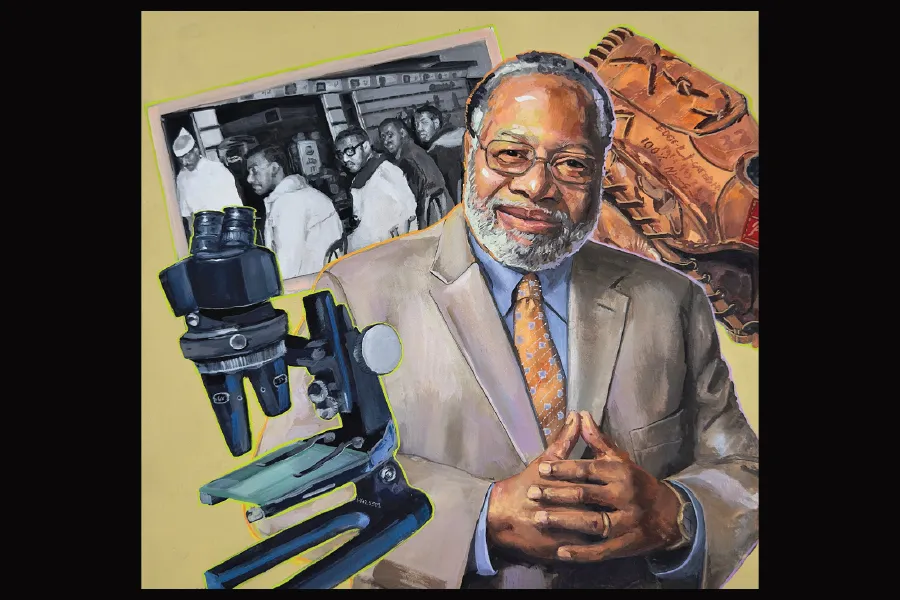
I was supposed to be a professional baseball player, batting .500, amassing grand slams, stealing home with ease and prompting Yankee Stadium to erupt in cheers of my name. At least, that is what I believed when I was 7.
Instead, I found a different dream, and a different kind of home, in my many extraordinary years at the Smithsonian. To think that 48 years ago, I wandered onto the National Mall—clad in an army jacket emblazoned with a Sgt. Pepper’s Lonely Hearts Club Band patch, no less—and this year I will depart, my life indelibly changed.
Every day I have worked here, the Smithsonian has shown me that anything is possible. That humans can explore the cosmos, that scientists can solve our greatest problems, that artists can capture the ineffable, that we can face our own history and be made better by the unvarnished truth.
Every day I have worked here, I have seen Americans discover the breadth of who we are, celebrate our milestones and embrace the complexities of our past. Thirteen secretaries ago, Frederick Douglass was barred from speaking at the Smithsonian. Today, I leave you as the first African American, and the first historian, to lead this remarkable institution. America has always been, and will always be, a country in pursuit of the best version of itself.
Countless individuals at the Smithsonian have made me who I am. I met the love of my life while working at the National Air and Space Museum and picked up my children from preschool at the Smithsonian Early Enrichment Center. I have felt the limitless optimism of nine American heroes in an ordinary office building near L’Enfant Plaza, the first members of the staff at the National Museum of African American History and Culture. These names may not be up in a museum, but they are forever in my heart.
I have the same enduring faith in those who will remain at the Smithsonian for decades to come—and in the Americans who will continue to find themselves, and to see themselves, within our walls.
I was 10 the first time I visited the Smithsonian in the 1960s. My father was driving me home from North Carolina to New Jersey after visiting our extended family. I was a nerdy kid, and I begged him to pull over at various Civil War sites in Virginia, not knowing that we would not be welcome. I had given up hope when he abruptly veered off I-95 toward Washington, drove to the Mall, parked outside the Smithsonian and said, “This is a place you can go and not worry about the color of your skin.”
For four decades, my father’s words have rung true in ways that have surpassed my most inconceivable childhood dreams. What an incredible place to work and love for so long. What an incredible place to, in the words of Langston Hughes, let America be America again.
It has been the honor of my life to be a part of it.
Subscribe to Smithsonian magazine now for just $19.99
This article is a selection from the November 2026 issue of Smithsonian magazine