

Can A.I. Help Historians Discover the Untold Stories of the American Revolution?
A landmark collaboration between the Smithsonian Institution and the Library of Congress uses cutting-edge technology to find new connections between people who lived during the nation’s earliest years
:focal(1272x654:1273x655)/https://tf-cmsv2-smithsonianmag-media.s3.amazonaws.com/filer_public/89/e2/89e2961f-4623-4717-9400-b3ed11c0c910/odi_uniform.png)
"America is a place in evolution—a place of pursuit,” says Smithsonian Secretary Lonnie G. Bunch III. That spirit is at the heart of Revolution Crossroads, a new initiative from the Smithsonian and the Library of Congress. In the video below, learn how curators, historians, and data experts are using artificial intelligence to bridge the gaps between historical artifacts and documents. Discover how we are using today's technology to bring the complex, often untold stories of early America to light, honoring the full scope of our nation's history.

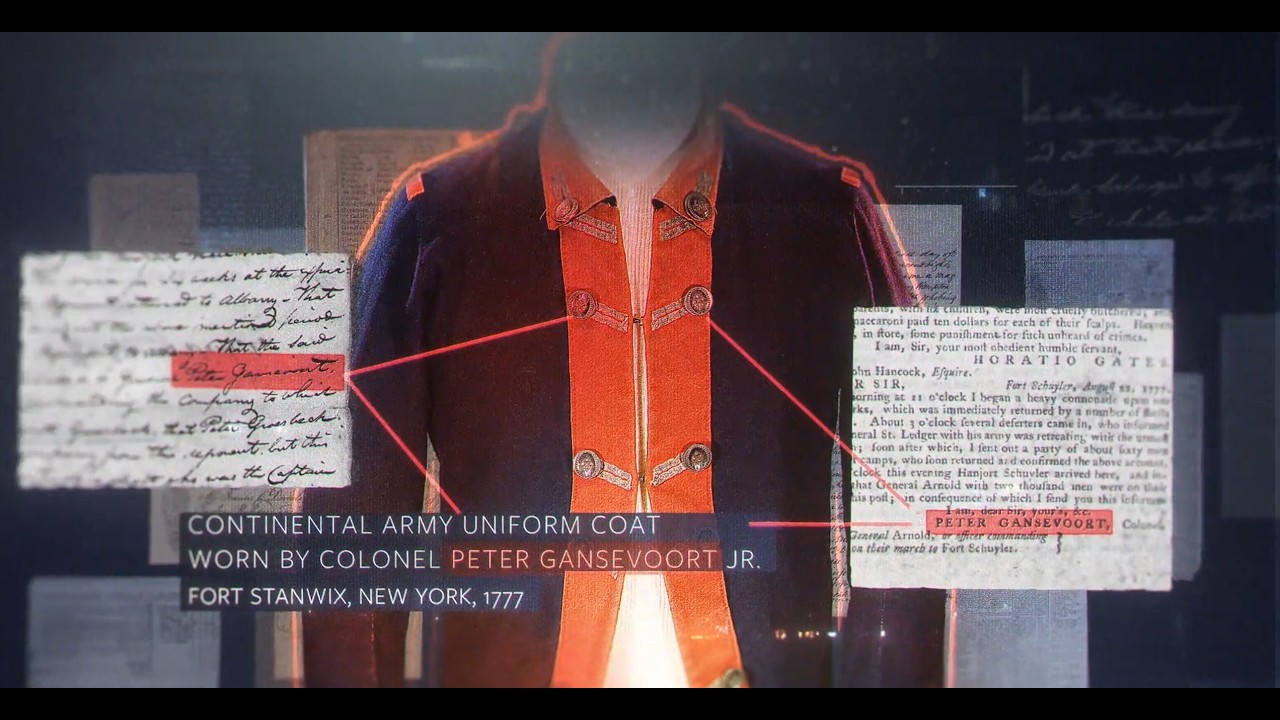
From 1770 to 1810, America was alive with change. The traces of this era live on in hundreds of thousands of items: historic newspaper articles, personal letters, military records, artifacts, maps, portraits, and more that have been separated for centuries across different libraries, archives, and museums. Revolution Crossroads uses emerging tools to identify patterns, people, and connections previously beyond reach, pushing the boundaries of how AI can be used to explore history in new ways.
Explore More
For deep-dive blog posts, further resources, and the latest project updates, check out our main website at https://www.si.edu/revolution-crossroadsFor developers and data scientists, the open data hosted on our Hugging Face repository includes publicly available Smithsonian, Library of Congress, and other national repository records, metadata, and media. These assets are optimized for digital humanities research, machine learning experimentation, and natural language processing (NLP) models. We invite the open-source community to experiment, refine, and help interpret these datasets. To download the datasets and start experimenting, use the Hugging Face link https://huggingface.co/RevolutionCrossroads
Video Transcript
[Secretary Lonnie G. Bunch III] America is both an ideal and a place. And the 250th is an opportunity for America to understand itself through its complexity, through its fullness of its history, and that America's great strength is that it's a place in evolution, a place of pursuit, not a place that is already there.
[Becky Kobberod] Revolution Crossroads is a new project that the Smithsonian is embarking on in partnership with Library of Congress to look at all of the holdings we have from the time period of our nation's founding to see if we can bring them all together and use advanced technology to help us learn maybe something new from that time period.
[Kenneth Cohen] Revolution Crossroads is really a rich opportunity for a couple of reasons. The first is that it brings together two very large repositories and repositories that hold different kinds of records about the past, right? The Library of Congress is mostly documentary items, things that are written, things that are drawn. The Smithsonian collections have some of those materials, but are mostly three-dimensional artifacts. So putting these two types of evidence into conversation with each other can reveal new patterns, new discoveries about the revolutionary era that can help historians, but also the general public better understand and have a complete understanding of the period.
[Becky Kobberod] We know about the big names and the big battles, and we've all learned, in our history classes, about the founding of our country, but there was also communities being built and everyday lives going on at that time that have maybe not had as much time spent in terms of research.
[Kenneth Cohen] There's still so much to learn about the revolutionary era. There are casts of characters that still have to be uncovered, and AI allows us to do that because it allows us to find references and patterns across huge amounts of documentary and object evidence in ways that would take a historian a lifetime to do without those tools.
[Abbigal Potter] This new set of technologies, AI, is just the next iteration of what we've always been doing. The AI, you know, it's very data driven, and that's what we have in libraries, archives, museums. But there's also, you know, trade-offs.
[Kenneth Cohen] Historians are aware, because of our training, that AI can't counter the biases and perspectives that are embedded in the evidence, so we've got to bring that human awareness to the findings that AI brings us.
And so for us, we're really focused on how can technology advance the work of our subject matter experts to enhance their work.
[Becky Kobberod] We believe it's very important to ensure everything that we're creating is actually open and available and accessible to the American public and beyond. In fact, all of the datasets that we're actually using for the project are freely available to anyone. They can actually access that same dataset online and go on this journey with us. We'll be showing some of our experiments, and we'll be showing the outputs, and we'll also show when it's not working.
[Abbigal Potter] We're hoping that by bringing our data together, by showing what's possible with these AI technologies, that we can show that researching historic time periods with historic documents with these modern tools is a really compelling thing to do.
[Kenneth Cohen] What's exciting is its potential to open up a whole new field of vision and to link them together in ways that haven't been done before, and on a scale that is so expansive that it really promises to transform our understanding of the era.
[Secretary Lonnie G. Bunch III] The Smithsonian has always been that place where the public goes to understand itself, whether it's through history, culture, art, or science, utilizing the best new technologies, utilizing our expertise. Here is another way to help America understand itself. And isn't that the greatest gift we can give to America?