Ten Turkey Facts to Gobble Up This Thanksgiving
Dive into the juicy history of America’s favorite barnyard bird
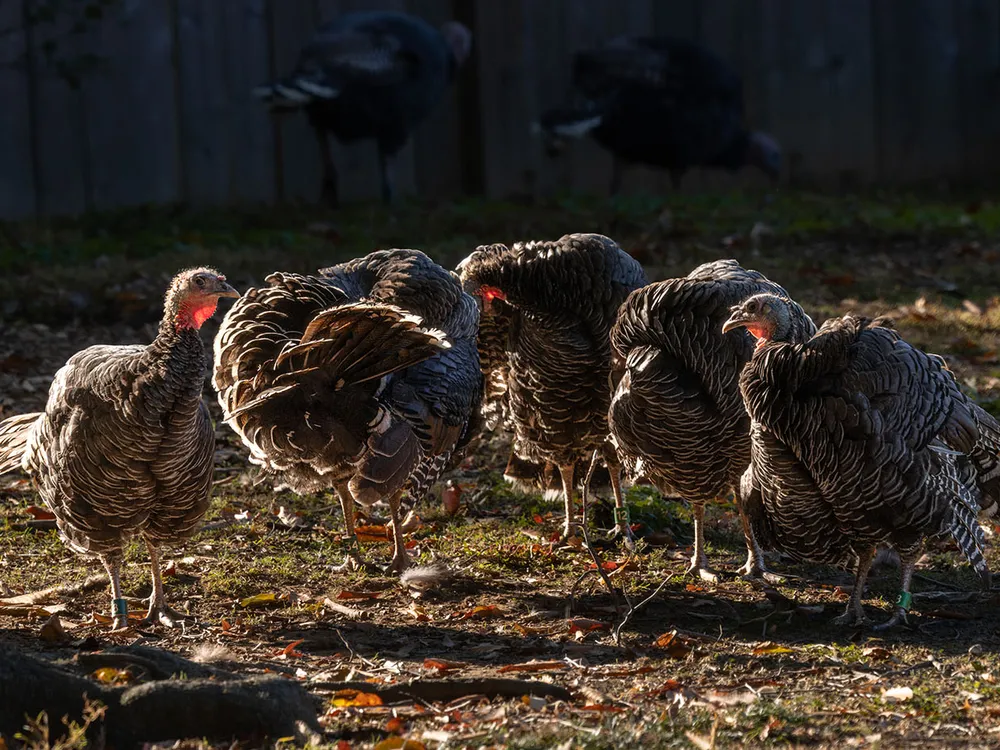
1. Humans have been raising turkeys for thousands of years.
Although indigenous peoples in North America have hunted wild turkeys since the end of the last Ice Age, the animals were first domesticated in Mexico around 2,000 years ago. Dinner wasn’t the original goal: archaeological evidence suggests turkeys were initially kept so their feathers could be used in clothing and ceremonial regalia.
By A.D. 500, people were raising turkeys in what is now the United States too, judging by archaeological remains from caves in Arizona and New Mexico. Even so, those weren’t the birds that English settlers ate in the Thirteen Colonies. The domestic turkey descends from a southern Mexican bird that the Spanish took home in the 1500s. The birds then spread through Europe, and colonists brought them back across the Atlantic. The bird’s English name may reflect this long-distance trade: turkeys are thought to have reached England along winding trading routes that first passed through the country of Turkey.
2. Domestic turkeys are smarter than their reputation suggests.
Generally clumsier and less wary than their wild cousins, domestic turkeys have lost much of the woodland savvy that keeps their relatives alive. However, farm-raised turkeys are still intelligent enough to maintain lively social bonds with other birds and live peacefully in flocks of dozens.
Also, the old claim that they’re so dimwitted that they stare up at the sky and drown when it rains is a persistent — and incorrect — myth. Chilled, soaked chicks can fall ill in a rainstorm, but that has nothing to do to with drowning.
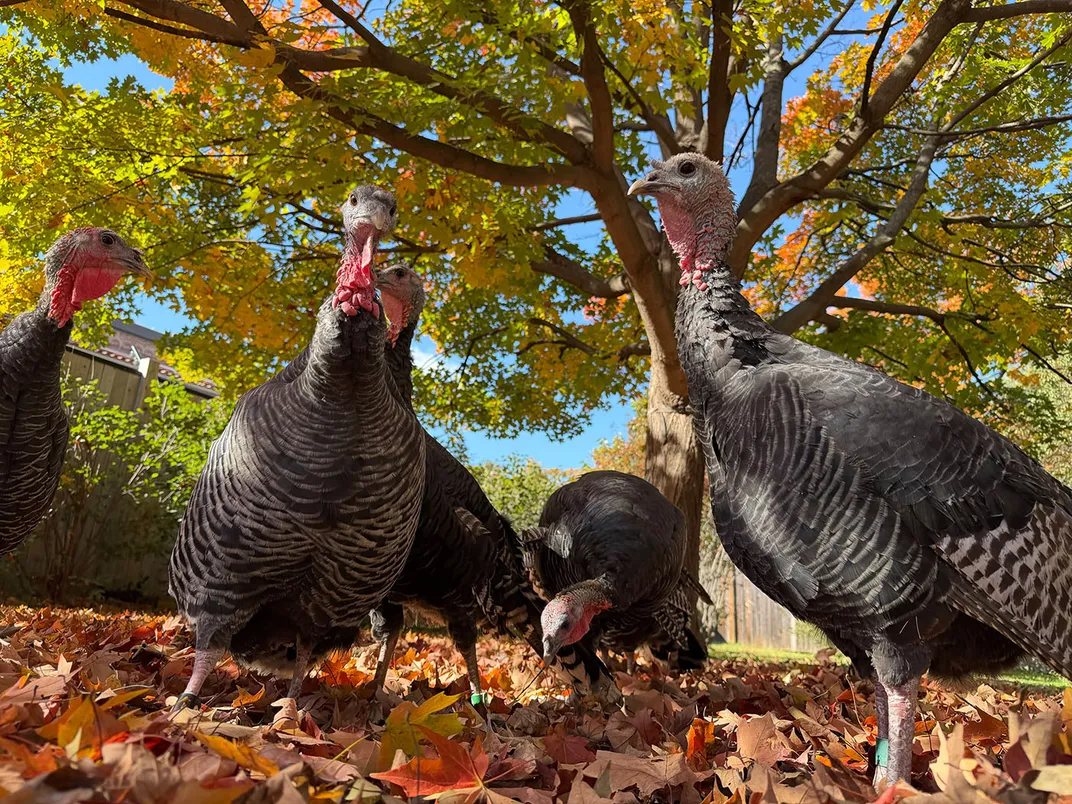
3. Rather than being plump, wild turkeys are built for speed and agility.
Bred to be hefty, barnyard turkeys are typically unable to fly. But their wild cousins are swift and difficult to pursue, running up to 25 miles per hour and flying in short bursts of 55 miles per hour. Despite being among North America’s heaviest birds, they can escape predators such as foxes, bobcats and coyotes by flying and gliding for up to a mile at a time.
Commercial males average about 41 pounds, far too heavy to fly.
4. Most farm-raised turkeys have white feathers because they look more appetizing on the shelf.
In the wild, bronze feathers help turkeys blend into dense woodlands and meadows, but the species also carries a recessive gene for white plumage. Commercial breeders selected for white plumage for aesthetic reasons — when a dark-feathered bird is plucked, tiny leftover feathers called pin feathers leave dark pigment spots or stubble under the skin. White feathers don’t leave visible dark specks, which gives the meat a cleaner, more appealing look in the grocery store. As a result, more than 99 percent of the roughly 195 million turkeys raised in the U.S. each year are Broad-Breasted Whites.
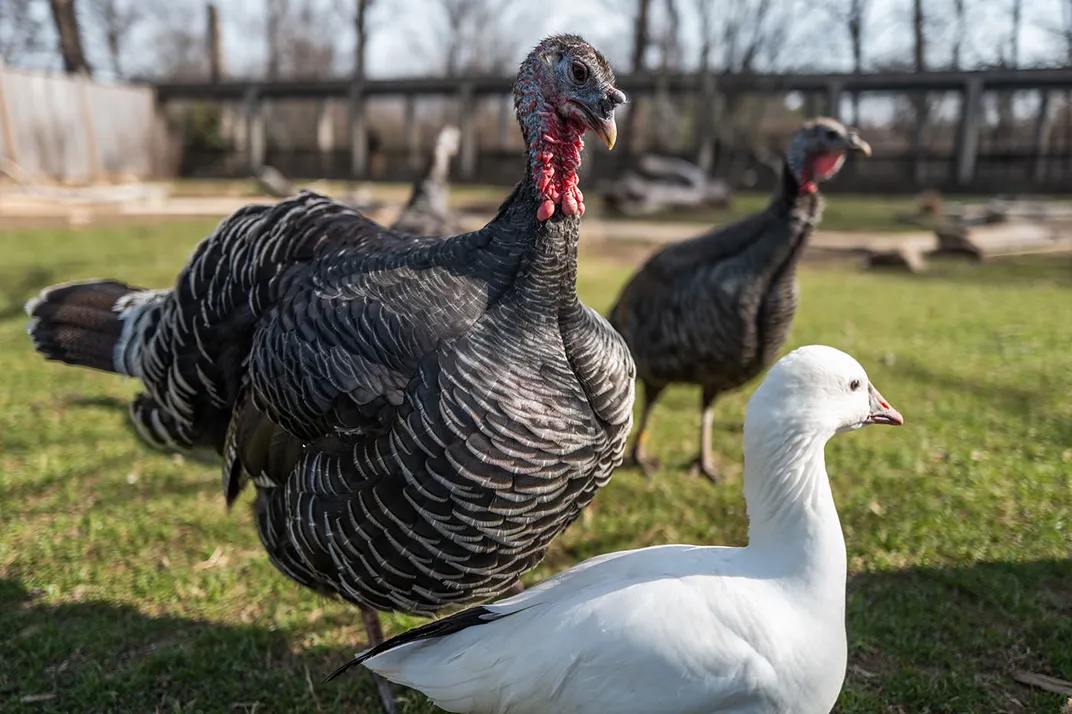
5. A turkey sees the world in more colors than you do.
Wild turkeys rely heavily on their sharp vision to detect danger, so it helps that they can see with visual acuity much greater than a person's. Eyes set on the sides of their head give them a visual field of 270 degrees, and they can cover the rest with a quick turn of the neck. Their retinas also hold seven different types of photoreceptors, including one rod and six different types of cones, compared to one rod and three cones in human retinas. They can even see beyond the normal human color spectrum: their eyes hold a single cone photoreceptor that responds to wavelengths near 400nm, which is in the UVA light range.
6. Wild and domestic turkeys are the same species, but they’re not identical.
Scientists recognize six subspecies of wild turkeys: the Eastern, Rio Grande, Merriam’s, Osceola (Florida), Gould’s, and the South Mexican turkey, each adapted to a different region of North America. The South Mexican variety is now thought to be extinct, although it’s this subspecies whose domestic descendants interbred with Eastern wild turkeys to become today’s commercial birds.
7. Benjamin Franklin wasn’t serious when he suggested the turkey serve as the national symbol of the United States.
Franklin championed the turkey as a “much more respectable bird” than the bald eagle in a private 1784 letter to his daughter. However, he was mainly arguing that the bald eagle was in fact unfit due to its “bad moral character,” characterized by stealing food from smaller birds as opposed to hunting for itself.
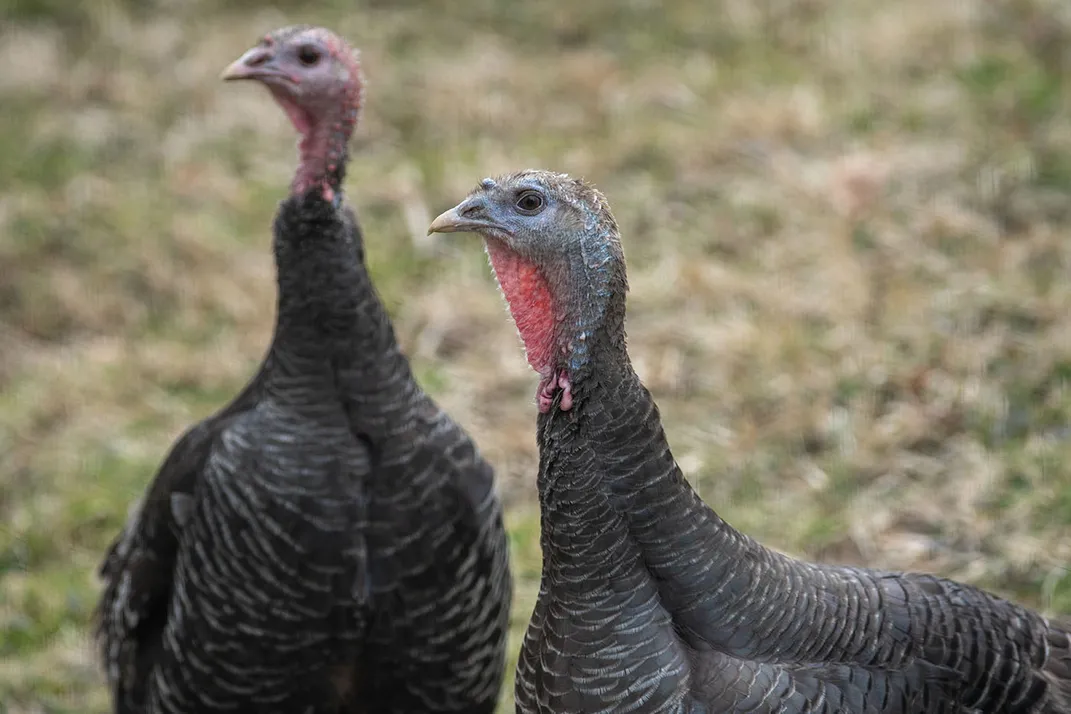
8. A turkey’s head changes colors based on excitement level and body temperature, like a mood ring.
The bald head of a turkey shifts between red, blue and gray coloration as blood vessels expand and contract underneath the surface of the skin. Pale blue often signals a relaxed attitude, while dark red can mean aggression or stress.
9. Wild turkeys are a nationwide conservation success story.
Turkeys were common across the continent in the 1800s, but unregulated hunting and the clearing of forests reduced their numbers to roughly 130,000 by the mid-1930s. Along with strict hunting regulations, trap-and-transfer programs, which moved wild birds to new habitat, helped populations rebound.
Today an estimated 6.5-6.7 million turkeys roam 49 states and six Canadian provinces. Although they’re declining in some states like Missouri and parts of the Southeast, they’re increasingly common in urban environments like residential neighborhoods, parks and golf courses.
10. You can visit domestic turkeys at the Smithsonian’s National Zoo.
The Zoo keeps a flock of standard bronze turkeys in an outdoor yard at the Bird House exhibit. Inside, the exhibit follows the journeys of migratory birds and the Smithsonian scientists working to protect them and their habitats.
Want more animal care news? Sign up to receive the latest email updates and information on Zoo news, events, volunteer opportunities, and more.
Love wild turkeys? Your donation helps protect their habitat through Smithsonian conservation and research programs. Learn more or make a donation.