The Smithsonian’s Cheetah Cub Cam Returns—With Five Adorable Reasons to Tune In
Four generations of one cheetah family now live at the Zoo’s off-campus research facility. Meet the newest members, streaming live
:focal(960x603:961x604)/https://tf-cmsv2-smithsonianmag-media.s3.amazonaws.com/filer_public/db/4b/db4bb2c0-a017-475d-9d33-b3de9dce2356/yard_1_den_2_10_9_2026_10_02_00_am_edt.png)
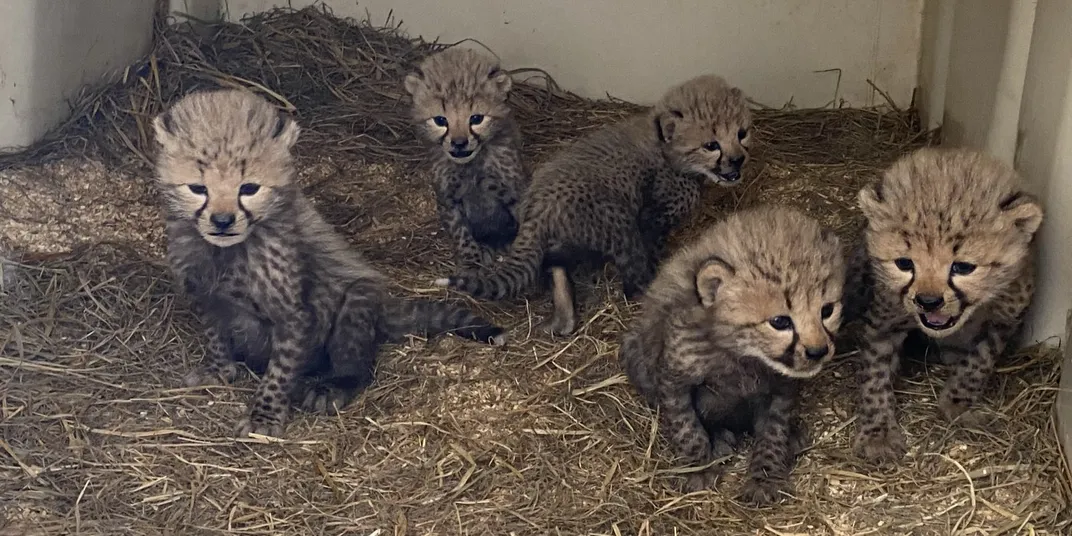
Carnivore keepers at the Smithsonian Conservation Biology Institute (SCBI) are delighted to announce the birth of five healthy cheetah cubs on October 5, 2026. The cubs and their mother, 5-year-old Zura, are healthy, strong and active, keepers say.
The group is living in the off-campus research facility in Front Royal, Virginia, about an hour’s drive from the Smithsonian’s National Zoo in Washington, D.C. Even though the cubs will not be on view to the public, live video of the cheetahs is now streaming on a den cam on the Zoo's website.
Zura’s litter of five offers hope for a predator at risk of extinction, as well as a significant milestone in the Smithsonian’s cheetah conservation program. Hers is the 21st litter of cubs born at SCBI since 2007, a significant achievement for a species that is difficult to breed in human care.
A Family Connection
For the keeper team, the cubs represent a full-circle moment for the breeding program. Zura was born to Rosalie at SCBI in 2021. Before that, Rosalie was born to Sanurra at the same facility in 2015. Both Rosalie, now age 11, and Sanurra, now age 16, are still at SCBI. They are currently living together.
“With these cubs, we now have four generations of the same cheetah family with us,” said Adrienne Crosier, carnivore curator at SCBI. “It’s a testament to the high level of care our team is able to provide for these animals.”
So far, staff have minimal contact with the cubs: the first few weeks are a critical time for the cubs to develop strong bonds with their mother. Staff are confident in Zura’s maternal instincts, noting that she appears to be a careful and attentive first-time mother.
Staff conducted regular health checks throughout Zura’s four-month pregnancy. Before giving birth, the cheetah was trained to sit calmly and voluntarily participate in medical procedures, which enabled staff to conduct blood draws, ultrasounds and x-rays with minimal stress.
The cubs are the third litter in the Smithsonian’s breeding program sired by 9-year-old Flash. (As with most cheetahs, Flash’s parenting duties ended at conception; cheetah fathers don’t play a role in cub-rearing, in the wild or in managed care.) Because Flash’s lineage is not well represented in the overall population of cheetahs in North America, these births are a valuable addition to the species’ gene pool, Crosier said.
Staff expect Zura’s litter will be visible on the Cheetah Cub Cam for about six to seven months, at which point they’ll naturally prefer not to sleep together in the same den. As with other litters, Zura’s cubs will likely remain at SCBI for another year or two before moving to partner facilities to support future breeding efforts.
Genetic Threats to Cheetah Survival
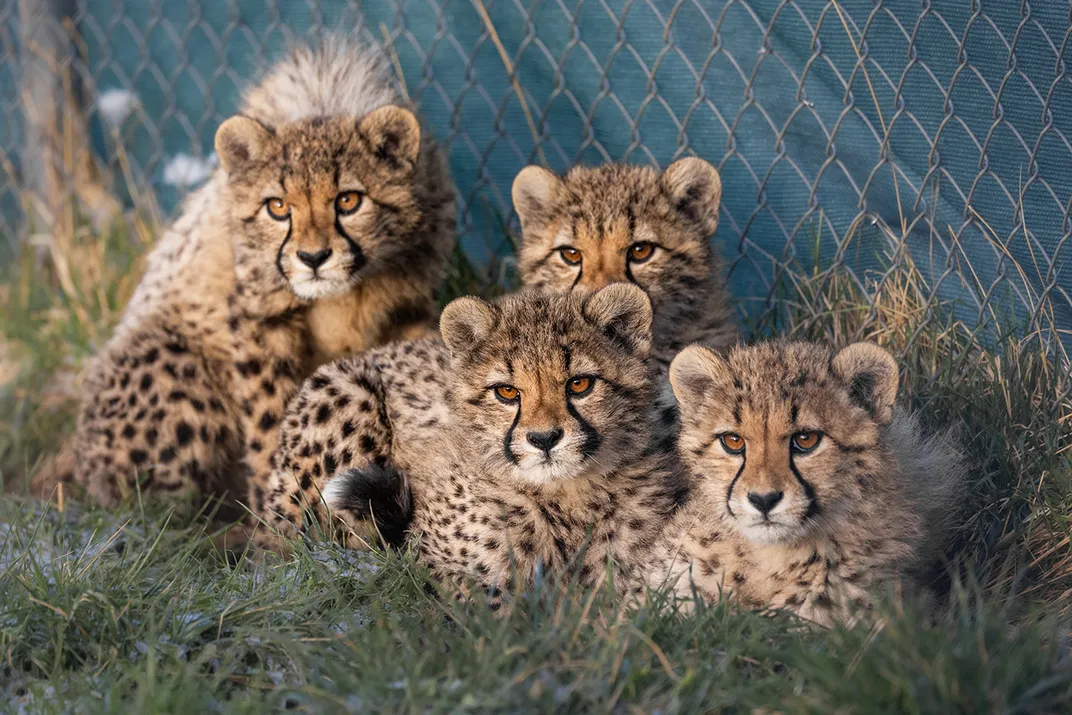
Cheetahs were once common across Africa and Asia, with a population of 100,000 at the start of the 20th century. Today, fewer than 7,000 are estimated to be left in the wild, and the species is considered vulnerable to extinction by the International Union for Conservation of Nature. Climate change, habitat loss, declining prey populations and human conflict have limited the species to just 9% of its historic range.
SCBI’s cheetah breeding program is part of a global effort to build a backup population. However, in human care, cheetahs are not exactly prolific breeders. Only about 40-50% of cheetah pairings result in cubs.
Some of the difficulty lies in their behavioral preferences; females can only conceive during short, irregular windows of receptivity, and tend to prefer having multiple male options.
An even greater obstacle lies in the fact that cheetahs have already survived at least one near-extinction event, and the consequences have left them vulnerable to another. Somewhere around the end of the last Ice Age, cheetah populations were drastically reduced around the world. The remaining population passed through a “bottleneck event,” where the few remaining cheetahs ended up mating with relatives. Even today, cheetahs carry reproductive issues typically associated with inbreeding, like low sperm motility, high genetic similarity and a reduced capacity to adapt to environmental change.
Zura’s cubs were born as part of a broader initiative to support the species by maximizing what little genetic diversity remains among human-raised cheetahs through careful breeding.
Animal care experts from the Cheetah Breeding Coalition arrange breeding opportunities within a network of ten accredited cheetah facilities in the United States, including the Smithsonian Conservation Biology Institute. At SCBI, a breeding population of about 30 cheetahs is cared for inside several acres of grassy, off-exhibit enclosures.
Beyond its role in the national breeding program, SCBI is also pushing cheetah science forward on a cellular level. Emerging science suggests that the gut microbiome — the communities of bacteria, fungi, and viruses living inside an organism's digestive tract — plays a significant role in shaping fertility, sperm quality, and even offspring survival across wildlife species. A team of Smithsonian researchers is investigating the microbial communities found in cheetahs’ reproductive tracts, with the aim of developing a greater understanding of the breeding challenges that hamper the cat's ability to produce the next generation.
Want more animal care news? Sign up to receive the latest email updates and information on Zoo news, events, volunteer opportunities, and more.
Love watching cheetahs? Your donation helps protect them in the wild through Smithsonian conservation and research programs. Learn more or make a donation.