11 Fascinating Facts About North American Porcupines
Among North America’s many forest-dwelling creatures, porcupines are one of the most easily recognizable. Still, there are plenty of surprises to discover about these prickly creatures.
:focal(700x473:701x474)/https://tf-cmsv2-smithsonianmag-media.s3.amazonaws.com/filer_public/56/a4/56a474fa-7cc2-4784-96a3-999cd1b1b8fc/2562-088jc.png)
1. A porcupine has about 30,000 razor-sharp quills, each with 700-800 microscopic barbs at the top.
Although they appear thin and brittle, the quills covering a porcupine’s body are one of the most effective defense systems found in nature. Even though they appear thin and brittle, porcupine quills are stiff, lightweight, and covered in hundreds of tiny hook-like barbs at the tip. These barbs are aligned backwards, allowing them to pierce incredibly easily through skin and muscle — it only takes about half the force of a hypodermic needle for a quill to push into flesh. Once lodged within their target, the barbs flare outward, latching deeply into tissue and causing serious damage when pulled.
In fact, the shape of the quills is so effective at hooking into tissue that researchers study them to improve the effectiveness of needles and medical adhesives.
2. They’re North America’s second heaviest rodent.
Under all those quills, porcupines hide surprisingly bulky bodies. On average, adults tip the scales at 12 to 35 pounds, about the same weight as a medium-sized dog. In North America, only the beaver is heavier.
3. They can’t launch, shoot, or throw the quills from their bodies.
It’s a persistent myth, but porcupines don’t actually fling their quills when attacked. When a porcupine means business, it will simply smack the target with its tail.
/https://tf-cmsv2-smithsonianmag-media.s3.amazonaws.com/filer_public/4c/6b/4c6bedcb-9e5d-40d3-a296-54fada4e934d/20141008-010tb.png)
4. Porcupine quills possess antibiotic properties.
Even though quills can become lodged inside a victim for weeks at a time, lab studies have shown infections from the entry wounds are rare. That’s because quills are covered in a waxy, fatty grease that inhibits the growth of several types of bacteria — a handy feature for an animal that occasionally pricks itself (see No. 6).
5. Their top speed is about 2 miles per hour.
With such impressive natural defenses, porcupines rarely need to move faster than a slow waddle. But if a particularly determined predator attacks, a cornered porcupine will rapidly shuffle backwards, wedging itself into the nearest tree hollow or burrow until the coast is clear.
6. Porcupines are somewhat clumsy and fall out of trees often.
One of a porcupine’s favorite foods are the buds that sprout at the ends of tree branches. Perhaps surprisingly for a tree-dwelling animal, tumbles are common. One study found about one-third of museum specimens showed evidence of healed broken bones, suggesting that tumbles are a natural part of porcupine life. (But even though a hapless porcupine might impale itself on its own quills, accidental self-sticks rarely end in infection.)
/https://tf-cmsv2-smithsonianmag-media.s3.amazonaws.com/filer_public/71/03/7103a6d3-ebb3-4290-89ac-aaecb3943f21/20141001-005tb.png)
7. They have cravings for anything salty.
Like many cold-climate herbivores, a porcupine’s diet depends on what’s in season: dry, woody fare like tree bark and acorns in the winter, and leafy greens and fruit in the spring and summer. However, their flora-heavy diets are naturally low in sodium and calcium, so porcupines will forage whatever natural sources they can find, including salt licks, shed deer antlers and even the bones of dead animals.
In human-dominated environments, these salty cravings can get them into trouble. Hungry porcupines have been known to gnaw on homeowners’ decks if the plywood is treated with preservatives that contain salt. Near hiking trails, it’s not uncommon for weary campers to leave boots outside their tents overnight and find porcupines eating their salt-covered footwear the next morning.
8. Porcupine quills are widely used in Native American artwork.
For centuries, Indigenous and First Nations artists have used porcupine quills to embellish items like shirts, dresses, mittens, moccasins and jewelry. This form of decoration is called quillwork, and it is so closely tied to the heritage of the Mi’kmaq nation that Europeans historically referred to them as the “porcupine people”.
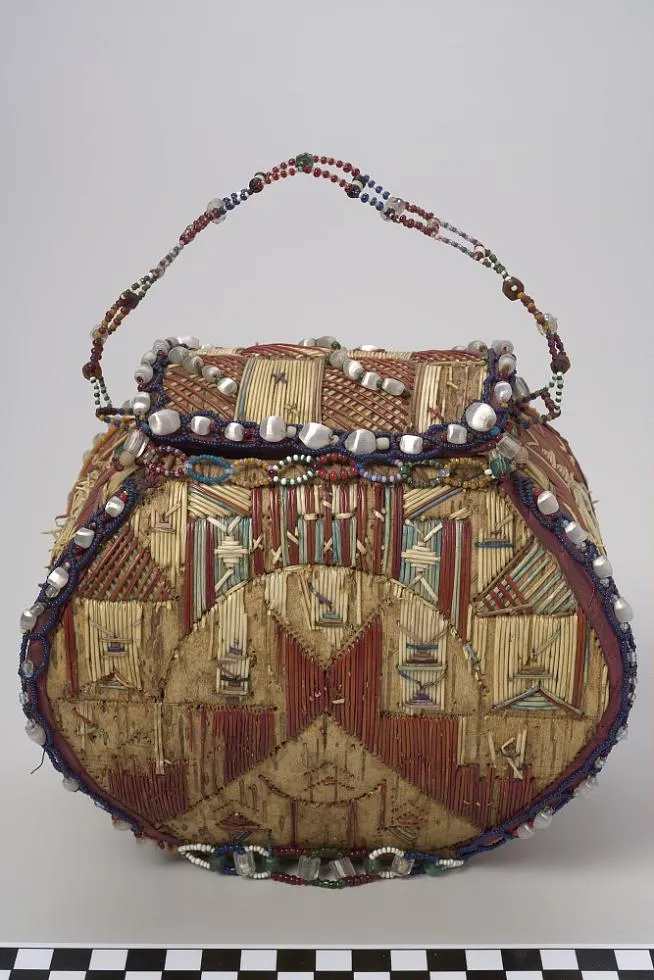
9. Porcupines produce a distinct musky smell.
Searching for a wild porcupine? There’s a chance you’ll smell it before you see it. A porcupine with its quills up will give off a stinky smell derived from a chemical compound called R-delta-decalactone, and it’s been described as unique blend of body odor, goats and cheese. Researchers think the odor serves as a warning to potential predators, especially those who have already experienced the business end of a porcupine’s quills.
10. Their courtship involves fighting, screaming and urine.
Porcupine mating rituals can get raucous. Each year, females enter a brief 8-hour window in the fall where they become receptive to mating attempts from amorous males. Potential suitors will compete for mating rights, often through vicious battles with biting, scratching, and tail-smacking. The victor will continue the ritual by performing courtship dances and vocalizing loudly with an assortment of grunts, whines, and shrieks. After that, the male will spray the female with his urine, which includes specific hormones and chemical signals to help bring her into a receptive state. When it's time to mate, the female pushes her tail aside to avoid injuring the male.
11. You can learn about porcupines and other animals at the Smithsonian’s National Zoo in Washington, D.C.
At the Zoo’s Claws and Paws exhibit, visitors can see two resident North American porcupines, a male named Jeffrey and a female named Khaleesi, while learning about the Smithsonian Institution’s efforts to study and protect wildlife around the world.
Want more animal care news? Sign up to receive the latest email updates and information on Zoo news, events, volunteer opportunities, and more.
Love porcupines? Your donation helps protect them in the wild through Smithsonian conservation and research programs. Learn more or make a donation.