How Smithsonian Science Is Helping the Scimitar-Horned Oryx Recover—and Thrive
Once pushed to the brink of extinction, the oryx is turning into one of conservation’s most impressive success stories due in part to Smithsonian research
:focal(700x467:701x468)/https://tf-cmsv2-smithsonianmag-media.s3.amazonaws.com/filer_public/f0/4d/f04d6ad2-55a9-4c8b-8acc-31d9666ca6c6/20260710-_006a6362-004bm.jpg)
It’s one of the conservation community’s best-known stories of hope. Twenty-five years ago, the scimitar-horned oryx — a pale, long-horned antelope built for life on the edge of the Sahara — was pushed to the point of extinction after decades of overhunting and loss of available habitat. Today, after a successful captive breeding and reintroduction campaign, the population in the wild has grown to over 600 individuals. The species was downlisted from "Extinct in the Wild" to "Endangered" by the International Union for Conservation of Nature (IUCN) in 2023 — an exceedingly rare victory for such a large mammal.
But beneath this remarkable story is a less obvious one. For several decades, staff at the Smithsonian’s National Zoo and Conservation Biology Institute have helped drive the oryx recovery effort — and their work has expanded to help protect even more of Africa’s endangered antelopes.
Testing the Tools That Made the Reintroduction Possible
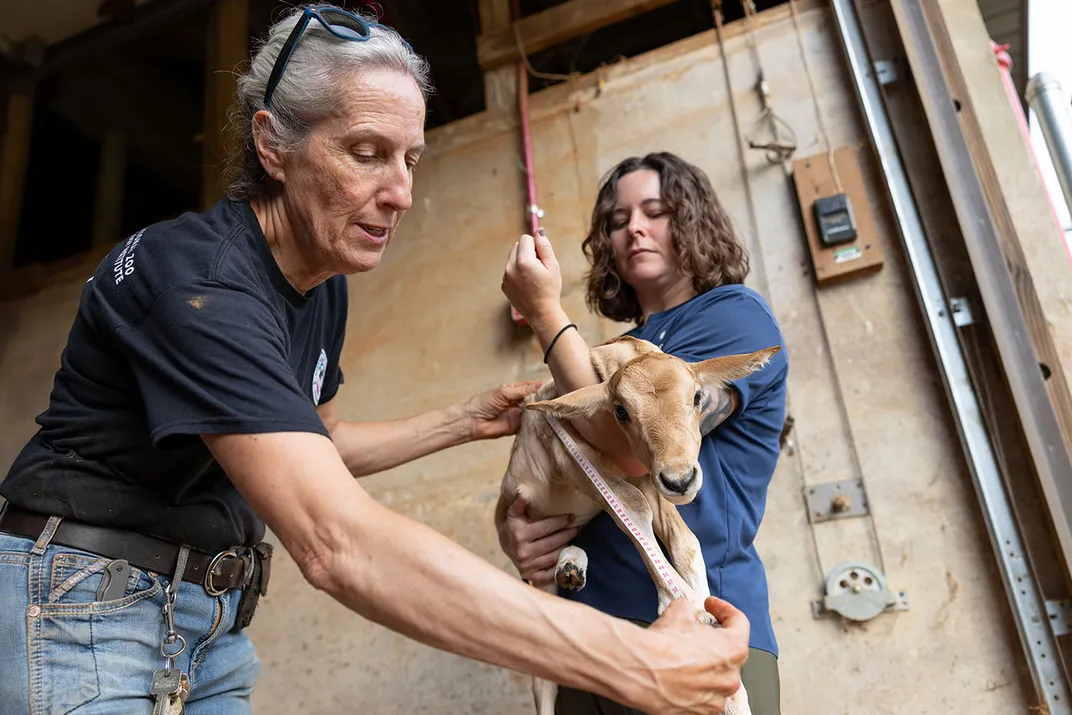
Before the oryx could be reintroduced into the wild, biologists needed a way to keep tabs on them once they got there. But with just a few thousand oryx left on Earth and no room for mistakes, project partners — including the Environment Agency-Abu Dhabi, the Sahara Conservation Fund, the Smithsonian Institution, and the Zoological Society of London — needed a group of live animals to help figure out which available tracking technologies actually worked. The Smithsonian’s oryx herd proved up to the task.
Dolores Reed is curator of ungulates at the Smithsonian Conservation Biology Institute (SCBI), the Zoo's conservation campus in Front Royal, Virginia. For more than three decades, she has provided day-to-day care for the Front Royal oryx, but starting in 2012, her work shifted into a new realm: partnering with researchers to collect valuable testing data.
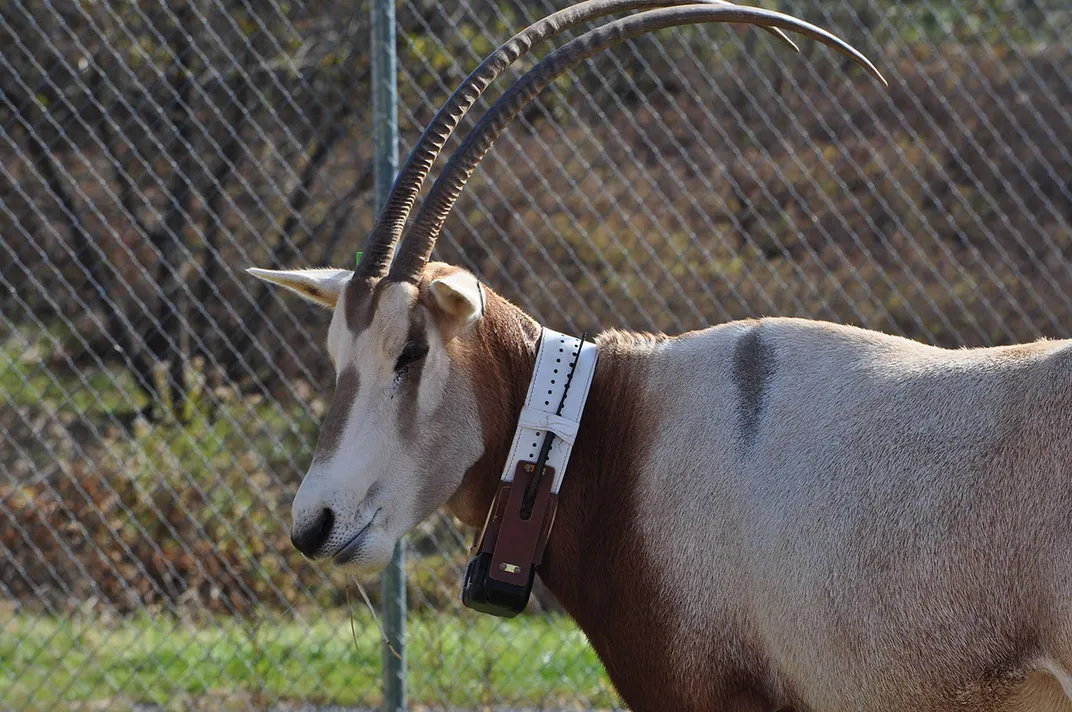
One project tested out models of tracking devices, honing in on the right collar design and energy source. That groundwork helped project parters choose the right technology before the first cohort held in Abu Dhabi was released into the Reserve de Faune de Ouadi Rime-Ouadi Achim, a large, protected area in central Chad and the natural habitat of the oryx.
Reed’s work hasn’t stopped since the introduction. SCBI staff continue to test smaller, less invasive devices for the reintroduced population, which are used on oryx in the Reserve.
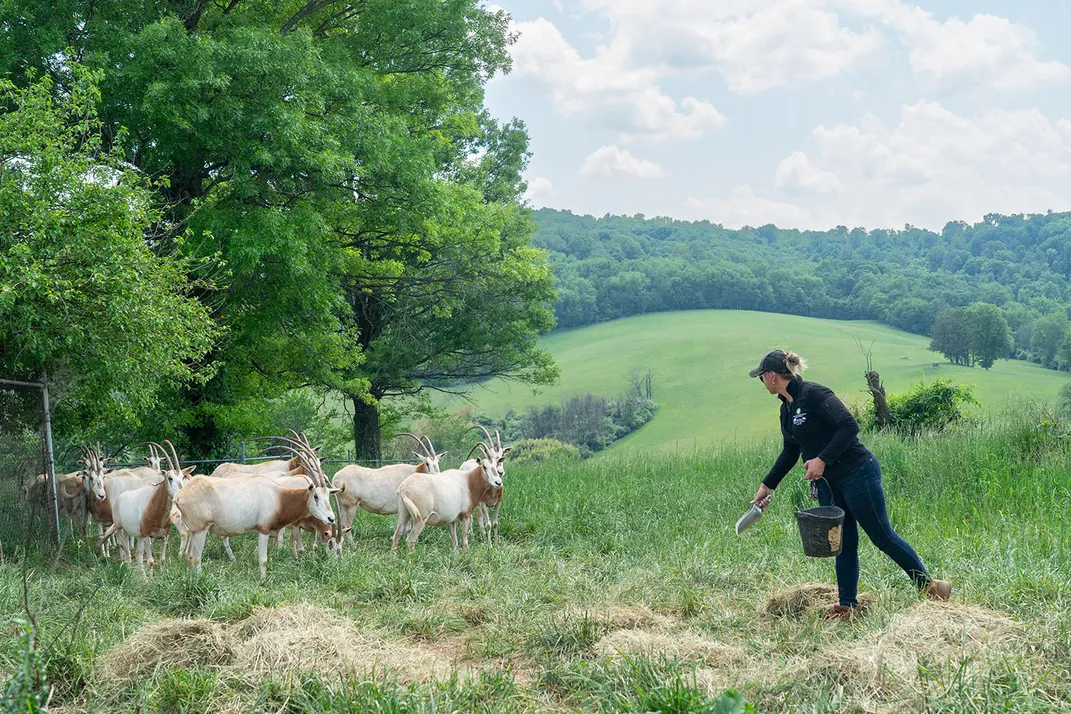
“In so many ways, the oryx have been a good test case for what works in conservation,” Reed said. “The lessons we learn and the expertise we’re able to share for oryx can be adapted to many other species that need our help.”
Welcoming New Arrivals to SCBI’s Research Herd
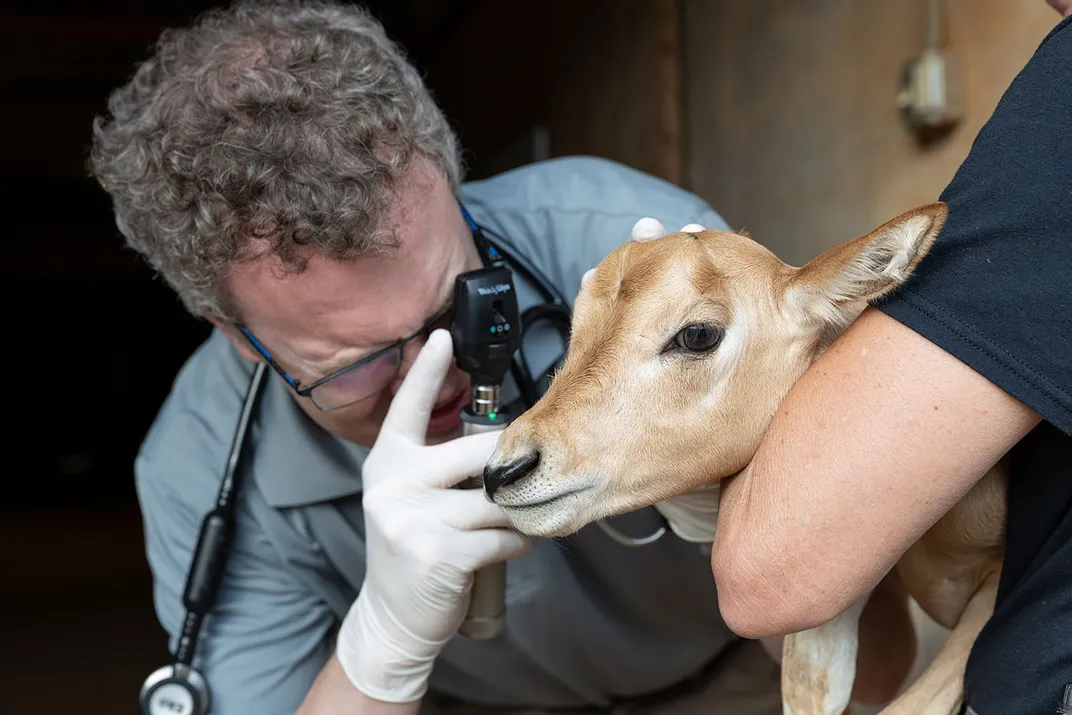
A reintroduced population of 600 oryx is nearly impossible to track individually, but staff at SCBI know every animal in their care by name. Earlier this summer, Reed and her team welcomed two newborn calves, Nova and Zola, on July 8 and July 21 — growing the Front Royal herd to 18.
Nova, the older calf, was born to nine-year-old Savannah, while Zola, the younger one, was born to nine-year-old Kiffa. Reed has already seen glimmers of personality distinguish the doe-eyed youngsters: Nova is bold and curious, whereas Zola is more cautious, hanging back and watching when encountering anything new.
Apart from being adorable new additions, Reed said the calves also play a meaningful role in the reintroduction project. A larger herd can provide more data for researchers to compare with the wild population in Chad. “It’s easier for us to validate results when we can get data on 18 animals than if we only had one or two,” said Reed.
Following the Herd Across the Sahel
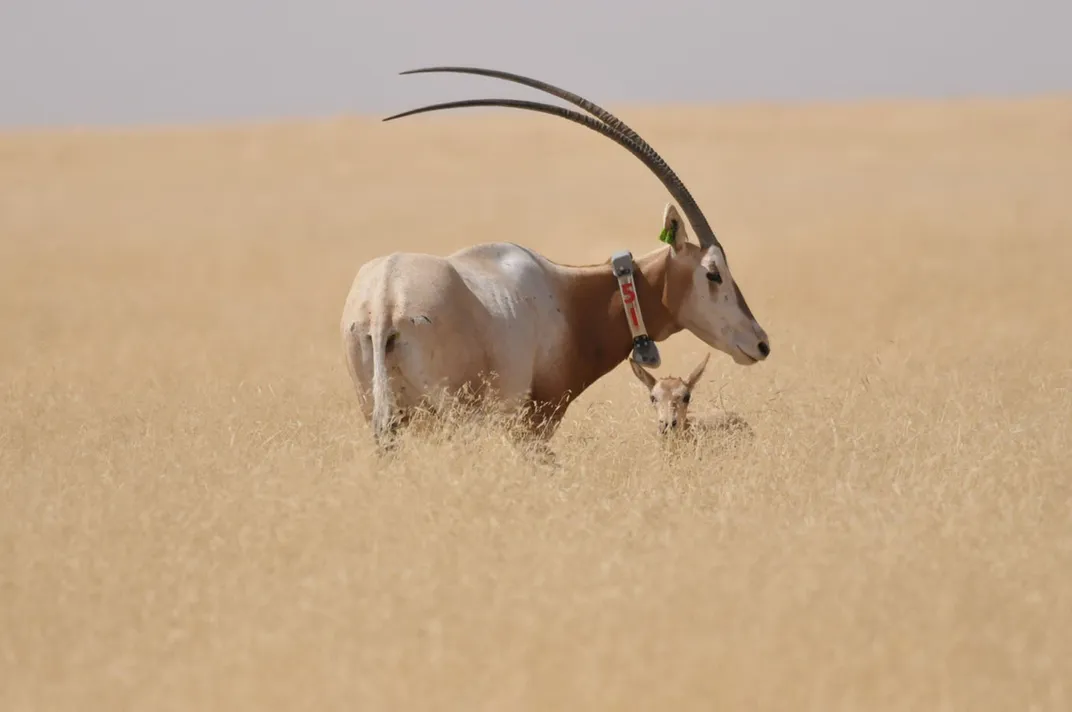
The Front Royal data is helping Katherine Mertes, a research ecologist at SCBI, make sense of what the larger population is doing in Chad, nearly 4,000 miles away.
Mertes has spent almost ten years tracking and interpreting the movement patterns of reintroduced oryx, and has watched as their numbers grow from a small founding group into a population of more than 600 animals.
Remote tracking has let Mertes and her partners on the ground step in during crises like drought and disease events, identify critical foraging areas and other important sites that need additional protection, and highlight movement routes that may expose animals to negative human interactions.
“We're not quite at the level where we can leave them totally alone,” she said. “But already we've seen the herd weather disease events and bad years, and they’ve bounced back every time."
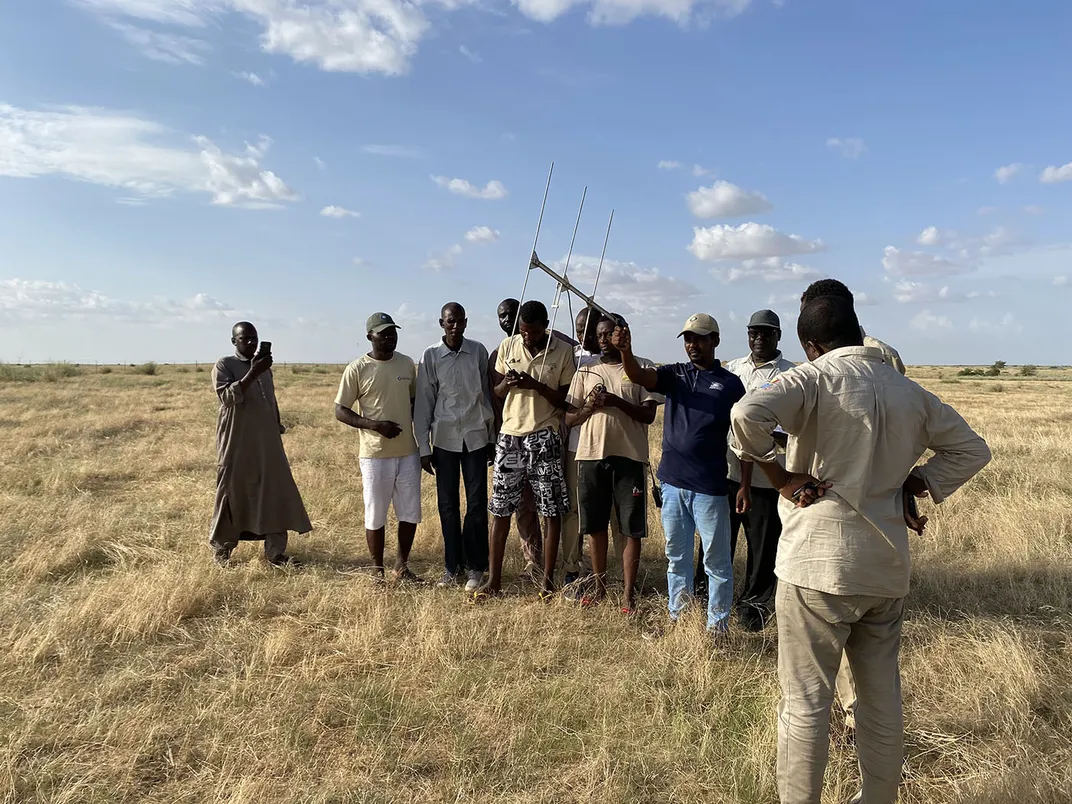
Tracking efforts have also revealed something remarkable about how the oryx survive in one of the harshest landscapes on Earth: each year, seasonal rainfall pushes a wave of fresh plant growth northward across the landscape. The tracking data shows oryx traveling many miles from the release site to follow it, seemingly riding that green wave across the dry grassland. It’s a promising sign for animals descended from a human-managed population, said Mertes.
“By following greening vegetation over long distances, we’re seeing the oryx are willing to do exactly what they need to survive,” she said.
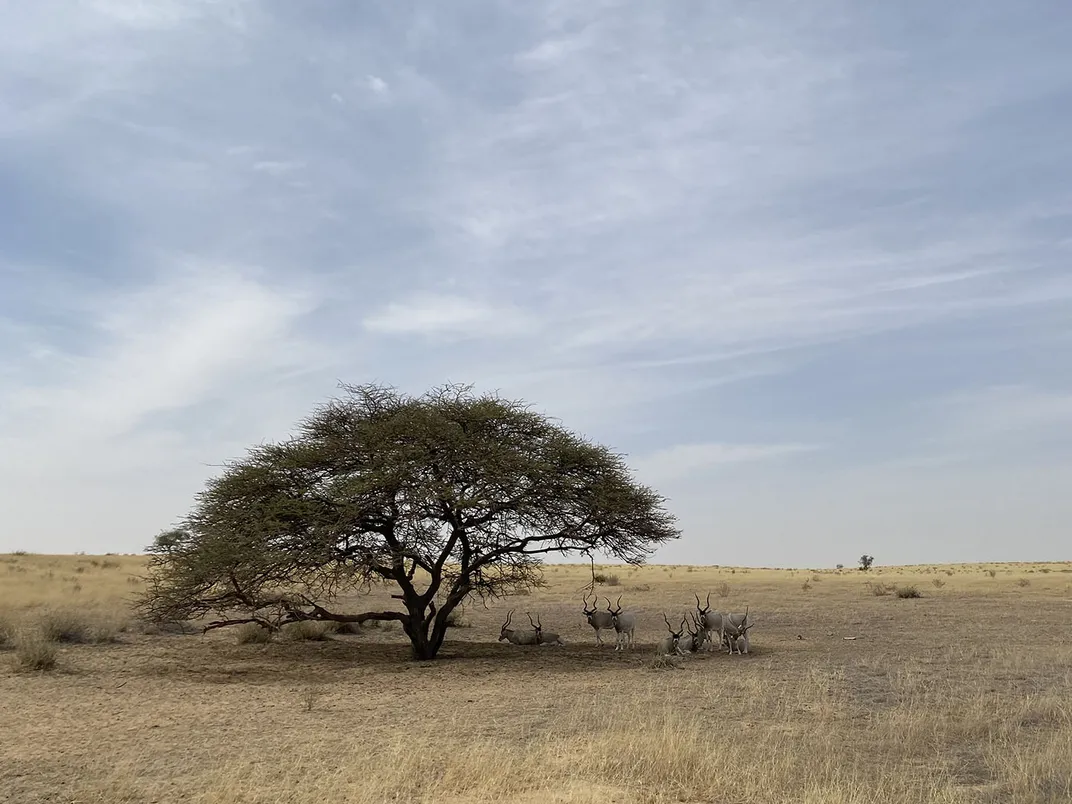
The same monitoring approach is now helping other endangered antelope species in the region. A founding population of just three dama gazelles translocated to the Reserve in 2020 has grown to a captive breeding population of more than 30 after two waves of releases, and an original group of fifteen addax released in 2020 has grown to a population of more than 150.
“It’s early yet, and both species are still integrating into the landscape,” said Mertes. “But we’re seeing lots of hopeful signs.”
Coming Full Circle at the Zoo
Soon, this story of hope will connect directly with visitors to the National Zoo in Washington, D.C. Two or three female oryx from the Front Royal research herd are expected to move to the Zoo’s Africa Trail habitat, currently in the final stages of a long-awaited reservation. There's no set date for the opening yet, since so much depends on how quickly the animals settle into their new home. But staff are hopeful that by next summer, visitors will get their first look at the oryx — and stand face-to-face with a living symbol of the science, dedication, and teamwork it takes to save a species.
The Oryx Reintroduction Project in Chad is a joint initiative of the Government of Chad and the Environment Agency-Abu Dhabi. Under the overall leadership and management of the Environment Agency-Abu Dhabi, on-the-ground implementation of the project is carried out by Sahara Conservation. The Smithsonian Institution extends its gratitude to the Government of Chad, the Environment Agency-Abu Dhabi, and Sahara Conservation for the opportunity to assist in the project's implementation.
Want more conservation news? Sign up to receive the latest email updates and information on Zoo news, events, volunteer opportunities, and more.
Love the scimitar-horned oryx? Your donation helps protect them in the wild through Smithsonian conservation and research programs. Learn more or make a donation.