How X-Rays, Plastic Cups and Spools of String Help National Zoo Researchers Find Wild Box Turtle Nests
To figure out why Eastern box turtle numbers are dropping across Virginia, Smithsonian researchers are turning to some surprisingly low-tech tricks.
:focal(700x470:701x471)/https://tf-cmsv2-smithsonianmag-media.s3.amazonaws.com/filer_public/7b/0f/7b0ff0da-1226-44bf-84de-647304f51d15/20260512-029jk.jpg)
Eastern box turtles take their nest building responsibilities seriously. A female may wander for hours, sometimes days, scouting for a spot with the right thermal conditions to make a nest. Once she settles on the spot, she digs a shallow hole, lays two to five eggs, and covers them with dirt. From there, it’s entirely up to the environment – the surrounding soil's temperature alone determines how, and whether, her eggs develop.
Sometimes, this takes place in a sun-dappled patch of forest or a breezy mountain vale. Other times, it’s a cow pasture.
Mark Ketner knows the process well. Now in his third year at the Smithsonian’s National Zoo and Conservation Biology Institute (NZCBI), he is a researcher with the Turtle Conservation Ecology Lab, a cross-disciplinary team investigating the rapid disappearance of native turtles across Virginia.
Since 2022, the team has collected troves of data on Eastern box turtle habits – like movements, mate-seeking habits and territory usage – with the goal of reversing troubling declines among the slow-moving reptiles. So far, the data implicates a familiar set of culprits: rural highways, climate shifts, lawnmower blades, and backyard predators.
Building on those findings, the team launched a new line of study this spring. Since April, Ketner and his colleagues have been investigating nest survival rates, gathering data on how quickly box turtles reproduce, and how many eggs are expected to survive after being laid. With any luck, said Ketner, the work will provide conservation leaders with a better understanding of how to protect the nesting sites of Virginia’s native turtles.
But in order to study a box turtle nest, you first have to find one.
Step 1: Time It Right
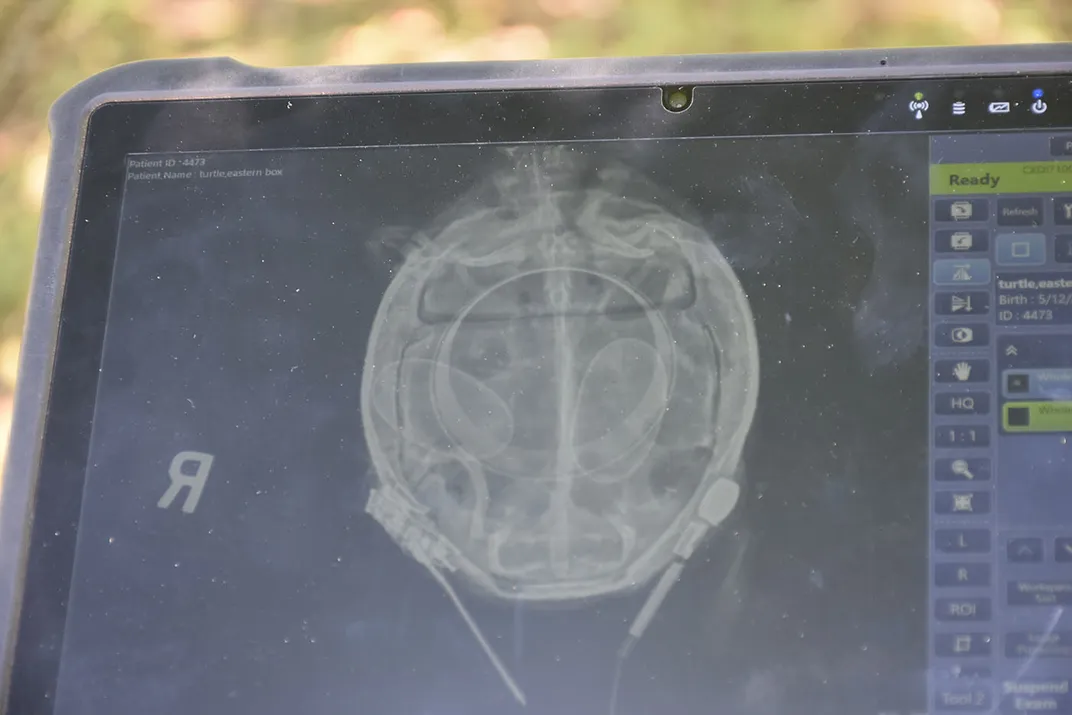
Timing is everything, since there's only a narrow window between the time when the eggs form inside the turtle and the moment she lays them in the earth. Females carry their developing eggs inside of them — a state biologists call “gravid” — for 30 to 60 days, usually between from late May through early July. Once the eggs calcify, she can deposit them at almost any point.
But, like everything else with box turtles, she’ll do it on her own schedule. “You might find a turtle at what looks like a perfectly good nest site and think, ‘well, this is probably where it’s going to happen,” Ketner said. “But then you come back the next morning and the turtle has wandered a mile and a half away, and is now digging a nest on top of a mountain.”
Step 2: Gear Up
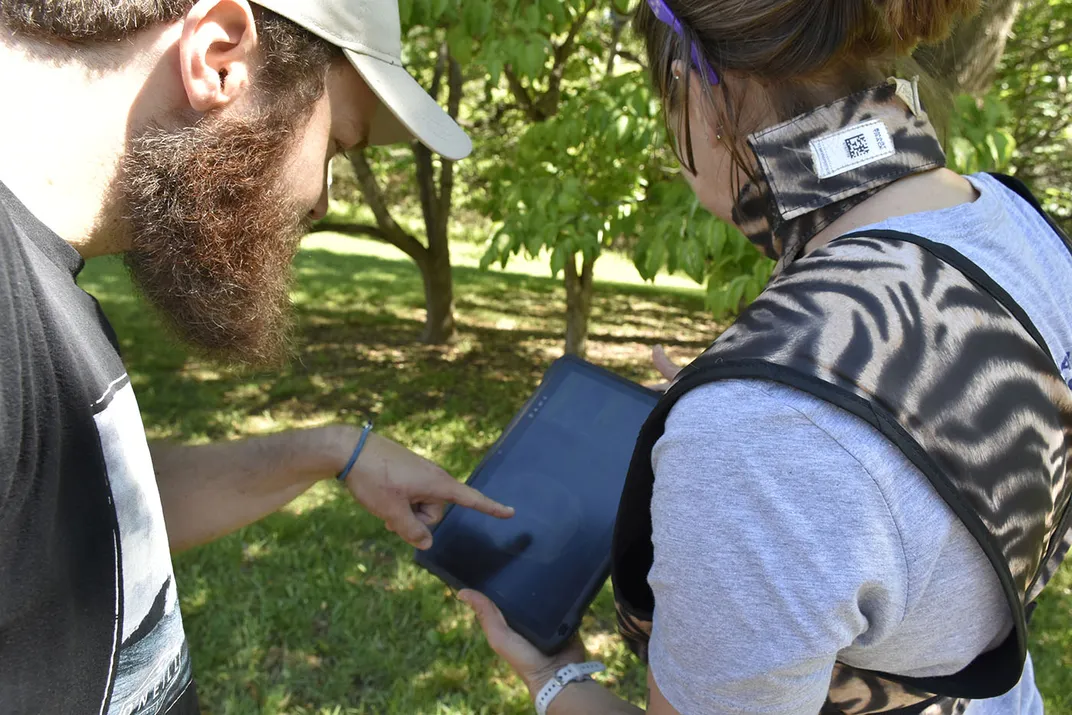
The researchers have to be prepared for all types of terrain — study sites cover a mix of turtle habitats and topographies, from open forest and native meadow to grassland and pasture.
In addition to familiarizing themselves with the landscape, Ketner and his field collaborator, Carley Laue of the Clifton Institute, a major project partner, have trained in field techniques like tracking, measuring and identifying box turtles in the wild.
For a typical field site day, Ketner and Laue will start by setting up a makeshift field station at the back of a vehicle, unpacking high-tech tools like radio tracking antennas and receivers, a digital scale, battery-powered trail cameras and a portable X-ray machine with a tablet for reading scans on the spot.
With it, they also unpack a set of ordinary objects that showcase the ingenuity it takes to chase turtles through the underbrush: heavy-duty boots, a few bobbins of string, flag markers and plastic cups.
Step 3: Search for Wild Turtles
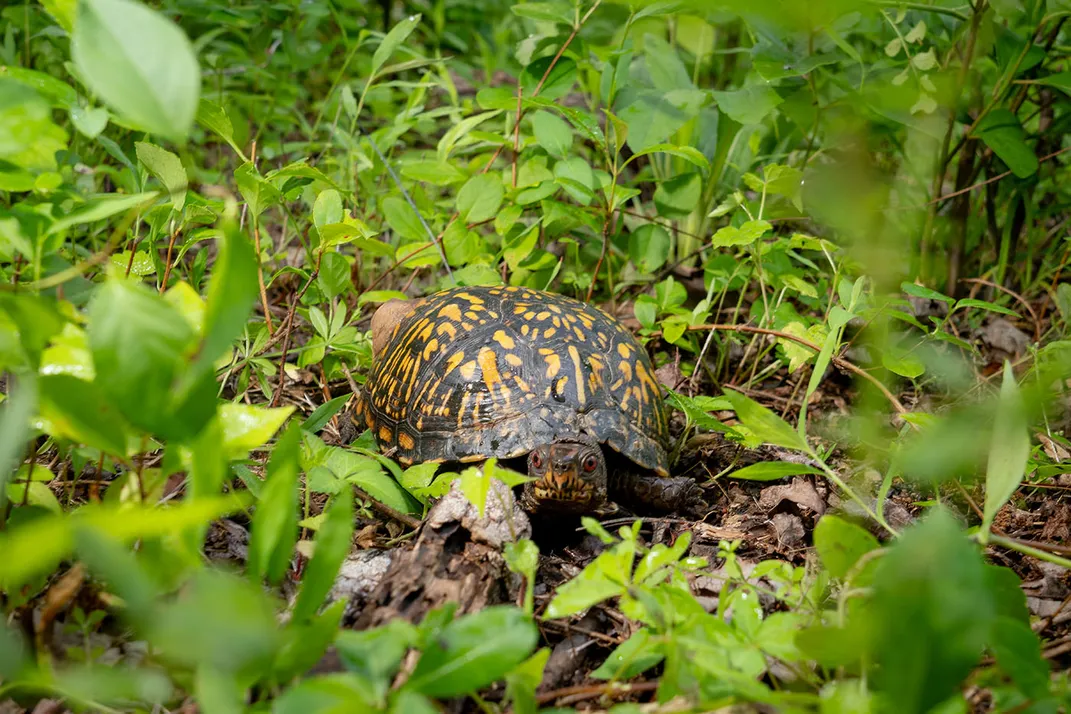
Once on the hunt, Ketner and Laue start a process that might sound familiar to anyone who’s ever played a game of Marco Polo. Ketner and Laue fire up the VHF receiver and dial in the turtle’s frequency. Once they’ve found it, they start to listen. The signal will beep quietly at first, then grow more frequent as they close in on the turtle’s location. When the signal peaks, it's time to scan the underbrush for a small, mottled brown-and-yellow shell. “They’re so good at hiding that even with a working transmitter, finding them can be tricky,” said Ketner.
Step 4: Check for Eggs Inside the Turtle's Body
/https://tf-cmsv2-smithsonianmag-media.s3.amazonaws.com/filer_public/83/24/83241cfc-e996-4831-ba25-9ea46d641c06/20260512-013jk.jpg)
Ketner and Laue briefly detain each captured critter for processing. After collecting measurements and other basic data, the duo will feel for developing eggs, gently running their fingers over the turtle’s skin just above the hind legs for the telltale hard bulge. Though reliable, this method isn’t always conclusive — which is why they enlist the help of veterinary technicians.
X-raying wild box turtles falls into the “other duties as assigned” category for Julia Jones, who works at the veterinary hospital at NZCBI’s conservation campus in Front Royal, Virginia. Jones occasionally joins the turtle hunts along with fellow vet technicians Christine Petroskova and Laura Peirson.
Working as quickly as possible to minimize stress, Ketner and Laue set the box turtle on top of a lead-lined plate and plastic cup just tall enough to keep the turtle from wandering off mid-scan. Then Jones hoists the unit into position and captures a quick image of the turtle’s body. Within seconds, she is able to deliver the turtle’s status to the researchers.
To Jones, a day’s worth of turtle research offers a fun change of pace from her duties at the vet hospital. “It’s nice to be able to work on conservation at a more local level. We can pop out of work for a few hours and make a difference for wildlife.”
Step 5: Attach Some Thread to the Turtle
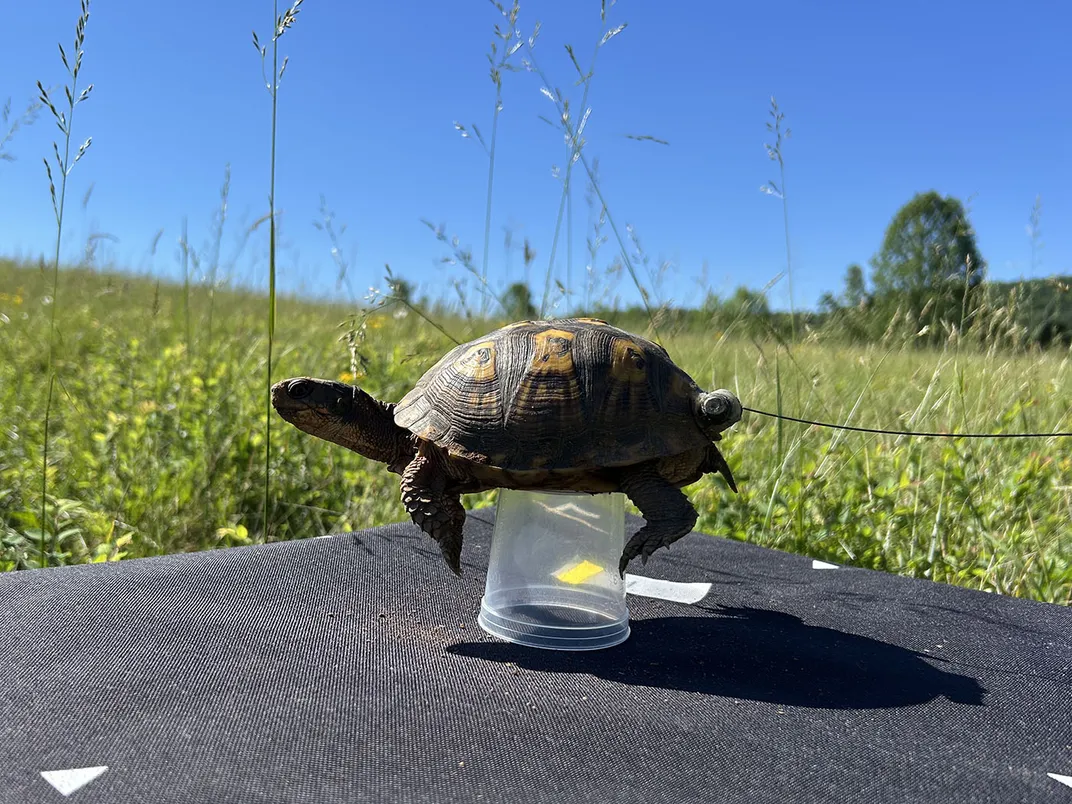
If the turtle turns out to be gravid, Ketner and Laue log the data, and gently adhere a two-gram bobbin and thread to the turtle’s shell. They carry her back to the spot where she was first detained, marked earlier with a small red flag. Before parting ways with their study subject, the pair will tie off the other end of the thread to the marker, ensuring the animal has plenty of thread to trail behind as she roams.
Step 6: Follow the Thread to the Nest Site
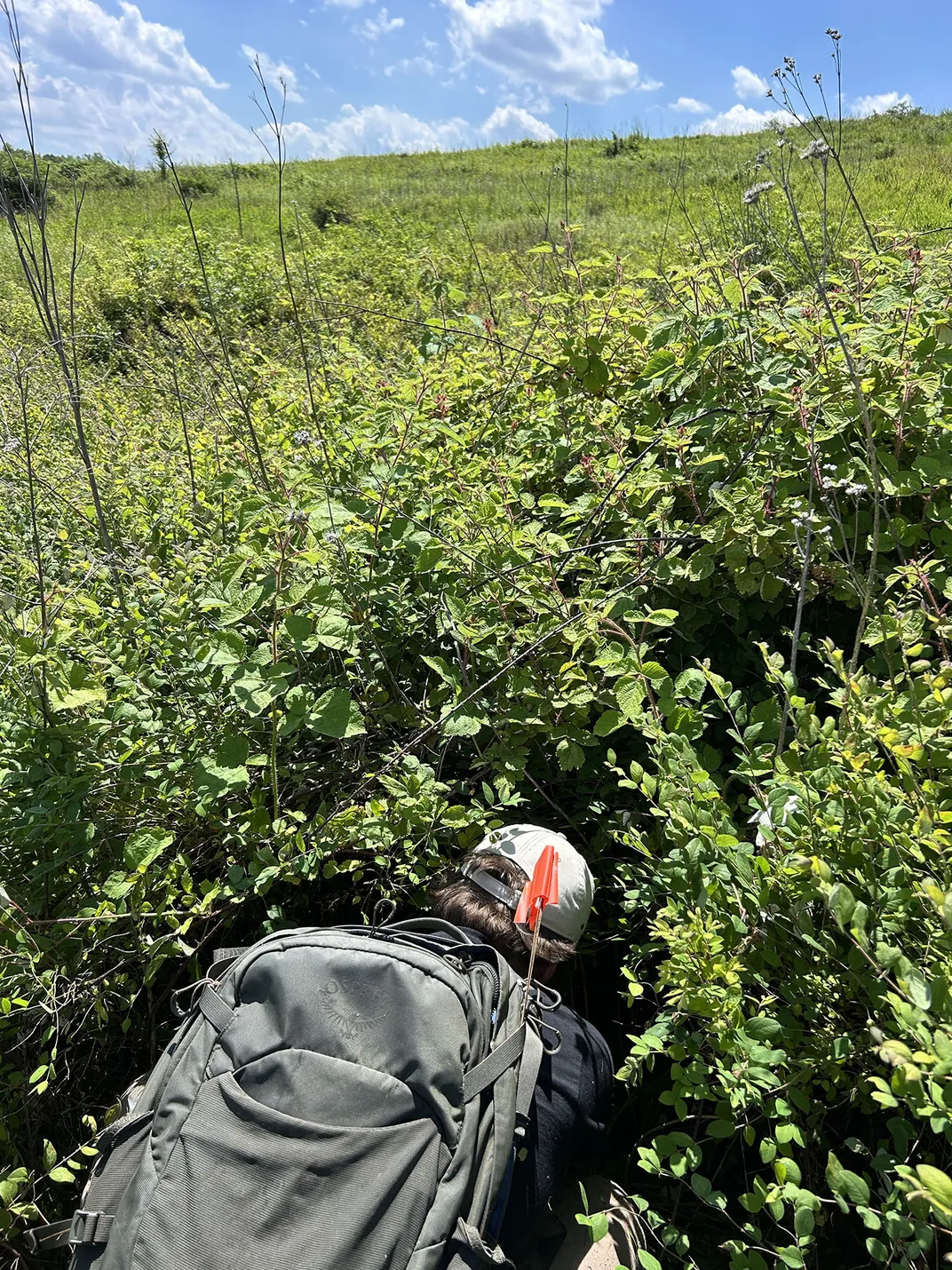
The next day, the team returns to the site to track down yesterday's turtles.
A turtle who hasn't yet chosen her nest site may wander for hours at a time, unspooling thread behind her as she goes. However, a turtle who’s identified her spot will not range more than a few yards away, pacing around the small patch of earth as she prepares to dig.
Once rediscovered, Ketner and Laue pick up the reptiles again, placing their subjects a scale for another weight check. If the turtle’s weight hasn't changed, they log the data and release her. If she's lighter — typically by 20 to 80 grams — that means she's made her nest somewhere nearby, likely at the point where the trail intersects with a freshly dug patch of ground.
"At this point we're usually bent over, following this thin piece of thread for hundreds of feet… we look kind of silly doing it," Ketner said.
After discovering the nest, Ketner and Laue do their best to minimize disturbance to the site. The duo will mark the spot with a flag, record the relevant data, and set up a battery-powered trail camera for another several weeks of remote monitoring.
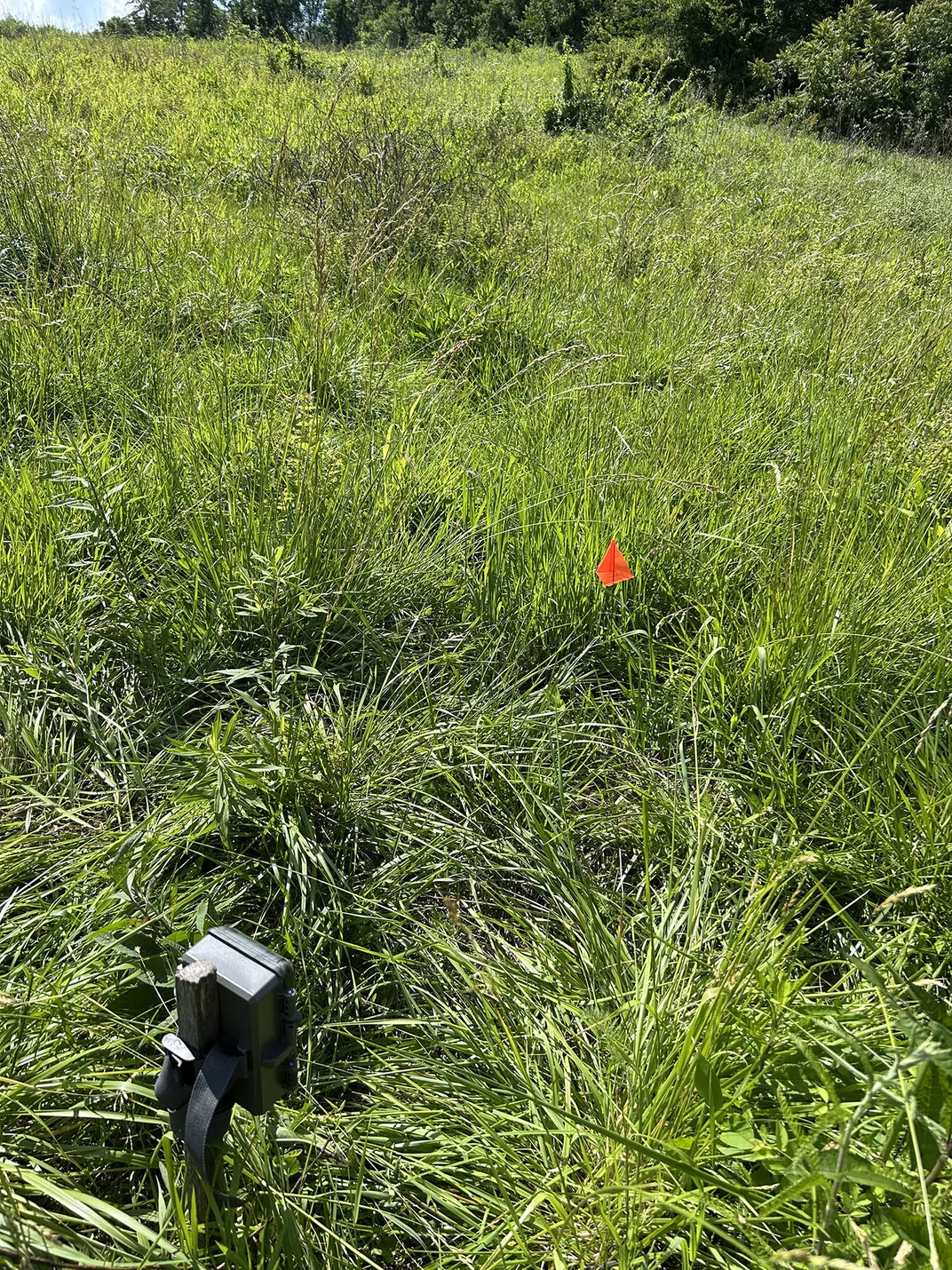
A Tough Road to Adulthood
Around two months later, the surviving babies will hatch, climbing their way up through the dirt together to greet a world filled with natural predators and human-engineered hazards. Few will make it to adulthood.
Over eight weeks of near-daily fieldwork, Ketner and Laue located a total of 16 nests. Unfortunately for the turtles, 13 nests had been dug up within just a few hours of being laid, the eggs destroyed and eaten by skunks or raccoons. The finding lines up with other studies showing that box turtle nest predation may run as high as 90 percent.
“Nest predation adds a layer to turtle population decline that I don’t think many people are aware of,” said Ketner. “It’s easy to picture a turtle’s biggest threat as a spray of pesticide or a car on a country road. But we’re seeing they’re in danger before they’ve even hatched.”
/https://tf-cmsv2-smithsonianmag-media.s3.amazonaws.com/filer_public/77/cc/77cca0fc-344a-4208-b7b0-a7f1cef4708c/20260617-001mk.jpg)
Still, there are plenty of reasons to be hopeful, said Ketner. Even though a season’s worth of data won't change the odds for this year’s hatchlings, it sharpens the picture for the obstacles turtles face currently, and sets the stage for what management decisions will be necessary for future generations to survive.
Next year, the Turtle Conservation Ecology Lab plans to collect even more information on conditions like soil temperature, location and nest microclimate to better understand what tips a nest toward survival or loss. Once they’ve fully processed the findings, the team hopes to paint a detailed portrait of how turtles are using the ecosystem’s resources — crucial for anyone trying to protect the population.
“Collecting all the right the data is a slow, steady process,” said Ketner, “but they’re turtles. They figured this out over 200 million years ago, and they know exactly what they need. Our goal is to figure that out too, but in less time.”
Want more conservation news? Sign up to receive the latest email updates and information on Zoo news, events, volunteer opportunities, and more.
Love turtles? Your donation helps protect them in the wild through Smithsonian conservation and research programs. Learn more or make a donation.