11 Fascinating Facts About the Hellbender, North America’s Largest Amphibian
Hiding in Appalachia’s cool mountain streams is one impressively large salamander
:focal(700x467:701x468)/https://tf-cmsv2-smithsonianmag-media.s3.amazonaws.com/filer_public/35/86/35866baa-8a51-4d5c-8d8a-4a6dd39dea1c/20260804-002bg-full.jpg)
Dive into fun facts about this curious critter before encountering it on your next trip to the Smithsonian’s National Zoo.
1. It’s an amphibian with a dozen names.
Mudpuppy. Snot otter. Allegheny alligator. Lasagna lizard. Water dog. Mud devil. Most of the origins of the dozen or so regional folk names and countless Indigenous names have been lost to time, but records indicate the ‘hellbender’ moniker was in use among Appalachian settlers as early as 1802. Whatever you call it, the name is usually a nod to the animal's slimy skin, wrinkled sides or its supposedly demonic appearance.
2. Hellbenders have nocturnal, aquatic lifestyles.
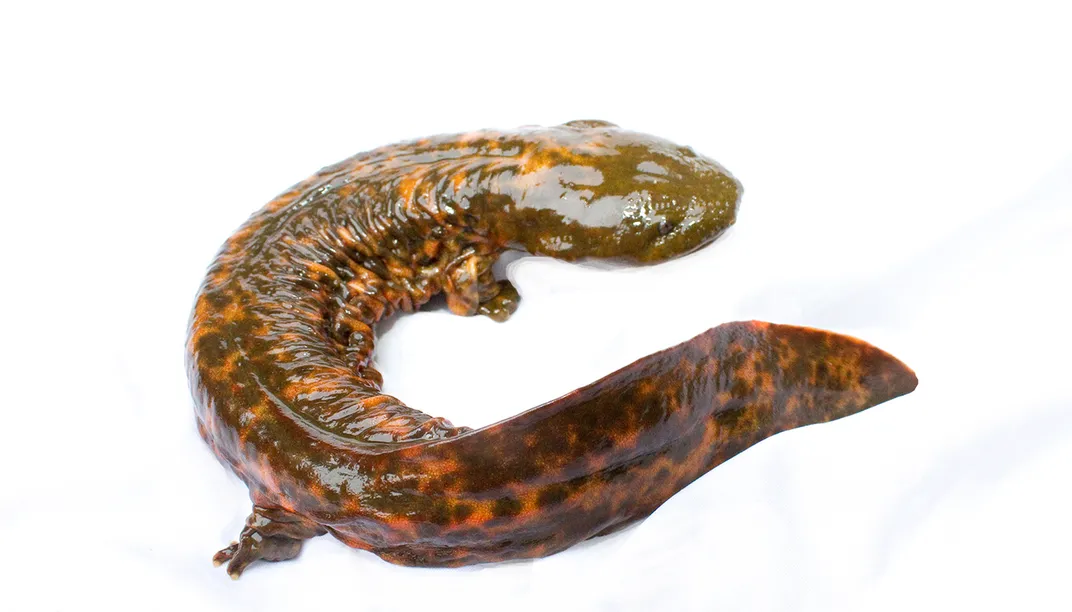
Never seen a hellbender? You’re not alone. These animals are found only in cool, clean mountain streams in the eastern United States. They’re a rare sight in the daytime — their flat, slippery bodies allow them to squeeze into tight crevices during the day, resting until it’s dark enough to hunt.
3. They are North America’s largest amphibian species.
Hellbenders can grow more than two feet long (74 centimeters) and weigh up to five pounds (2.2 kilograms), making them the largest amphibian species in North America and the third largest salamander on Earth behind their cousins, the Chinese and Japanese giant salamanders.
4. Male hellbenders are dedicated dads.
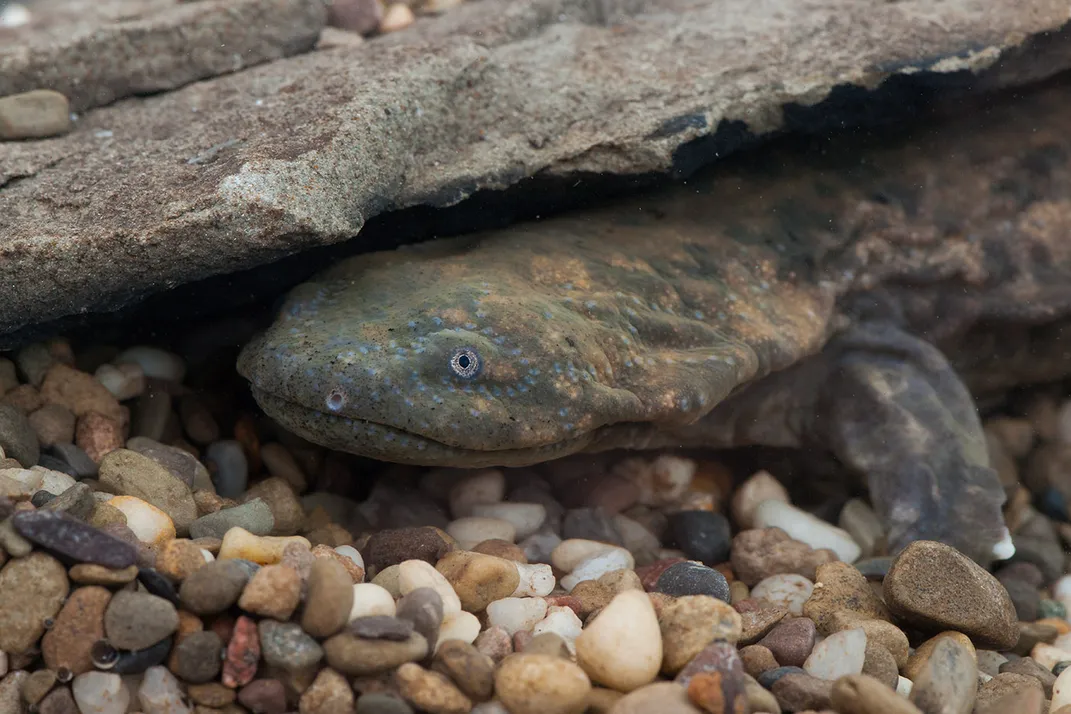
Most amphibians lay their eggs and swim away, but not hellbenders. Males excavate nest chambers under large underwater rocks, and chase females away shortly after the eggs are fertilized. For the next several months, fathers closely guard the egg clusters, nourishing them with oxygenated water by gently rocking their bodies back and forth like a fan.
Before you hand out that ‘Dad of the Year’ award, though, be warned: hellbender fathers may eat the offspring they’re guarding if they get hungry enough, a behavior known as filial cannibalism that shows up in several amphibian species.
5. Hellbenders are homebodies.
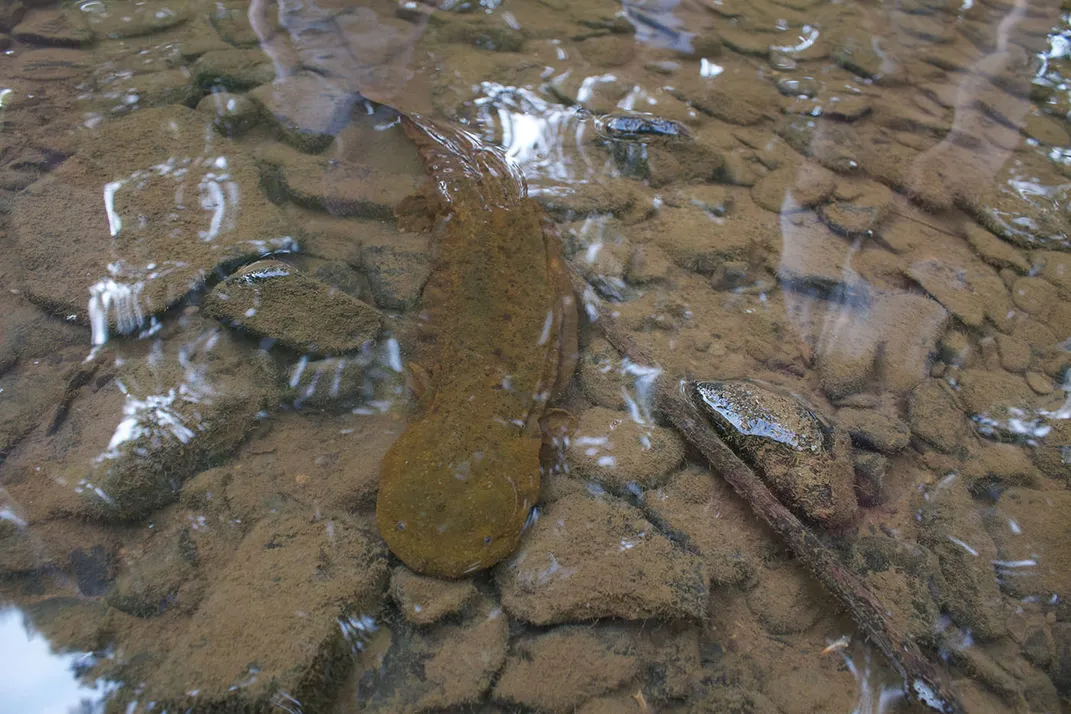
Pristine streams and well-oxygenated flowing water can be hard to come by, so once a hellbender has established a den site, it’ll stick to it year over year. If undisturbed, hellbenders may spend nearly their entire lives within a 200-foot stretch of river, a surprisingly small range for such a large creature.
6. They breathe entirely from their skin.
Unlike fish, hellbenders don’t have gills. Instead, capillaries near the surface of their skin absorb oxygen straight from the water. The fleshy, lasagna-like folds and wrinkles increase the surface area of this exchange, letting them take in oxygen from the water with increased efficiency. (And while they do possess lungs, hellbenders mainly use them for buoyancy when they need to rise above the stream bottom.)
Bonus fact: Hellbenders shed the outer layer of their skin when they grow. And just like other amphibian species, they eat their skin as they shed for a valuable nutrient boost.
/https://tf-cmsv2-smithsonianmag-media.s3.amazonaws.com/filer_public/a1/43/a1438259-1565-425a-a254-cd20ca2d7cfb/20130130-001bg.jpg)
7. Hellbenders are living fossils — just like their massive cousins.
The hellbender and its ancestors have undergone very little physical change over millions of years, keeping a similar body shape and lifestyle since the time of the dinosaurs, over 160 million years ago. Scientists think this long-lived lineage helps explain why the only other members of the Cryptobranchid family of amphibians — the Chinese giant salamander and Japanese giant salamander — are found on the other side of the Earth.
8. Hellbenders have weak eyes but can “see” through their skin.
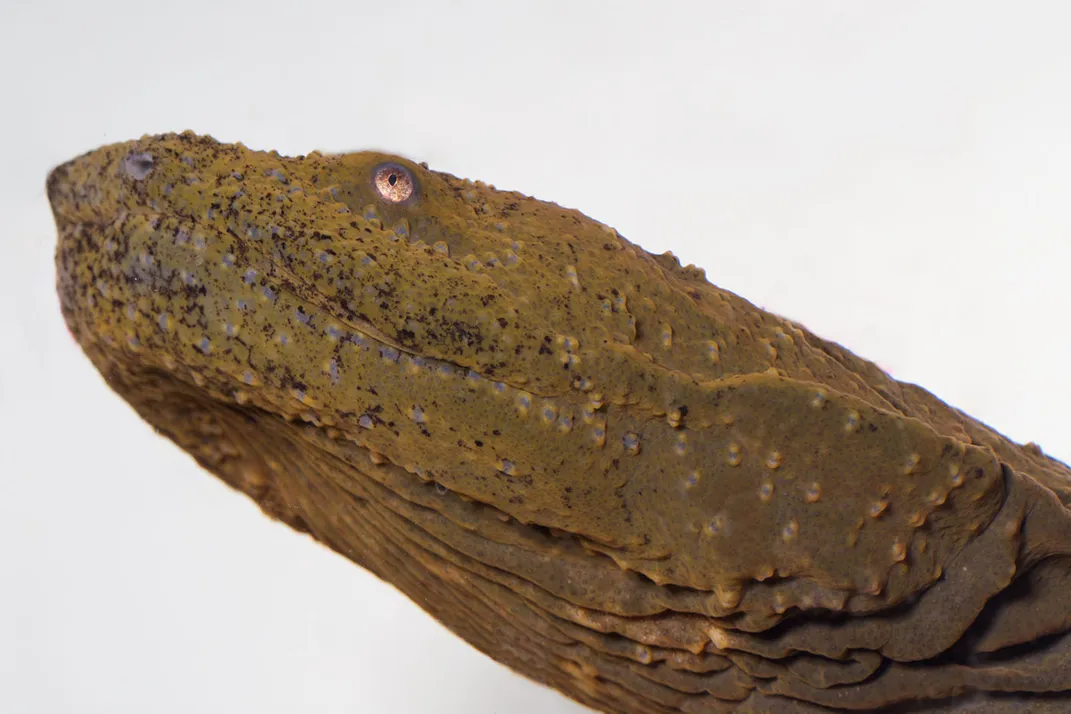
Great eyesight isn’t all that useful at night or in murky streams, so hellbenders mostly rely on their sensitive touch organs to move through their surroundings. When they need to check how bright it is, they use specialized photoreceptors in their skin that help them sense light levels. These cells are especially concentrated in their tails, which gives hellbenders the ability to poke a tail out from under a rock and ‘feel’ if it’s day or night without exposing the rest of their body to predators.
9. Hellbenders are far less numerous than they once were, and are now endangered in parts of their range.
Amphibian populations are dangerously declining in many parts of the United States, and hellbenders are disappearing as well. In 2024, the U.S. Fish and Wildlife Service reported that of the 626 known historical hellbender populations, 41% are believed to be wiped out completely, and another 36% are in decline. The usual culprits are at play — pollution, habitat loss, disease, climate change and capture for the pet trade are all chipping away at the groups that are left.
But the hellbender’s unique lifestyle means it faces a particular ecological risk from sedimentation: When forests along streambanks are cleared, rain washes more sediment into streams. Fine grains of silt fill in the crevices beneath rocks hellbenders rely on for shelter and nesting.
/https://tf-cmsv2-smithsonianmag-media.s3.amazonaws.com/filer_public/7b/44/7b44d313-e3c3-4e94-80c2-7529e2e059d5/20260804-005bg.jpg)
10. The hellbender is becoming an unlikely cultural icon.
With beady eyes, stubby limbs, wide mouths and mud-like skin coloring, a hellbender probably wouldn’t be a great fit for a beauty pageant. But this so-ugly-its-cute animal is building a profile as a regional icon in Appalachia and beyond. Breweries, cafes, movies and even the town of Boone, North Carolina have all embraced the amphibian as a mascot. The species’ cultural moment could provide the spark conservationists need in the fight to protect them long-term.
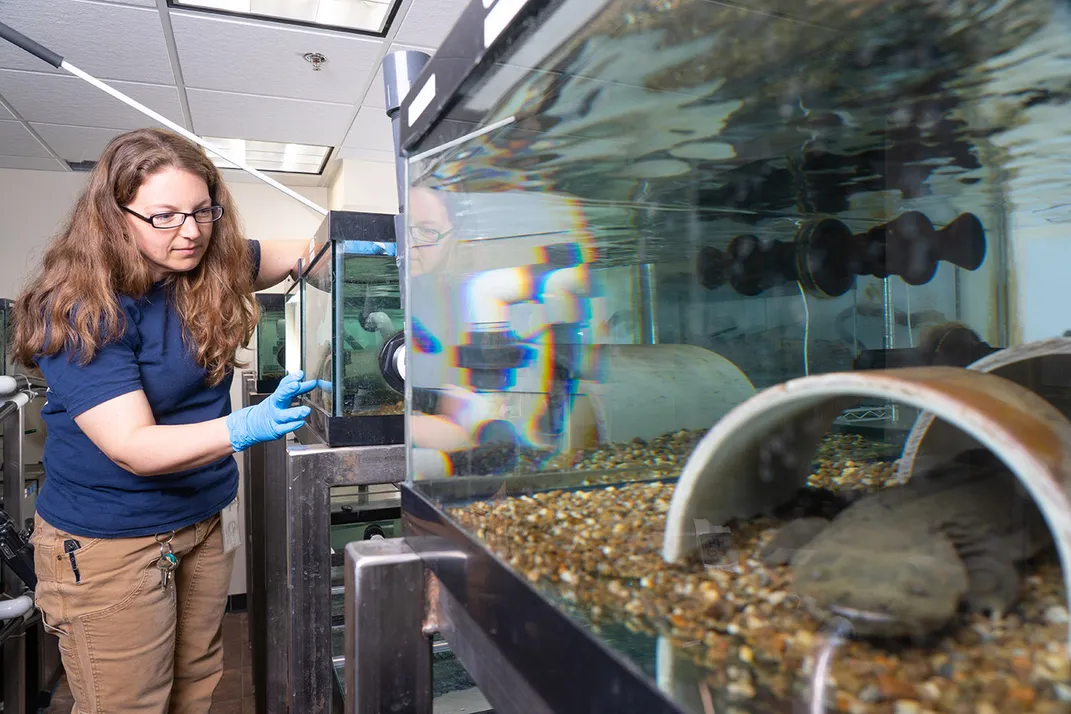
11. The Smithsonian’s National Zoo is part of a network of organizations trying to restore wild hellbender populations.
Only recently did the plight of hellbenders come into focus. Widespread awareness of their decline first emerged after field studies were released in the 1970's and 80's. The species wasn’t even bred successfully in human care until 2011, when a clutch of Ozark hellbenders hatched at St. Louis Zoo.
What’s it going to take to save them? According to researchers, collective action might just be the key. As scientists gather more data on the best ways to restore hellbender habitat, a broad network of zoos and wildlife agencies is pitching in. Some zoos are breeding the species and releasing lab-reared critters in Appalachian waterways across their range. Public awareness campaigns aim to inform the public about the importance of not moving rocks and disturbing the hellbender’s nesting sites. And small populations of hellbenders are housed at places like the Smithsonian’s National Zoo, giving members of the public opportunities to connect with this wonderfully weird species.
Want more animal care news? Sign up to receive the latest email updates and information on Zoo news, events, volunteer opportunities, and more.
Love hellbenders? Your donation helps protect them in the wild through Smithsonian conservation and research programs. Learn more or make a donation.