Practical Tips for Anyone Currently Raising Nine Flamingo Chicks at the Same Time
Flamingo parenting comes with plenty of surprises. Smithsonian’s National Zoo curator Sara Hallager explains what you should know.
:focal(700x467:701x468)/https://tf-cmsv2-smithsonianmag-media.s3.amazonaws.com/filer_public/1a/8a/1a8adb1e-bfc8-4254-b4a9-eef93b46bbc5/20260709-817a8866-010bk.jpg)
You’re not sure how it happened. One minute you were minding your own business, and now you're standing in the middle of a flock of American flamingos, surrounded by nine fuzzy gray chicks. All nine are desperate to eat and toddling on wobbly legs towards a standing pool of water.
Okay, we admit this is an unlikely scenario. But for Sara Hallager, curator of the Bird House at the Smithsonian’s National Zoo, it’s just another day on the job. Her team of Bird House keepers has helped manage the chaos of flamingo parenting since 1992, assisting many flamingo pairs over the years as their chicks have grown from egg to adulthood.
So if you’ve somehow found yourself in charge of a gaggle of flamingo babies — or if you’re just wondering how Hallager and the team manage it every year — here’s what you need to know:
First problem: Parents can’t always be trusted with their eggs.
The chaos of flamingo breeding season starts soon after the first eggs are laid. Parents build their nests out of mud, and each mother deposits exactly one egg into hers. You'd think that would be easy to keep track of. Not for flamingos.
“Parents have a habit of accidentally kicking eggs off the nest or forgetting to turn them,” explained Hallager. “Eggs often get buried in mud or crushed before they ever get a chance to hatch.”
To avoid this, Bird House keepers quietly swap in a decoy shortly after the egg is laid. The real egg goes to an off-exhibit incubator, where staff can control the temperature and humidity, while the parents sit on a replica none the wiser.
While the eggs quietly develop, the Bird House team also keeps notes on which pairs are the most diligent nest sitters. When it's time to return a hatching egg to the flock, the best-behaved parents get first dibs.
/https://tf-cmsv2-smithsonianmag-media.s3.amazonaws.com/filer_public/06/a8/06a82f69-1837-44ab-a938-13b380d4cf1b/20260709-817a8881-012bk_1.jpg)
When you’ve got hungry mouths to feed, skip the shrimp — flamingo babies drink milk.
You might think you know how to feed a baby bird. After all, it’s common knowledge that most bird parents regurgitate chewed-up food in their babies’ waiting mouths. However, flamingo chicks have a rather unique diet. Flamingos are one of a few bird species on Earth that produce a liquid, called crop milk, from special cells in their throat. Even though it doesn’t come from a mammary gland like mammals’ milk, it’s still nutritious, rich in fat, and loaded with antioxidants and immune boosters that growing babies need to thrive.
/https://tf-cmsv2-smithsonianmag-media.s3.amazonaws.com/filer_public/94/ac/94aca268-2b73-47c2-ad3c-165a53d5f446/20260709-817a8794-007bk.jpg)
If a chick looks like it’s bleeding, try not to panic. It’s probably just lunchtime.
This next tip may leave you baffled. Parents feed their chicks bill-to-bill. However, thanks to the same natural pigments that give adult flamingos their pink color, crop milk is bright red. So if one of the parents is a little sloppy during feeding time, some of their crop milk ends up splattered and dripping over the chick's fuzzy gray feathers.
“Sometimes visitors see chicks covered in crop milk and say, 'Oh my gosh! It's bleeding!' But it's not,” said Hallager.
Losing track of which chicks have been fed? Look for the neck bulges.
There’s a small mercy in the middle of all this: you can tell when parents have fed their chicks. A bulge at the base of each chick's throat, or crop, fills like a tiny balloon as the parents drain milk into their babies’ waiting mouths.
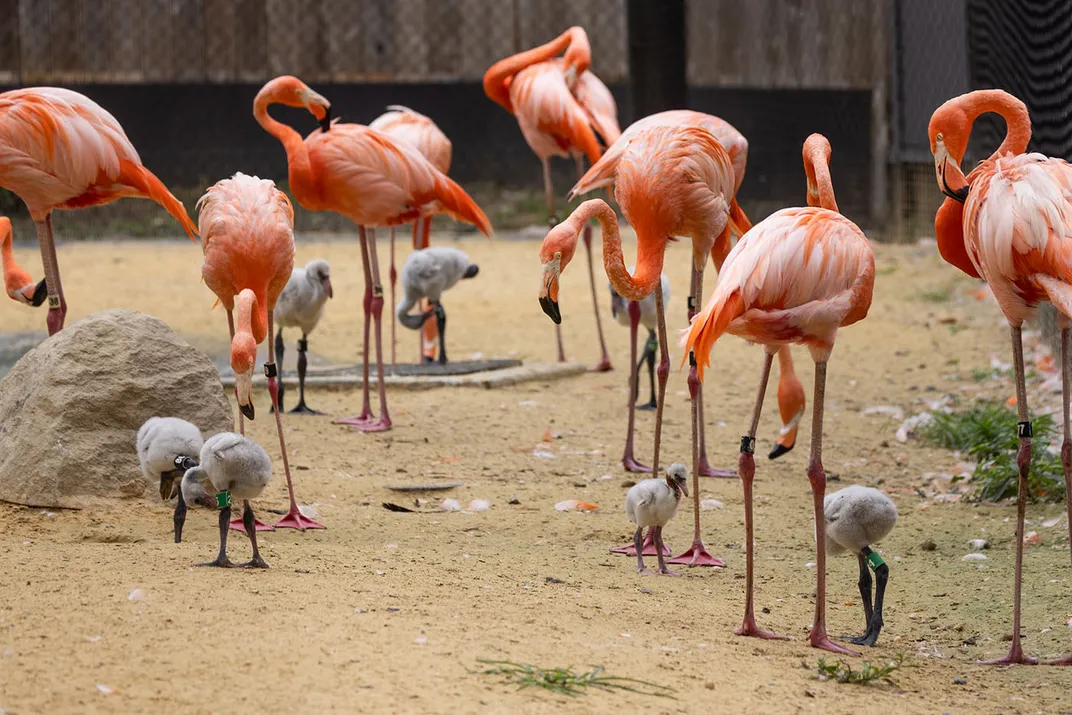
Can’t find the right chick? Listen for the cheep.
Spend any amount of time near a flamingo colony and you’ll notice the squawking never seems to end. For flamingo parents (and you), that’s a good thing. Each chick has a distinctive cheep, which it starts practicing the moment it emerges from the egg. “Once a parent hears their chick for the first time, that bond is immediately cemented,” explained Hallager. This bond is so powerful that a parent can locate its own chick inside of a crowd of hundreds or even thousands of near-identical fuzzy babies from the sound of its cheep alone.
Need a break? The 'aunts and uncles' have your back.
If flamingo parenting duties have you feeling like you need some me-time, you’re not alone. When flamingos need to spend time away from their chicks, parents round up their chicks in a large group called a creche (French for “crib”). Here, hatchlings are watched over by some of the other adults in the colony — “aunts and uncles is the best word for it,” explained Hallager — and wait together until mealtime. It’s only casual supervision, though: the parents are the only ones who will actually feed their babies.
Be warned: Parenting takes a toll on your appearance.
Parenting is full of surprises — like the gray hairs you hadn’t noticed a week earlier. Flamingos have their own version of that, too. You might know that flamingos get their signature pink color from their diet. But as the parents continue to produce crop milk over the course of the breeding season, those same color pigments are gradually transferred out of their own feathers and into the milk they’re feeding their chicks. The chicks, meanwhile, go from pale baby-gray to increasingly pink as they grow.
“Later in the breeding season, you can tell who the parents are, because the parents will be mostly white and the chicks will be a lot more pink,” said Hallager.
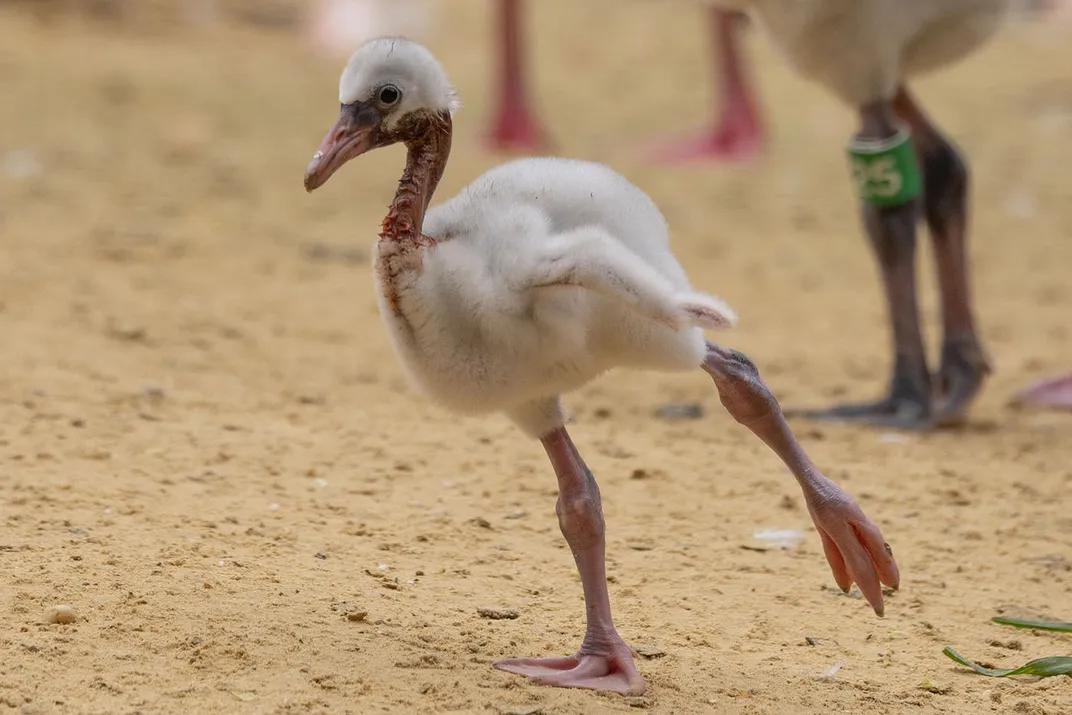
Chicks never stop begging.
You might catch a break after about three months, because by this point that chicks can swim, feed themselves, and venture away from the nest without putting themselves in danger. But the demands on flamingo parents don’t exactly stop there, said Hallager. Chicks at the Zoo continue to beg their parents for crop milk well into what would be considered flamingo independence, and it’s not uncommon for parents keep feeding them for more than 6 months.
Even at the Zoo, growing up comes with checkups.
Somehow, in the middle of all this, you forgot to make sure the chicks are up to date on their medical checks. Fortunately, the Bird House team has your back. Hallager and the keepers take diligent notes each chick’s health, tracking the dates when a baby is due for its routine weigh-in, veterinary checkup, and vaccine rounds (including shots that prevent serious bird diseases like West Nile Virus.)
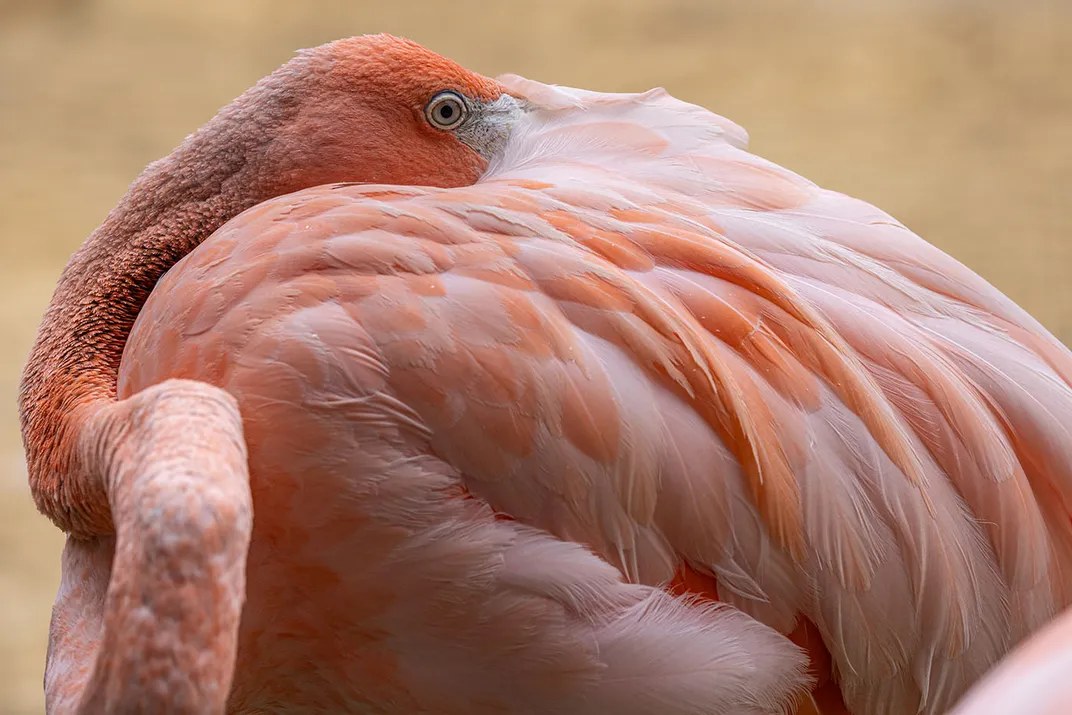
Finally. It’s over. All that work was worth it. You’ve got a healthy, thriving chick well on its way to adulthood. Careful management and gentle assists are the reason the Smithsonian's National Zoo can be home to 66 American flamingos today — including the nine hatched this year — and why that number has stayed so high since the Bird House team started caring for this species in 1992.
So the next time you’re feeling overwhelmed by a human toddler, spare a thought for any flamingo parents (or zookeepers) managing a group of hungry hatchlings, and be glad that you’ll never have to worry about the color draining from your body as you accidentally spill throat milk all over your kid.
Want more animal care news? Sign up to receive the latest email updates and information on Zoo news, events, volunteer opportunities, and more.
Love flamingos? Your donation helps protect them in the wild through Smithsonian conservation and research programs. Learn more or make a donation.