We Can Freeze Human Reproductive Cells. Can We Do the Same for Red Wolves?
With only a few hundred red wolves left, Smithsonian scientist Jennifer Nagashima is pioneering new ways to preserve their genetic diversity
:focal(700x467:701x468)/https://tf-cmsv2-smithsonianmag-media.s3.amazonaws.com/filer_public/01/1e/011e5da1-57cd-44c6-8185-0d478f0b21d0/20260125-817a2807-07rp.jpg)
For decades, zoos and wildlife facilities have worked to bring the red wolf back from the brink of extinction. Today, nearly all remaining red wolves live in human care, making careful management of their genetic lineages critical to the species' survival.
At the Smithsonian's National Zoo and Conservation Biology Institute (NZCBI), biologist Dr. Jennifer Nagashima is helping develop new tools to preserve the species' gene diversity. One of those tools is cryopreservation, where living reproductive cells are frozen at ultra-low temperatures for future use.
We spoke with Dr. Nagashima about the challenges of protecting red wolves and how cryopreservation technology can help secure the species' future:

What exactly is a red wolf and why does it need our help?
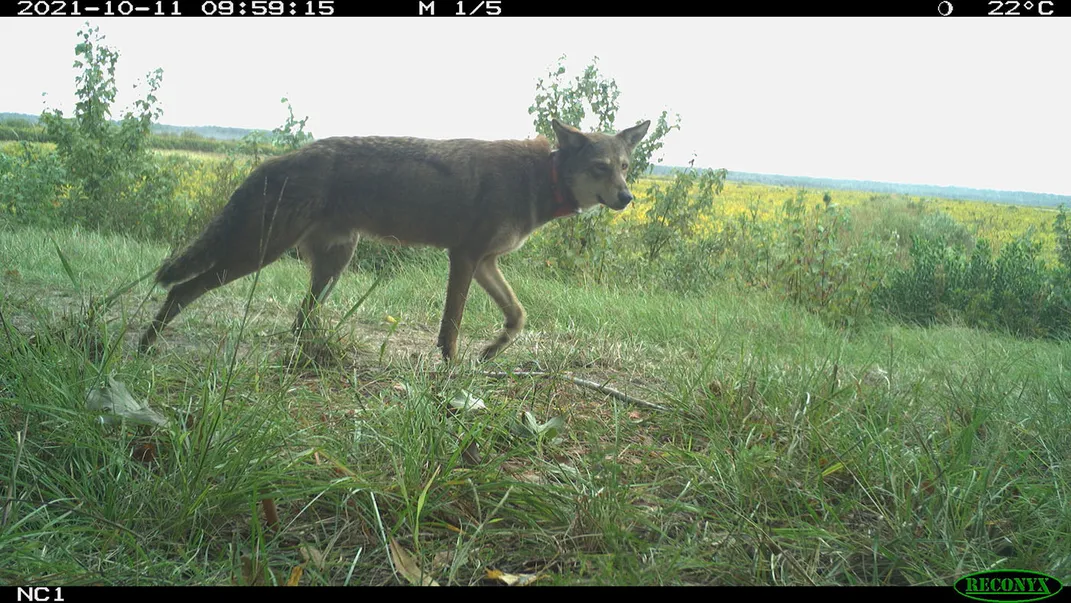
Red wolves are large wild canids native to the eastern United States. They were once abundant from Texas to New England, but now they’re the most critically endangered canid in the world.
They’ve been seriously misunderstood over the years. We have this perception of the ‘big bad wolf’ that menaces people and eats livestock, but red wolves are a timid species. They’ve been heavily persecuted, which is why they almost went extinct.
They’re culturally important for a lot of people, too. There’s a great documentary called Waya: Saving Our Red Grandfather that explores their connection to the Cherokee Nation. It’s free to watch online and worth checking out!
What role do zoos play in red wolf recovery?
Unlike most other species, the majority of the red wolf population lives in professionally managed conservation breeding groups. Zoos and wildlife institutions are the only way we can introduce more red wolves into the wild. Today, there are 295 individuals managed in the Saving Animals From Extinction (SAFE) program, and 22 in the wild. And that’s it. That’s the whole red wolf population.
How can cryopreservation be used to protect red wolves from extinction?
It’s another tool we can use for maintaining genetic diversity. Not only are there relatively few red wolves left, but there’s also a very limited number of ‘founder’ individuals that contributed their genes to the living population. Our priority is to increase the population through breeding and not lose any of the genetic heritage we have left.
Artificial insemination has already been successful with fresh reproductive cells — namely sperm and seminal plasma — but we haven’t seen the right results from cryopreserved sperm yet.
If we get it right, it opens up a lot more options for genetic management over the long term. It could allow us to make sure genes are well represented without having to move wolves across the country whenever we want them to breed. And we could reinfuse underrepresented lineages back into the population if they become lost later on.
What makes a sample “good” for cryopreservation?
We don’t quite know the answer to this on a molecular level, but we’re actively researching why some red wolf sperm survives the freezing process better than others.
Last fall, my NZCBI colleagues and I published a research paper that compared average red wolf sperm samples, which we’ll call “Joe Schmoe” samples, to higher-performing samples, which we’ll call “Superstars”. The factors we thought were most important were sperm motility, meaning whether the sperm can successfully swim towards the egg, and cell membrane integrity. If the membranes are damaged, the sperm will either die off or not be able to bind to the egg when it’s time to fertilize. In other words, it doesn't matter how well a sperm cell can swim if it can't ultimately do its job. You need both.
In our study, we found the “Joe Schmoes” had higher drops in movement after thawing and showed lower membrane integrity. In comparison, the “Superstars” lost a bit of their motility, but they maintained a lot more membrane integrity and were much more active overall.
We’re continuing to explore how to elevate those “Joe Schmoes” into “Superstars”. We’ve identified some promising pathways, but the research continues.
Where are you getting the samples from?
Every year for the past three years, my colleagues and I loaded up a van with equipment and go on what we call a “red wolf road trip”. This year in February and March, I was joined by NZCBI colleagues Kathryn Storey, a research fellow, and Nucharin Songsasen, our lead research biologist. We collected sperm samples from wolves at five locations throughout the Southeast: North Carolina Zoo, North Carolina State University, Rowan Wild at Dan Nichols State Park and Brookgreen Gardens. We also visited the red wolf reintroduction area in North Carolina and performed a reproductive assessment of the male wolf living in the Red Wolf Education and Health Care Facility.
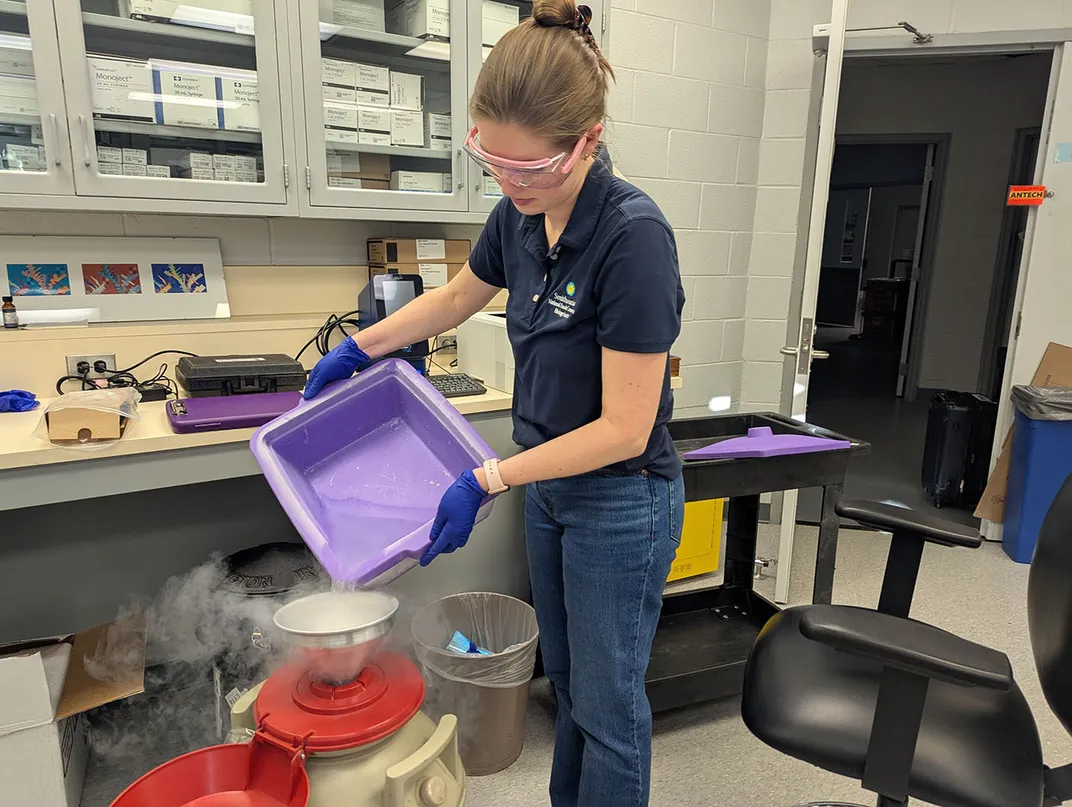
We’ve got it down to a routine: we sedate the wolves, we use electroejaculation devices to collect the samples, then we head back to our makeshift traveling laboratory. From there, we evaluate sperm quality under a microscope, process the samples and prep them for long-term storage. The sperm is mixed with protective solutions, gradually cooled and treated in liquid nitrogen at ultra-low temperatures for long-term storage.
Altogether, on a three week road trip we ended up with 13 good samples. But I always want more!
/https://tf-cmsv2-smithsonianmag-media.s3.amazonaws.com/filer_public/2e/50/2e501de0-5ce7-45b2-a9a7-d384b3ab9f6c/20240212-001ks.jpeg)
What's one misconception people have about cryopreservation?
Lots of people assume we already have all the science worked out. There’s a lot of information on cryopreserving human cells, along with certain agricultural species like cattle and horses. But even small differences between species make it so what works well in humans isn’t necessarily going to translate to, say, wolves or cheetahs.
There are also practical challenges. For humans, freezing your eggs is an arduous process — you can't exactly pop into the clinic and get it done on a Thursday afternoon. And it gets a lot more complicated when you’re dealing with wildlife. If you want to give a cheetah multiple hormone injections to induce ovulation, the animal needs to cooperate for the entire process. For a large predator, that’s not always a given.
Have your efforts made a difference for red wolves?
Absolutely. During our last road trip, we identified an emerging health concern. Two of the males we met did not have descended testes. This condition, called cryptorchidism, is clearly not one we’d want in the population – those males are basically infertile. Now two isn’t many, but with the wolf population as small as it is, we’re now looking at how prevalent this condition is, and whether it might relate to other health issues, like cancer. If we can understand the causes behind it, we can hopefully put a stop to it before it gets to a point where we have too many infertile males in the population.
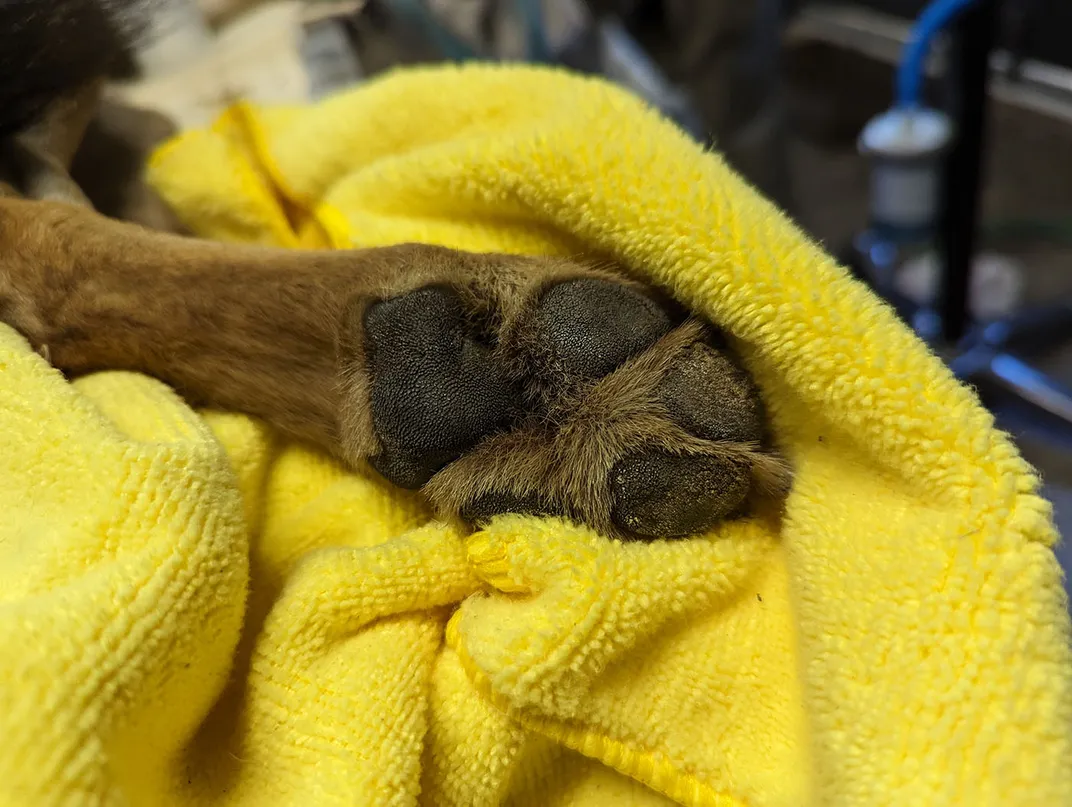
Also, we’re not just collecting sperm samples. We’re assessing the individual’s overall reproductive status by looking at indicators like sperm quality. That information we create gets used by the SAFE program coordinators in their annual red wolf population management meetings, and when it’s time to sit down and figure out how to create the next generation of red wolves in human care, they’re using that information to make decisions about the future.
Want more animal care and conservation stories? Sign up to receive the latest email updates and information on Zoo news, events, volunteer opportunities, and more.
Love red wolves? Your donation helps protect them in the wild through Smithsonian conservation and research programs. Learn more or make a donation.