How Well Do You Know America’s Bird? Nine Fascinating Facts About the Bald Eagle
It soars on six-foot wings, graces our currency and stares out from a thousand patriotic murals. But how much do you actually know about the bald eagle?
:focal(680x253:681x254)/https://tf-cmsv2-smithsonianmag-media.s3.amazonaws.com/filer_public/1d/66/1d6628cb-903f-4401-b56f-ed2069aa92bd/20131121-8639_photoart-ss.jpg)
1. Bald eagles nearly went extinct in the mid-20th century.
It’s hard to imagine, but America almost lost its national bird. Bald eagles were hunted and shot for their feathers during the early 20th century. This pressure slowly reduced the population until Congress passed the Bald Eagle Protection Act in 1940.
Then came an even bigger threat. DDT, a popular pesticide, was used to control mosquitos and other pests. But the chemical, when leached into watersheds, was absorbed by aquatic plants and fish, which birds like the bald eagle rely on for food. When ingested, the chemical had a devastating effect on reproductive processes: it interfered with eagles’ ability to produce strong eggshells, causing shells to become so thin they often collapsed under the weight of their incubating parents. Populations crashed. By 1963, just 417 nesting pairs of bald eagles were known to exist.
Once scientists traced the cause, DDT was banned. The bald eagle gained additional habitat protections under the Endangered Species Act, signed by President Richard Nixon in 1970. With their nesting grounds safeguarded and the chemical threat removed, eagles slowly rebounded. It wasn’t until 2007 that the species was officially considered stable. Today, bald eagles are thriving in places they hadn’t been seen in over a century.
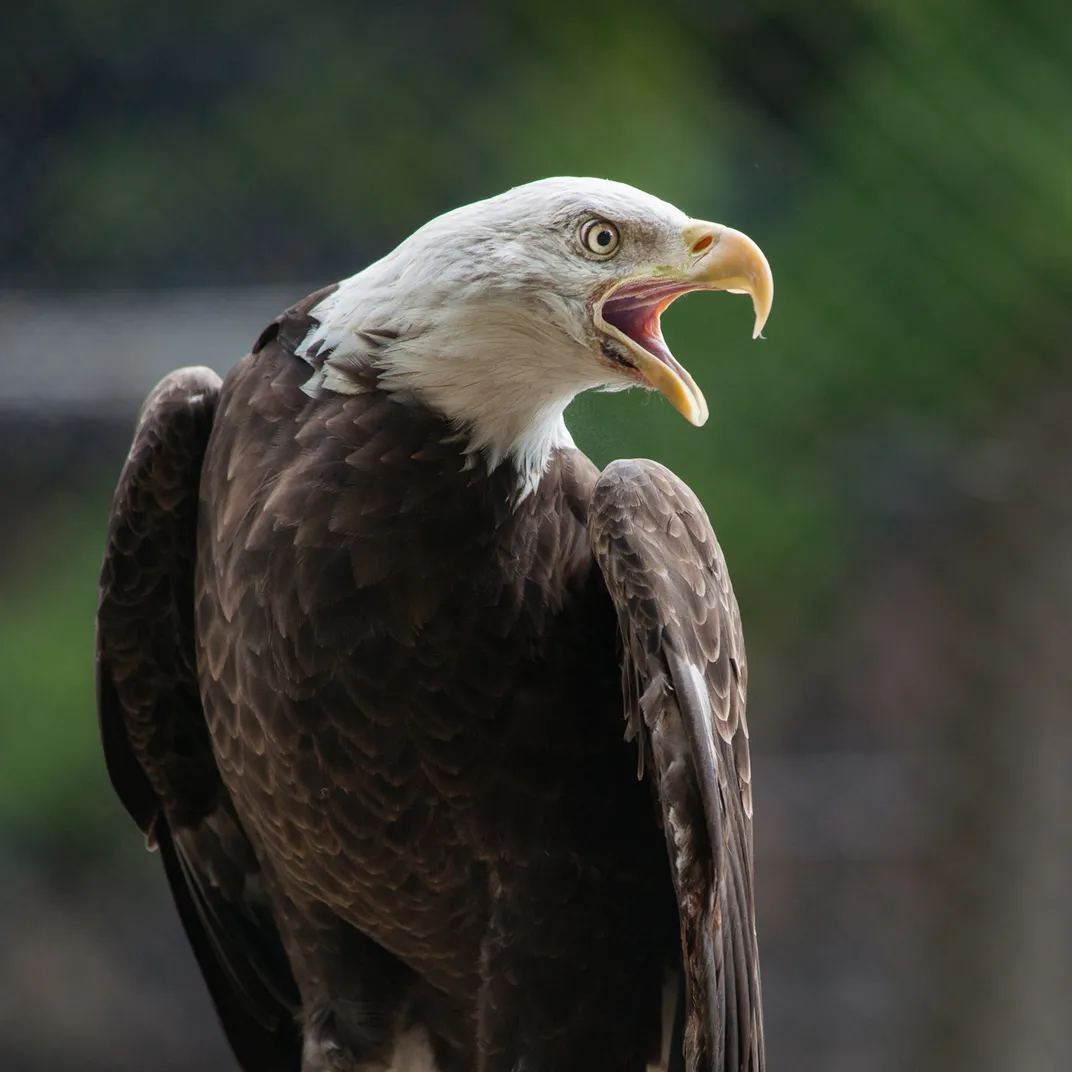
2. Bald eagles don’t screech majestically.
Picture a bald eagle soaring overhead in a movie. Can you hear the noble screech echoing through the skies? Well, turns out that’s a bit of Hollywood magic.
Bald eagles look powerful in flight, but their calls are far less impressive—the sharp, piercing screech used in television and movies is actually the cry of a red-tailed hawk, repurposed by Hollywood sound engineers.
So what does a bald eagle sound like? A high, thin, chirpy squawk that’s often compared to a seagull.
3. Bald eagles are almost always found near bodies of water.
Want to spot bald eagles in the wild? Location matters. Bald eagles tend to look for certain conditions before they settle down: large bodies of water that hold stable populations of fish, old-growth trees that can support the weight of a nest, and a reliable source of fresh drinking water. Find a spot with all three and there’s a good chance eagles aren’t far away.
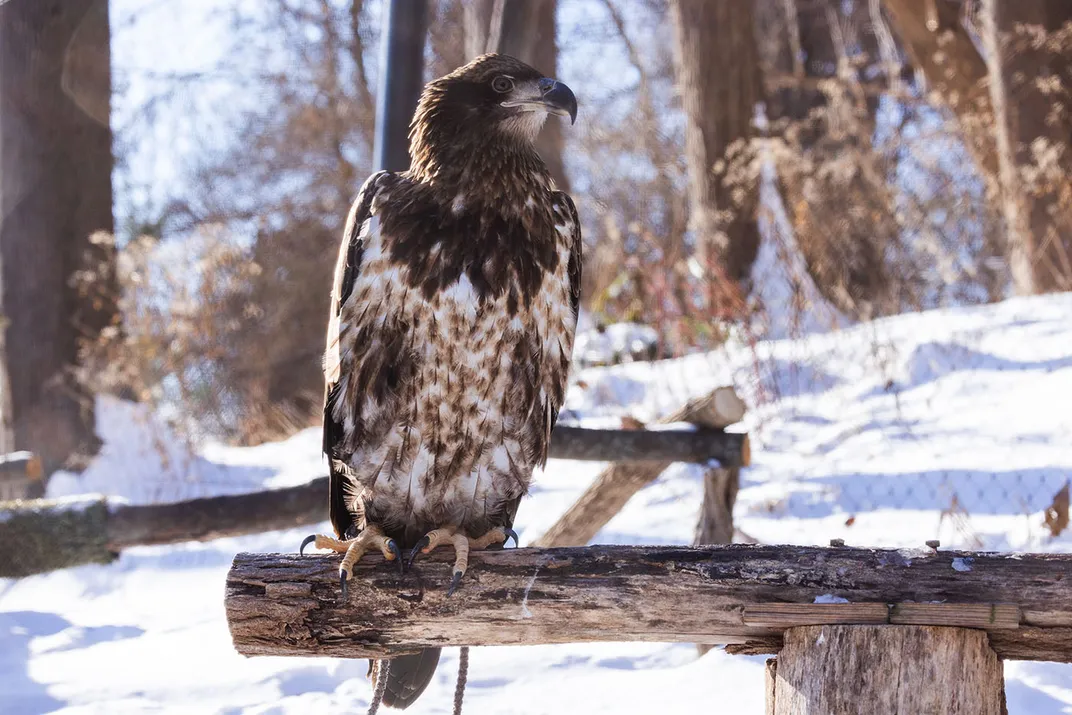
4. Not all bald eagles have white heads.
Ever spotted a brown-headed eagle in flight and wondered what species it might be? It could have been a bald eagle. These birds don’t sport their signature white plumage until they reach about 5 years old; younger eagles have mottled brown plumage that often confuses casual birdwatchers.
5. Bald eagles in human care are usually wild rescues.
Decades ago, when bald eagles were rare, wildlife experts carefully managed breeding pairs to help rebuild their numbers. Nowadays, the population is stable enough that accredited zoos and wildlife centers generally don’t breed bald eagles at all.
If you’ve seen a bald eagle up close at a zoo, it’s likely that the bird sustained an injury in the wild and was deemed unable to survive on its own. For example, Acadia, a female bald eagle that lives at the Smithsonian's National Zoo in Washington, D.C., was born in Florida and rescued after breaking her wing in a fall from a tree.
6. Bald eagles steal food from other birds.
When it comes to mealtime, bald eagles’ behavior isn’t always as noble as their reputation suggests. Although they’re skilled hunters, they’ll use their large size to bully smaller birds of prey, like ospreys, for their catches. And if they find a freshly dead animal, they usually won’t hesitate to scavenge it.
7. Farmers once considered them a nuisance.
Early in America’s history, bald eagles had a reputation problem. Many farmers incorrectly believed the birds would swoop into their fields to carry away lambs, calves and other small livestock. That misconception led to widespread shooting and harassment of eagles well into the 20th century.
/https://tf-cmsv2-smithsonianmag-media.s3.amazonaws.com/filer_public/f0/4f/f04f963d-3783-48b8-bb52-9cd4fa14ec98/20190725-dji_0020-01rp.jpg)
8. Bald eagles’ nests are absolutely massive.
A bird this iconic deserves an equally impressive home. A typical bald eagle nest spans 4 to 6 feet across and about 3 feet deep — enormous by bird standards.
But nests can get much larger. The Guinness World Record for largest birds’ nest belongs to a pair of bald eagles in 1963 near St Petersburg, Florida. The nest reportedly measured 9 feet 6 inches (2.9 meters) wide and 20 feet (6 meters) deep, and weighed two tons, or as much as a car.
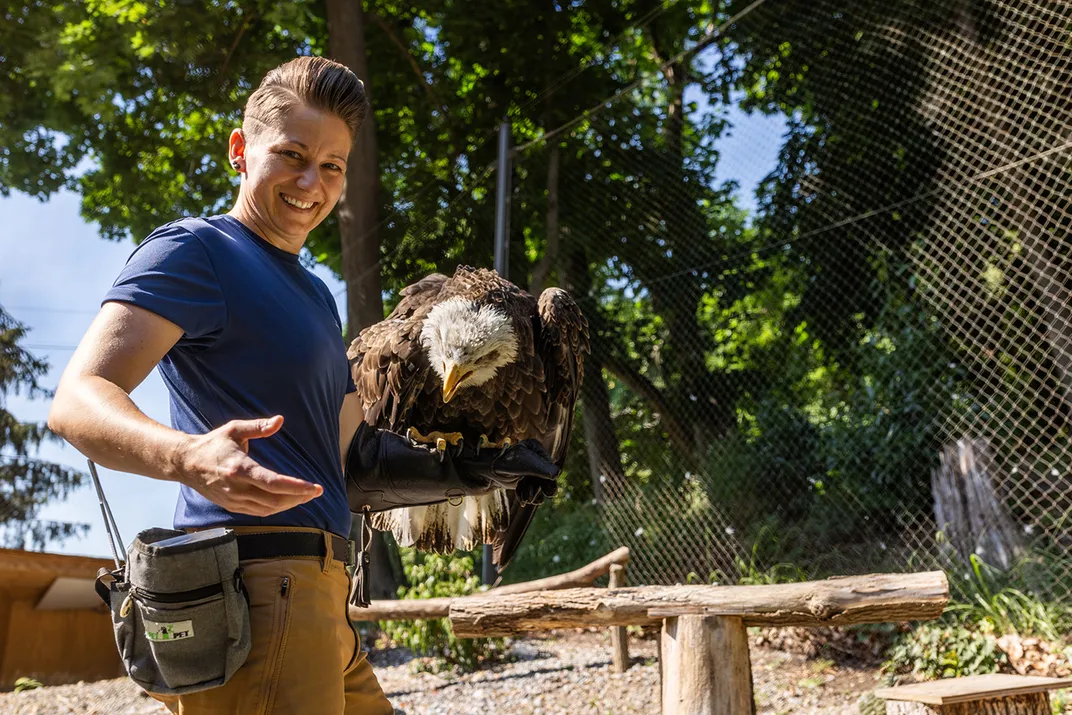
9. You can get up close to bald eagles at the Smithsonian’s National Zoo.
Depending on where you live, you can see these impressive birds in person. The Smithsonian’s National Zoo is home to two bald eagles, female Acadia and male Connick. After you see them up close, you can learn how the Smithsonian works to protect these birds and other North American species.
Want more animal care news? Sign up to receive the latest email updates and information on Zoo news, events, volunteer opportunities and more.
Love bald eagles? Your donation helps protect them in the wild through Smithsonian conservation and research programs. Learn more or make a donation.