Meet the Striped Skunk, America’s Misunderstood Neighbor
They’re one of North America’s most recognizable animals, but how well do you really know these fascinating creatures?
:focal(700x467:701x468)/https://tf-cmsv2-smithsonianmag-media.s3.amazonaws.com/filer_public/64/bd/64bd6701-6086-4384-b5bd-8aa6c5259bfd/20150426-4507cn.jpg)
Keep your distance and they’re helpful neighbors. Cross them, and you’ll regret it.
If you live in the continental United States, chances are you’re never far from a striped skunk. They may be one of North America’s most recognizable animals, but how well do you really know these fascinating creatures?
Here, There, and Everywhere
Meet the striped skunk, a medium-sized omnivore that thrives in nearly every corner of North America. It belongs to the Mephitidae family, a squat-bodied group of mammals that share black-and-white coloring and the ability to produce a powerful defensive musk.
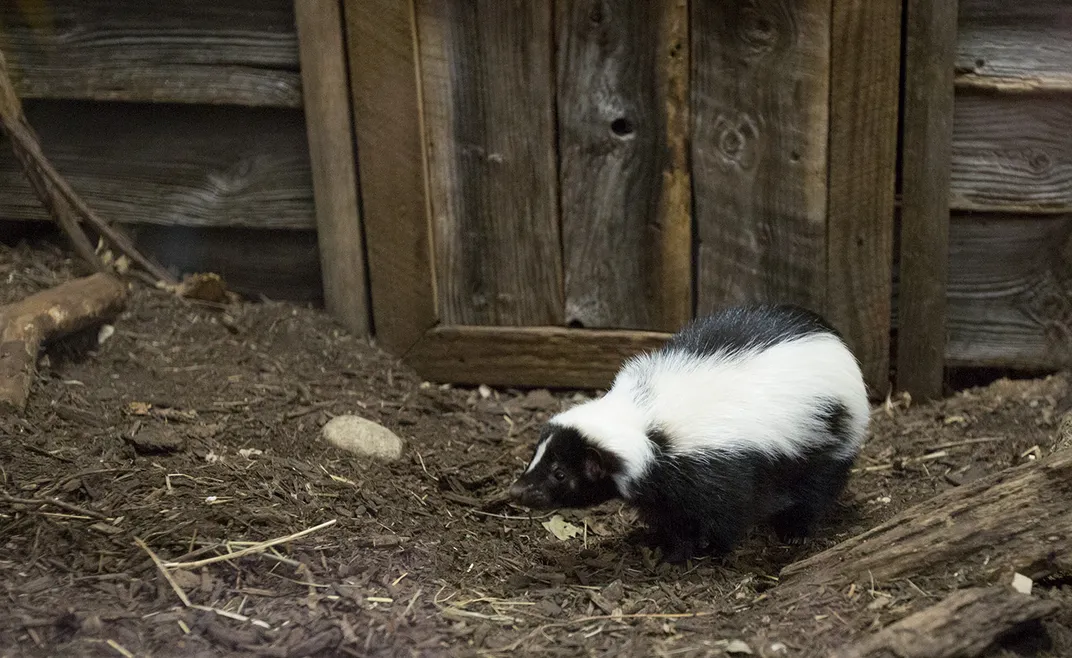
The striped skunk’s low profile, along with the ability to make a home anywhere, has helped it become one of the most widely distributed mammals in the United States. Though best suited to woodlands and prairies with dense thickets to hide, the striped skunk has adapted particularly well to suburban sprawl, carving out shelter under sheds, woodpiles, porches, and other quiet places to hide.
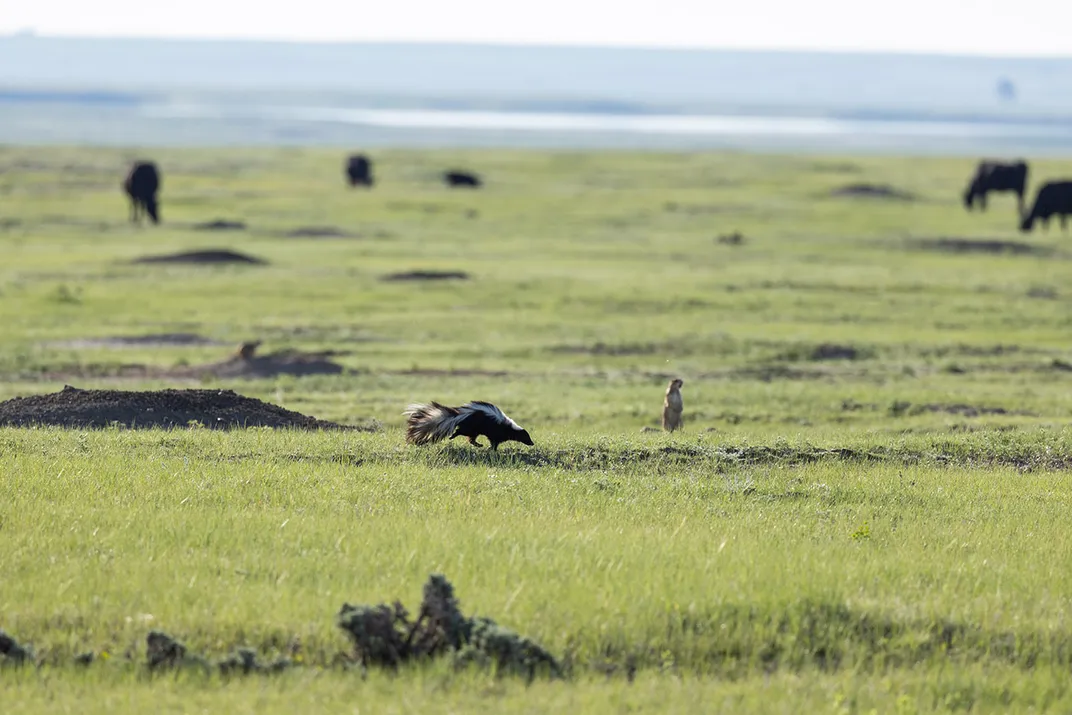
Skunks are voracious eaters, feasting on whatever they can find: mice, insects, spiders, squirrels, small birds, fruits, berries, grains, roots, and carrion. In suburban and urban landscapes, they’ll even find meals in vegetable gardens, under bird feeders, and inside trash cans or compost bins.
Hell of a Smell
Even though they’d make a perfectly sized meal for coyotes, foxes, and bobcats, very few are willing to take the chance. In addition to leaving them reeking for a month, a skunk’s spray is so aggressively pungent that it can nearly disable a predator’s sense of smell for a short time, making it one of the most effective chemical defenses in the animal kingdom.
This naturally noxious musk comes from a pair of highly specialized nipple-like glands on either side of the animal’s anus. When the skunk lifts its tail, it can shoot two small jets of yellowish, oily liquid about 10 feet (3 meters) away with startling accuracy.

According to scientists, this pungent cocktail owes its stench to sulfur-based chemicals called thiols, which are also found in naturally smelly things like onions, rotten eggs, and feces. Hinting at this connection, the striped skunk’s Latin name, Mephitis mephitis, is derived from Mefitis, the Roman goddess of noxious gases.
Fortunately for their neighbors, skunks rarely take their spray on the offensive. When they do, there are warning signs: stomping feet, chattering teeth, and a handstand to look more intimidating. A skunk’s body needs about a week to replenish its liquid, but one dose is usually enough to get the point across.
You Sure About That Fur?
Those white streaks of fur are naturally intended to signal alarm, but as any clothing designer would tell you, fashion is all about turning heads.
In the late 19th and early 20th centuries, skunk fur was a common staple of the garment industry, with pelts harvested by the thousands to make coats, gloves, shoes, hats, and luxury items.
Across the United States, fur farms raised skunks for their durable, silky pelts, which were sold under more marketable names like “American sable” before the passage of the Fur Products Labeling Act in 1951 encouraged proper labeling.
Ancient Connections
Skunks diverged into their modern lineages in the Americas well over a million years ago, so they were well-established by the time the first Indigenous groups of North America arrived.
To Native American tribes, skunks weren’t just a familiar sight—they were a useful resource. In addition to their versatile hides, the animals’ pungent scent glands were harvested by some tribes for treatment of respiratory ailments.
Their influence can even be found in Native American place names. Some historians have dawn connections between the Ojibwe (Anishinaabe) word for skunk and the origin of the name for Chicago, a place where pungent-smelling wild onions and garlic were once commonly harvested along the banks of the Chicago River.
Past Prejudices
When European settlers first arrived in America, they knew little about the complex tapestry of life they encountered. To early farmers, skunks bore an uneasy resemblance to the European pole cat, a distant cousin that had a notorious reputation for raiding chicken coops. This Old World connection was later cemented in the minds of Americans: skunks, too, came to be viewed as chicken thieves and were often shot or trapped in the vicinity of poultry farms.
For the record, wildlife experts tend to consider this belief unfounded. Hungry skunks will occasionally make a snack out of chickens or their eggs, but they’re far more likely to forage for insects and small rodents on the edges of a farm, well out of sight from quarrelsome farmers.
Outbreaks on the Frontier
President Theodore Roosevelt: famous conservationist, hunter, and fearer of skunks. Yes, really.
In 1885, Roosevelt wrote:
“There is no wild beast in the West, no matter what its size and ferocity, so dreaded by old plainsmen as this seemingly harmless little beast.”
Believe it or not, he wasn’t referring to their smell. He was describing the skunk’s connection to rabies, the viral disease that spreads through the saliva of infected animals. Rabies outbreaks were common in the 19th century, and before the development of the rabies vaccine, the disease was nearly 100% fatal to anyone who contracted it.
By Roosevelt’s day, settlers and frontiersmen had nicknamed skunks “phoby cats,” a reference to the historical name for the disease, “hydrophobia.” Like many rabid animals, a skunk exhibiting symptoms can be aggressive and unpredictable, and cowboys traded campfire stories of rabid skunks sneaking into tents and biting unsuspecting travelers as they slept.
Your Natural Neighbor
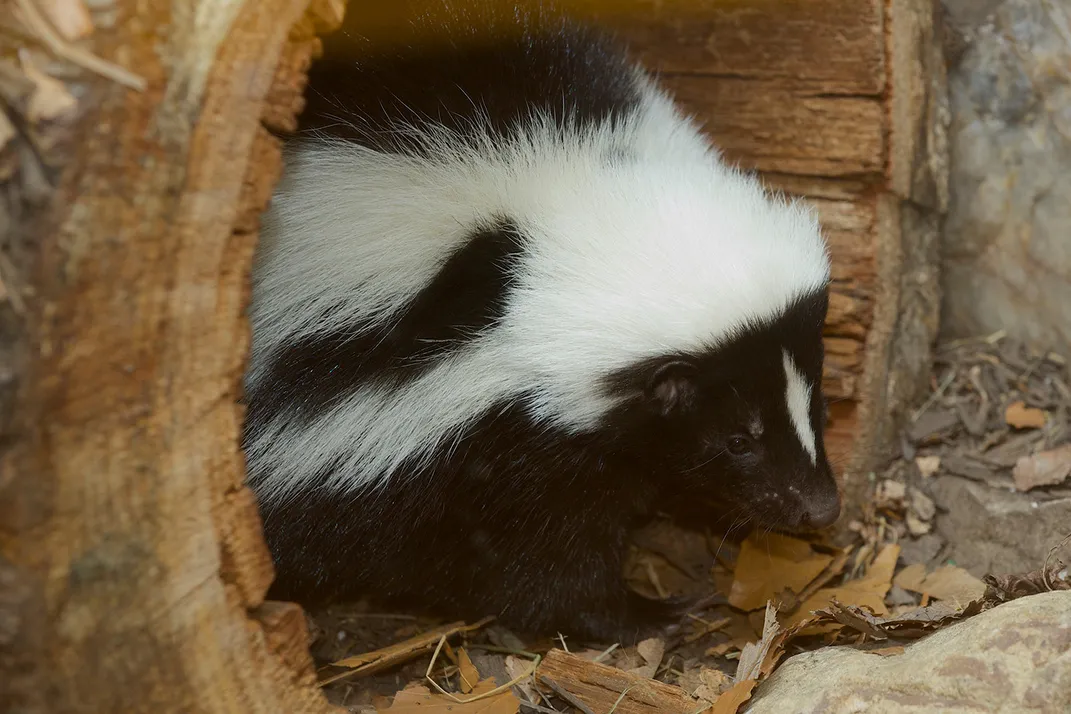
Nowadays, most Americans don’t necessarily think of skunks as chicken thieves or disease spreaders, but they’re not always thrilled to see them in their backyard. Like any animal living alongside people, skunks will occasionally cause problems for homeowners while they dig up lawns hunting for grubs or make their homes under porches, decks, and crawl spaces.
But when they’re not tearing up your garden, they can be useful allies in maintaining the natural elements of your home. Skunks — which eat just about anything — are known to be excellent mousers, and will also help control populations of grubs, grasshoppers, and other insect pests, reducing the need for chemical pesticides. When they eat berries and other fruits, they disperse seeds and cycle nutrients back into the soil.
Skunks: The Emblems of America
Provided you can keep them out of your trash cans, skunks might just become the ally you need to maintain a healthy backyard. And finding a way to live alongside these animals might even be considered… an act of patriotism?
At least, that’s what early twentieth century naturalist and author Ernest Thompson Seton hinted at in his essay, The Well-meaning Skunk:
“I have a profound admiration for the Skunk. Indeed, I once maintained that this animal was the proper emblem of America. It is, first of all peculiar to this continent. It has stars on its head and stripes on its body. It is an ideal citizen; minds its own business, harms no one, as long as it is left alone; but it will face any one or any number when aroused.”
Celebrating America's 250th
Explore the iconic species that have shaped the nation's culture, history and landscapes as the Smithsonian's National Zoo marks America's 250th anniversary.