

Flirting Like a Panda: Spring Sparks for Bao Li and Qing Bao at the National Zoo
A sure sign of spring is when giant pandas show interest in one another. Watch how Bao Li and Qing Bao “flirt” in this update!
:focal(700x467:701x468)/https://tf-cmsv2-smithsonianmag-media.s3.amazonaws.com/filer_public/ac/74/ac74b571-69f1-4e76-8a95-88fb81da428e/20260323-817a5964-002bk.jpg)
An update from assistant curator of giant pandas Laurie Thompson and giant panda keeper Mariel Lally.
After a cold winter filled with snow, ice and “snowcrete,” we are finally starting to see signs of spring here in Washington, D.C. Along with cherry blossoms blooming near the Tidal Basin, a sure sign of spring is when the Zoo's giant pandas begin to show interest in one another.
Watch an adorable tutorial in how to "flirt", featuring Bao Li, our 4-year-old male, and Qing Bao, our 4-year-old female:

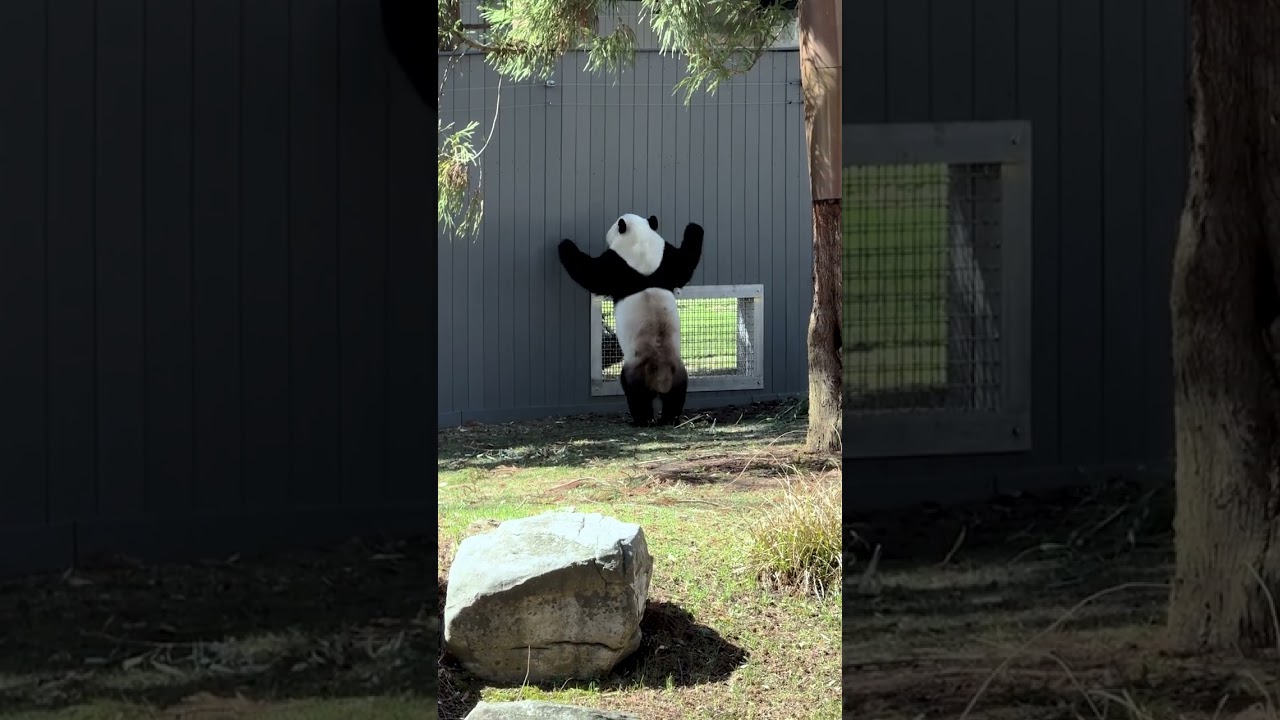
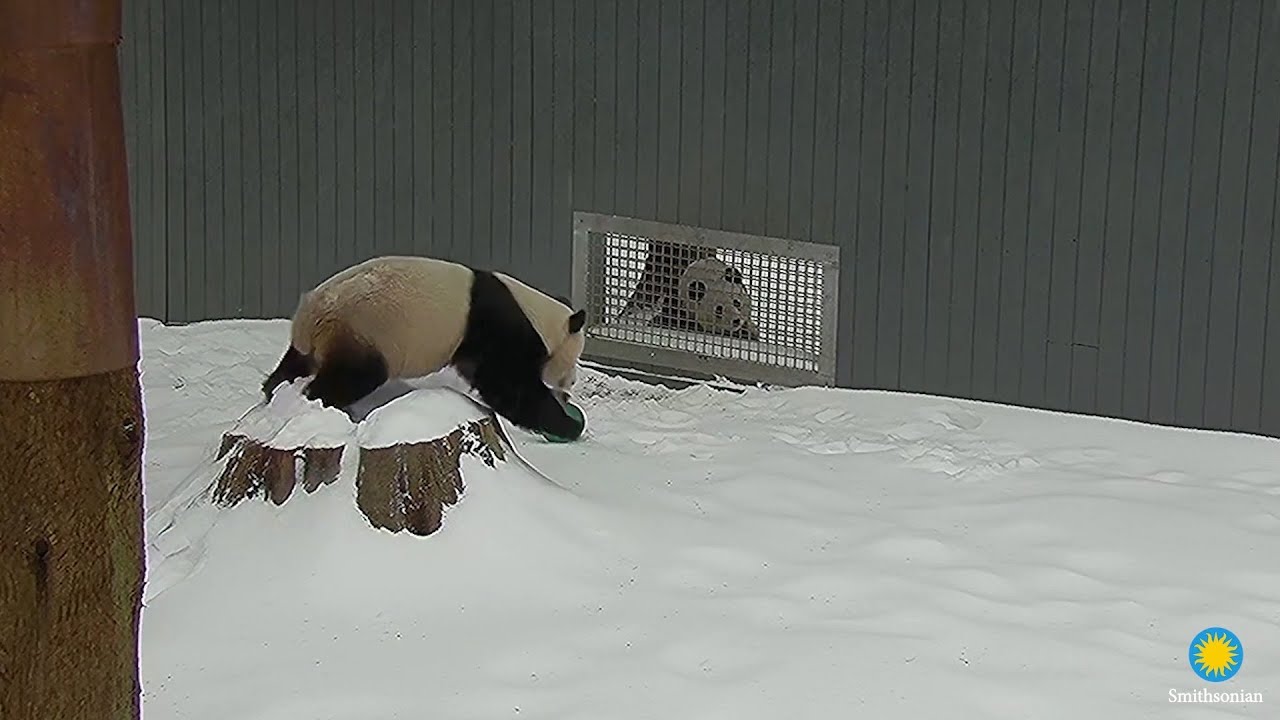
During fall and winter, Bao Li and Qing Bao do not pay much attention to each other. That is because giant pandas live solitary lives and prefer to spend time alone. Here at the Zoo, we replicate this by giving Bao Li and Qing Bao their own habitats. Even though our pandas do not live together, they are neighbors and share a fenceline. Built into the fence are two “howdy” windows—mesh screens that allow Bao Li and Qing Bao to see, smell and vocalize at one another on their own terms.
Giant pandas reach adulthood between 5 and 7 years of age, with females maturing faster than males. Bao Li and Qing Bao are both 4 years old, which is equivalent to a human’s early teens. Because both bears have a bit more maturing to do, we’re still a few years away from breeding. That said, showing positive interest in each other is an important first step!
Bao Li is currently in rut—the period when male giant pandas ready themselves for breeding. Typically, it lasts from November to May. During this time, if he catches a glimpse of Qing Bao, he will vocalize and try to grab her attention.
Outside of breeding season, Qing Bao usually doesn’t respond. But she’s not deliberately ghosting him. Female giant pandas’ interest in males is driven by their hormones, which only ramp up for a few consecutive weeks out of the entire year. And estrus—the window when female giant pandas are able to conceive a cub—is extremely short, lasting only 48-to-72 hours.
Last year, Qing Bao experienced her first estrus cycle in March and April, followed by her first pseudopregnancy in August and September. This year, on Feb. 16, we noticed Qing Bao was starting to show some physiological changes in her reproductive area—a key indicator that breeding season was right around the corner.
Over the next several weeks, we saw changes in her behavior, too. Initially, Qing Bao went about her normal routine of eat, sleep, play and repeat. But by mid-March, she spent a lot of time wandering around her habitat and scent marking.
Since these bears rarely run into one another in the wild, leaving a scent mark is their way of sliding into each other’s DMs. Whether you’re at the Zoo or watching them from afar on the Giant Panda Cam, this time of year you’re bound to see Bao Li and Qing Bao raise their tails and wiggle their backsides on a log, rock or other surface. Under their tail is a gland that secretes an oily substance. It reveals a lot of details about the panda who left it, including their age, sex, fertility and more.
Lately, Qing Bao’s wandering and scent marking became more pronounced. She climbs a tree, looks around for a few moments, then climbs down and wanders again. When she comes inside, she takes a dip in her pool to cool off after all that activity.
/https://tf-cmsv2-smithsonianmag-media.s3.amazonaws.com/filer_public/7f/74/7f74b325-4087-455b-8688-90ac11a5c161/20260323-817a5961-001bk.jpg)
Bao Li has been very playful, excitedly running around his habitat and rolling around in front of the howdy window, trying to capture Qing Bao’s attention. Even when she is not spending time in the habitat, he looks for her. His rut is much more intense compared to last year, with more power walking and scent marking.
Bao Li’s vocalizations are also louder and more frequent this year. At times, Qing Bao will happily chirp at him. However, she’ll also moan when she’s not in the mood to socialize. Our animal care team is listening for one vocalization in particular: bleating. A bleat sounds like a sheep’s “baa,” but with a higher pitch and longer trill. Bao Li is a talker and often bleats at Qing Bao. When she bleats back, we will know she has reached peak estrus!

Even though they are very focused on each other, Bao Li and Qing Bao continue to participate in daily training sessions. We teach the bears behaviors that assist us with their daily care and enable them to voluntarily participate in their own healthcare.
When Bao Li is very amped up—as he tends to be when Qing Bao is in estrus—his attention span for training sessions tends to be shorter. He will do a couple basic behaviors, such as presenting body parts for check-ups. Then, he’ll go back to powerwalking and looking for Qing Bao at the howdy window.
Qing Bao, on the other hand, is always willing to train. Last fall, we worked with our veterinary technicians and successfully trained her for abdominal ultrasounds. This will enable us to monitor her pregnancies in future.
The pandas don’t have to participate if training if they don’t want to, but they know they will receive an extra food reward if they do. Both bears really enjoy pineapple and apple juices diluted with water as a training treat.
In addition to physiological and behavioral changes, we also monitor Bao Li and Qing Bao’s hormones by analyzing their urine samples and tracking changes over time. Both pandas are very good about leaving us samples before they head outside in the morning. Using a syringe, we collect the fresh urine from the floor. Then, we split the sample into two separate tubes, label them with each bear’s name and the date of collection, and store them in a special freezer.
On a routine basis, we send the samples to the endocrine lab at our Front Royal, Virginia, campus for analysis. In a male panda, our scientists look for the rise and fall in testosterone levels. For a female panda, they track her estrogen and progesterone levels. After her estrogen levels peak, it indicates that she is ovulating. As of the last sample, we are still waiting for Qing Bao to be in peak estrus.
This time of year, Bao Li and Qing Bao are very active and their flirtations are adorable and fun to watch. If you’re coming to the Zoo during spring break, be sure to stop by the David M. Rubenstein Family Giant Panda Habitat and pay our pandas a visit!
Get pandas in your inbox — sign up for our e-newsletter. Want to visit Bao Li and Qing Bao in person? Reserve your free Zoo entry pass here. Stay connected from home on the Giant Panda Cam, sponsored by Boeing.