Open Wide! A Smithsonian Collaboration Reveals Hidden Clues in Animal Teeth
From razor-sharp piranha teeth to an elephant’s enormous molar, new research shows how evolutionary history influences their microscopic mineral structures
Imagine a shark, a crocodile, and an elephant lining up for a dental exam at the National Museum of Natural History. Their teeth couldn’t look more different. Some are built for tearing, others for gripping or grinding. But beneath those differences lie some fascinating connections.
To connect the dental dots, Gabriela A. Farfan, the museum’s Coralyn Whitney curator of gems and minerals, employs a slightly unconventional dental checkup: “I want to grind the teeth up and study their crystal structures on an atomic level,” Farfan said, “which is exactly what we did in the new research.”
The project began when John Fink, a doctoral candidate in the department of geosciences at Boise State University with an interest in fossilization and the minerals found in teeth, approached Farfan about conducting research at the museum. Farfan suggested starting with a fundamental question: How do the minerals inside teeth differ across the animal kingdom? Together with collaborators including museum specialist Teresa Hsu and vertebrate zoologists Melissa Hawkins and Katherine Bemis, Fink and Farfan set out to investigate what these microscopic differences might reveal.
The team examined tooth enamel and enameloid, the hard outer layers of teeth, from 22 species of fish, reptiles, and mammals. Their findings, published this week in the journal Science Advances, reveal that the chemistry and crystal structures of an animal’s teeth are more strongly associated with evolutionary ancestry than with factors like diet or environment.
We often think an animal’s teeth are shaped by what it eats. Sharp teeth help predators tear into prey, while broad, flat molars help herbivores grind tough vegetation. But the new research reveals that looks can be deceiving when it comes to teeth.
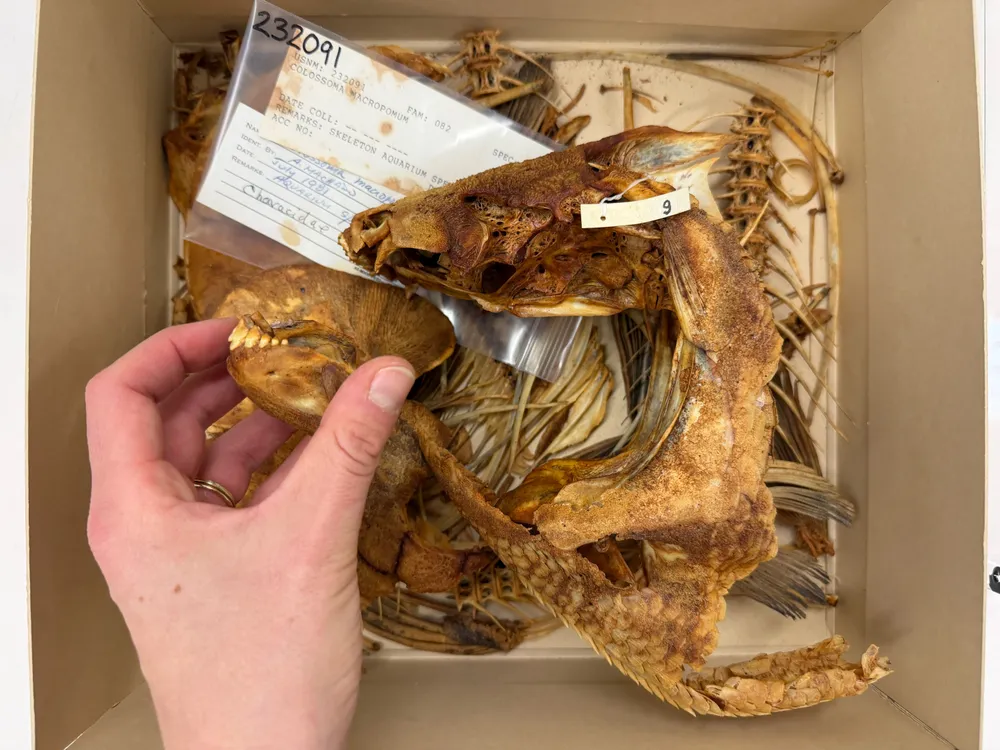
Consider the piranha, the pacu and the tigerfish. At first glance, these fish seem to have little in common. Piranhas have famously sharp teeth and eat a variety of foods, including other animals. Their close relatives, pacu, are primarily plant-eaters with rounded, molar-like teeth designed for crushing. Meanwhile, African tigerfish use their large, pointed teeth to ensnare other fish. Yet despite their dramatically different appearances, the teeth of all three species revealed an unexpected consistency at the microscopic level. “Their tooth minerals—the bioapatite in their teeth—are very similar structurally and chemically speaking,” Fink said.
To identify these patterns, the researchers combined measurements of tooth chemistry and crystal structure using a statistical technique called principal component analysis. The method allowed them to examine relationships among the measurements, revealing clusters of animals that closely reflected their evolutionary lineages.
One aspect of teeth the team focused on was bioapatite, the calcium phosphate mineral that gives teeth their hardness. Its chemical makeup and the arrangement of its atoms create a microscopic signature. These signatures offer clues about biomineralization, the process by which living organisms produce minerals to build structures such as teeth and bones. Just as relatives can share physical traits, related animals may share inherited biological processes that influence how the crystals inside their teeth form.
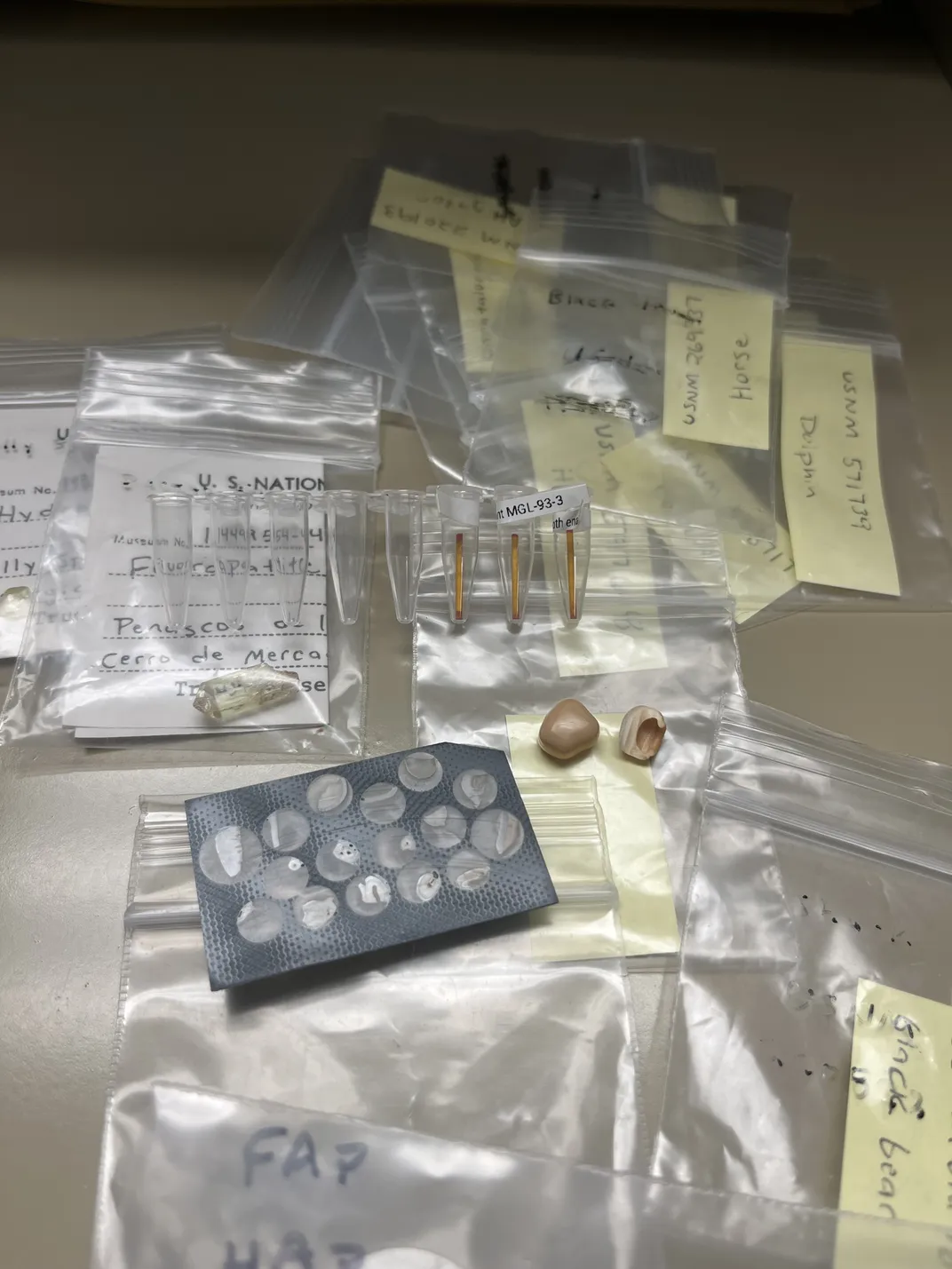
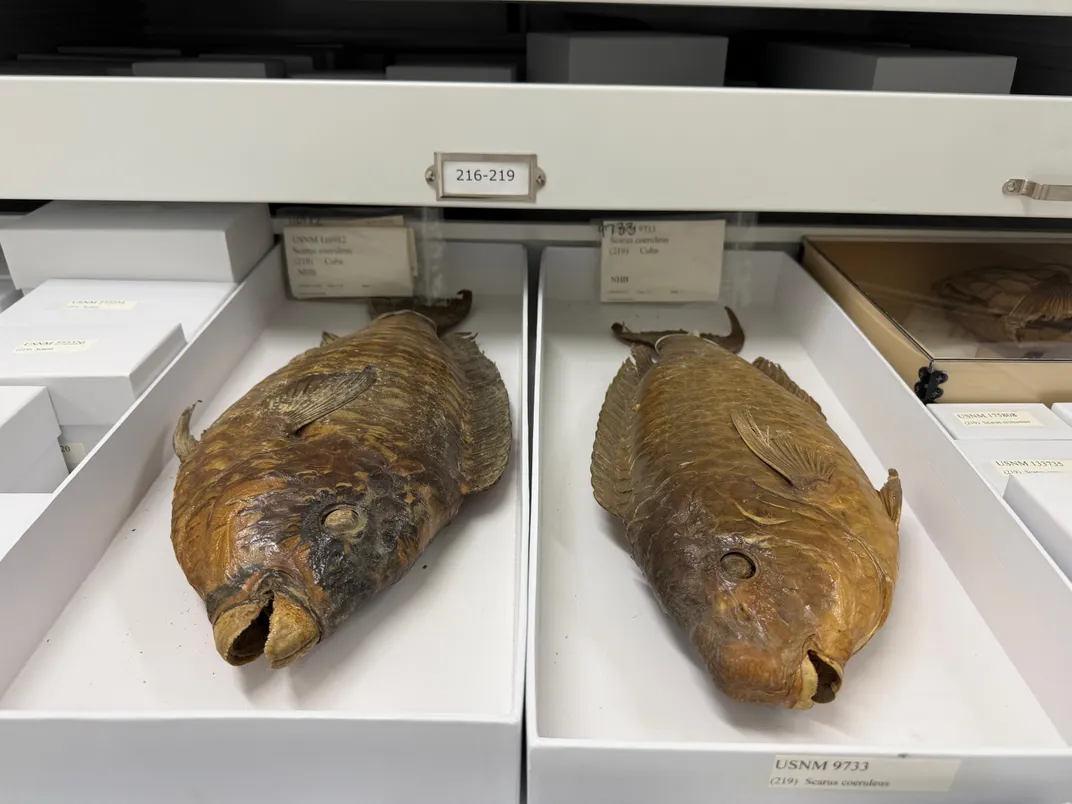
Uncovering these hidden signatures required more than a toothbrush and a dental mirror. To sift through the museum’s vast scientific collections, Fink and Farfan worked with museum specialist Hsu and zoologists Hawkins and Bemis, whose expertise helped them select and access teeth from a wide range of animals. Farfan recalled that the collaborators were initially surprised by the mineralogists’ interest in grinding up teeth for chemical analysis. Some teeth were already loose in specimen boxes. Others required careful removal from preserved jaws. The work required balancing the scientific value of the analysis against the irreversible loss of material from the museum's collections.
This trove of teeth allowed the researchers to compare creatures of all shapes and sizes. “It's actually wonderful to have this resource at the museum where we have preserved specimens representing the whole tree of life that are available for scientists to use,” Farfan said. These specimens, collected and preserved long before anyone thought to investigate their atomic structures, opened the door to discoveries that earlier generations of scientists could not have anticipated.
Then came the messy part. Using a handheld rotary tool, Fink carefully removed the softer dentine beneath each tooth’s hard outer layer before crushing the remaining enamel or enameloid into fine powder. “Teeth kind of smell bad when you dremel them,” Fink recalled. For the pacu, he even had to use a small saw to remove teeth from a preserved jaw while minimizing damage to the specimen. Other teeth proved too difficult to separate cleanly, leaving some animals out of the final analysis.
The powder was analyzed using X-ray diffraction, which shines X-rays at crystalline material and measures how the rays scatter to map its atomic structure. Additional techniques helped the researchers investigate chemical differences, particularly the presence of chemical compounds and elements like carbonate and sodium.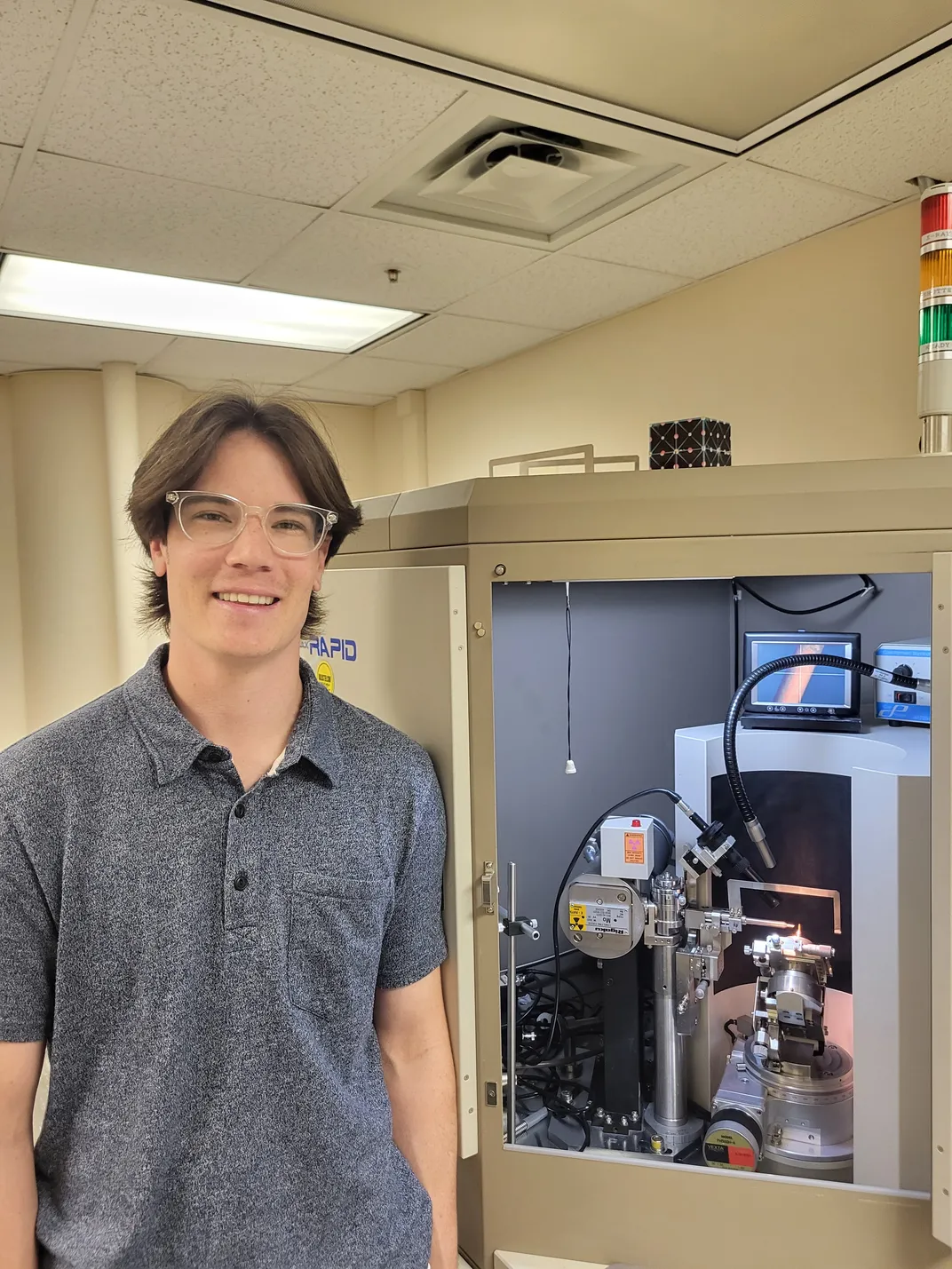
Farfan compares arranging the chemical building blocks of these crystals to piecing together Legos. Each piece represents a unit cell, the smallest repeating building block of a crystal. Subtle differences in the chemistry and dimensions of these microscopic pieces can change the overall mineral structure. Fink described how cells build enamel by depositing mineral crystals layer upon layer. “They really are these beautiful hierarchical structures of crystals that are not visible to the naked eye,” he said. Under a scanning electron microscope, however, those intricate structures come into view.
The microscopic differences in teeth could also help scientists interpret the chemical clues preserved in fossils millions of years old. Fossil teeth are valuable records of prehistoric life, offering clues about ancient diets, environments and climates. But fossilization can transform the minerals inside a tooth, potentially complicating those interpretations. “Fossilization inherently alters the chemistry,” Fink said. “It changes a tooth or a bone into stone.”
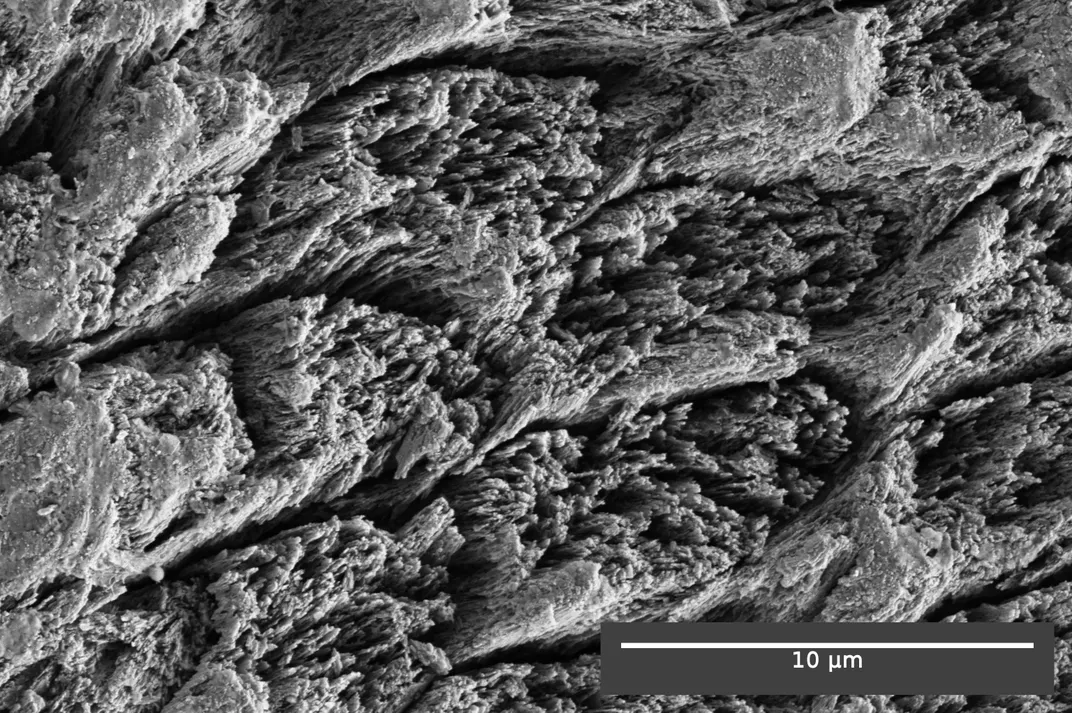
By establishing a baseline for how tooth minerals vary among living animals, the new study could help researchers distinguish original chemical characteristics from changes that occur during fossilization. Some mineral compositions are more resistant to those changes than others. For example, the fluorine-rich minerals in shark teeth dissolve less quickly than those in mammalian teeth, while differences in carbonate concentration can also significantly affect how readily tooth minerals break down. The researchers hope to build on their findings by studying fossil teeth, exploring how millions of years of fossilization may have changed the minerals inside them.
The next time you spot a tooth in a museum, consider what microscopic clues might be hiding beneath its surface. “There's so much more than just the object that you're seeing when you visit a museum,” Farfan said. For these researchers, even the tiniest tooth is a crystalline record of evolution, waiting to be uncovered.