The Hidden History of North America’s Mallards is Written in Their DNA
DNA recovered from historical museum specimens reveals how the release of captive-bred ducks quietly reshaped wild mallard populations across North America
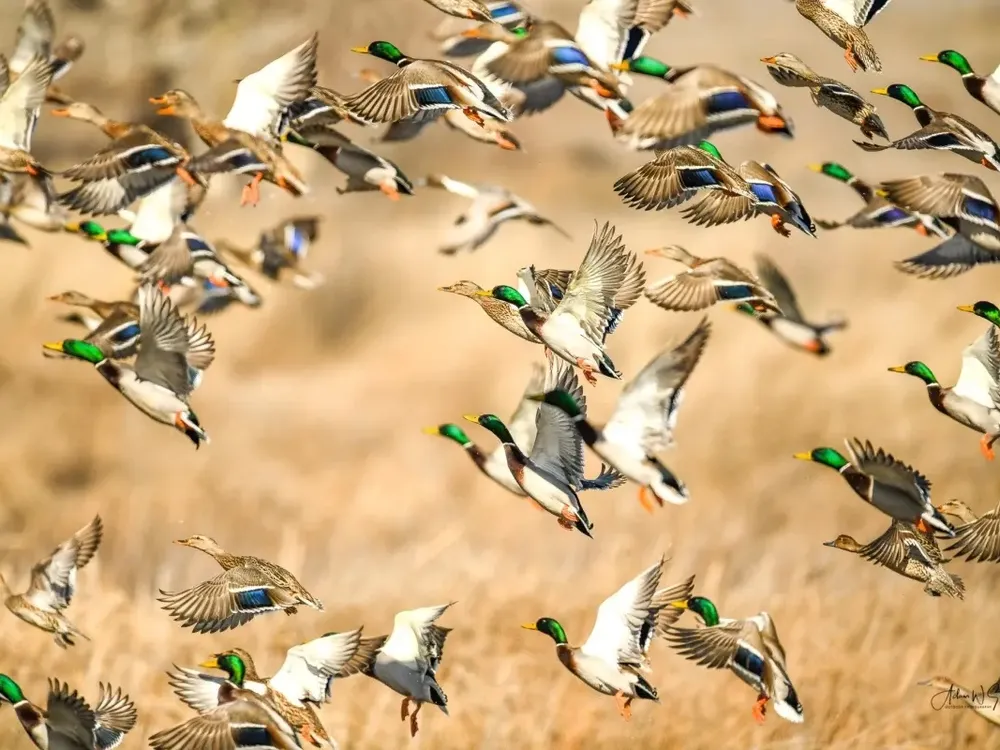
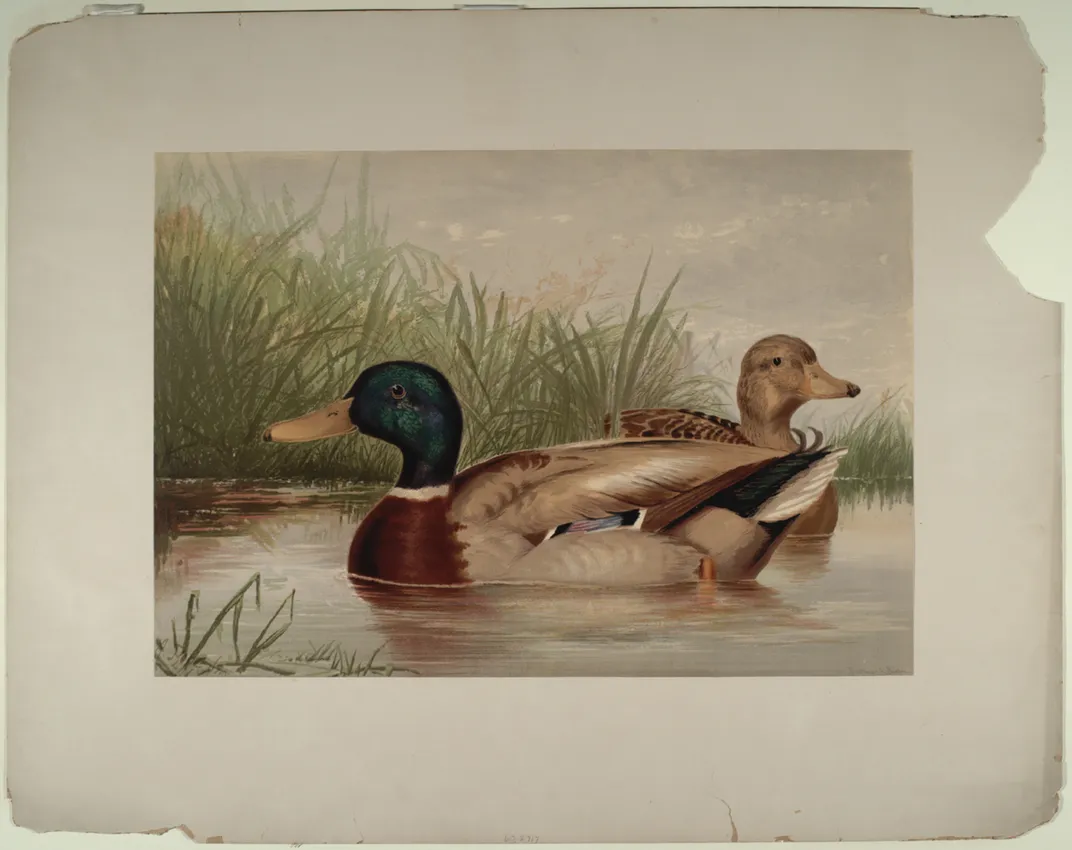
The mallard (Anas platyrhynchos) is a familiar inhabitant of North America’s waterways. In city parks, along wooded streams and across marshes, male mallards glide past with iridescent green heads and yellow bills, while mottled brown females disappear into the reeds. Few birds seem more ordinary, or more unmistakably wild. But beneath those familiar feathers lies a hidden history that toes the line between nature and domestication.
For more than a century, captive-bred mallards have been released into North American wetlands, often to supplement populations for hunting. Over generations, those birds interbred with their wild counterparts, leaving behind a genetic legacy that persists decades later.
Now, scientists have reconstructed that history using DNA recovered from museum specimens, some collected more than 200 years ago. By comparing the genetic makeup of historical and modern mallards, researchers have traced when domesticated ancestry first appeared in wild populations, how it spread across the continent and where its influence remains strongest.
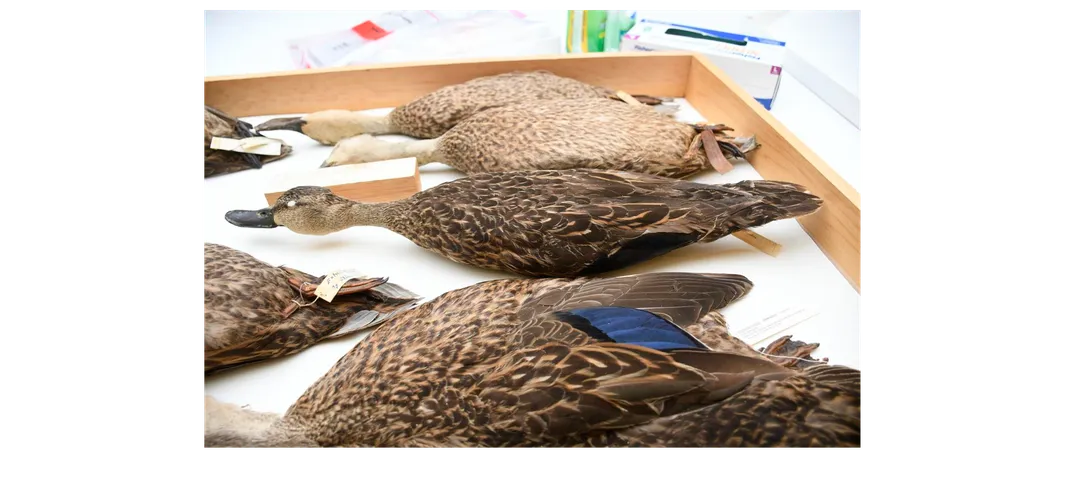
The findings reveal that the mallard, one of North America’s most recognizable waterfowl, has undergone a largely invisible transformation. And the evidence was waiting in museum drawers.
The research, published this past August in the journal Current Biology, brought together scientists from the Smithsonian Institution and the University of Texas at El Paso (UTEP). Supported by a grant from the National Science Foundation, the team examined nearly 700 historical mallard specimens from the National Museum of Natural History and 25 other North American natural history museums. Collected across the continent between 1818 and 2018, these specimens provided an unusually extensive record of genetic change across both geography and time.
The researchers discovered that game-farm ancestry began appearing in wild mallards during the 1910s and 1920s, coinciding with historical records of captive-bred duck releases. But that ancestry did not spread evenly.
In the Atlantic Flyway, a major migratory corridor along eastern North America, game-farm ancestry increased sharply beginning in the 1940s. Since the 1980s, it has accounted for approximately 20 percent of the average mallard’s genetic ancestry in the region. Populations in the Central and Pacific Flyways, meanwhile, have remained largely wild. The differences reflect a complicated history of human intervention, shaped by hunting practices, habitat changes and the movement of captive-bred birds into natural populations.
Robert Fleischer, a Smithsonian evolutionary geneticist who collaborated on the research, said the historical specimens allowed scientists to examine changes that would otherwise be impossible to reconstruct. "I like to think of museums as time machines," Fleischer said.
Modern mallards can reveal how much game-farm ancestry exists today. But without older specimens, scientists would have little way of determining when that ancestry arrived or how rapidly it accumulated.Helen James, an ornithologist and curator at the museum, sees the study as an example of how collections assembled for one scientific purpose can become indispensable to another. The naturalists who preserved mallards during the 19th and 20th centuries were primarily documenting where birds lived and how they varied. They could not have anticipated that future researchers would extract genetic information from these specimens to investigate changes unfolding across an entire continent.
"When the original collectors preserved these specimens, they were trying to get a handle on the diversity and distribution of birds," James said. "They weren't expecting that we were going to be getting genomic data from them, but they've become a vast biorepository because of the advances in molecular sequencing lab techniques."
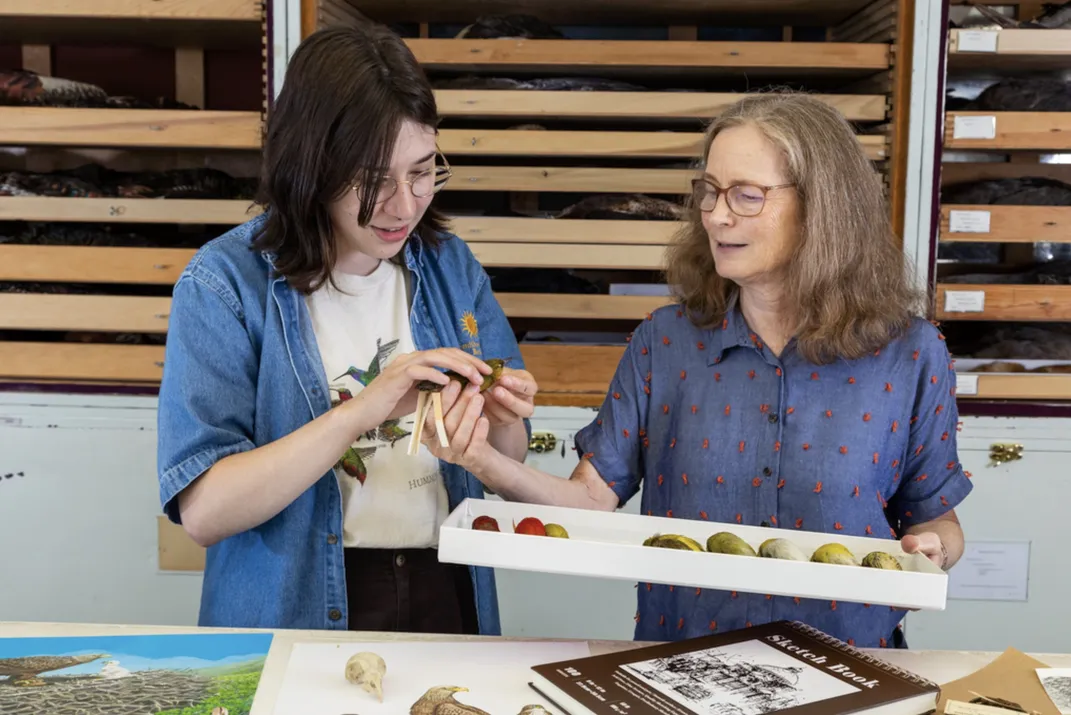
Each preserved bird carries information beyond its physical appearance. Collection dates and locations establish where and when an individual lived, transforming specimens into historical reference points. James brought her expertise in museum collections to the collaboration, which grew from earlier research involving Hawaiian ducks and expanded into a broader investigation of mallard ancestry.
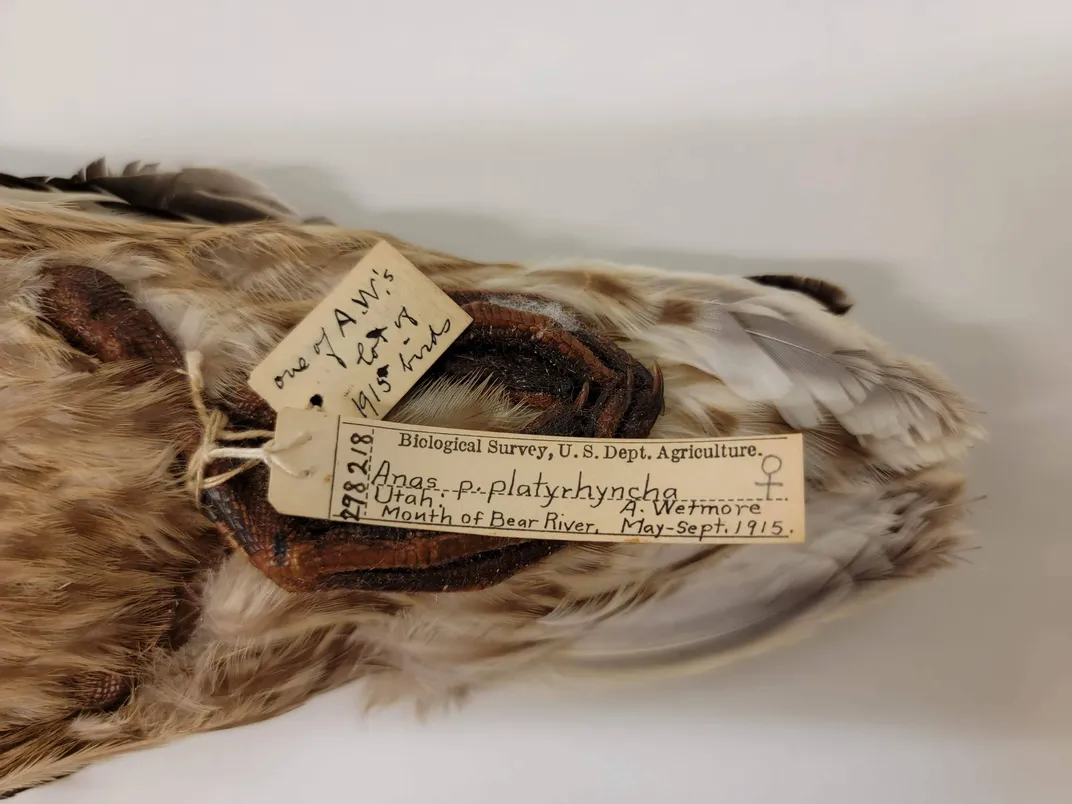
The researchers analyzed small tissue samples from each specimen. Many came from the dried skin of the mallards’ toe pads, allowing scientists to recover DNA while leaving the rest of the bird specimen largely intact. For curators, however, every sample requires a decision. Historical specimens are finite, and tissue removed today cannot be replaced. "My daily life revolves around trying to figure that out," James said of the balance between making specimens available for research and preserving them for future generations.
Turning centuries-old skin into a genetic history required painstaking laboratory work. Unlike DNA obtained from living animals, genetic material in preserved specimens is often fragmented and degraded. Even minute contamination from modern DNA can complicate an analysis. Lauren McFarland, a doctoral candidate in biological sciences at UTEP and the lead author of the new study, pieced together the snippets of historical DNA at the Smithsonian's Center for Conservation Genomics.
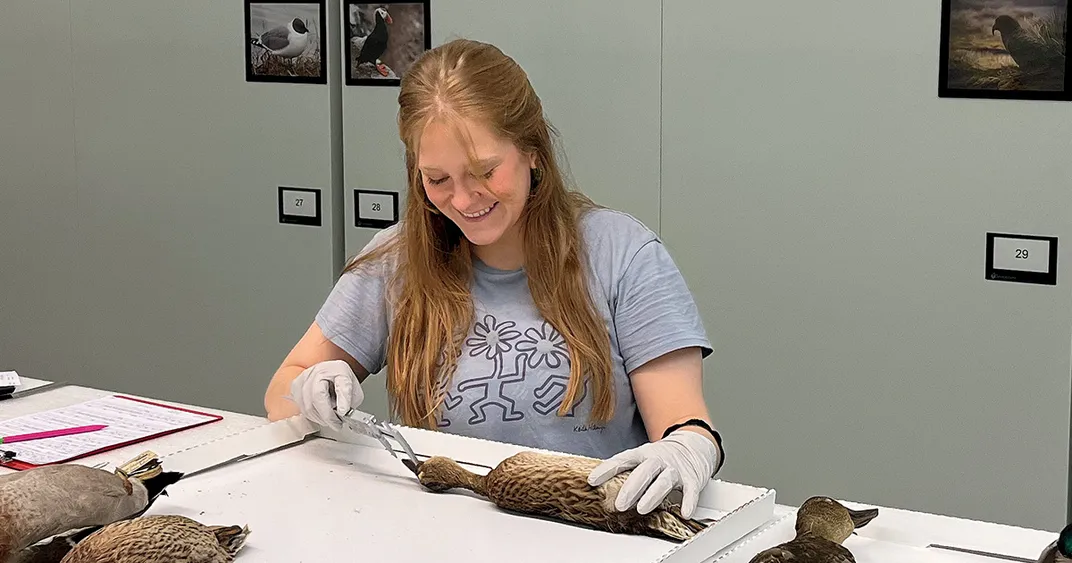
McFarland and her team worked in a dedicated ancient DNA laboratory, soaking toe-pad samples in a warm solution to release genetic material before purifying the fragments. They then used specially designed molecular probes to isolate targeted regions of the mallard genome for sequencing. McFarland described the probes as "Essentially like fishing hooks, the baits bind to matching DNA and pull those regions out."
Once the data were assembled, the team compared historical mallards with modern wild birds and known game-farm populations. Because each museum specimen had a collection date and location, researchers could estimate ancestry through time across North America's four major migratory flyways. According to McFarland, these regional patterns revealed the significance of the findings.
The changes were not uniform or gradual. Instead, genetic ancestry rose in distinct periods, particularly in eastern North America, where large-scale releases had been concentrated. "It didn't creep up steadily, it arrived in bursts," said McFarland.
Fleischer said the expanded historical dataset offered considerably greater resolution than earlier studies, allowing researchers to distinguish between the trajectories of eastern and western populations."I like to think of museums as time machines."
— Robert Fleischer, Smithsonian Evolutionary Geneticist
The analysis also revealed differences in genetic diversity. Captive-bred game-farm mallards generally exhibited lower genetic variation, and interbreeding with wild populations was associated with reduced genetic diversity and increased inbreeding among hybrids. The findings demonstrate that even a species as widespread as the mallard is not immune to human-driven genetic change.
The findings have also changed the way James sees mallards in the wild. "I now look at them a little differently because I realize that many of these birds carry substantial ancestry from domesticated mallards," she said.
The research raises questions about the future of wild mallards, including whether game-farm ancestry will persist as releases decline and how inherited domestic traits might influence survival. But it also reveals something about the future of natural history collections. The preserved birds provided what modern sampling alone could never supply: a genetic baseline predating widespread releases. The implications extend far beyond mallards, reaching into the collection of more than 600,000 bird specimens that James oversees.
Somewhere in a museum drawer, another specimen may hold the first evidence of an ecological transformation that has not yet been recognized. Its significance may remain hidden for decades, awaiting a new question, a new technique, or simply a scientist willing to take a closer look. The green-headed duck paddling across an eastern pond may still look much as it did generations ago. Its genome, however, likely tells a much more complex story.