For Freshwater Mussels, Being Small Can Come With a Big Risk
Across much of the animal kingdom, larger species face greater extinction risk. New research reveals that America’s freshwater mussels buck that trend
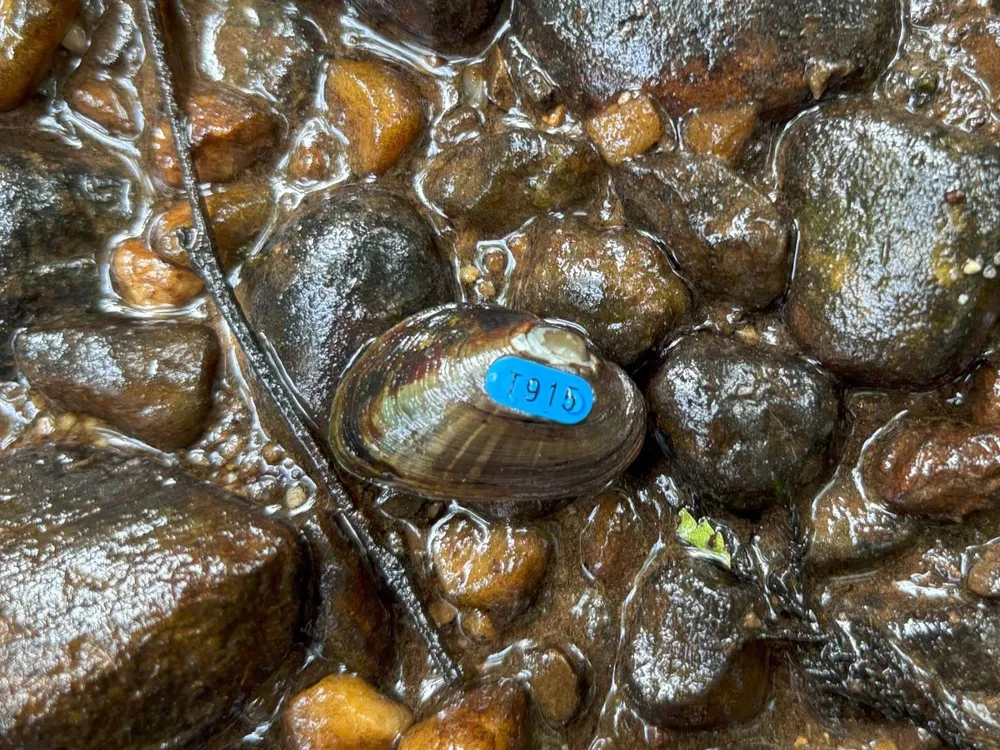
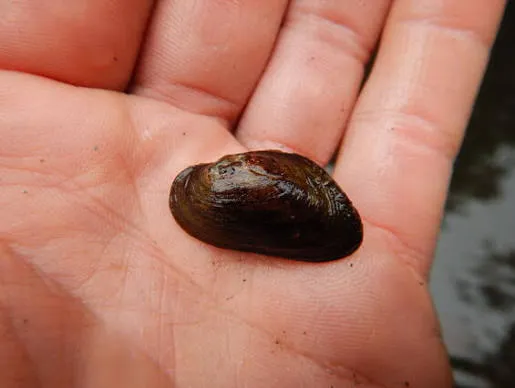
The dwarf wedgemussel lives up to its name. Small enough to fit easily in the palm of a hand, the freshwater mussel inhabits rivers and streams along the Atlantic coast. Its brownish, unassuming shell houses one of the most endangered freshwater mussels in northeastern North America.
At the National Museum of Natural History, several dwarf wedgemussel specimens reside among the museum’s vast invertebrate collections, including those digitally preserved as 3D models. Its diminutive size may be more than a physical trait. It may also be a clue to why mussels like it are in trouble across the country.
Scientists have found that being big can come with a cost in the animal kingdom. Compared to smaller species, large-bodied animals often grow slower, take longer to reproduce and recover more slowly when their populations decline. Studies have linked larger body size with greater extinction risk in groups ranging from mammals and birds to marine fishes and insects. Freshwater mussels appear to turn that trend on its head.
A study published in July in the Journal of Biogeography examined some 300 species of freshwater mussels across the United States and found that imperiled species tended to be smaller, not larger, than their more secure relatives. And size was connected to a suite of other traits: smaller mussels tended to occupy smaller geographic ranges and rely on smaller, less mobile fish hosts. Their ranges also contained higher densities of large dams.
“We were surprised, especially because it bucks the trend,” said Sean Keogh, a coauthor of the study and a Peter Buck postdoctoral fellow in the Department of Invertebrate Zoology at the museum.
The result is not a simple equation in which being small causes a mussel to become endangered. Instead, size appears to sit within a web of interconnected traits that can shape vulnerability. John Pfeiffer, the museum’s curator of bivalves and a coauthor of the study, cautions that the work is one piece of a larger scientific puzzle. “Infrequently in science, do you completely resolve a question or have a complete answer,” Pfeiffer said. “It’s an iterative process that is refined over time.”
Adult freshwater mussels spend most of their lives in one place, nestled into the bottoms of rivers and streams. But during their larval stage, they have an unusual way of getting around: they hitchhike. Freshwater mussel larvae must temporarily attach to a host, usually a fish, before they can develop into juveniles. Some female mussels lure fish close with fleshy structures that resemble prey. Others release clumps of larvae that look like something a fish might want to eat. Once attached, the larvae travel with their host before dropping off into a new habitat.
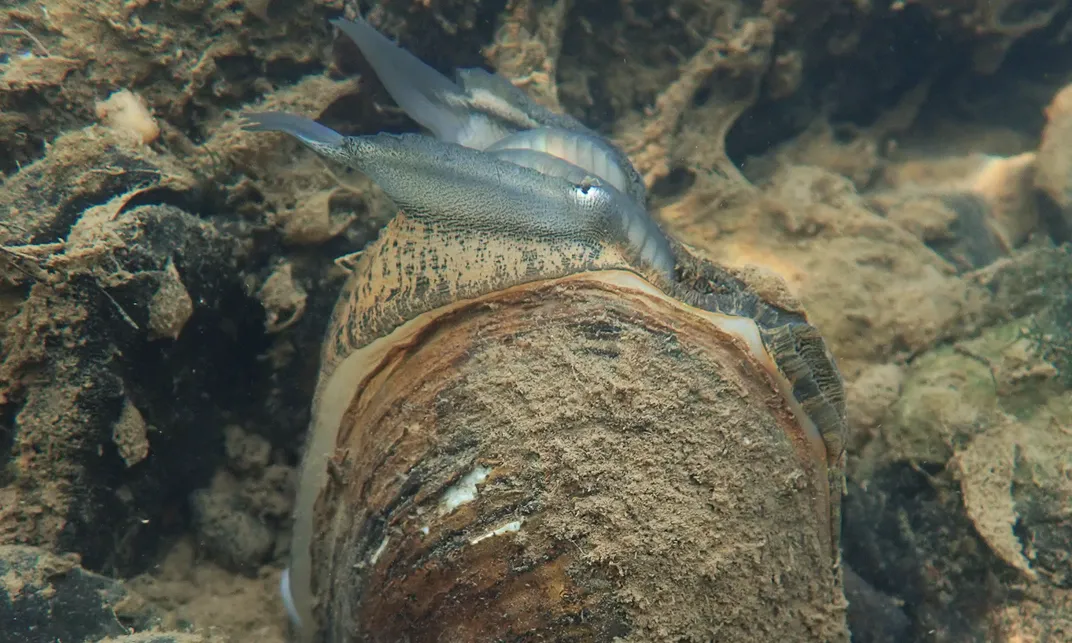
That unusual relationship may help explain why body size matters. Smaller mussel species often rely on smaller fish as hosts, which tend to travel shorter distances and occupy more limited geographic ranges. Because freshwater mussels depend on host fish to carry their larvae to new locations, the movements of those fish can limit how far mussels spread. For smaller mussel species already confined to relatively small ranges, that could mean fewer opportunities to establish new populations when environmental conditions change.
Then comes another obstacle: dams. Large dams can fragment rivers, blocking the movements of the fish that carry mussel larvae. But the wall itself is only part of the problem. Many freshwater mussels depend on flowing water and complex river-bottom habitat. Building a large dam can transform shallow, flowing stretches of river into deep, slow-moving reservoirs. It can alter natural flows and allow fine sediment to settle over the gravelly riverbeds where many mussels live.
“Not only do you have differences in stream flow when you manipulate the hydrology of a river through these big dams, but you also influence the river bottom as well,” Keogh said. “That gravel just gets covered with a bunch of silt.”
For smaller species already confined to relatively tight ranges, those changes may be especially consequential. The study found that imperiled mussels experienced greater densities of large dams within their geographic ranges than non-imperiled species. The researchers describe body size, range size, and dispersal potential as having potentially “cascading effects” on the vulnerability of a given mussel species. While all these traits are interconnected, Keogh was surprised by just how strong the relationship was between smaller body size and imperilment among freshwater mussels.
Seeing that pattern required information scattered across rivers — and across museum collections. The study drew on a standardized dataset containing more than 400,000 freshwater mussel occurrence records to estimate species’ geographic ranges. That dataset underpins MusselMapR, an online tool Pfeiffer and colleagues previously developed to bring together freshwater mussel records from dozens of natural history collections.
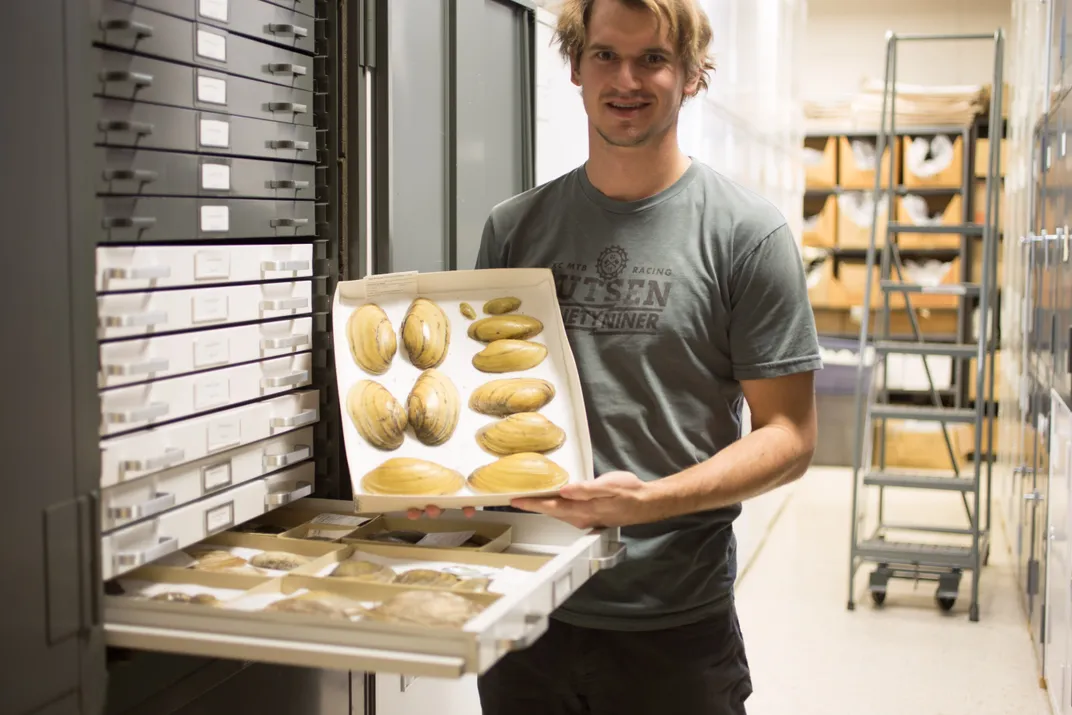
Museum specimens also provide physical records of body size and evidence of where species have occurred. Researchers can use them to measure changes in body size and map fluctuating geographic distributions — two traits central to the new study.
Museum specimens are also particularly valuable for studying endangered species such as the dwarf wedgemussel. Animals that are rare in modern rivers can be difficult to track down, while specimens collected decades or even centuries ago remain available in museum drawers. “They might not be common in modern-day rivers, but they can be common in natural history museums,” Pfeiffer said.
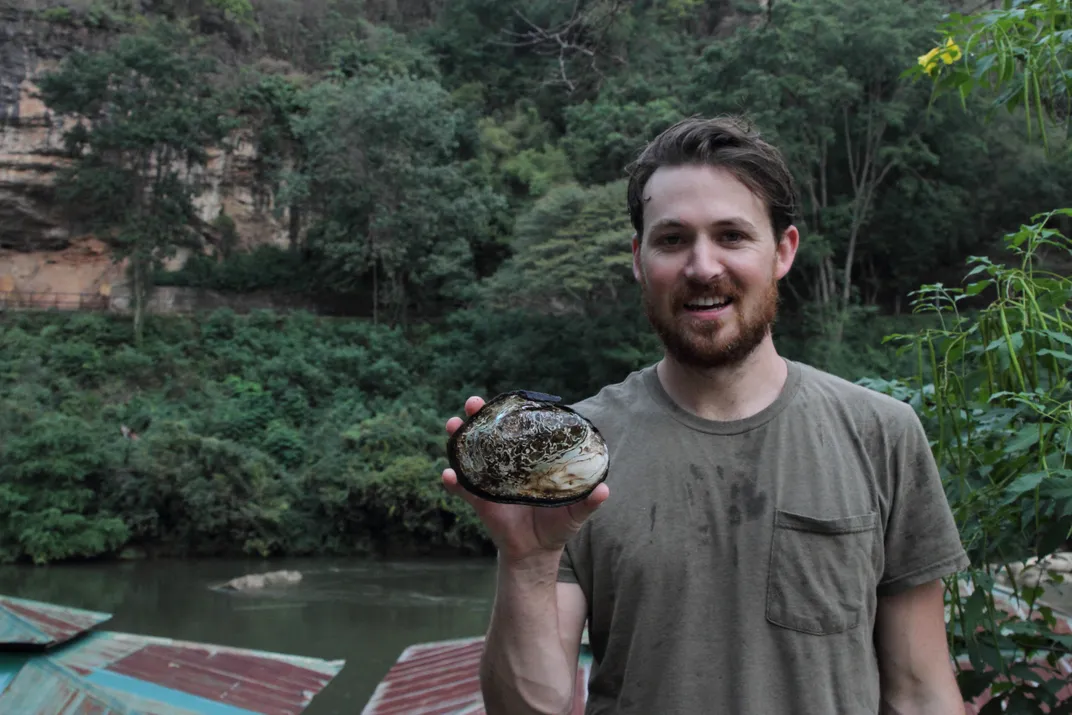
For conservationists, the reversed body-size pattern could offer another way to spot species that may be vulnerable — even before they reach the brink. Some small-bodied mussels with limited ranges are not currently classified as imperiled. Those species could be worth a closer look, Pfeiffer said. Perhaps they possess some other trait that protects them. Or perhaps their conservation status does not yet reflect their vulnerability. That distinction matters when hundreds of species compete for limited conservation resources. “Conservation biology is a crisis discipline,” Pfeiffer said. “It requires making urgent decisions based on limited data.”
Traits such as body size cannot predict the future of a species on their own. But they can help scientists identify which species deserve closer attention. The new study suggests that, for freshwater mussels, the smallest species may require the longest look.