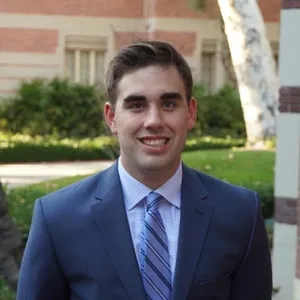
Meet Francisco Werner, the National Museum of Natural History’s New Sant Chair for Marine Science
With decades of experience in ocean research, Werner is excited to work with the museum’s unrivaled collections and a world-class staff of marine scientists
:focal(4067x2557:4068x2558)/https://tf-cmsv2-smithsonianmag-media.s3.amazonaws.com/filer_public/26/f7/26f79470-2fe4-4bda-9e36-d3ad8063e80a/nmnh-2026-01553.jpg)
Earth’s ocean is sprawling, covering more than 70 percent of the planet’s surface. This expansive environment is also incredibly complex: a marine habitat subject to varying light levels and water temperatures, constantly churned by currents and home to a dizzying diversity of lifeforms ranging in scale from microscopic to massive.
Francisco “Cisco” Werner, the new Sant Chair for Marine Science at the National Museum of Natural History, has spent his career making sense of this chaos. Whether investigating the ties between cod spawning and ocean circulation off New England or modeling the currents and ecosystems in the North Pacific, Werner researches how various factors like physics, chemistry and biology converge to create ocean environments.
In his new role, Werner will guide research at the Ocean Science Center, a collection of more than 70 marine science researchers at the museum and the Smithsonian Marine Station at Fort Pierce, Florida.
Werner is no stranger to working alongside world-class research teams. He previously served as the National Oceanic and Atmospheric Administration (NOAA) Fisheries’ Chief Science Advisor and led international marine research programs at multiple universities. But one new, and exciting, aspect of his role at the museum will be working with a large swath of the world’s largest natural history collection.
“Like the ocean, everything at the museum feels interconnected — whether it's a mineral or an animal or a human object, it's part of a larger story,” Werner said. “That inspires you and you start thinking about things in ways that you hadn’t before.”
Smithsonian Voices spoke with Werner about his early love for the sea, his career and what excites him about his new role at the museum.
/https://tf-cmsv2-smithsonianmag-media.s3.amazonaws.com/filer_public/30/30/303002a5-d6ce-42f2-a76b-857a502794f3/nmnh-2026-01556.jpg)
What inspired your initial interest in oceanography?
I remember watching Jacques Cousteau on television when I was around ten or twelve years old and becoming fascinated by the creatures living in the ocean. I was born and raised in Venezuela where the Caribbean Sea is in our front yard. Not only was I able to see things on television that Cousteau was showing us, but I was able to see them for myself — I spent all the time I could in these tropical waters, observing fish, corals and other sea creatures up close.
What aspects of marine science first captured your interests as a researcher?
The short answer is everything!
Understanding the ocean requires an interdisciplinary approach. You cannot just study physics alone to understand this environment. You also need to learn how chemistry, biology and geology all interact to create our ocean’s ecosystems.
In order to make sense of something happening in a particular part of the ocean, you really need to understand how everything is connected. It gives a real richness to the science that we need to continue expanding upon, not only to understand how things are working today or worked in the past, but to project how things might work in the future.
/https://tf-cmsv2-smithsonianmag-media.s3.amazonaws.com/filer_public/56/b3/56b36b2c-a16c-4c54-8e01-a0c8af114f17/3b_jpeg_-flat_global_ecco2_2028x102423000.jpg)
Another aspect we cannot lose sight of is the relationship that humans have with the ocean. Humans interact with the oceans in multiple ways. They rely on and harvest the ocean’s resources while also having a personal connection with the ocean. Whenever you go to the beach, the ocean invites you to have that relationship with it.
In school, did you study a particular species or habitat?
When I went to graduate school, I didn’t start with the idea of studying a specific species or ecosystem. I ended up investigating the physics of the continental shelf off of Washington and Oregon. It was funded by the Department of Energy which sought to assess the impact of the Columbia River’s runoff and its discharge on the coastal ocean.
That project required that I study the physics of the ocean to understand how currents move things around and where these particles end up. However, critters and broader ocean ecosystems also actively move and transform matter including substances like oil and marine debris. One quickly learns that considering only the oceans’ physics will likely give you the wrong answer. So looking at how a spilled substance may move along the continental shelf was a really useful precursor to my later work developing interdisciplinary models for ocean systems.
As someone who has experiences in both worlds, how does directing science at a university differ from directing science at a government agency like NOAA?
The science and the questions people ask in academia and government are often the same. The main difference is the time you have to answer these questions. In academia, you might have two to three years to work on a problem, which allows you to conduct several rounds of experiments and make multiple measurements to refine your results.
/https://tf-cmsv2-smithsonianmag-media.s3.amazonaws.com/filer_public/d5/61/d56168bb-4580-466c-8495-713e4800893d/ciscowerner_svalbard_2018.jpg)
In government, questions generally need answers on a quicker turnaround, often three to six months that allows management or regulatory decisions to be made–based on the best scientific information available.
Are there any research projects that you are particularly proud of from your time at NOAA Fisheries?
When I joined NOAA around 2011 and became the director of the Southwest Fisheries Science Center in California, it was a celebratory time. The Magnuson-Stevens Fishery Conservation and Management Act, the law that governs fisheries, was nearing its 40th anniversary. This milestone allowed us to reflect on how the act successfully rebuilt fish populations through sustained science and management actions and helped the fishing communities that relied on them.
But it quickly became apparent that much of the work that was done in those previous years was going to have to change because ocean conditions had evolved so dramatically. There were things like marine heatwaves or ocean acidification that scientists had not considered when they first created the act.
All of a sudden, the science that had led to so much success had to be reevaluated because the ocean was a different place. We changed the ways that we sample because populations of certain species are now in new places. For example, a species of fish that used to reside off the coast of North Carolina may have moved poleward, off New England, to find cooler water.
"Like the ocean, everything at the museum feels interconnected. That inspires you to think about things in ways that you hadn’t before.”
— Cisco Werner, Sant Chair for Marine Science
We also needed to be in more places, more often to keep pace with how these populations were changing and moving. We introduced new technologies, including approaches to analyze environmental DNA (eDNA) floating around in the water.
We also had to analyze all of this new data differently. We needed to finetune new analytic approaches to help connect eDNA with the data from traditional sources like fishing nets. And finally, we had to determine how best to communicate this data in a credible way. Not just with policy makers and managers but with the local communities that rely on these fisheries.
It was an interesting and exciting moment because while we were reflecting on existing successes, we had to revisit how we did almost everything. This effort took up nearly ten of my years at NOAA and I’m proud to say that we were able to implement many new methods to update how the organization collects, analyzes and shares data.
/https://tf-cmsv2-smithsonianmag-media.s3.amazonaws.com/filer_public/a9/f5/a9f58f11-a743-4cec-9690-977145ddce4d/nmnh-2026-01555.jpg)
What excites you about working at the National Museum of Natural History?
It’s impossible not to get excited about working at the museum! When you see the actual specimens, whether they’re recent or more than a million years old, you understand how unique it is to have such a carefully curated collection.
And anyone who walks into the museum, from little kids to grandparents, is immediately captivated by the exhibits. When they see the giant squid or the life-size North Atlantic right whale model hanging from the ceiling in the Sant Ocean Hall, their eyes light up with the awe that these specimens and objects elicit. I think we all have a similar experience that pulls us in and makes us want to learn more about everything that’s here at the museum.
What role will the museum’s sprawling collection play in advancing the Smithsonian’s marine research efforts?
We’re now at a point where we can utilize new approaches to learn even more about these specimens than we could when they were first collected. Using molecular, optical, and chemical approaches, we can estimate what a given animal ate, where it lived and what environmental conditions were like when it was collected. As a result, you begin to see the museum’s collection as much more than the sum of the individual parts — it's actually a complete history of the natural world.
What aspect of being the Sant Chair for Marine Science are you looking forward to?
I see the ocean as a connective tissue linking together many of the specimens and objects in the museum’s collection as well as the science that takes place here. The museum allows us to bring together various scientific disciplines to better understand marine environments and the organisms that live there.
/https://tf-cmsv2-smithsonianmag-media.s3.amazonaws.com/filer_public/a0/01/a001211b-b38a-4396-a0bf-457d2688c4ca/nmnh-2026-01552.jpg)
I look forward to working with all the world-class researchers at the museum and the Smithsonian as a whole. Tapping into their collective expertise and utilizing the museum’s specimens offers a unique opportunity to understand what things were like in the past, how that relates to what we’re seeing now and what we expect to see in the future. By making this knowledge accessible, we can provide the public with the information they need to make better informed and forward-looking decisions for tomorrow.