What Are Beetle Wings Doing in This 17th-Century Artwork? The Indian Insect Makes the Painting Glimmer 400 Years Later
Four centuries after it was painted, tiny beetle wings still catch the light in this remarkable work from India
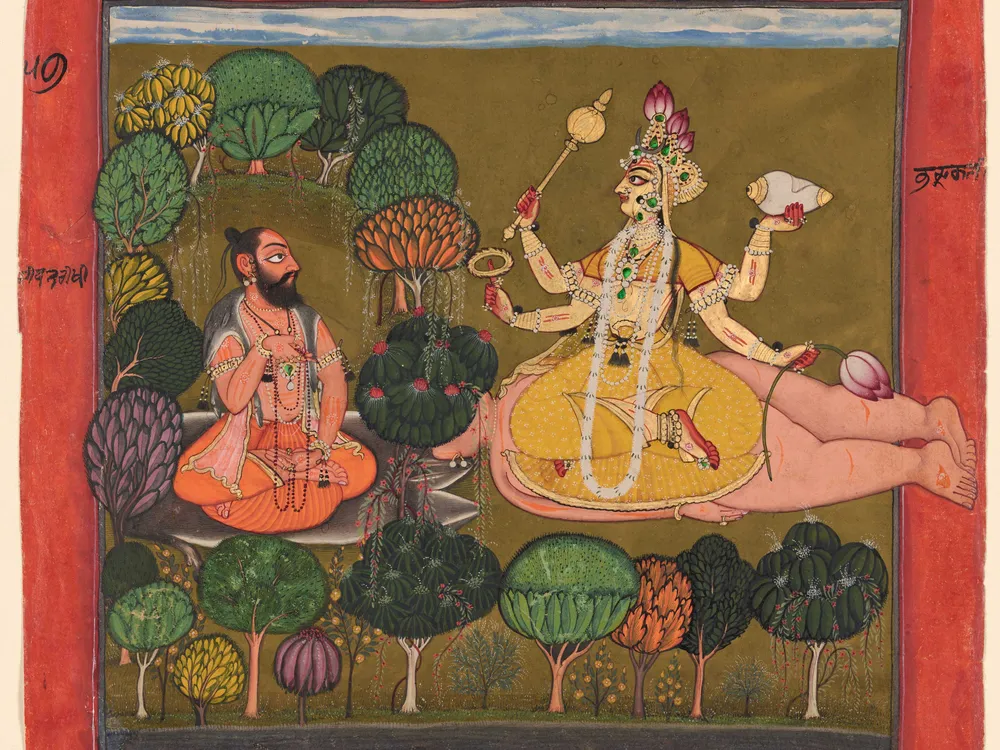
This painting from 1660s India has a secret hidden in plain sight. When you admire it, you’re not just looking at paint and paper—you're looking at beetle wings!
Imagine you’re meditating on this painting. When you pick it up to look more closely, the emeralds flicker. The gold gleams. The goddess is resplendent. It’s not only a beautiful work of art but also a tool supporting spiritual insight. That’s the experience the artist sought to create.
In the artwork, we find the sage Chyavana meditating on the Hindu goddess Bhadrakali (Benevolent Kali). Look closely and you’ll notice how she shines. Her body is gold, and she's adorned in layers of brilliant yellow cloth and jewelry. Even the verse on the back of the painting says she “glows like a Topaz.”
In Hindu tradition, a practitioner would use paintings like this to meditate. To support that experience, the artists filled this work, “The Goddess worshipped by the sage Chyavana,” with small details that bring the goddess to life.
The bright green emeralds on Kali’s headdress and necklace are actually tiny pieces of beetle wings that were painstakingly cut and glued to the page. This technique was only used in one region of India – the Himalayan (Pahari) foothills – during a brief period from around 1650 to 1700.
Around 1630, rulers and kings of this region began commissioning paintings that proved extraordinary, with similar intricate and glittering details like the ones seen in this painting. Although this artwork is among some of the most beloved Indian paintings, it is also among the least well understood.
Artists who worked with these materials sought to make their pieces flash and sparkle. When someone picked the painting up, the beetle wings flickered in the light because they are naturally iridescent. Iridescence occurs in materials that change color when they are viewed from different directions. This effect amplifies the goddess’s beauty and makes her feel alive and present to the viewer.
Many Hindus worship the Goddess, who manifests in many forms. In this painting, the goddess takes on the auspicious form of Bhadrakali. Bhadrakali manifests to destroy all forms of evil.
In her four arms, she holds symbolic objects:
- Lotus flower, a symbol of purity
- Conch shell, which in Hinduism made the sound that starts the universe
- Discus, a weapon associated with the god Vishnu
- Mace, a symbol of royal power
The vibrant colors in this painting also reveal how artists from this period used the natural world around them. The yellow of the goddess’s dress is Indian yellow, a pigment made from the urine of cows who have only been fed on mangoes. The trees and grass are a mixture of Indian yellow and indigo, a blue that comes from the indigo plant. And Kali’s skin color is made from a precious mineral: gold.
Join curator Debra Diamond behind the scenes to get an even closer look at this work and how it shines in motion.